

Reason
After the revolution of July 14, 1958, major changes took place in the political and social situation of Iraq that were in the interest of all the peoples of Iraq. One of the most important achievements of the revolution for the Kurds was the adoption of Article 3 of the constitution, which stated, (Kurds and Arabs coexist in Iraq and their national rights are recognized by the constitution within the framework of a unified Iraq). In terms of freedom of political and organizational activity, after the return of the KDP leader, after 12 years of exile, the Kurdistan Democratic Party (KDP) officially received permission to operate as the only Kurdish party in Iraq.
The Kurdish-Arab alliance in Iraq lasted only a short time, and Article 3 of the constitution was never implemented, as the political situation became increasingly complex and
The government also reneged on the promises it had made to the Kurds, began removing Kurdish officers and civil servants from the army and Kurdish civil servants from their offices, especially in the Kurdish provinces, Kurdish education was suspended in the Kurdish regions, political and literary books were banned in Kurdistan, and the authorities seized the hearts of the farmers in order to appease the hearts of the despots.
The Kurdistan Democratic Party (KDP) opposed the government's policies, especially after the announcement of the interim constitution of Iraq and the introduction of Article 2 of the constitution, which stated that "Iraq is part of the Arab Ummah". On 19 October 1960, the newspaper Xebat published an article on this issue and the situation in general. In the article, in addition to presenting Articles 2 and 3 of the constitution, it called for the end of the Urfi decrees and the transitional period, free and democratic elections, the release of political prisoners, and the cessation of the expulsion of members of political parties, unions, and farmers' organizations. In response, the government closed the newspaper Xebat and brought its editor to court, especially after the publication of issue 462 on 28 March 1961, which published an article on the occasion of the Newroz holiday in which it praised the President. Mustafa Barzani and carried out violent attacks on government officials, then the government began to arrest a number of cadres and members of the KDP central committee, thus returning the party's situation to the situation before the July 14th revolution and it resumed its underground work and struggle.
President Mustafa Barzani On November 5, 1960, at the invitation of the Soviet government, he visited Moscow to participate in the October Revolution. In meetings with high-ranking Soviet officials, he asked them to help normalize relations between the Kurdistan Democratic Party (KDP) and the Iraqi government. During these meetings, many problems between the KDP and the Iraqi Communist Party were resolved.
On January 13, 1961, the President Mustafa Barzani returned to Baghdad and met with Abdulkarim Qasim in February, during which the President Mustafa Barzani tried to dispel their doubts and presented all the documents of the Kurds' optimism towards the government to Abdulkarim Qasim, but to no avail. President Barzani left Baghdad at once in early March 1961 and returned to Barzan. As a result, the situation between the Kurdistan Democratic Party (KDP) and the Iraqi government deteriorated day by day. The government began arming those tribes that had made the Chashati (Chetati) their profession. President Barzani also tried to obtain weapons to be ready for any sudden attack by the government.
At the end of June 1961, the KDP Central Committee met to study the situation and decided to send a memorandum to Abdulkarim Qasim. The memorandum was sent on July 30, 1961, and it called for an end to the conflicts between the KDP and Abdulkarim Qasim, the restoration of peace in Kurdistan, and the prevention of the deterioration of the situation. However, Abdulkarim Qasim ignored the KDP Central Committee's memorandum and the situation worsened. Before the memorandum was sent, on July 12, 1961, Jalal Talabani was sent by the Party's Central Committee to Barzani and presented the final decisions of the Central Committee to the President. Mustafa Barzani Talabani demonstrated the Political School's readiness to face any sudden development, and the President Mustafa Barzani He believed that nothing should be done for now and that preparations should continue, and then Jalal Talabani returned to Sulaymaniyah with the advice of President Barzani.
The chauvinistic policy of the Abdulkarim Qasim government towards the Kurdish people continued and the situation was increasingly heading towards an explosion. In order to prevent war, as a protest against the government's policy, on September 6, 1961, the Kurdistan Democratic Party (KDP) held a general strike throughout Kurdistan. This strike closed all parts of Kurdistan, which also showed the weight and power of the KDP. The aim of the strike was to prevent the government from sending its forces to Kurdistan.
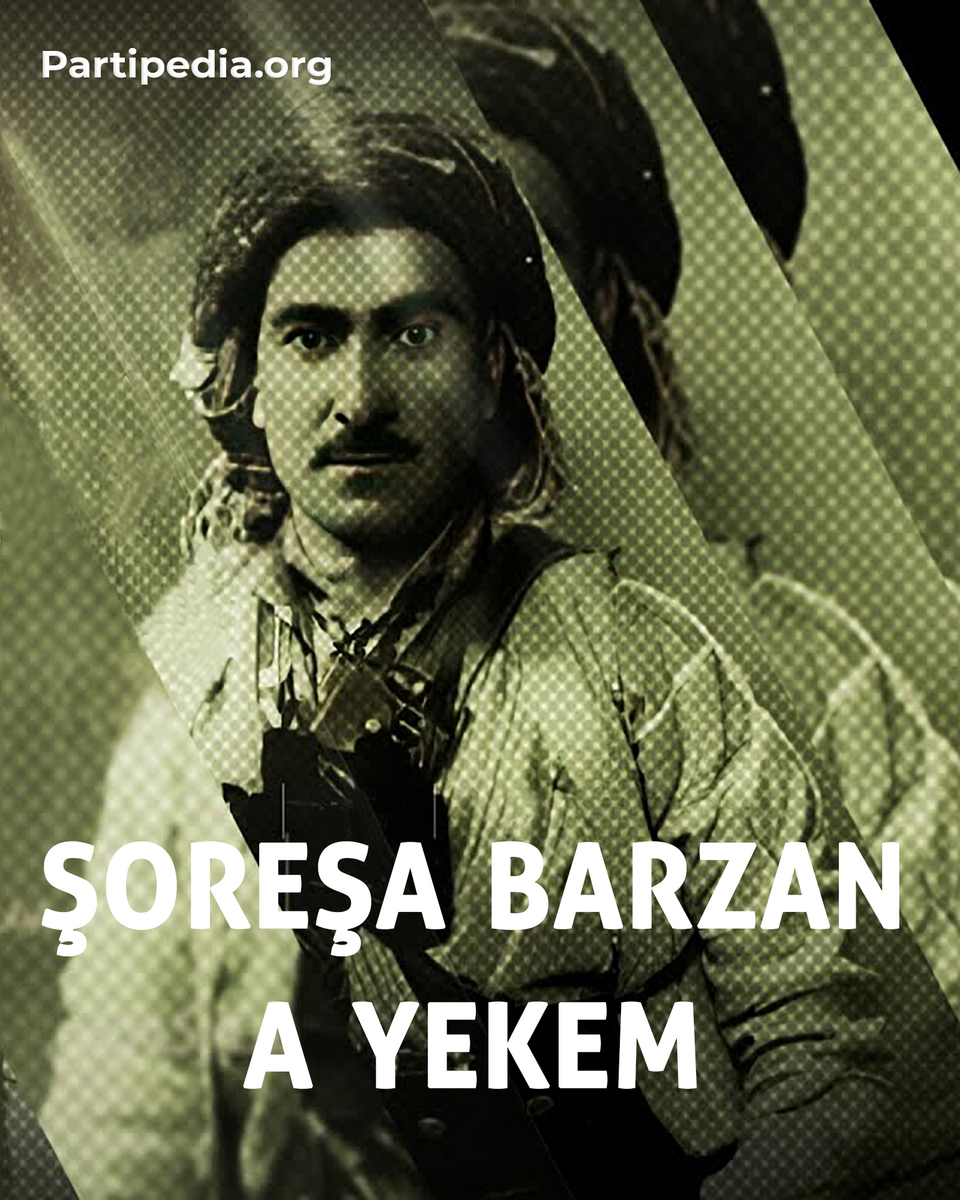
The beginning of the revolution
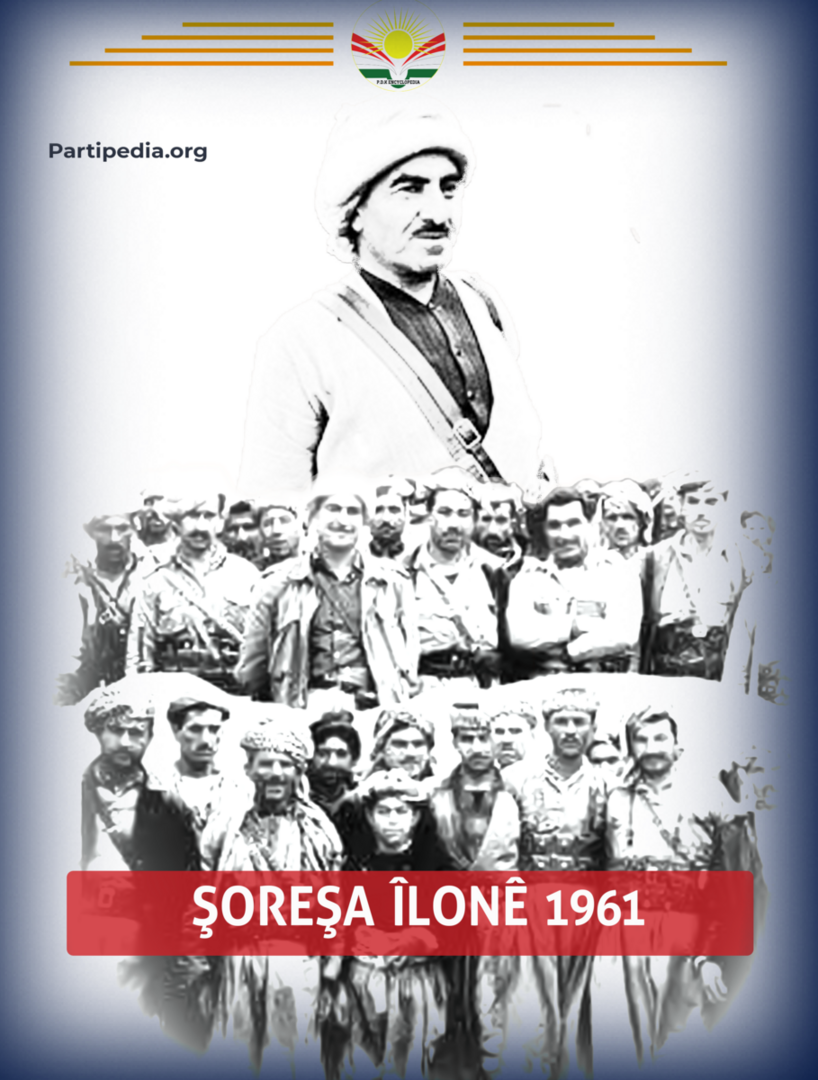
Despite all the KDP's efforts to approach the government and prevent war, all these efforts were ignored by Abdulkarim Qasim and on September 11, 1961, the army forces began aerial bombardment of Derbendi Bazyan, Geliye Xelkan and the surroundings of Duhok. In response, on September 19, 1961, the KDP Political School decided to confront the government, forcing the Kurdish people to resort to armed struggle to defend themselves.
After several battles and conflicts, the government managed to take control of all areas of Kurdistan, except for some areas of Barzan, by September 23, 1961, on October 6, 1961. Omar Debabe and Ali Abdullah, members of the KDP Political School, arrived in Barzani and met with the President Mustafa Barzani The meeting decided to reorganize and to establish coordination between Barzan forces, KDP armed forces, and tribal fighters who had not yet left the battlefield.
After the reorganization and several victories over the Iraqi army, in February 1962, a large meeting was held by members of the party's central committee in the village of Awdalan in Sulaymaniyah province. At the meeting, the members of the central committee sent a memorandum to Abdulkarim Qasim, stating that the war they were waging was a war of self-defense and defense, not an offensive war. In the memorandum, they also chose the name Peshmerga for their fighters and raised the slogan "Democracy for Iraq and Autonomy for Kurdistan". Some of the participants in the meeting included Ibrahim Ahmed, Ali Askari, Ahmed Abdullah, Omar Debabe, Ali Abdullah, Mullah Abdullah Ismail, Shamsuddin Mufti, Abdulrahman Zabihi, Nouri Ahmed Taha The meeting was guarded by a force of 15 Erbil police officers, who had recently become peshmerga. The meeting unanimously decided to continue the defense.
The Iraqi army's successes were temporary, and the Peshmerga forces were able to reorganize themselves in a short time and form the Kurdistan Liberation Army, which numbered approximately 20,000 Peshmerga. This force was able to liberate most of Kurdistan, except for the major city centers, by mid-1962. In early 1963, the government was forced to declare a ceasefire, which was extended several times until the overthrow of the government of Abdulkarim Qasim on February 8, 1963. During this period, the Kurdistan Democratic Party (KDP) tried to find a peaceful solution to its problems with the government, and these efforts were welcomed by the Iraqi public.
The Ba'athist Coup
September Revolution paved the way for the February 8, 1963 coup against the government of Abdul Karim Qasim, which was the result of an agreement between the Ba'th Party and the and national officers, who contacted the Kurdistan Democratic Party (KDP) during the preparations for the coup and agreed on the implementation of all the political and national demands of the Kurdistan revolution, and through Salih Yousfi, the promise of autonomy for the Kurdish people from the President Mustafa Barzani was given after the coup's success, in return for which the revolutionary leadership promised to stop the war against the government.
After the success of the February 8 coup, the Ba'ath Party sent a letter to KDP Secretary Ibrahim Ahmadi, requesting him to nominate several Kurdish individuals to participate in the new government. The Political School, after the approval of the President, Mustafa Barzani The Ba'ath Party responded as follows: (Democracy for Iraq and autonomy for Kurdistan is the policy of our party), and our proposed names are: Baba Ali Sheikh Mahmud, Fuad Arif, Bekir Abdulkarim, Omar Mustafa, Jalal Talabani and Ali Askari.
On February 18, 1963, a delegation from the Kurdistan Democratic Party (KDP) led by Jalal Talabani and Salih Yusfi was sent to Baghdad to negotiate with the new government. The next day, the delegation met with government officials, and the Ba'athists tried to hide from the promises they had made to the Kurds before the coup. It was also decided in the meeting that Jalal Talabani, without returning to the KDP President and the Political School, would visit Egypt and Algeria with a government delegation to discuss the Kurdish question. During this visit, Jalal Talabani met with Egyptian President Gamal Abdel Nasser and Algerian President Ahmed Ben Bella, and both countries supported a peaceful solution to the Kurdish question.
Revolutionary Leadership Council
On September 28-29, 1964, in the town of Qaladizi, in the presence of President Mustafa Barzani and a number of leading cadres of the Kurdistan Democratic Party, military commanders and social figures related to tribes and families, held a meeting to organize the affairs of the revolution, write the constitution and how to negotiate with Baghdad. President Mustafa Barzani He gave a speech at the beginning of the congress in which he talked about the negotiations and organization of the revolutionary ranks and called for the election of a Revolutionary Leadership Council in Iraqi Kurdistan to lead the work through free elections.
At the end of September 1964, President Mustafa Barzani and the Political School, based on the decisions of the Sixth Congress and the Qaladize Meeting, agreed on October 7, 1964, to establish the Revolutionary Leadership Council to manage the liberated areas. Initially, the village of Boskin was designated as the meeting place, but later the meeting moved to the village of Girdespi in the Pişder area and lasted for 10 days. The meeting was attended by 63 people, including 17 members of the Kurdistan Democratic Party (KDP) Leadership, 17 force commanders, 29 Islamic, Christian and Yazidi religious administrators, social figures, tribal leaders and family figures.
The tribal leaders had previously agreed on their choice among themselves and came out in large numbers, as well as the members of the Party leadership and the commanders of the forces who were appointed to the Council. On October 9, 1964, the constitution of the Revolutionary Leadership Council in Iraqi Kurdistan was signed in the village of Boskin, and on October 10, 1964, the decisions and proposals of the Judicial Committee of the Kurdistan Province were signed in 13 points, then the administrative laws and regulations were prepared in 12 points, and the financial laws and regulations were organized into three sections: the financial sector of the revolution, taxes, and customs.
By the decision of the Council, an eleven-person executive board was established, with Mustafa Karadaxi as secretary, later replaced by Mehmud Osman. At the level of ethnic minorities, Turkmens were not included in the council due to their special circumstances, although the President Mustafa Barzani Great efforts were also made in this regard, including to ensure that someone would represent the council in Europe. Council member İsmet Şerif Wanlı was appointed for this task, as he personally participated in the Second People's Congress and the meetings to establish the council. This council established five committees, which were:
1. Constitutional Committee
2. Judicial Committee
3. Military Committee
4. Executive Committee
5. Finance Committee.
Finally, the members of these committees at three levels are supervised by the President. Mustafa Barzani were elected to be members of the Central Committee of the Kurdistan Democratic Party, commanders September Revolution, tribal leaders, and religious and national figures. The members of the central committee of the Kurdistan Democratic Party (KDP) were: Mustafa Barzani, Habib Muhammad Karim, Dr. Mehmud Osman, Salih Yusfi, Aziz Ekrey, Dr. Fuad Celal, Abdulkarim Murad, Ali Qasim Shingali, Neaman Isa, Ismail Arif, Hashim Akreyi, Sheikh Ismail Mullah Aziz, Sheikh Muhammad Harsin, Mustafa Qaradaxi, Muhammad Amin Muhammad Ali, Omar Sharif and Ramazan Akreyî. Commanders September Revolution Colonel Abdulrehman Qazi, Colonel Nouri Mela Meruf, Colonel Ruken Abdul Kafi Nebawi, Colonel Sheikh Salih Sheikh Mihemed, Captain Nafiz Celal Hewizi, Captain Nouri Mela Hekim, Captain Bekir Abdulkarim Hewizi, Captain Yusuf Cemil Miran, Captain Sheikh Riza Gulani, Rashid Sindi, Police Officer Abdulwehab Atroshi, Asad Khoshawi, Isa Suwar, Huso Mirxan Dolameri, Ali Khalil, Abdullah Axa Pisderi and Haji Sheikh Qadir. The tribal leaders, religious and national figures were: Dr. Ismet Sherif Wanli, Dr. Kemal Fuad, Sheikh Latif Hafid, Kake Ziyad Khafuri, Mohsen Dizey, Sheikh Hussein Boskin, Grandfather Babekir Axa, Sheikh Muhammad Balisani, Wehab Axa Jundiyani, Abbas Mamend Axa, Ismail Suwara Axa, Salih Beg Miran, Suleman Haji Bedri Sindi, Ahmed Muhammad Emin Dizay, Mahmud Beg Gulayi, Mustafa Beg Caf, Caucasian Sheikh Seyid Taha Nehri, Kwixa Ismaili Telan, Haji Axa Hero, Majid Hema Rashid Khan, Mahmud Abbas Axa, Abdulrehman Axa Norek, Sheikh Rauf Hanjire, Haji Ibrahimi Chermega, Sheikh Mohidini Sandulan, Matran Mario Wala, Bishop Polis Bedari, Gorgis Malik Cheko and Tahsin Beg Said Beg.
The establishment of the Revolutionary Leadership Council was an important step in organizational and administrative work. This Council was responsible for appointing district governors and district administrators at the highest level, assigning and distributing ranks and titles to various leaders of the revolutionary army, appointing the Political Bureau for party work and electing a secretary for itself, establishing the Executive Bureau, which was responsible for managing and implementing specific decisions on internal affairs and supervising government institutions in the liberated areas. This Council was directly chaired by the President. Mustafa Barzani was.
The revolutionary army was organized as follows:
• General Chairman: President Mustafa Barzani
• Chief: Nuri Mela Maruf
• The army First in Badinan: Asad Khoshawi, his forces from:
• The Power of Zaxo: Jesus the Horseman
• The Power of Duhok: Ali Xelil
• Sheikh and Acre Forces: Huso Mirxan Dolamari
• The army Second in Erbil: Rashid Sindi, his forces consist of:
• Safin Power: Tahir Ali Wali
• The Power of Coffee in Pishder: Huso Mirxan Jajoki
• The Power of Betwata: Ali Shaaban
• The army Third in Sulaymaniyah and Kirkuk: Colonel Aziz Akrey, his forces from:
• Working Team: Abdulwahab Atroshi
Power. Qaradakh: Fazil Talabani
• The Power of Salvation: Tariq Ahmed.
The resumption of the war in 1965
At the end of 1964, under the new cabinet of Tahir Yahya, the Iraqi government and the Revolutionary Leadership Council increased their efforts to prevent war, and for this purpose, on December 17, 1964, a government delegation visited President Mustafa Barzani and on December 10, 1965, the Revolutionary Leadership Council sent a delegation to Baghdad, and these efforts continued until March 1965, when the talks stopped and relations between the two sides became strained again, and in February 1965, the war resumed.
During this phase of the war, the government, despite using most of its military forces, benefited from the large number of guerrillas,
The attacks of the government army and the guerrillas began in mid-April 1965 with the attack on Mount Safin in Erbil province. The most important battles of this period are: the Battle of Safin in April 1965, the Battle of Piramagrin on April 28, 1965, the Battle of Qaradaq on June 4, 1965, the Battle of Azmar and Chavarta on June 25, 1965, the Battle of Zinatir in the fall of 1965, the Battles of the Rewandze Front on August 5, 1965, the Battle of Kewarsh, September 6, 1965, the Battle of the Capture of Penjwen, December 23, 1965. As a result of these battles, the Iraqi army was able to advance in several places and was pushed back in many places by the Peshmerga forces of the revolution and was forced to retreat.
During this time and after the President's pardon Mustafa BarzaniOn July 6, 1965, the Political School group led by Ibrahim Ahmed returned to Southern Kurdistan from Iran and settled in Haji Omaran. After a while, in early 1966, this group joined the government and opposed the revolution.
The Plan (Tawakeltu Ala Allah), New Phase of the War 1966
After the death of Abdulsalam Arif on April 13, 1966 and the resignation of Tahir Yahya's cabinet, Abdulrahman Arif became the president of Iraq and a new cabinet was formed by Abdulrahman Bazaz. Meanwhile, the Political School Group separated from the revolution and joined the government. These factors made the government feel superior, so the Minister of Defense, Lieutenant General Abdulaziz Oqaili, planned to attack the Peshmerga forces of the revolution and named it (Tawakeltu Ala Allah). This plan was launched on May 3, 1966 by the 4th Mountain Brigade, supported by the 1st Brigade, on Mount Hindren and the 3rd Brigade, supported by the 14th Brigade, on Zozk. In this attack, the government used most of the forces of the guerrillas. This attack by the government army took place on May 12, 1966 at Dastan Hindrin, where It led to the defeat of government forces and the Gangs and the issuance of the June 29, 1966 statement, and the government's agreement with the demands of the revolutionary leadership, and the statement was read by Abdulrahman Bazaz.
The New Phase of the Revolution and the Role of Gangs (1966-1970)
After they failed to implement the "Tawakeltu Ala Allah" plan, the government tried to carry out its anti-revolutionary plans by opening bases and arming the Gangs, especially the old Political School group. The Gangs carried out their duty in the worst possible way and became witnesses and executors of the government's plans.
In return, the government tried to convey to the people and the outside world that its relations with the leadership of the revolution were at their strongest by sending delegations to Barzani's headquarters and inviting and welcoming delegations of the revolution in Baghdad. The most important visits of this period were the visit of President Abdulrahman Arif to Barzani to meet with President Mustafa Barzani on October 28, 1966, followed by the visit of Idris Barzani and Masoud Barzani One after another, they arrived in Baghdad on December 2, 1967.
During the ceasefire, the revolutionary leadership, with the aim of strengthening the revolutionary army, opened various military courses for the Peshmerga, and on April 17, 1967, the Kani Simaq military congress was held under the chairmanship of President Mustafa Barzani was held and a constitution was adopted at that congress to carry out the tasks of the revolution. The government fulfilled some of the promises made in the June 27 declaration, especially after Prime Minister Tahir Yahya visited the President in August 1967. Mustafa Barzani and returned the villages of Dubiz where Arabs had settled to their Kurdish owners.
Relations between the revolutionary leadership and the government became strained again when a government delegation visited the revolutionary leadership on October 7, 1967. The delegation announced that the government had withdrawn from the negotiations and had no intention of arming the guerrillas, and the Prime Minister informed President Barzani in a letter that he had no authority in this regard and that the President was under the influence of army officers. As a result, the revolutionary leadership decided to take action and send Peshmerga forces to the guerrilla headquarters in Bakreaco. At that time, the President sent the Minister of Agriculture, Abdulkarim Farhan, to the President. Mustafa Barzani and asked him to stop the attack and President Barzani agreed to that request, in response to this the government sent a large number of its forces to Sulaymaniyah to support the gangs and after those events in Hewler and other areas the phenomenon of killing of cadres and members of the Kurdistan Democratic Party (KDP) by the gangs increased, in response, the leadership of the revolution tried to respond by sending armed forces against the gangs and this situation led Prime Minister Tahir Yahya to write a letter to the President Mustafa Barzani and asked him to stop beating the Gangs, in return, he told him to stop killing the Gangs and close the Bekreco prison run by the Gangs.
At the beginning of 1968, the situation between the revolution and the government deteriorated again. The government attacked the revolution through the Gangs and sent troops to Sheikhan under the pretext of stabilizing the situation, while the President responded by Mustafa Barzani He sent a letter to the President, Prime Minister, and Chief of Staff of the Army, asking them to put an end to this situation, but the government's inaction led to the revolutionary forces responding to the attacks by the gangs and the army.
On April 15, 1968, fighting broke out again in the Erbil plain between the revolutionary army, the regime army, and the guerrillas, and continued until April 18, 1968, resulting in the defeat of the Iraqi army and its forced retreat from the Erbil plain.
On July 17, 1968, the government of Abdulrahman Arif was overthrown by the Ba'athists in a coup d'état, and Ahmed Hassan Bakr was appointed president by the Ba'athists. Thus, until the end of 1968, there was no war between the revolutionary army and the army. In response, the attacks of the guerrillas increased. The new Iraqi regime adopted a new policy and tried to get closer to the communists and gave more importance to the guerrillas, especially the Political School and the Square to evacuate the forces of the revolution and, with the help of the soldiers, tried to take control of the areas of Qaradag. In response, the leadership of the Revolution sent the forces of Xebat, Rizgari, and Deshta Erbil to Qaradag to confront the guerrillas. These forces were able to clear the area of the guerrillas by the 28th of that month, and as a result, the guerrillas moved towards the government headquarters. They retreated to Kirkuk.
In February 1969, the revolutionary leadership decided to attack the Baba Gurgur oil field in Kirkuk, which was an important source of government revenue and was being used against the revolution. After preparations, the attack was successfully carried out on March 2, 1969, and the government did not have such an opportunity.
In February 1969, the war began again in earnest, with the government, with the support of the guerrillas, attacking the revolutionary forces from all sides, and during this time, several battles took place, the most important of which were:
The Battle of Shaxolan on February 21, 1969, the Battle of Geliye Alane on July 13, 1969, the Battle of Sharazur and Halabja on May 25, 1969, the Battle of Dukan on September 20, 1969, the Battle of Deccan and Soria in mid-August 1969, in these battles, many massacres were committed by the army and the gangs and they did not spare themselves from anything. The government, with the help of the gangs, increased its attacks on the Garmyian and Qaradag areas and the war continued for 3 months of the summer, as a result, the Peshmerga were forced to retreat and gather on Mount Surdash, on the other hand, the army did not achieve such a success in the Erbil plain. After these successes, the government and the guerrillas planned not to stop until they reached the Dilman area, where Barzani's base was located, so they resumed their attacks, launching a large-scale attack on the Merge area in mid-October 1969 and occupying the fields of the Valley of Martyrs.
After the advance of the army and the guerrillas, at the end of October 1969, the Peshmerga forces reorganized themselves and launched a counterattack, defeating the army in the Battle of Gritk on October 31, 1969. After this defeat, the army suffered several other defeats in battles, such as: the Battle of Marga, November 6, 1969, the Battle of Piramagrun, November 18, 1969, the Battle of Mount Surdas, mid-November 1969. These defeats forced the government to renegotiate with the revolutionary leadership, which led to the March 11, 1970 agreement.
agreement of March 11, 1970
The Ba'athists failed in their military efforts to end the revolution and the revolution achieved great successes. The Ba'ath government had nothing left to lose except for the loss of many human and material resources, so it considered making an agreement with the Kurds. In September 1969, the Ba'athists made their first attempt to reach an agreement with the leadership of the revolution through a delegation from the Kurdistan Students' Union (Kurdistan Qutbist Union). Negotiations continued for several months. Delegations from both sides at the highest level came and went to reach an agreement between Baghdad and the Interim Government, finally after the visit of Iraqi Vice President Saddam Hussein to the Interim Government and a meeting with the President. Mustafa Barzani On March 11, 1970, an agreement was signed between the Ba'ath government of Iraq and the revolutionary leadership, resulting in the recognition of what the Kurds had begun the revolution for, namely the political and national rights of the Kurdish people in Southern Kurdistan.
Regret over the March 11 agreement and Algiers Agreement of 1975
The March 11, 1970 agreement was never implemented by the Iraqi government as agreed, thus worsening the situation between the revolutionary leadership and the Iraqi government.
On March 26, 1974, the Ba'ath regime announced the cessation of talks with the revolutionary leadership. He then disbanded all border guard units and the fighting between the two sides resumed. The regime's artillery began shelling areas under the control of the revolution that month and by the end of September 1974, it had taken control of most of the areas under the control of the revolution. The army's victories did not last long and the revolutionary army was forced to retreat from the areas it had occupied. The revolution was widely supported by the government of the Shah of Iran at this time.
In the late fall of 1974, Baghdad announced the continuation of the war and announced that the war would continue into the winter. These defeats were unbearable for the Ba'th regime and Saddam Hussein. The government was so weak in the face of the revolution that it was forced to use its reserve members. The government's reserve funds were running out. The Shah of Iran wanted to use the revolution to pressure Iraq to review the May 1937 Shatul Arab agreement, and it was for this purpose that he persuaded the United States to secretly support the revolution under his supervision.
As Mohammad Reza Shah of Iran was getting closer to his goal, on March 6, 1975, an OPEC summit was held in Algiers with the presence of representatives of thirteen member countries. At this conference, with the assistance of the president of the host country, Hawari Boumediene, a political-military agreement was signed between Saddam Hussein, who was then the vice president of Iraq, and Mohammad Reza Shah Pahlavi of Iran. The result of this agreement was that Iran would help Iraq to contain the Kurdistan revolution, protect its borders with Iraq, and no longer interfere in Iraq's internal affairs. In return, Iraq would give Iran some land (Shatt al-Arab) and the water borders of the two countries would be restored to the 1913 Treaty of Constantinople between Iran and the Ottoman Empire.
The fall of the revolution (The failure of the revolution)
When Algiers Agreement announced, President Mustafa Barzani At the request of the Shah of Iran, he had visited Tehran with a delegation. President Barzani sent Mohsen Dzeyi from Tehran to Haji Omaran to hold an emergency meeting with members of the Political School and the political and military leaders of the revolution and to inform them of the latest developments. On the afternoon of March 8, 1975, Mohsen Dzeyi arrived in Haji Omaran and held a meeting. Barzani's representative told those present that the Iranian monarchy had decided to close its borders as of April 1, 1975 and was no longer ready to help the revolution. President Barzani asked the members of the leadership to decide whether to emigrate to Iran or continue the revolution.
Most members of the Political School were in favor of continuing the revolution through partisanship and not surrendering to any side. Mohsen Dzeyi returned to Tehran on March 9, informed President Barzani of the decisions and proposals of the meeting, and the President's response was received on the same day. Mustafa Barzani was sent to Haji Omaran through the KDP office's Beytel agency in Tehran, supporting the KDP leadership's proposal to continue the guerrilla war.
After Mohammad Reza Shah returned from Algeria, he met with the revolutionary leadership delegation in Tehran on March 11, 1975. The King justified his agreement by saying: (I too had to put the interests of my country before other interests, just as you signed the agreement of March 11, 1970 with them for your own interests).
March 12th President Mustafa Barzani and the delegation returned to Haji Omaran and met with members of the party leadership. The meeting decided to continue the war. On March 13, after the ceasefire was declared, President Mustafa Barzani held a comprehensive meeting with the military leaders of the region, political figures and advanced party cadres, it was decided to divide the revolutionary areas into several sections and to appoint a special field leader for each section, as well as to lighten the burden of the revolution and reduce the number of Peshmerga in the forces, and it was announced that everyone was free to return to Iraq and receive a general amnesty, or flee to Iran as a refugee or remain in the areas under the control of the revolution and continue the fight, most of those present at the meeting decided to stay.
After the decision to continue the revolution, on March 18, General Mansur Pour, the representative of Mohammad Reza Shah, arrived in the area under the control of the revolution and accompanied by President Mustafa Barzani and several members of the Political School, Mansur Pour had brought the Shah's final decision on the revolution and had told the revolutionary leadership (if the war continued, Iraqi military forces would enter Iranian territory to crush the revolution and if necessary, Iranian forces would assist them). On March 18, the revolutionary leadership decided to hold an emergency meeting with the members of the Political School and the Central Committee in attendance, Chairman Mustafa Barzani expressed their views to the participants of the meeting, that the war should be stopped for a while and restarted at a more favorable time. After discussing the situation with military officials and political parties, everyone approved President Barzani's proposal. On March 25, 1975, most of the revolutionary leadership, peshmerga, and civilians emigrated to Iran, and many of them were pardoned and remained in Kurdistan, and were later transferred to southern and central Iraq.
Source:
- Masoud Barzani, Barzani and the Kurdish Liberation Movement, 1958-1961, Volume 2, (2012).
- Masoud Barzani, Barzani and the Kurdish Liberation Movement 1961-1975, Volume 3, Part 1, (Hewlêr, Ministry of Education Press, 2004).
- Masoud Barzani, Barzani and the Kurdish Liberation Movement 1961-1975, Volume 3, Part 2, (Hewlêr, Ministry of Education Press, 2004).
- History of the Kurdistan Democratic Party (KDP), Congress and Conference (Program and Internal Regulations). Encyclopedia of the Kurdistan Democratic Party, Volume 1, (Hewlêr - Rojhelat Press - 2021).
- Salah El-Khirsan, El-Teyarat El-Siyasiyeh Fî Kurdistan El-Iraq, Qiraet Fî
- Habib Muhammad Karim, History of the Democratic Party of Kurdistan-Iraq (in the leadership position 1946 - 1993), (Dohuk - Xebat Press - 1998.
- The Declaration of the Democratic Party of Kurdistan, Journal of Work (Al-Nizal), Issue 141, Baghdad, December 9, 1960.
- Sherko Fethullah Omer, The Kurdistan Democratic Party and the Liberation Movement of the Kurdish Nation 1946-1957, ed. Suwara Qeladzeyî, (Martyr Azad Hewrami Publishing House - 2013).
- Ismet Sherif Wanli, Kurdistan Eliraqîyh Hiwîyh Wetenîyh (Diraseh Fî Sewret Eilol 1961), Translated by Soead Mihemed Xizer, (Elslêmaniyeh- Moe’siset Jîn- Metbe’et Şiwan- 2012m).
- Sherzad Zekeryah Mihemed, Council of the Supreme Leaders of Kurdistan. Iraq 1964- 1970 Political History and Politics, (Dihok- Center for Kurdish Preservation and Al-Wesayq- Dihok Community-2012).
- The Revolutionary Council of Iran has established the Committee for the Protection of the Rights of the Iranian People, Roznaneh Itilaat Shomareh 11533, Tehran, Shambeh 16 Aban 1343 AH.
- By the Order of the Elamite Council of the Emirate of Iraq, Roznaneh Itilaat Shomareh 11534, Tehran, Shambeh 16 Aban 1343 AH13.
- Shawkat Mullah Ismail Hesen, Days of the History of the September Revolution 1961-1975, (Hewlêr, Tafsir Office of Publications and Communications, Ministry of Education Press, 2007).