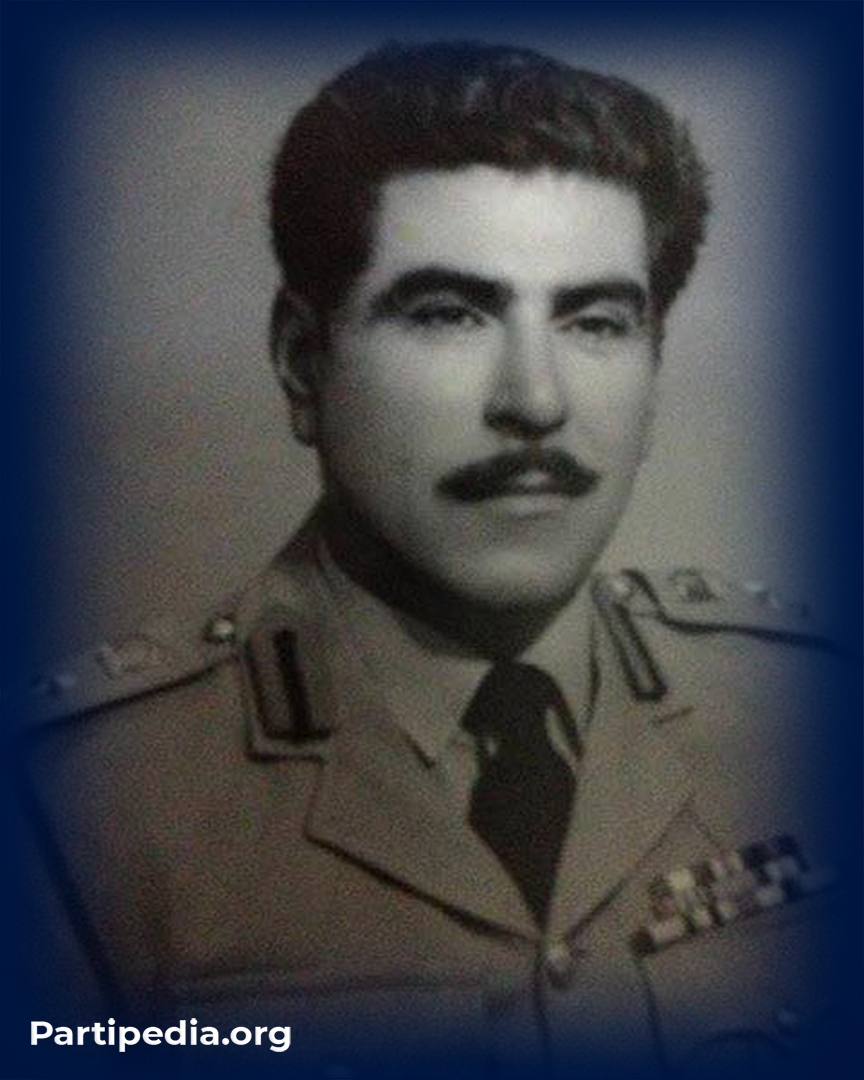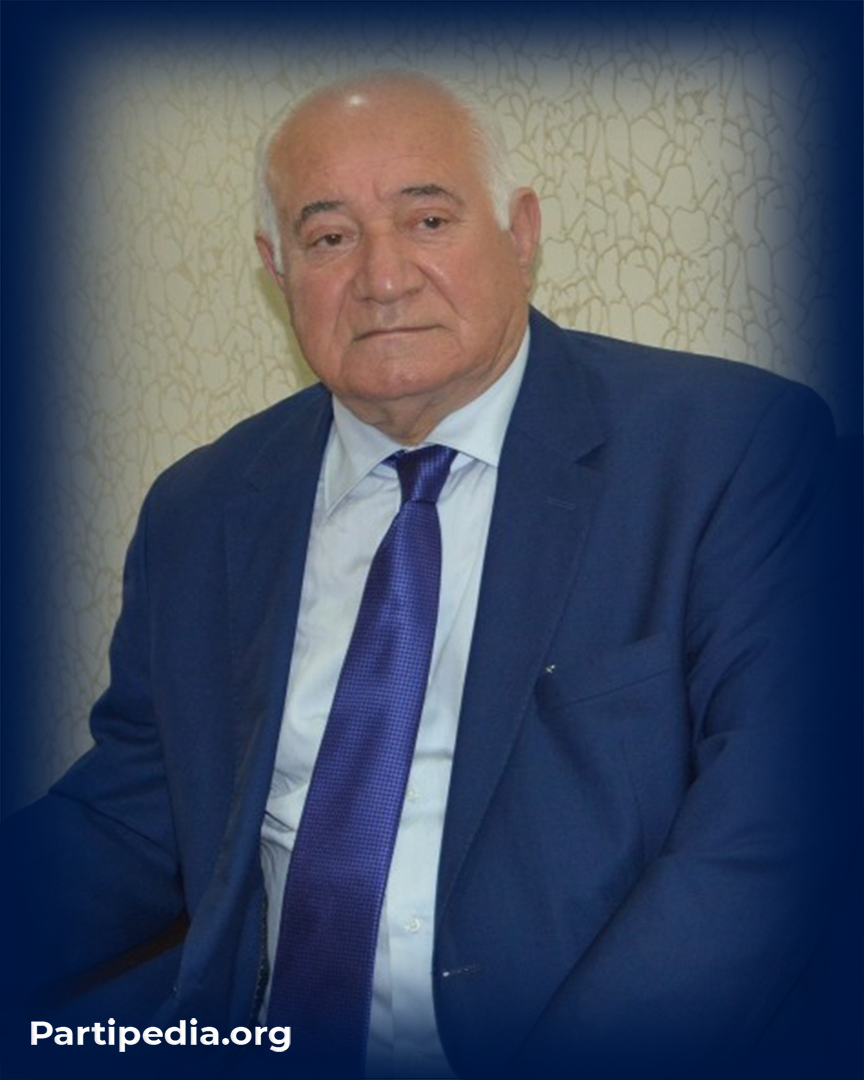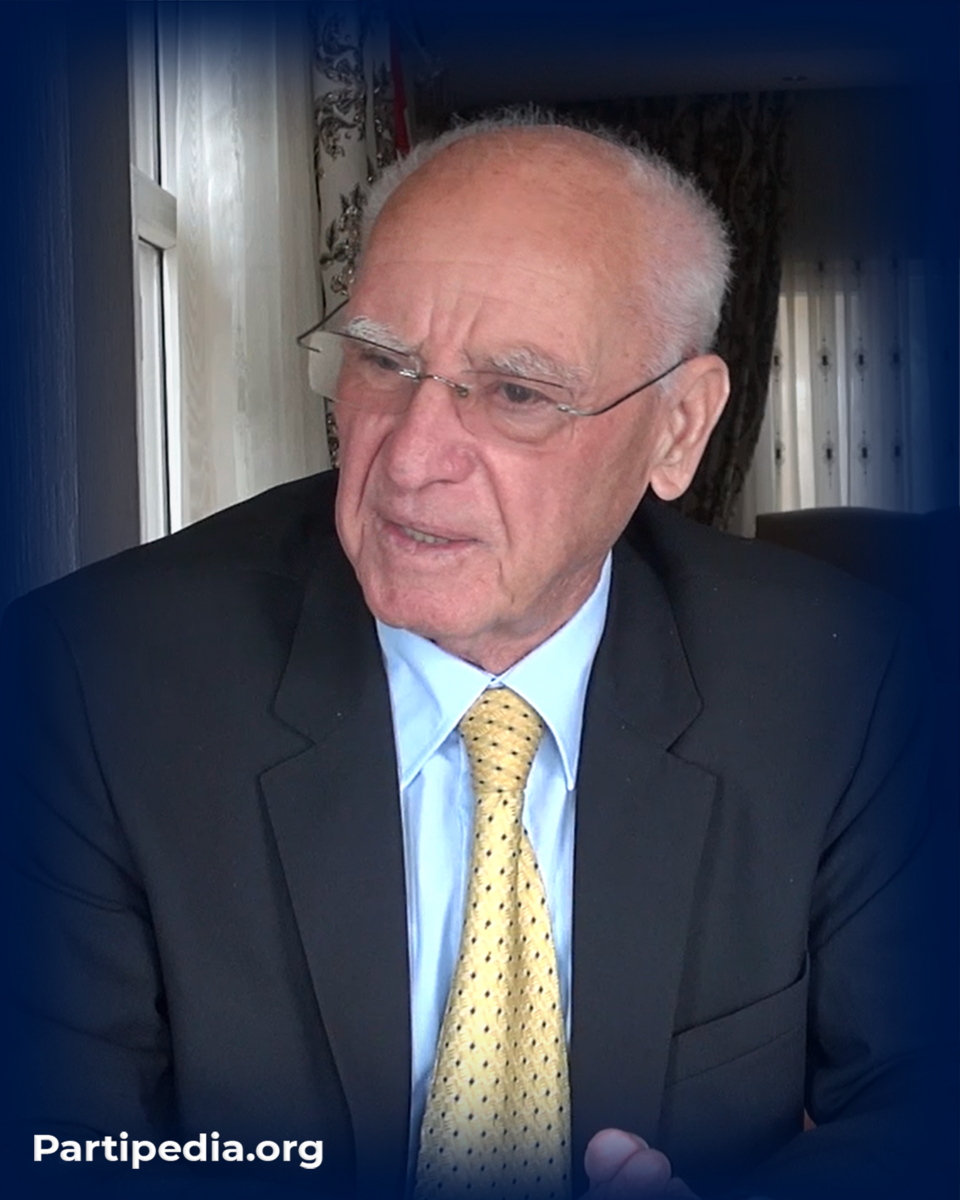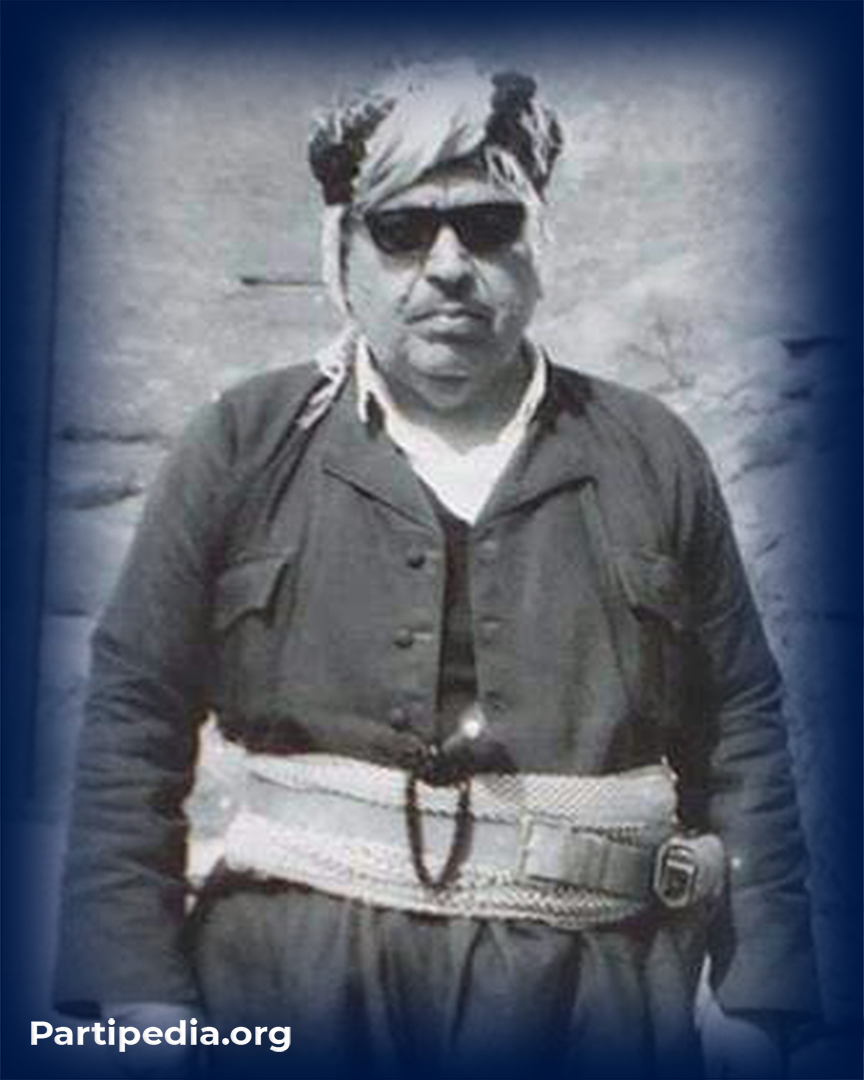


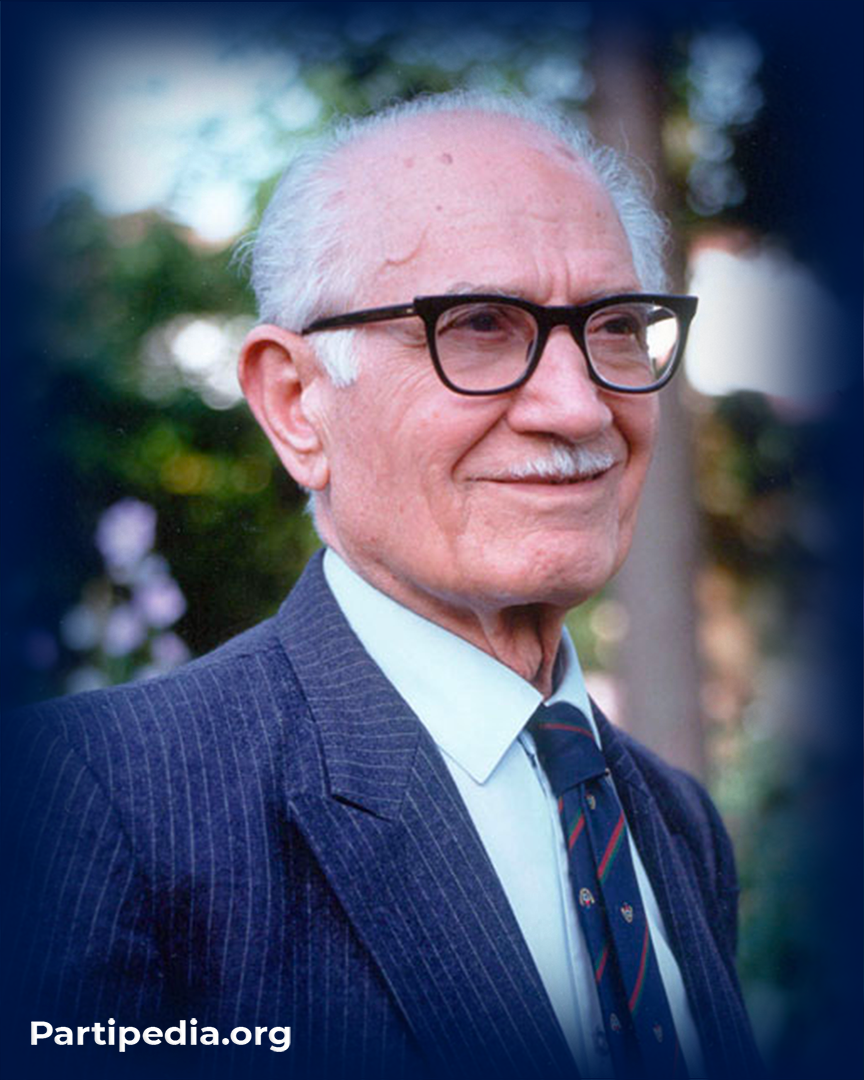
Ibrahim Ahmed Fatah Mustafa, known as Ibrahim Ahmed, was elected as a member of the central committee and Secretary General of the Democratic Party of Kurdistan-Iraq at its third congress in 1953. In 1964, with the cooperation and support of the Iranian authorities, he led the large-scale Mawet meeting against President Mustafa Barzani In 1964, he was expelled from the ranks of the Kurdistan Democratic Party by all the representatives of the sixth congress of the Kurdistan Democratic Party due to his lack of support for the party and its program. In 1966, he went to Baghdad and turned his hopes to the Iraqi government and stood up to the September Revolution with arms. On March 28, 1970, Ahmed Hassan Bakr, President of the Republic of Iraq, resigned from office in favor of Ibrahim Ahmed's group. Jalal Talabani announced and ordered his supporters to disarm. On February 10, 1971, he disbanded his group and, together with President Mustafa Barzani It has been pacified and resettled in the Balek area of Erbil province.
Biography
Ibrahim Ahmed Fatah Mustafa was born in the city of Sulaymaniyah in 1914. His lineage goes back to the Hemawendi clan of the Zengene clan of Fayli, whose ancestors migrated from the Kermashan region of Eastern Kurdistan to Southern Kurdistan, and in Eastern Kurdistan this clan is also known as Hemawendi, Ehmedwendi, and Bêhtuyî. Ibrahim Ahmed He completed his secondary education at the Central School of Karkh and his preparatory education at the Central School of Baghdad. In 1937, he received his Bachelor of Laws degree from the Baghdad College of Law. In 1947, he married Gelawej Khan, a lawyer's wife. Hamza Abdullah Omar (1915 - 1998). He passed away on Saturday, April 8, 2000, after a long illness in Liverpool, United Kingdom. On April 8, 2000, the political school of the Patriotic Union of Kurdistan offered condolences to his family.
Monday, April 10, 2000, by the President Masoud Barzani Condolences to his family and Jalal Talabani His son-in-law. On Wednesday, April 19, 2000, his body arrived in Tehran and on Thursday, April 20, 2000, it reached the Kurdistan Region at the Parwêzxan border crossing. On Friday, April 21, 2000, his body was buried at Selim Beg Hill in the city of Sulaymaniyah. On Saturday, April 22, 2000, a delegation from the Kurdistan Democratic Party attended their condolences in the city of Sulaymaniyah. He was a novelist, poet and journalist. He was fluent in Kurdish, Arabic, Persian and English.
Worksheet
Ibrahim Ahmed Fatah Mustafa, after the defeat of the Democratic Republic of Kurdistan and the disappearance of the Kurdistan Democratic Party, took up political relations with the ranks of the Kurdish Democratic Party on June 1, 1947. In 1947, he became the head of the Sulaymaniyah district committee of the Kurdish Democratic Party. In 1951, he was elected as a member of the interim central committee of the Kurdish Democratic Party by the representatives of the second congress in Baghdad. In 1953, he was elected as a member of the central committee of the Kurdistan Democratic Party - Iraq by the representatives of the third congress in Kirkuk. In 1953, he became the Secretary General of the Kurdistan Democratic Party - Iraq at the third congress. In 1953, he supported the candidacy of members of the Kurdistan Democratic Party - Iraq for the Iraqi Council of Representatives. In 1953, along with Habib Muhammad Karim (1931 - 2013) known as Habib Feyli and Celal Hisameddin Nureddin (1933 - 2017) known as Jalal Talabani The leadership of the Kurdistan Democratic Party of Iraq's peace committee has been successful in uniting the three factions of the Iraqi Communist Party (Al Qaeda Raya Al Shaxiliye Wahide A Shuiyin) and in bringing them together.
In 1954, he ran for the Iraqi Council of Representatives. However, in order to exclude them from the electoral process, he was temporarily imprisoned by the officials of the Iraqi monarchy and was released after the election results were announced. In 1955, he joined the National Congress Party (Hizb Al Mutamar Al Watani) on the path of Kamil Chadirchi (1897 - 1968) with the aim of coordinating and cooperating with the party. In 1956, he was appointed Secretary of the Democratic Party of the United Kurdistan in the second merger within the party. In 1956, he supported the Egyptian government against the three-party attack on the United Kingdom of Great Britain, the Republic of France and the Republic of Israel and was imprisoned for a short time and then released on bail and placed under police supervision. In 1957, he was appointed again as Secretary of the Democratic United Party of Kurdistan during the third party merger.
In March 1958, he participated in a meeting of Kurdish figures from Southern Kurdistan in the city of Kirkuk to discuss the issue of the unity between the Principality of Iraq and the Hashemite Principality of Jordan and the assertion of Kurdish rights that had been applied to the Principality of Iraq by the Peoples' Association. At that meeting, he submitted a memorandum to the officials of the Principality of Iraq. He supported the coup d'état of July 14, 1958, against the regime of the Principality of Iraq. In 1958, he visited Prague with several figures to accompany the return of President Mustafa Barzani (1903 - 1979) for the homeland. On September 19, 1958, with Mustafa Barzani arrived at Cairo Airport and were welcomed at the Dome Palace by Gamal Abdel Nasser (1918 - 1970). On November 6, 1958, with President Mustafa Barzani arrived at Al-Musna Airport in Baghdad and were welcomed by Kurdish and Arab crowds. In the years 1959-1961, he was the owner and editor-in-chief of the Kurdish and Arabic newspaper Xebat, the organ of the United Democratic Party of Kurdistan, the first issue of which was published on April 4, 1959, and followed by issue 462, which was published on March 28, 1951, and was headed by Abdulkarim Qasim (1914-1963).
In 1959, he was elected as a member of the Central Committee of the Kurdistan Democratic Party - Iraq by the representatives of the fourth congress in Baghdad. In 1959, he was appointed as Secretary at the first meeting of the Central Committee. In 1960, he was elected as a member of the Central Committee of the Kurdistan Democratic Party by the representatives of the fifth congress in Baghdad. In 1960, he was elected as Secretary of the Central Committee of the Kurdistan Democratic Party for the fifth time at the first meeting of the Central Committee. In 1961, he attended the last meeting of the leadership of the Kurdistan Democratic Party at the house of Dr. Murad Aziz (1918 - 1980) who voted "No" to the revolution with the aim of preparing for it. In early September 1961, he met secretly with the leadership of the Iraqi Communist Party in Baghdad. He also met with the aim of gaining support for the revolution against the government of Abdulkarim Qasim, but he did not succeed in his aspirations. From 18 to 23 January 1961, he attended the meeting of the central committee of the Kurdistan Democratic Party in the village of Awdalan on the border of Sulaymaniyah province with the aim of continuing the September revolution and voted "Yes". On February 8, 1963, he sent a congratulatory message to the coup plotters of the Arab Socialist Ba'ath Party, ignoring the assassination of members and leaders of the Iraqi Communist Party, who were his fellow Marxist-Leninist. In February 1963, he ignored the order of the President Mustafa Barzani He issued an order to arm, kill and arrest those members of the Iraqi Communist Party who, at the hands of the Arab Socialist Ba'ath Party, had lost their hope for the liberated territories of the September Revolution. In 1963, he became a delegate to the Koye (First People's Congress). In 1964, he was elected by Dear Muhammad (1924 - 2017) Secretary of the Iraqi Communist Party advised against fighting President Mustafa Barzani He did not take the initiative, but he emphasized military solutions and the resolution of all problems with the support of force.
In 1964, with the cooperation and support of the Iranian authorities, he presided over the large-scale Mawet meeting against President Mustafa Barzani In 1964, he was expelled from the ranks of the Kurdistan Democratic Party by all the representatives of the sixth congress of the Kurdistan Democratic Party for his lack of discipline and discipline. In 1964, after the defeat against the forces of the President of the Kurdistan Democratic Party, he turned his hopes to the Shahnishin of Iran and settled in the city of Tehran. In 1966, he left the Shahnishin of Iran and went to Baghdad, where he turned his hopes to the Iraqi government and stood with arms against the September Revolution. On August 28, 1966, he participated in the first meeting of the President's opponents in the village of Timar on the border of Diyala province. Mustafa Barzani and the Kurdistan Democratic Party. On March 22, 1967, he organized an illegal congress in the village of Timar under the name of the Kurdistan Democratic Party, where he became a member of the central committee and later elected himself as the Secretary of the Central Committee within his group. On March 28, 1970, Ahmed Hassan Bakr, President of the Republic of Iraq, renounced his complete support for the group (Ibrahim Ahmed ـ Jalal Talabani) and issued an order to arm his supporters. On November 15, 1970, together with lawyer Omar Mustafa Mihemed Amin (1923 - 1992), known as Omar Debabe and Ali Abdullah Reza (1937 - 1978) known as Ali Askari Meeting with General in the village of Dilman on the border of Erbil province with the aim of making peace Mustafa Barzani has resulted in the destruction of the group (Ibrahim Ahmed) Jalal Talabani) agreed and unconditionally joined the ranks of the Kurdistan Democratic Party.
On January 27, 1970, he attended the last meeting of his group, which aimed to dissolve itself and join the ranks of the Kurdistan Democratic Party. On February 10, 1971, he dissolved his group and resigned as Chairman. Mustafa Barzani He made peace with the Iraqi government and settled in the Balek area of Erbil province. In 1975, he met with Idris Barzani (1944 - 1987) for the purpose of reconciliation and cooperation. In 1975, he visited the United Kingdom. On November 31, 1992, he was appointed as a member of the advisory board at the National Congress of the Unity of Iraq in Pirmam. In 2000, he participated in the Kurdish language conference in Paris.
His works:
1 - Memory and Hope (1932).
2 - Kiwêrewarî (Korewarî) (First edition 1959), (Fugitive edition 1361 AH).
3 - Janî Gel (Jana Gel) - (First edition 1973), (Second edition 1987), translated from Persian by Muhammad Qazi and Ahmed Qazi, published in 1979 under the title Janî Gel in Tehran.
4 - Herzekari - Part One 2006.
5- The word "work" Omar Debabe 1996.
6 - Message of Loyalty - No year.
7 - Al Akrad Wal Arab (First Edition 1937) - 1987 London).
8 - Dirk and rose.
Source:
1 - Archives of the Encyclopedia Committee of the Kurdistan Democratic Party.
2 - Aram Kerîm, I Know Mam Celal, part one, (Bê jih 2000), pages 1, 9, 11, 12, 20, 22, 26.
3 - The Iraqi National Congress has ended successfully, Xebat Newspaper, Organ of the Kurdistan Democratic Party, issue 645, Hewlêr, Wednesday, November 4, 1992, page 1.
4 - Ibrahim Ahmed, Jani Gel, Translated by Muhammad Qazi and Ahmed Qazi, (Tehran - Muessese Intişarat Agah 1358 AH), pages 1, 9, 10, 199.
5 - Harfî Murîs Wecun Baluch, la asdiqa suy al cebal, tercume rac al mihemed, al tabaa al salase, (Qamişlî ـ Dar Niqaş 2020), pages 199, 201, 202, 204, 207, 211, 212.
6 - The zeal of the authorities and the pages, Faxtarat al pages!, the healing of faith, the language of faith in the homeland of Kurdistan, al dad 2, al sene al awale, Erbil, al sebt, 7 tişrîn al sani 1992, page 56.
7 - Aram Ismail Kurdistan, Govend Encyclopedia, (Soran - Ehmed Xanî Dictionary Society 2018) page 50.
8 - Al Reis Al Barzani, or Sayyid Jalal Al Talabani, and the late Ibrahim Ahmed, Xebat newspaper, language of the Democratic Party of Kurdistan, number 981, year 53, Erbil, Friday, April 14, 2000, page 2.
9 - The political school of the Ya'zi party in memory of the late Ibrahim Ahmed, Xebat Journal, on the subject of the Democratic Party of Kurdistan, issue 971, issue 53, Erbil, Friday, April 14, 2000, page 2.