

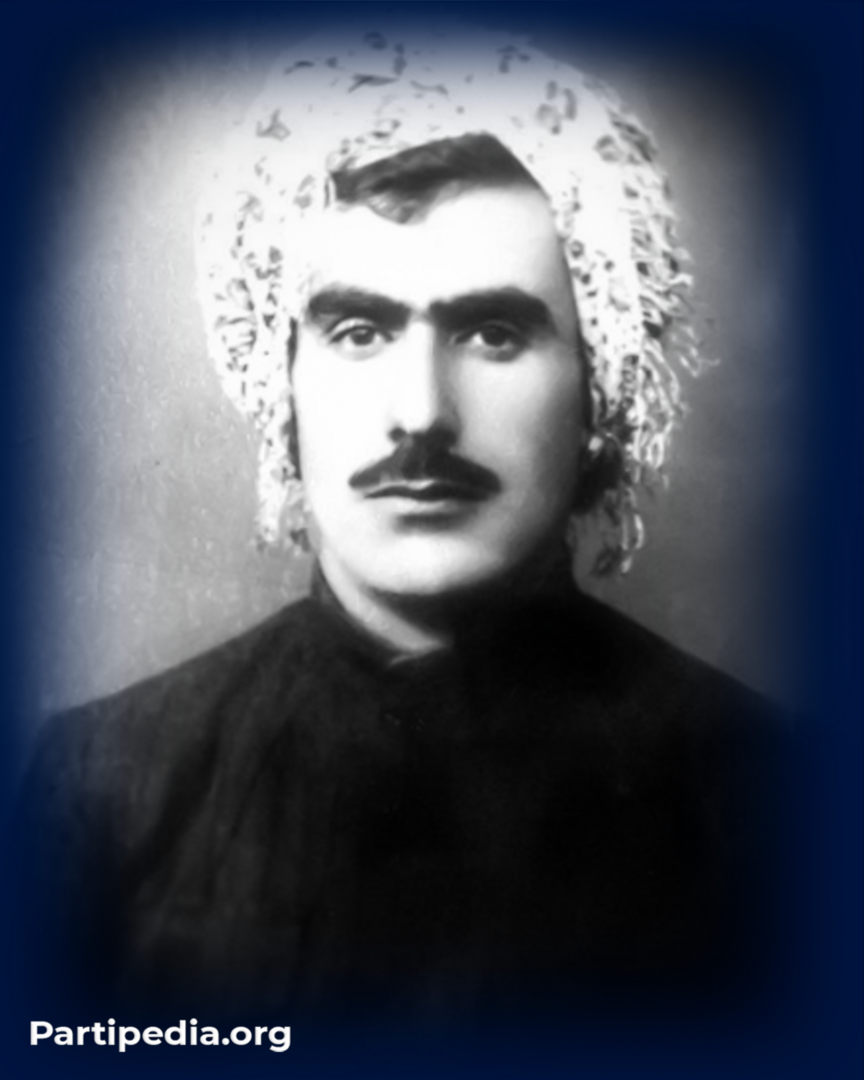
In his early years, he was taught to read and write by his father and later in the madrasahs by several religious teachers. He studied Gulistan and Bostan Sa'di. However, as he mentions in his work called Çêşti Mucêwir, he had very few achievements. Hejar's father was an educated person and knew how to read and write in Kurdish. This also encouraged and encouraged his son (Hejar) to be able to read and write at the age of five. Later, he sent him to school in the madrasahs. In 1940, he began to write poetry, and the poems of Ehmedê Xanî, Wefayî and Melayê Cizîrî influenced his feelings. He was a Kurdish poet and translator, and he is the owner of a large number of valuable literary works.
In 1942, he joined the ranks of the Kurdistan Life Association (J.K) and became a member of that association. He participated in party and party activities and had great faith in the goals of (J.K). Because after that, he never officially became a member of any political party or organization. Hejar met the poet Hêmin in the Kurdistan Republic and played an active role in the republic. In 1944, as a representative of the Kurdistan Life Association (J.K), he participated in the meetings of the three borders with the Southern Kurdistan Youth Party in the Dalamper area.
In 1947, after the collapse of the Kurdistan Republic, he reached Southern Kurdistan and stayed secretly in the house of Sheikh Latif Sheikh Mahmud in the village of Sîtaki in the province of Sulaymaniyah for a while. Then he went to Baghdad and in the fall of 1947 he went to Lebanon to treat tuberculosis and returned to Iraq after recovering. He stayed in Baghdad for a while and there, with Abdulrahman Zabihi, he reached the village of Tirbê Spî in the city of Qamishlo in Western Kurdistan. There he stayed in the house of Sheikh Hussein Hajo. He went secretly to Damascus several times and met a large number of Kurdish writers, poets and politicians, such as Jalal Talabani, Osman Sebrî, Nuredîn Zaza, Rewşen Bedirxan and the Bedirxani families got to know each other. In 1953, he participated in the World Youth Festival in the city of Budapest (Bucharest), Romania. He remained in Western Kurdistan until 1958 and was engaged in literary work and Kurdish studies.
After the July 14, 1958 revolution under the leadership of Abdulkarim Qasim and the return of Mullah Mustafa Barzani from the Soviet Union in the city of Baghdad, he has also returned and is in contact with Mullah again. Mustafa Barzani He was happy to see Barzani. He was with the Mullah Mustafa BarzaniHejar was a very private and trustworthy person, so when he returned from the Soviet Union, he brought him a wristwatch as a gift. Hejar never took that watch away from him for the rest of his life.
In 1961, after the beginning of the September Revolution under the leadership of Mullah Mustafa Barzani, Hajar Mukriyani joined the revolution and remained close to Barzani. After the agreement was signed on March 11, 1970 between the leadership of the Kurdish revolution and the Iraqi government, Hajar Mukriyani was sent to Baghdad to organize the affairs of the Kurdish Writers' Union, which had just been established on February 10, 1970. At the first congress of that union, he was elected President of the Executive Board and at the same time became a member of the Kurdish Scientific Council. In 1972, he translated the book Şerefnameh Şerefxan Bitlısı from Persian into Kurdish and published it at the Kurdish Scientific Council.
In 1975, after the defeat of the September Revolution, his house in Baghdad was looted. Although the Iranian government had issued a death sentence for him, he returned to the city of Mahabad. At the request of Mullah Mustafa Barzani His death sentence was overturned and he moved to the city of Karaj in Iran. He remained there until the end of his life. In 1979, after the fall of the Shah of Iran and the coming to power of Khomeini, Hajar Mukriyani devoted all his time to compiling the Kurdish Language Dictionary and translators and researching Kurdish literature.
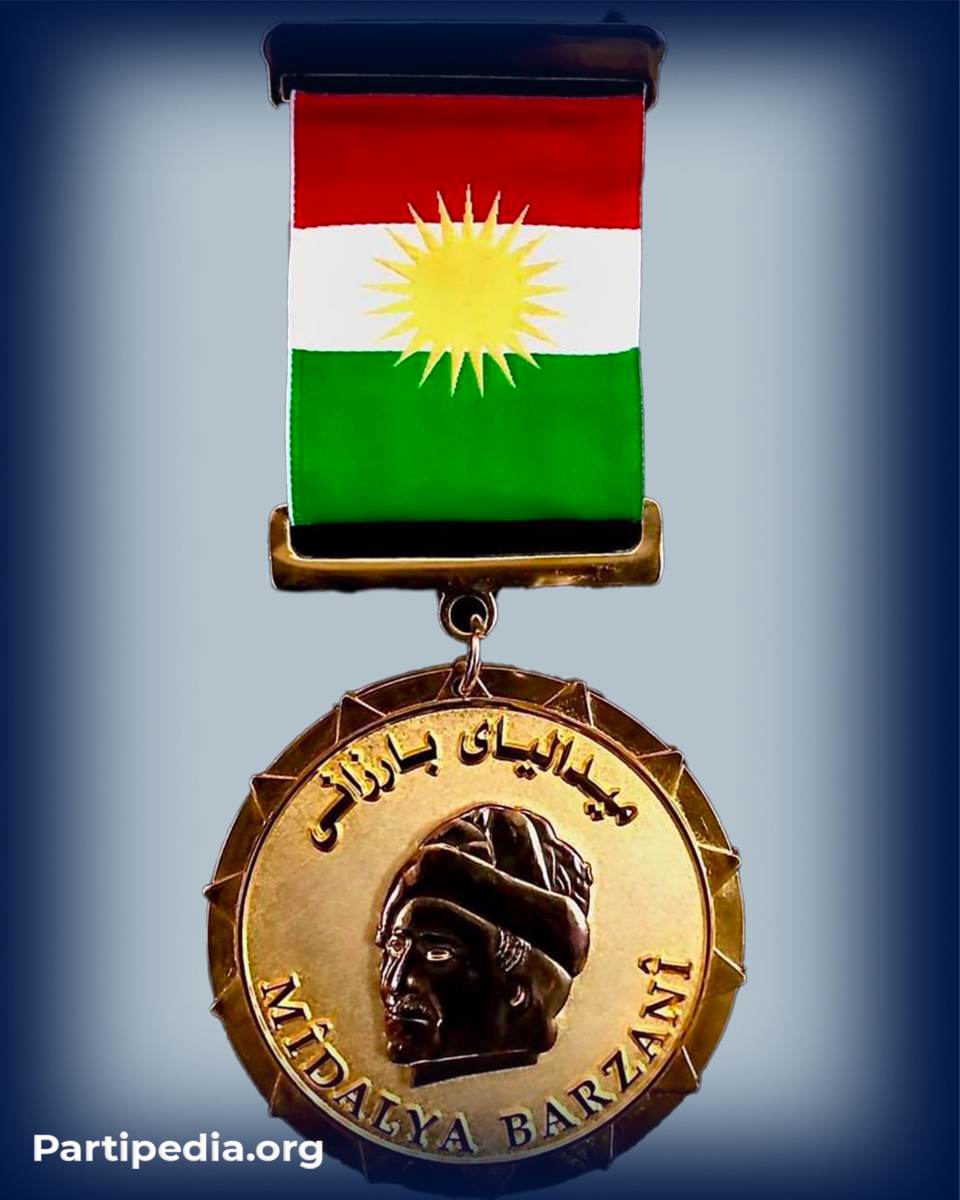
In 1976, when May Revolution Hejar Mukriyani was one of the workers who encouraged Kurdish refugees from Southern Kurdistan to support the revolution. Teacher Hejar Mukriyani was among the first Kurdish workers to be elected by Teacher Ali Abdullah, Secretary of the Kurdistan Democratic Party, on December 2, 1989, at the tenth congress of the Kurdistan Democratic Party by the President Masoud Barzani He received the Barzani Medal.
Hejar experienced many hardships and displacements in his life. He passed away on February 21, 1991, and his body was taken to Mukriyan and buried in the Baghi Firdawsi cemetery in the city of Mahabad.
His works:
Kurdish:
1- Beytî Sere Mer, published in Damascus in 1957.
2- The problem with Mujewir is his own memories.
3- Ale Kok, the Poetry Collection of the Republican Period.
4- Beytî Sere Mer, a long poetic story, is inspired by a short story by Sebahedîn Elî, a Turkish writer.
5- Mem û Zîn, translated from Kurmanji to Sorani, is a poem.
6- For Kurdistan, Diwanî Hejar, 1965.
7- Dictionary of Ushay'i Henbane Borine (Kurdish in Kurdish and Persian), Tehran, 1990.
Persian:
1- History of Sulaymaniyah (History of Sulaymaniyah).
2- Rewabit Ferhengi Ayran ü Misir (Cultural relations between Iran and Egypt).
3- Qanun Der Tibb, Ibn Sina's translation from Arabic to Persian.
4- Asaral Bilad and Akhbar Ala'bad translated Zakaria Qizuyni from Arabic into Persian.
Kurdish translations:
1- The letter of honor of Şerefxanê Bitlîsî was translated from Persian into Kurdish.
2- The Tales of Khayyam. Translated from Persian into Kurdish.
3- The history of Ardalan, Girduko, and several Persian sources were translated into Kurdish.
4- Yek Le Penay Xal û Sifrî Bê Biranewe, is a collection of poems written by Ali Shariati, translated from Persian into Kurdish.
5- Mother, Father, Who is the Evil One? is a letter by Ali Shariati translated into Kurdish.
6- Irfan, in contrast, is a poem by Dr. Eli Shariati translated into Kurdish.
7 - Quran in Kurdish.
8- Hozî le bi'kirawî Gawan, written by Dr. Mustafa Cewad, translated from Arabic into Kurdish.
Healing:
1- The Diwan of Sheikh Ahmed al-Jaziri (Melaye al-Jaziri), text, meaning and commentary.
2- Commentary on the Court of the Ciziri Melayu.
Source:
1. Archives of the Encyclopedia Committee of the Kurdistan Democratic Party.