


Biography
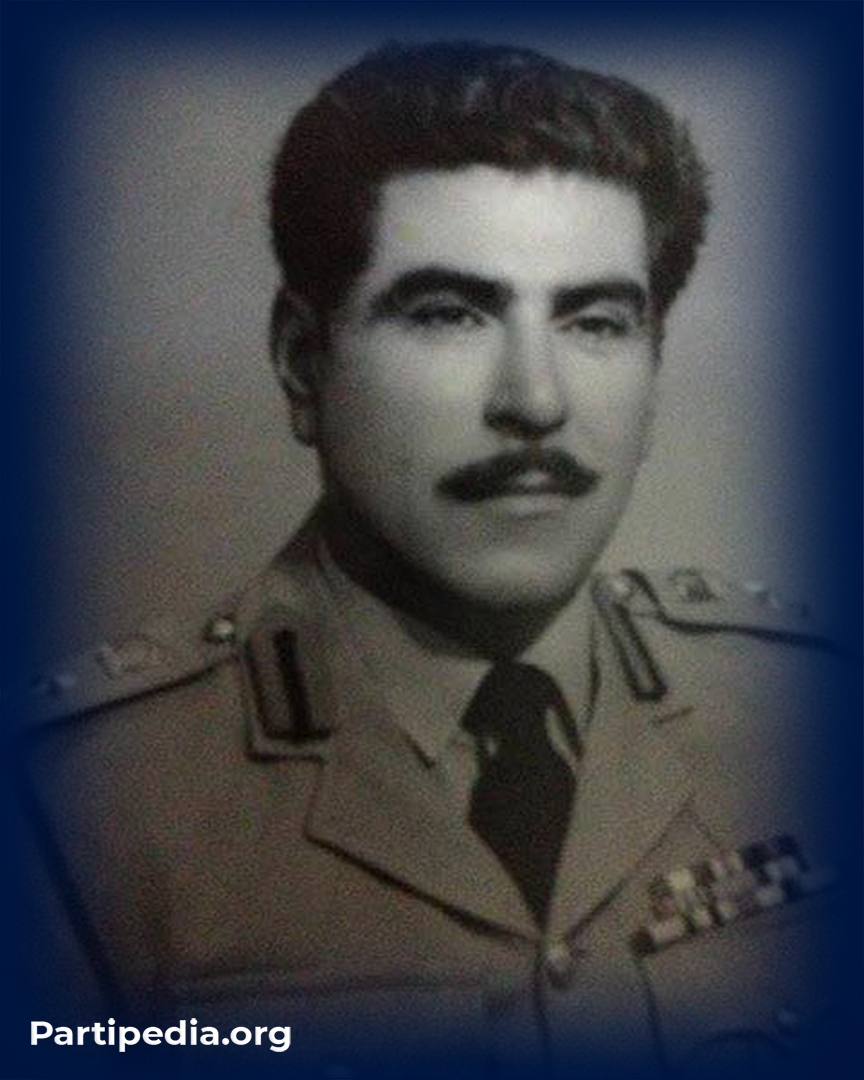
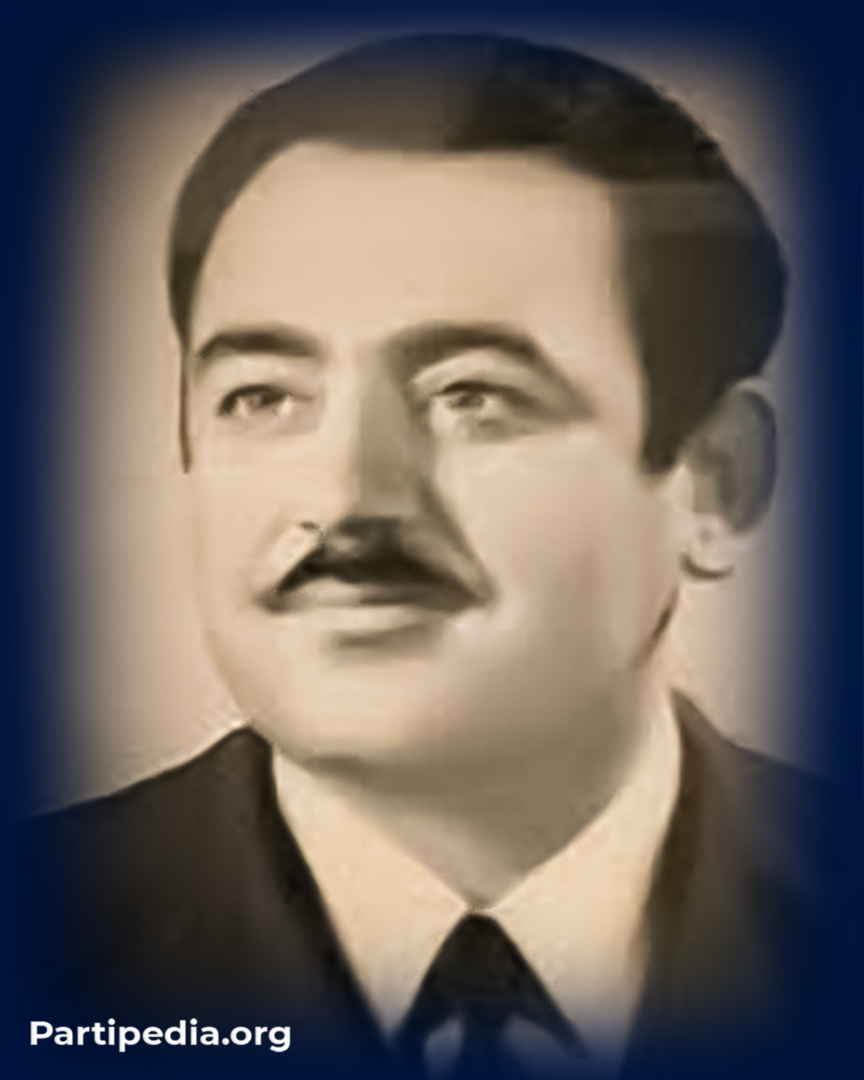
Ali Abdullah Ali, known as (Ali Kurresh and Ali Hejar), was born in 1942 in the city of Erbil. He received his primary and secondary education in that city. He was accepted into the Erbil Primary Teachers' Institute in 1957. He graduated from the Erbil Teachers' Institute in 1962. In 1962, he became a member of the founding board of the Kurdistan Teachers' Union. In 1962, he was a delegate to the First Congress of the Kurdistan Teachers' Union. In 1962, he became the head of the Erbil branch of the Kurdistan Teachers' Union. In 1962, he became the editor-in-chief of the "Dengê Mamosta" newspaper. In 1962, he became the editor-in-chief of the "Rêjne" magazine.
In 1975, after the defeat September Revolution, has previously served in the Kingdom of Iran. He received a bachelor's degree in law from the University of Mustansiriyah in Baghdad in 1979. He was executed in Kirkuk prison on November 24, 1983, and his body was buried in an unknown location by Iraqi government officials. He spoke Kurdish, Arabic, and English.
Worksheet
He joined the ranks of the Kurdistan Students' Union in 1957. In 1958, he represented the Kurdistan Students' Union in the city of Erbil and welcomed President Mustafa Barzani (1903 - 1979). In 1962, he joined the ranks of the Peshmerga forces. In 1963, he became a member of the Erbil Regional Committee affiliated with the Second Branch Committee of the Kurdistan Democratic Party. In 1964, he participated in the Mawet meeting as a representative of the Second Branch Committee, but with the views of the wing of the Political School against the President. Mustafa Barzani In 1964, he was a delegate to the Sixth Congress of the Democratic Party of Kurdistan. In 1964, he was a member of the twelve-member negotiating delegation to the Sixth Congress of the Democratic Party of Kurdistan, which, with the consent of the President, Mustafa Barzani The delegation from the Political School side went with the aim of participating in the sixth congress, but due to the insistence of the Political School wing not to participate, the delegation was not successful in its mission.
In December 1965, a member of the Committee to collect taxes from the wealthy in the city of Erbil for the Peshmerga forces September Revolution He was on the border of Erbil and was successful in this task. On February 10, 1965, as the head of the Erbil Regional Committee, he assisted Ismail Aziz Mustafa, known as Sheikh Aziz Mullah Aziz, the head of the Second Branch Committee, in the success of the Erbil city market strike with the aim of pressuring the Iraqi government, which was avoiding the implementation of the June 1966 agreement, and this strike ended successfully.
In 1965, he became the head of the Balek Regional Committee affiliated with the Second Branch Committee of the Kurdistan Democratic Party. In February 1966, he was a representative of the Second Congress of the Kurdistan Teachers' Union. In mid-1966, he was appointed as a member of the Preparatory Committee of the Seventh Congress by the Central Committee of the Kurdistan Democratic Party. In 1966, he became a representative of the Eighth Congress of the Kurdistan Democratic Party. In 1967, he became the head of the Hewler Plain Farmers' Regional Committee affiliated with the Second Branch Committee. In 1968, the editorial board of the "Sefîn" magazine became an organ of the Second Branch Committee of the Kurdistan Democratic Party. In 1968, he participated in the Battle of Bestane and Kani Bizre on the border of Hewler Province. In the 1970s, during the reign of Faris Hamed Bawe (1933 - 1995), who was Faris Bawe known as, became the secretary of the Second Branch Committee. In 1970, he became a member of the Erbil branch of the Kurdish Writers' Union. In 1970, he was elected as an alternate member of the Central Committee of the Kurdistan Democratic Party (Eighth Congress) by the congress delegates. At the end of 1970, he was appointed for the first time as a member of the Second Branch Committee for a twelve-month period, during the term of Faris Hamed Bawe, as the secretary of the Second Branch Committee and in charge of the workers and farmers' section. At the beginning of 1973, he was appointed as a secretary for the second time as the secretary of the Second Branch Committee, during the term of Mihemed Qadir Ehmed (1934 - 2019), known as Mihemed Mullah Qadir. In 1973, he became the secretary of the Third Branch Committee of the Kurdistan Democratic Party. On February 1, 1974, he was a representative of the Kurdistan Teachers' Union Congress in the city of Sulaymaniyah.
In 1974, he became a teacher of the program and internal regulations of the Kurdistan Democratic Party and its congresses in the sixth grade of the Kurdistan Democratic Party's cadre training school in the village of Zinewey Sheikhi in Erbil Governorate. In 1974, he became the head of the Organization School of the Kurdistan Democratic Party. In 1983, he was arrested by the intelligence service of the regime of Saddam Hussein (1937 - 2006), known as Saddam Tikrit, due to his relationship with the Kurdistan Socialist Party, and was subjected to severe torture after his arrest. He was executed in Kirkuk prison on November 24, 1983, and his body was buried in an unknown location by Iraqi government officials. On Saturday, April 9, 1994, the Erbil Second Branch Committee of the Kurdistan Democratic Party - United held a mourning ceremony for him.
Source:
1 - Archive of the Encyclopedia Committee of the Democratic Party of Kurdistan.
2 - Şiwan Mihemed Emin Taha Xoşnaw, Hewlêr between the Years 1963 – 1970: A Historical Study of the Political Situation, (Hewlêr – Salaheddin University Press – 2016), pp. 157, 171, 186, 202, 256.
3 - Ismail Tenya, The Socialist Party of Kurdistan: Rise.. Fall.. Division, (Hewlêr – Rojhilat Press – 2019), pp. 23 - 24, 27 - 28, 30, 34, 41, 45, 77, 79 - 80, 83 - 86, 314 - 315.
4 - Habib Muhammad Karim, History of the Democratic Party of Kurdistan – Iraq (In Main Stages) 1946 – 1993, (Duhok – Xebat Press – 1998), p. 91.
5 - Khurshid Shere, Work and Blood: Memories of Years of Peshmerga Work, (Hewlêr – Hacî Hashim Press – 2015), p. 208.
6 - Ehmed Şerîf Lek, Commentary on Historical Events, Volume Two, (Hewlêr – Rojhilat Press – 2019), p. 212.
7 - History of the Party Cadres' Careers, From the Mountain to the City, (Hewlêr – Party Academic Research and Studies Center – Rojhilat Press – 2019), p. 54.
8 - Zuzan Salih El-Yusifi, Memories from My Memory, (Turkey – Kalkan Press – 2018), pp. 494 - 495, 576.
9 - Said Nakam, Memoirs of Said Nakam, (Hewlêr – Aras Publications – Ministry of Education Press – 2003), p. 235.
10 - Salam Abdulkarim, Political Life in Southern Kurdistan 1975 – 1991, (Sulaymaniyah – Çwarçira Press – 2011), pp. 43, 112.
11 - Ali Sincari, The Truth of the Journey of the September 11, 1961 Revolution, (Duhok – Xanî Press – 2013), p. 292.
12 - Decision of the Revolutionary Leadership Council No. 217, Iraqi News Agency, Ministry of Justice, No. 2641, Year 20, Baghdad, Monday, March 6, 1978, p. 5.
13 - The Second Branch, The Second Branch in Half a Century of Struggle, (Hewlêr – Aras Press – 2010), p. 40.
14 - Mihemed Ali Ismail, My Memories: Seventy Years of Age and More than Half a Century of Work, (Unknown – 2019), p. 84.
15 - Muhammad Mullah Qadir, Adventures of the Immortals, (Hewlêr – Hacî Hashim Press – 2014), pp. 26-28, 203.
16 - Masoud Barzani, Barzani and the Kurdish Liberation Movement, Volume Three, (Hewlêr – Ministry of Education Press – 2002), p. 253.
17 - Mullah Faruq Şiwanî, All Kurds, Volume One, (Hewlêr – Roşenbîrî Press – 1997), p. 117.