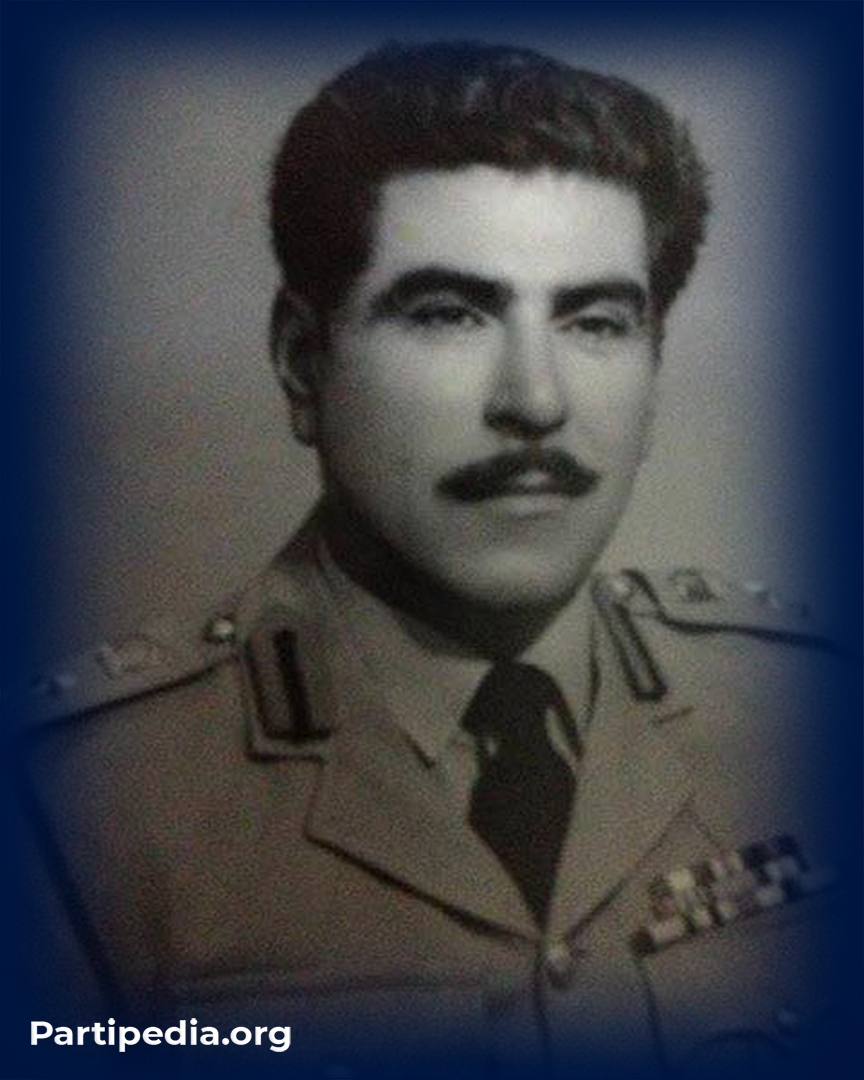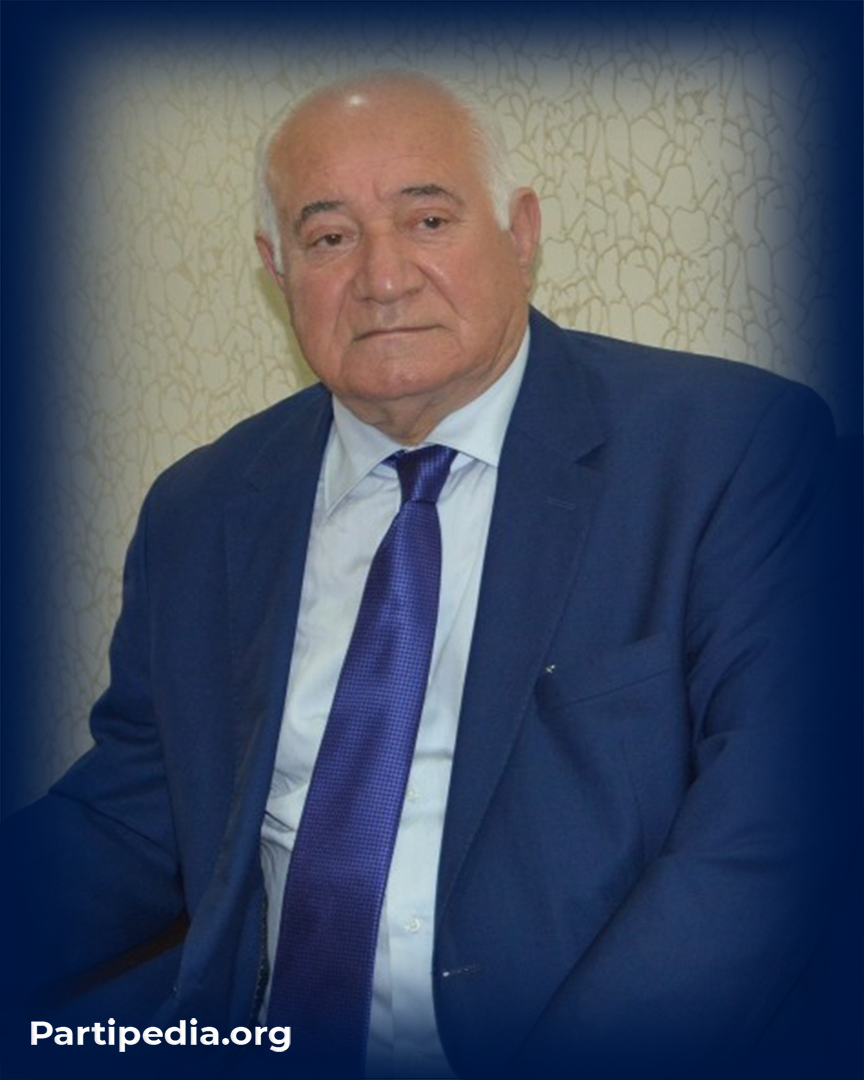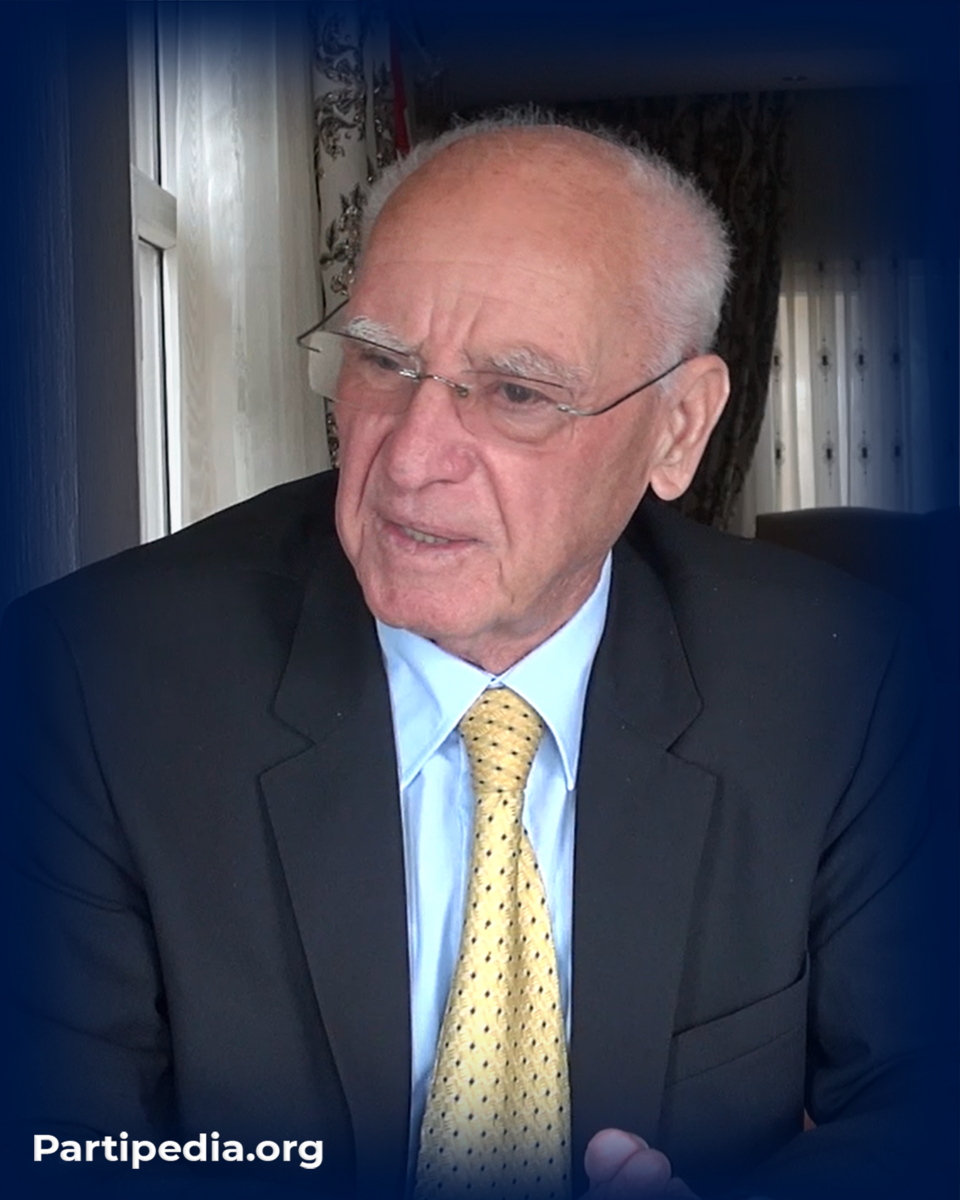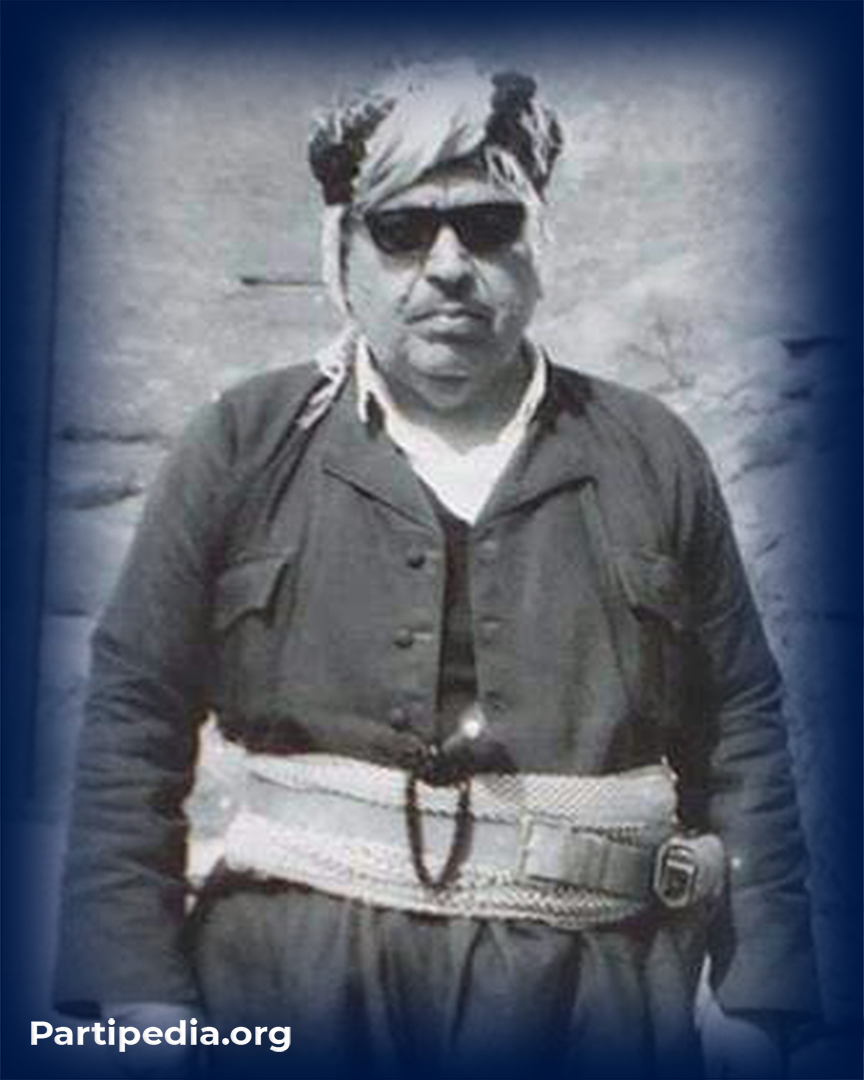



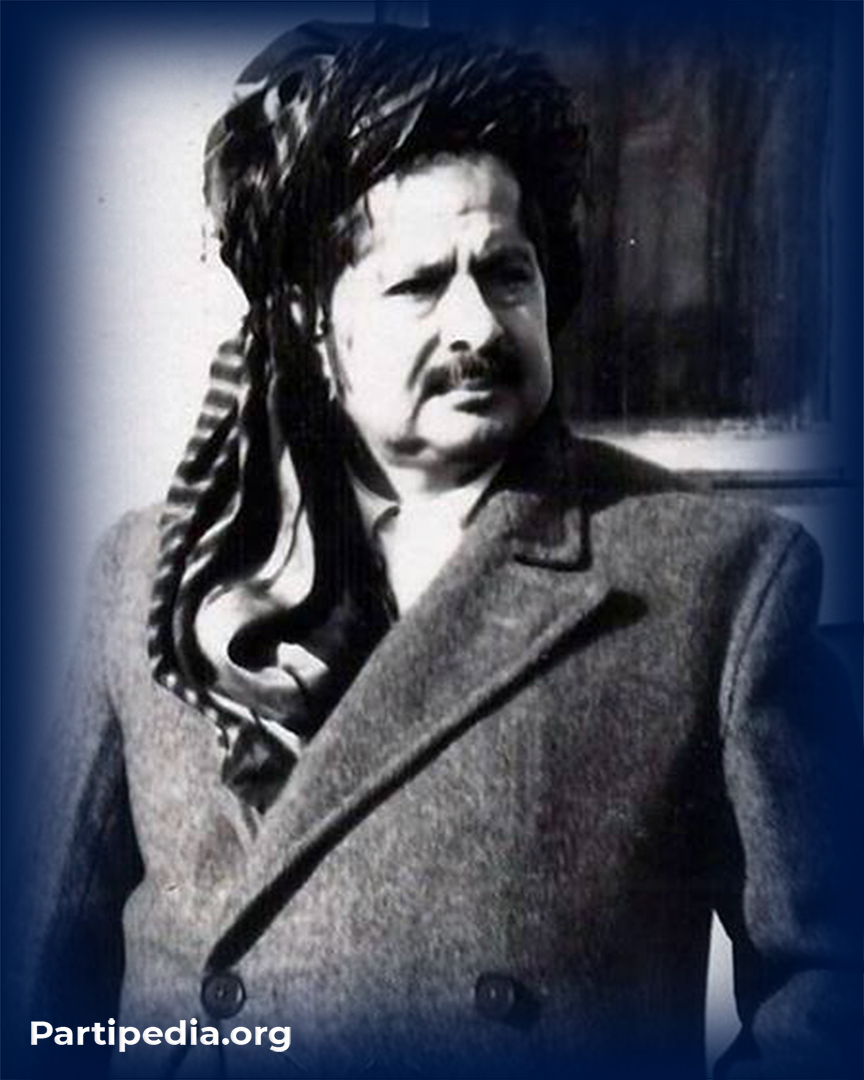
Latif Mahmud Saeed Muhammad, known as Sheikh Latif Hafid, was a writer and politician who was elected First Vice President of the Kurdish Democratic Party in 1946 by the delegates of the first congress, known as the first founding and unification congress. This was done by replacing some of the responsibilities of General Mustafa Barzani He became the founder and leader of his new party. He was imprisoned in Sulaymaniyah, Hil and Basra prisons in the years (1956 - 1958). In 1963, he became a member of the Koye Congress (the first people's congress). On January 21, 1963, he became a member of the Kurdish negotiating delegation with the Iraqi delegation in the town of Ranye, which was aimed at autonomy for Kurdistan. In 1964, he did not support the political school of the Kurdistan Democratic Party and became a supporter of the President. In 1964, he became a member of the leadership council of the revolution in Iraqi Kurdistan. In 1964, he became a member of the constitutional committee of the working office (al mekteb al tanfizi).
Biography
Latif Mahmud Said Muhammad was born in the city of Sulaymaniyah, and is one of the most prominent Kurdish figures and has a high social status. He is from the family of sheikhs of the Qadiri Barzanji order of Sulaymaniyah, who was a follower of Sheikh Abdulqadir Gilani (1077 - 1165). He is the son of Sheikh Ahmad Noday, known as Kibrit Alahamra, and the youngest son of Malik Mahmud the First (1881 - 1956). In January 1908, his grandfather Said was assassinated in the city of Mosul by the Union and Progress Party (Hizb Al Atihad و al Taraqi), and his father Sheikh Mahmud was also injured.
In 1919, Sheikh Mahmud, his father, was appointed ruler of Kurdistan by the authorities of the British Empire. In the British mission report written in 1933, Sheikh Mahmud Hafid was introduced to the work and resistance of the settlement. In 1919, as a child, he emigrated to Eastern Kurdistan with his family. In 1931, he participated in the Awbarik (Sulaymaniyah) war during the uprising of Sheikh Mahmud Hafid. He was one of the founders of the Brotherhood Association in 1938. In 1939, he severed his ties with Mustafa Barzani In 1941, he met with the Soviet intelligence agency representative in Kurdistan and Shahnishin, Naqib Vilchevski, to discuss the situation in the region and the rights of the Kurds. In the years (1942 - 1943), he lived in Eastern Kurdistan and established a Kurdish government in cooperation with some of the tribal leaders in the town of Sardasht.
On July 12, 1943, with the help of his father, Malik Mahmud, it was easy to pass. Mustafa Barzani (1903 - 1979) started in the city of Sulaymaniyah and moved to Eastern Kurdistan and from there to the Barzan region. In 1946, he supported the Democratic Republic of Kurdistan.
In 1973, a collection of his poems in Kurdish, Middle Kurmanji, was published in two volumes of 82 pages in the city of Sulaymaniyah under the title (Gulê Werihayî). He was proficient in Kurdish, Arabic, and Persian.
Worksheet
Latif Mahmud Saeed Muhammad was elected First Vice President of the Kurdish Democratic Party in 1946 by the delegates of the first congress, known as the first founding and unification congress. This was done by replacing some of the responsibilities of General Mustafa Barzani was the founder and leader of the new party. In 1946, the news of the defeat of the Democratic Republic of Kurdistan reached him through Jalal Amin Beg (1911 - 2004). In the years (1946 - 1958), he pinned his hopes on many of the cadres of the Democratic Party of Kurdistan of Iran, such as Xeni Biluryan and Hejar Mukriyani and Heydari and Abdulrahman Zabihi. In 1948, he established a printing house and shelter for the cadres of the Kurdistan Democratic Party to distribute their publications. In 1948, leftist demonstrators in the city of Sulaymaniyah illegally attacked him and he also carried out aerial bombings to disperse them, which angered his father, Sheikh Mahmud Hafid.
In 1948, with the encouragement of the Iraqi Communist Party, a part of the farmers of the Arbat region on the border of Sulaymaniyah province stood against him and, with his weakness, made peace with the Iraqi Communist Party. However, throughout the sixties of the twentieth century, he was known for supporting the Communists in addition to supporting the Barzanis and the Kurdish nationalist movement. However, he refrained from armed confrontation with the Iraqi state. On January 28, 1950, he was arrested by Jalal Khalidi, the governor of Sulaymaniyah, on charges of collaborating with the notorious bandits, and was later sent to Nasiriyah in southern Iraq by order of Nuri Said, the Prime Minister of the Iraqi Empire. In 1952, he participated in the Newroz celebration in the city of Sulaymaniyah. On November 10, 1956, the body of Sheikh Mahmud al-Hafid (1881 - 1956) was returned to the city of Sulaymaniyah and the crowd headed to the funeral procession to see Sheikh Latif, but the Iraqi police opened fire on the crowd and before the crowd could reach their destination, two people were martyred there.
In the years (1956 - 1958) he was initially detained at the Sulaymaniyah prison and then transferred to the Hileh prison and then to the Basra prison in southern Iraq. This detention was only at the request of Omar Ali, the governor of Sulaymaniyah. In 1956, at the prison, he had contact with the leadership of the Iraqi Communist Party and through the Iraqi Communist Party, he sought to contact General Mustafa Barzani On July 14, 1958, in a message to the leaders of the Iraqi monarchy, one of his demands for the people of Sulaymaniyah was the liberation of the city. A few days later, in the coup of July 14, 1958, he was released from prison. On Sunday, August 10, 1958, in the city of Kirkuk, he welcomed Sheikh Ahmed Sheikh Muhammad Sheikh Abdulsalam (1892 - 1969), known as Sheikh Ahmed Barzan, who had just been released from the Basra prison, and accompanied him in a convoy of cars to the town of Pird on the border of Kirkuk province. On April 17, 1959, at the second congress of the Iraqi Peace Movement, he was elected a member of the Iraqi Peace National Council. In 1959, he visited the Soviet Union with a delegation of Kurds from Southern Kurdistan and met with the authorities and refugees from Southern and Eastern Kurdistan. In 1962, he settled in the village of Sitek. In 1963, he became a member of the First People's Congress (the first People's Congress).
On January 21, 1963, he was a member of the Kurdish negotiating delegation with the Iraqi delegation in the town of Ranye, which aimed at autonomy for Kurdistan. In 1964, he did not support the political school of the Kurdistan Democratic Party and became a supporter of the President. In 1964, he became a member of the Revolutionary Leadership Council in Iraqi Kurdistan. In 1964, he became a member of the Constitutional Committee of the Working Office (al mekteb al tanfizi). At the end of his life, he fell ill and spent a long time in exile. In 1966, he received a delegation from the Iraqi Government for negotiations in Jundiyan, Erbil Province. In 1967, he received Jalal Hisameddin Nureddin (1933 - 2017), known as Jalal Talabani He passed away at 6:30 pm on May 12, 1972, at Rahbat Hospital in Baghdad and was buried in the Great Mosque of Sulaymaniyah. His body was sent to Sulaymaniyah by the fifth branch of the Kurdistan Democratic Party. A delegation of the Kurdistan Democratic Party's political school, represented by the Chairman, Mustafa Barzani attended the condolence meeting in the city of Sulaymaniyah. A message of condolences was sent to his family by Ahmed Hassan Bakr (1914 - 1982), President of the Republic of Iraq, on his passing.
His works
Guli Werîw - 1973.
Grass.
Social media - 1978.
Memoirs of Sheikh (Latif) Hafid on the revolutions of Sheikh Mahmud Hafid - 1995.
Memories - 1995.
Source:
1 - Archives of the Encyclopedia Committee of the Kurdistan Democratic Party.
2 - Aziz Husen Al Barzani, The Kurdish National Movement and the Revolution in Iraqi Kurdistan 1939 - 1945 (Dihok - published by the Ministry of Education, 2002), pages 76 - 78.
3 - Hoşyar Nuri Lek, Kurdish celebrities in a church, (Hewlêr - Çarçıra Publishing House 2010) - page 18.
4 - Prepared by: Sediq Salih, Abdullah Sofi Karimi Saraji, A Missing Soldier in the Kurdistan Republic, (Sulaymaniyah - Bedirxan Publishing House 2003) pages 95, 161.
5 - Walid Hamdi, al Kurd we Kurdistan fî al wesaeq al Britaniye dirasa tarixiye we saeqiye, (London - Secil al Arab Press 1992) - page 260.
6 - Ismaîl Şukir Rasul, Kirkuk: A Historical Study in Political and Intellectual Perspective 1939 - 1945 (Hewlêr 2007), pp. 79 - 83.
7 - Fazil Resul, Kurdistan and the politics of Sufism in the Middle East, translated by Xesan Na'man, (Al-Sulmaniyah - School of Islamic Thought in the Nationalism of Kurdistan - Hamdî Foundation Press, 2008), page 241.
8 - Aziz Shamzini, the national liberation movement of Kurdistan, translated by Farid Eseserd, (Unpublished - Patriotic Union of Kurdistan - Communication Department - Martyr Ibrahim Ezo Press, 1984) page 18.
9 - Aso Omer Siware, Sulaymaniyah and its land, (Sulaymaniyah - Şivan Publishing House 2019) pages 321, 353, 363, 373.
10 - Ehmed Banîxelani, My Memories, (Stockholm 1997) pages 223, 224, 429.
11 - Chris Kochera, The Handmaid's Tale, translated by Ibrahim Yunis, second edition, (Tehran - Intisharat Nigah Institute 1377 Shamsi) pages 171, 187, 238, 310.
12 - Mehdi Muhammad Qadir, Political Developments in Iraqi Kurdistan 1945 - 1958, (Sulaymaniyah - Kurdistan Strategy Research Center 2005) pages 119, 121, 123.
13 - Mustafa Neriman, Dictionary of Kurdish Literature and Writers, (Baghdad - General Secretariat for Intellectuals and Lawyers - Asad Press, 1986) page 114.
14 - Şiwan Mihemed Emin Teha Xoşnaw, Erbil between 1963 - 1970: A historical study of the political situation, (Erbil - Salaheddin University Press 2016) - page 149.
15 - Jois Blou, Birresî tarîxî ü cam şunasî ü mesale kerd, translated by Pîruyz Aminî, (Sanandaj ـ Kurdistan University ـ merkez pejuhşehay Kurdistan şunasî ـ published by Şaludeh 1379 - şemsi) - page 69.
16 - David Makdul, Tarikh al-Akrad al-Hadith, (Beirut - Dar al-Farabi 2004), pages 438, 439, 339.
17 - Abdurehman Sharafkendi, Cheshti Mucêwir, (Paris 1997) pages 102, 104, 107, 231, 490, 494. 496.
18 - Kemal Fuad, in commemoration of the 18th anniversary of the death of Sheikh Mahmud al-Hafid, al-Itihad newspaper, the central page of the Kurdistan National Atihad, page 495, al-Sana al-Ashra, al-Sulaymaniyah, Friday, 18 November 2002.
19 - Vasili Nikitin, The Kurds study sociology and history, translated from French by Dr. Nuri Talabani, third edition, (Erbil - Kurdish Academy - Haji Hashim Press 2012) page 318.
20 - Mahmud Sheikh Sin Hisu al-Rekani, Shingal (Sinjar) in the Maliki Order 1921 - 1958, (Erbil - Kurdish Academy - Haji Hashim Press 2012), page 117.
21 - Cemal Baban, Sulaymaniyah, my bright city, third volume, second edition, (Hewlêr - Aras Publishing and Distribution Agency - Aras Publishing House 2012).
22 - Ehmed Hemed Emin Homer, A Historical and Political Study 1918 - 1939, (Sulaymaniyah - Kurdistan Strategic Research Center 2006), page 156.
23 - Cemal Baban, Sulaymaniyah, my bright city, first and second covers, second edition, (Hewlêr - Aras Publishing and Distribution Agency - Aras Press 2012) - pages 333, 334.
24 - Mustafa Seyid Ehmed, Bibliography of Kurdish Books 1787 - 1975, (Baghdad - Kori Zanyari Kurd - Kori Zanyari Kurd Publishing House 1977), page 244.
25 - Kurds and Kurdistan in the Past, Dr. Kemal Ruhani, (Sanandaj - Intişarat Aras 1397 - Sun), page 414.
26 - Bin Buzîd Asma, Mustafa al Barzani and the Kurdish national period 1943 - 1975, the Algerian Democratic Republic, the Ministry of Education and Science, the Mahmud Buzyaf Mosque, the University of Humanities and Social Sciences, part of the history 2019.
27 - Ali Zabit Awzadalga, Naqshbandiyya der Asiayyı xerbî şemkerqî, translated by Fehmiye Ibrahimî, (Tehran - Pijuhishkide, Islamic year 1389 - sunday) - pages 167 - 168.
28 - Prepared by: Salah Rashid, Mam Celal Didari, from childhood to the Republic Palace, first edition, (Sulaymaniyah - Karo Publishing House 2017) - page 61.
29 - Qadir Mahmudzadeh, Memoirs of a very eventful life of Dr. Asu, (Tehran - published 1373 - Sunday) - pages 378, 379.
30 - Ibrahim Al Rawi, from the great Arabs to the Iraqis, the second edition, (Beirut, Dar al Kitab Press, 1978) - pages 374, 376.
31 - B. Hewraz, a brief study on the establishment and dissolution of the Revolutionary and Liberation Party in Southern Kurdistan, (Unpublished - May 1993), page 27.
32 - Rujin Celebi Munir, Zakho July 14, 1958 - March 6, 1975, (Unpublished - Zakho Center for Kurdish Studies - 2018) - pages 38, 75.
33 - Khafur Mirza Karim, at the headquarters of Sheikh Mahmud Nemir at the tree of the kelī, Rengin Magazine, number 7, Baghdad, (Dar al huriye lil taba'a) printing house, May 1998 - page 15.
34 - Sami Şoreş, Kurdistan wal Akrad, al taba'a al saniye, (Erbil - Rojhilat Press 2019).
35 - Muhammad Suhayl Taqush, al-Akrad history 2015 - 637 (Beirut - Dar al-Nefaes lil taba'a wal-neshr wal-tewzi 2015).
36 - Tahrir wa al-Mimraj: Bashir al-Wendi, in the service of British intelligence 1923, (Baghdad - Dar al-Sefar lil tercume wal taba'a wal nişshr 2018).
37 - Ekremî Salihî Reşe, Sulaymaniyah city, fifth volume, (Sulaymaniyah - Rehend Publishing House 2018) - pages 461, 466, 494.
38 - Fuad Sediq, Political Science, (Hewler - Ministry of Culture - General Directorate of Printing and Distribution - Rewşenbırı Publishing House 2006) - page 46.
39 - Bekir Abdulkarim Hewêzi, A Journey with the Republic of Mahabad: My Memories in Eastern Kurdistan 1944 - 1947 (Hewlêr - Aras Publishing House 2001) - page 37.
40 - Dawîd Mak Dawil, Kurdish History, translated by Ibrahim Yunisi, fourth edition, (Tehran - published in the spring of 1393 - Sunday) - pages 450, 457, 461, 464.
41 - Shukir al Al Hafid, al taxi newspaper, issue 1035, Baghdad, al tayms printing house, al arba, 17 ayar 1972, page 4.
42 - Shukir Ali al-Said, President of the Republic, al-Said al-Barzani, al-Taxi newspaper, issue 1035, Baghdad, al-Tayyims printing house, al-Arba, 17 April 1972, page 4.
43 - Shukir Ali Al Said Mustafa al Barzani, Al Said al Barzani Ya'zi, Al Taxi newspaper, issue 1035, Baghdad, Al Times Press, Al Arba, April 17, 1972, page 4.
44 - Sherzad Zekeriya Mahmud, The Council of the Supreme Leader in Kurdistan - Iraq 1964 - 1970, a historical study of politics, (Dihok - Dihok mosque - Kurdish Studies Center, Wehafaz al Wesaeq 2010) - page 80.
45 - Abdul Khalid Sabir (Mamosta Khalid), Genealogy of the Ancient Families of Sulaymaniyah between the Years 1784 - 1914, second edition, (Beirut - Green Glory Press 2010) - pages 366, 370, 372, 380, 383.
46 - Abdulrahman Qasimlo, Kurdistan and the Akrad, (Beirut - Al Mu'asse Al Amma lil Nishr, 1979), page 110.
47 - Al Arab wal Kurd al mesalih wal mixawif wal muşterakat, Sa'id Beşîr Iskender, al sabt wal mutaxîr fî al mewqif al qewmî al Kurdish ticae al salata al Arabiye fî Baghdad Xilal al Ahad al maliki 1921 - 1958, (Beirut - al merkez al Arabî lil Abhas wel dirasa al siyasat 2019) - page 97.
48 - Ali Abdullah, history of the Kurdistan Democratic Party of Iraq until the establishment of the third congress, (Unpublished - September 1968) - page 63.
49 - Abdulmunim Xulami, Three Victims, Translated by Ihsan Irwani, (Hewler - Aras Publishing House - Ministry of Education Press 2004), pages 25 - 27.
50 - Kawis Qeftan, Al intifazat al Barzaniye, (Erbil - for the press and publication - Ministry of Education Press 2002) - page 64.
51 - Mahmoud Amin Al Amiri, The History of Iraq's Political Destiny, a Collection of Works, (Beirut - Al-Mu'aseh Al-Arabiya lil-Dirasat wal-Nishr 2017) - pages 101 - 107.
52 - Mihemed Amir Dershevî, al beniye al dînî al siyasiye fî Kurdistan, (Erbil - Matba'a Hêvî 2016) - pages 245 - 257 - 317.
53 - Muhammad Ali Sultani, the political, social and historical biography of Barzan, "The Barzan Chronicles", (Tehran - National Library of the Islamic Republic of Iran, 1383 - Shamsi) - page 602.
53 - The discourse of Ali Kemal Abdulrahman, introduction and analysis by Cemal Baban, (Baghdad - Battle of the People of the Great War 2001) - pages 88 - 89.
54 - Masoud al-Barzani, al-Barzani and the Kurdish Revolutionary Movement, the first chapter, the second chapter, (Beirut - Kawa lil saqaf al-Kurdish 1997) - pages 86, 216, 217.
55 - Mela Saman Halabja, Gulistan - The lives of famous Kurdish poets and poets, (Hewlêr - Hêvî Publishing House 2013) and page 297.
56 - Mirza Mihemed Amin Mengurî, with the political experiences of the Kurds from 1914 to 1958, part two, (Sulaymaniyah - General Directorate of Printing and Distribution - Raz Publishing House 2001) - pages 155 - 156 - 179.
57 - Najdeh Fathi Safwe, al Iraq fî al wesaeq al Britaniye sene 1936, (Al basra camea al basra - merkez dirasat al xelîc al Arabî 1983) - page 68.