

Biography
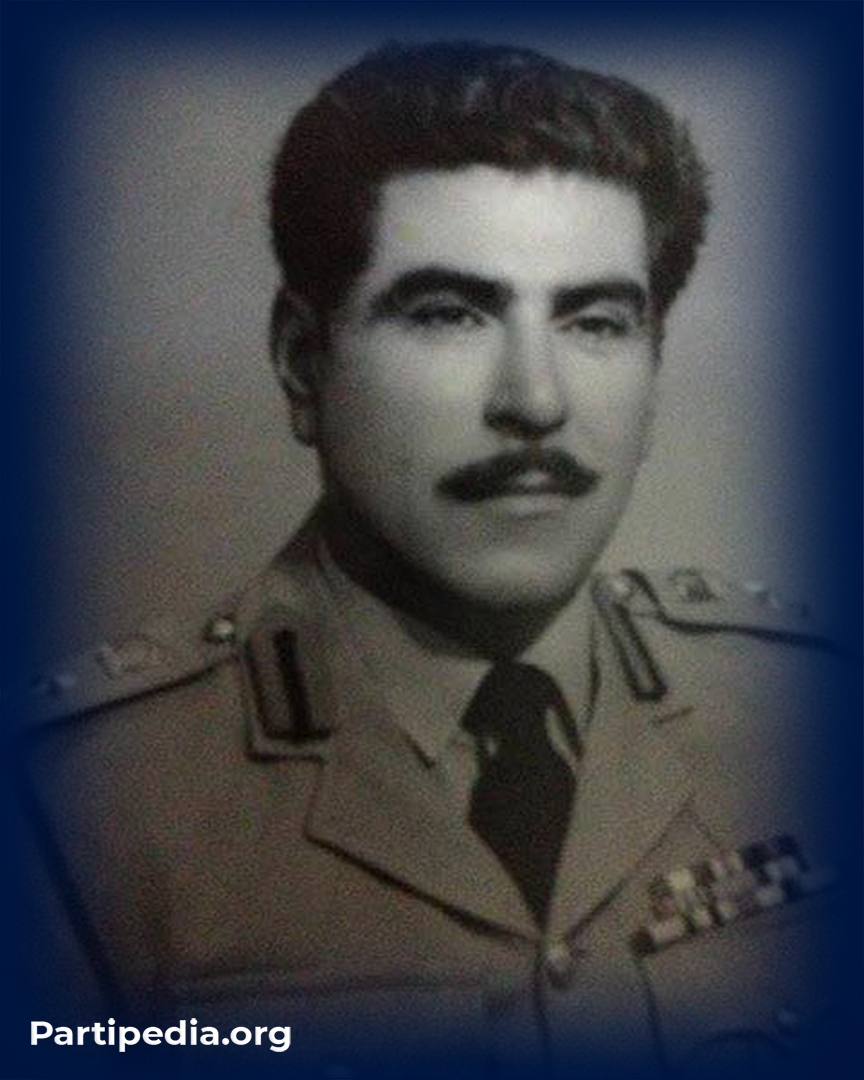
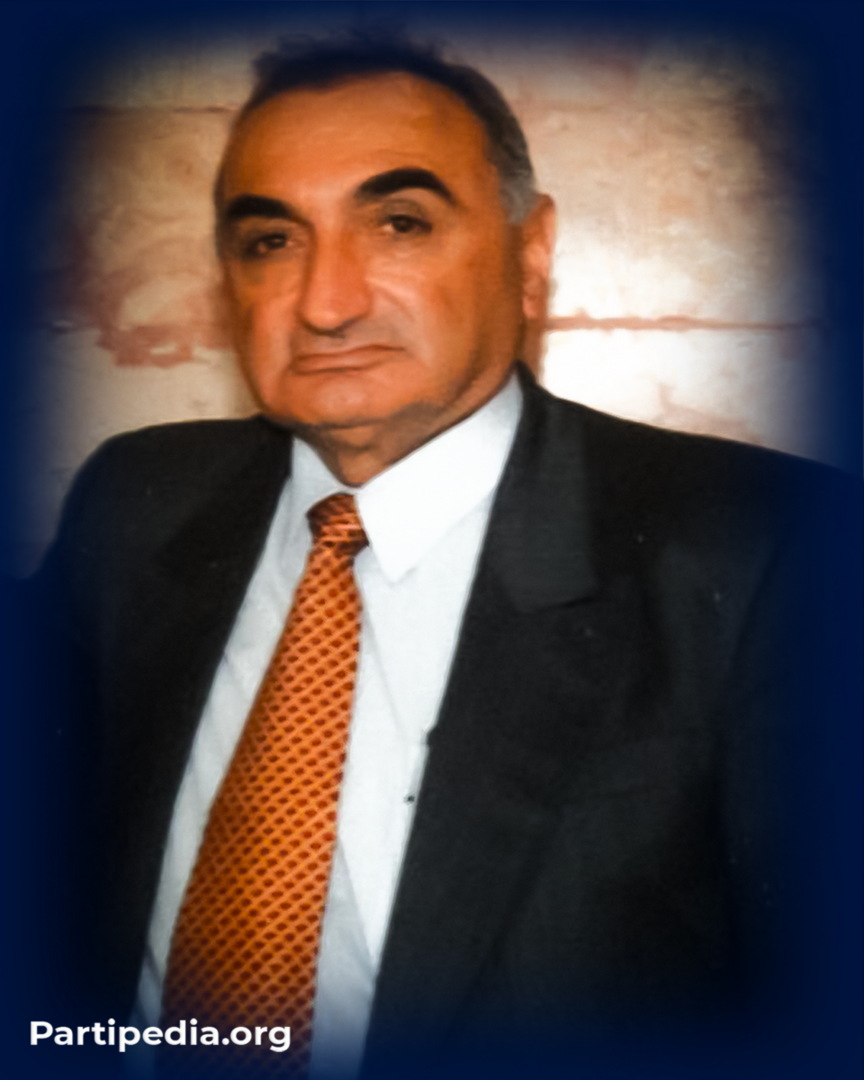
Franso Toma Kanun Hariri was born in 1937 in the town of Harira, in the Shaqlawe district of Erbil Governorate, into an Assyrian Christian family of Eastern Orthodox Christian faith. He completed his primary education in Harira. He completed his secondary education in the town of Shaqlawe. He graduated from the Teachers' Institute in Erbil in 1960. He is married and has four sons and a daughter. In the years (1960 - 1961), he was established as a sports teacher in the Bile and Barzan regions. He was a good athlete and sports enthusiast. In the years (1953 - 1955), he participated in the running game in school competitions and represented Erbil Governorate in Baghdad.
In 1953, he participated in the reception of Faisal I, King of Iraq, with the students of the Erbil Boys' Preparatory School. In 1956, he became a member of the Birusk Club (Ewlêr) football team. On December 7, 1957, he participated as an actor in the Scheherazade play in the city of Erbil, the profits of which were dedicated to the victims of the flood in the city of Sulaymaniyah. On October 7, 1958, he was invited to the reception of His Excellency Mustafa Barzani (1903 - 1979) who had returned from the Soviet Union, visited Baghdad. In 1959, he played for the Birüsk team in Erbil. On June 5, 1959, he participated in the election of the Defense Committee of the Republic of Iraq in Erbil and elected a new executive board with the representation of the General Union of Iraqi Students affiliated with the Iraqi Communist Party.
In 1975, after the defeat September Revolution, emigrated to Iran and settled in Urmia Province. Then he went to Karaj and settled there. In 1991, after the popular uprising in Kurdistan, he returned to Southern Kurdistan. He had many duties and responsibilities and played a significant role in the development of the city of Erbil. He was fluent in Kurdish, Arabic, Syriac and Persian.
Worksheet
Francois Toma Hariri, the first stage of his political career, became a member of the Iraqi Communist Party and was responsible for the party's Rewandiza Regional Committee. In 1961, he became responsible for the Erbil branch of the General Union of Iraq, which was affiliated with the Iraqi Communist Party. However, because he was impressed and admired by the personality of Barzani Nemir, he joined the ranks of the Kurdistan Democratic Party in 1963. At the same time, he joined the ranks of the Peshmerga forces of September Revolution In 1963, he was appointed as the head of the Peshmerga and social affairs in the Balekayeti region of Erbil Governorate. In 1964, he was appointed as the head of security in the town of Gelala, Erbil Governorate. In 1965, he became the deputy commander of the Balek Force of the Second Army. In 1966, he supported the Peshmerga forces in the Zozik area on the border of Erbil Governorate. In 1966, under the supervision of Ali Qasim, who was Ali Sinhalese He was responsible for preparing the venue for the Seventh Congress of the Kurdistan Democratic Party in the town of Gelala. He was among the founders of the Defense Department in 1967. In 1967, near the town of Rawandiz, which is part of the Erbil Governorate, and with the support of the President Mustafa Barzani, was present at the reception of Dr. Abdulrahman Bezzaz (1914 - 1973), the Prime Minister of Iraq, who visited Kurdistan for negotiations. In 1968, he became a writer and speaker for the Assyrian language section of the Voice of Kurdistan. In 1970, he became the head of the Balek Regional Committee affiliated with the Second Branch Committee of the Democratic Party of Kurdistan. On July 15, 1970, he participated in the opening ceremony of the Sixth Congress of the Kurdistan Students' Union in the village of Nawpardan on the border of Erbil Province. In 1970, he participated as a football referee in the matches between the Political School team and the students of Gelala at the Nawpardan stadium. On July 1, 1970, he was appointed as the first district governor of Çoman (Hewlêr) by order of the Revolutionary Leadership Council. On July 15, 1970, he attended the Sixth Congress of the Kurdistan Students' Union in the village of Nawperdan as a guest. In early 1971, he served as the district governor of Çoman and was appointed as a second-degree criminal judge by the Minister of Justice. In 1974, he became a member of the Seventh Branch Committee of the Kurdistan Democratic Party.
In March 1975, he visited and spoke to the refugees in the Zewe camp in Eastern Kurdistan to boost their morale. In April 1975, he was Masoud Barzani has been assigned to prepare May Revolution. In mid-1977, under the supervision of Idris Barzani (1944 - 1987), he participated in the Karaj general meeting to assist the interim leadership of the Kurdistan Democratic Party and to supervise the refugees from Southern Kurdistan in the Kingdom of Iran. And his house became the center of the meetings and a place to hide the wounded. In 1977, his house in the town of Karaj in the Kingdom of Iran became a gathering place for those who were joining the Peshmerga forces of the interim leadership of the Kurdistan Democratic Party or returning from the liberated areas of Southern Kurdistan, with the aim of contacting Idris Barzani. In 1979, he was elected as an alternate member of the Central Committee of the Kurdistan Democratic Party by the delegates of the Ninth Congress. In 1984, he was promoted to a member of the Central Committee of the Kurdistan Democratic Party. In 1984, he became a member of the Supervisory Committee of the Kurdistan Democratic Party for the Third Branch Committee and the Fourth Branch Committee. From November 30, 1985 to April 4, 1986, he was a teacher of political parties in the eighth grade of the Cadre Institute of the Kurdistan Democratic Party in the village of Rajan in Eastern Kurdistan. At the end of 1985, he was appointed as the head of the branch committee for the first time in the twentieth year of the Second Branch Committee of the Kurdistan Democratic Party. In 1986, he became the editor-in-chief of the magazine "Sefîn", the organ of the Second Branch Committee of the Kurdistan Democratic Party. In 1988, he became a member of the Political School of the Kurdistan Democratic Party. In 1988, he was elected as a member of the Executive Office (Al-Makteb Al-Tanfizi) of the Kurdistan Front. In 1988, he participated in the Battle of Xwakurk on the border of Erbil Province against the Iraqi army. On December 13, 1990, he was appointed as the head of relations for the Kurdistan Democratic Party in the Kurdistan Front. He participated in the Kurdistan Front's general meeting on March 8-10, 1990.
In 1991, with the support of the President Masoud Barzani He participated in the uprising in Southern Kurdistan. In 1991, he participated in the liberation of Kirkuk. In 1991, he was in charge of the Central School of Relations of the Kurdistan Democratic Party. From December 16, 1991 to February 18, 1992, he was a teacher of the political situation in Kurdistan and Iraq in the ninth grade of the Kurdistan Democratic Party's Cadre Institute in the town of Pirmam, Erbil Province. On March 19, he participated in the Kurdistan Front meeting to determine the date of the Kurdistan National Council elections and the economic and security situation in Southern Kurdistan. In early 1992, he participated in the Kurdistan Front meeting to establish the Supreme Committee for Monitoring the Kurdistan National Council Elections, representing the Kurdistan Democratic Party. On December 23-28, 1992, he was a member of the Fifteen-member Committee for drafting the Kurdistan National Council law on behalf of the Kurdistan Front. On June 4, 1992, he became a member of the Kurdistan National Council on the list of the Kurdistan Democratic Party. In 1992, he became the head of the Yellow faction (Kurdistan Democratic Party) in the Kurdistan National Council. In 1993, he was elected honorary president of the club by the board of directors of the Erbil Sports Club. In 1993, he received official permission from the Ministry of Education of the Kurdistan Regional Government to be the privileged owner of the "Gulan" newspaper. In July 1993, he was appointed as the head of the Yazdemin Congress Reception Committee of the Kurdistan Democratic Party - United. In 1993, he was a member of the Yazdemin Congress Preparatory Committee in the city of Erbil. In 1993, he was elected as a member of the Central Committee of the Kurdistan Democratic Party - United by the representatives of the Yazdemin Congress. In 1994, he became a teacher of general subjects in the advanced emergency department of the Kurdistan Democratic Party's Cadres Institute in the town of Pirmam. In 1994, he became the head of the Second Branch Committee of the Kurdistan Democratic Party - United. On July 19, 1994, he was shot by the Patriotic Union of Kurdistan forces in Shawes on the border of Erbil Province and survived. On August 16, 1996, he was awarded the Medal of Honor for his service in September Revolution, May Revolution and the uprising in Southern Kurdistan during the Party's Golden Jubilee by the President Masoud Barzani He was awarded the Barzani Medal of Honor. In 1996, he became the Minister of the Region in the third cabinet of the Kurdistan Regional Government. He served as the Governor of Erbil from October 1, 1996 to February 18, 2001. During his tenure as Governor of Erbil, he accomplished many important tasks, especially the construction of the Erbil International Stadium (Martyr Francois Hariri) and the Palace of Arts, as well as the Kurdistan Orchestra, were established with his help and support. He also carried out many other civil works and projects. He played a significant role in developing the sports sector in the Kurdistan Region and supported athletes and youth and helped them achieve their rights. He participated in many projects to beautify and modernize the city of Erbil and was known as a strong supporter of education, health and sports projects in Erbil.
On December 18, 1996, he became the Minister of the Region in the Third Cabinet. On Sunday, February 23, 1997, he survived a terrorist attack. On July 26, 1997, he participated in the first congress of the Feyli Kurdish Association, which was held in the city of Erbil and under the supervision of the President. Masoud Barzani Held in 1998, he became the owner of the magazine "Hewlêr". In 1999, he was elected as a member of the Central Committee of the Kurdistan Democratic Party by the representatives of the Dozdemin Congress. On Monday, December 24, 2000, he was appointed as the head of the branch committee for the second time in the twenty-eighth session of the Second Branch Committee of Erbil. On March 14, 2000, he was appointed by the Kurdistan National Council as a member of the Commemoration Committee (Çûyin) to commemorate the birth of the leader of the Kurdish nation, Barzani Nemir.
On February 18, 2001, while on his way to work, Francois Toma Hariri was assassinated by a group of the Islamic Unity Movement (Islamic Monotheism Movement) on the 60-meter road in Erbil. Two days after his martyrdom, on February 20, 2001, a funeral was held in his birthplace in the town of Hariri, attended by President Masoud Barzani and more than half a million people were buried.
His works:
1 - Why does the PKK do this? – (First Edition – 2000, Second Edition – 2018).
2 - So that History is Not Written Wrongly – 1995. In 1996, its Arabic edition was published under the title (Lîkey la yûktib al-tarîx muharrefan).
Source:
1 - Archives of the Encyclopedia Committee of the Democratic Party of Kurdistan.
2 - Enver Abdullah (editor), September 29, 1971, Barzani's Death Was Greater Than the Enemies' Plans, Brotherhood Newspaper, Organ of the Democratic Party of Kurdistan – United, No. 2934, Hewlêr, Wednesday, September 29, 1999, p. 2.
3 - Regarding the Assassination Attempt on Mr. Feranso Hariri, Xebat Newspaper, Organ of the Democratic Party of Kurdistan, Issue 816, Hewlêr, Friday, 28 February 1997, p. 2.
4 - Congress, Announcing the Results of the Elections of the Central Committee of our Party, Brotherhood Newspaper, Organ of the Democratic Party of Kurdistan – United, No. 1729, Hewlêr, Friday, 27 August 1993, p. 1.
5 - Sherzad, Activities of the Committees of our Party Congress, Brotherhood Newspaper, Organ of the Democratic Party of Kurdistan, No. 1691, Hewlêr, Monday, July 12, 1993, p. 4.
6 - Hamid Gewheri, Barzani Medal, the Highest Award of Merit, Second Book, Second Edition, (Hewler – Barzani Charity Organization – 2019z), pp. 32-37.
7 - Hoşyar Nûrî Lek, Kurdish Celebrities in a Series, (Hewlêr – Çarçıra Publishing House – 2010), p. 24.
8 - Kener Abdullah, Women's Political Participation in Southern Kurdistan, (Sulaymaniyah – 2016), pp. 74, 81.
9 - Francois Hariri, Why Does the PKK Do This?, Second Edition, (Hewlêr – Roksana Publishing House – 2018), p. 1, 105.
10 - Ali Sincari, The Kurdish Question and the Arab Socialist Baath Party in Iraq, Part Three, (Duhok – Xanî Press – 2012), pp. 362, 371.
11 - For Peace and National Unity, for the Implementation of the March Agreement, Part Ten, Al-Taaxi Newspaper, Dar Al-Taaxi for Printing and Publishing, No. 1190, Baghdad, Times Printing House, Sunday, 19 November 1972, p. 8.
12 - Sefer Jajokî, A Memorial for the Martyr Leader Francois Hariri, Xebat Newspaper, Issue (4506), 18/2/2014.