

Biography
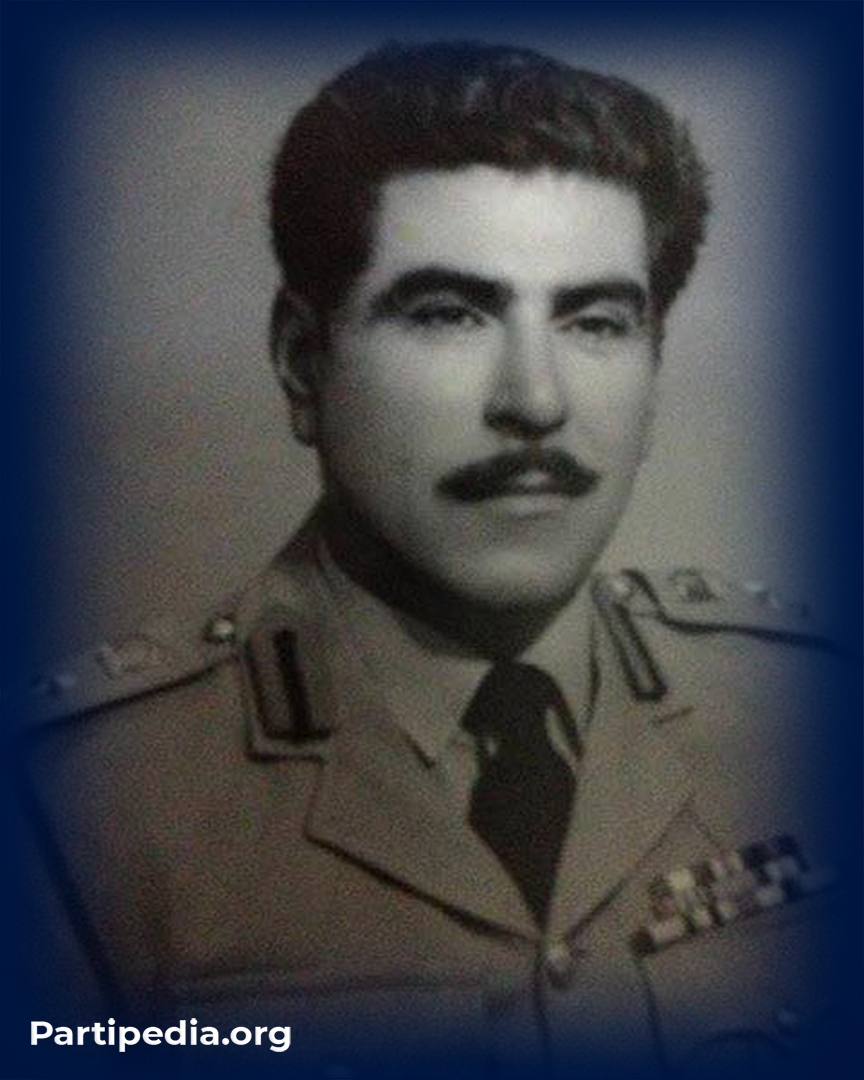
Abdulsamad Muhammad Abdulrahman Ibrahim, known as Abdulsamad Bena and Abdulsamad Mencel, was born on March 11, 1913, in the city of Koy, in the Erbil Governorate. He completed his primary, secondary, and preparatory education in that city.
He was established as an employee of the Resafe military court in Baghdad in 1934. He passed away on February 11, 1968 in Baghdad and was buried on February 12, 1968 in the Kekon cemetery in the town of Koy. He knew Kurdish, Arabic, Persian, Turkish and English.
Worksheet
In 1932, he worked politically with the officials of the newspaper (Al-Ahali), which was published on December 2, 1932 in Baghdad and was considered the only opposition newspaper for which communists such as Yusuf Salman (1901 - 1949), known as Fahid, the secretary of the Iraqi Communist Party, worked. In 1933, he was among the founders of the Youth Association, known as the Enlightenment Association, in the town of Koy, in the Erbil Governorate. In 1933, he was among the founders of the Kurdish Youth Memorial Association in Baghdad. In 1934, he joined the Iraqi Communist Party and supported the recognition of the Kurds as a nation and the right to independence for Kurdistan. In 1935, he joined the ranks of the (Al-Ahali) Association. During his work in the ranks of the Kurdish Hiwa Party, he distributed a Kurdish leaflet called "Bilêse" in the town of Koyê. In 1941, he was arrested and dismissed for political activities. In early 1942, he translated an article in support of the women's movement for the Kurdish magazine "Gelawêj" published in Baghdad.
In 1946, he became one of the officials of the Kurdish Democratic Party in Sulaymaniyah Province. In 1946, he was the author of some of the Kurdish Democratic Party's publications. In the years (1947 - 1958), he was involved in collecting material aid from the Fayli merchants of Baghdad for the prisoners of Barzani. On June 18, 1947, through Muhammad Said Mirza Majid Haj Ahmed (1904 - 1959), known as Said Qazaz, he was granted permission to write as a sharia writer the last night of the lives of the four martyred officers - Izat Abdulaziz Abdullatif (1912 - 1947), known as Izat Ketani, Mustafa Mustafa (1912 - 1947), known as Mustafa Khoshnaw known as, Khairullah Abdulkarim Abdullah (1912 - 1947) known as Khairullah Gurjizadeh and Mihemed Mahmud Mihemed (1922 - 1947) known as Mihemed Mahmud Qudsi – wrote their last will and testament in his own handwriting. On June 19, 1947, the bodies of the four martyred officers were received from the Baghdad medical examiner and sent to their respective places.
In the years (1947 - 1949) he was exiled to the town of Hit, which is part of the Anbar Province in Western Iraq. He participated in the demonstrations of 27 - 29 December 1948 in Baghdad against the regime of the Kingdom of Iraq. In the years (1949 - 1958) he was exiled to the Za'faraniye field (Mezra'a Al-Za'faraniye) near Baghdad. In 1953 he was responsible for the campaign announcement of Massoud Muhammad for the Iraqi Council of Representatives. In 1958 he was a member of the delegation welcoming the President Mustafa Barzani (1903 - 1979) was at Musanna Airport in Baghdad upon his return from exile. In 1959, he was a delegate to the second Baghdad conference. In 1959, he was a delegate to the Fourth Congress of the Democratic Party of Kurdistan - Iraq. On Saturday, December 8, 1960, he was a member of the fifty-person committee supporting the founders of the open phase of the Democratic Party of Kurdistan. In 1960, he was a delegate to the Fifth Congress of the Democratic Party of Kurdistan in Baghdad. In 1961, his house became the first shelter for the lawyer Omar Mustafa Mihemed Amin (1923 - 1992), who Omar Debabe, a member of the Central Committee of the Kurdistan Democratic Party, was known to have escaped from prison.
In 1963, he was arrested and tortured by the National Guard (Al-Haras Al-Qawmi) and later released. In 1963, he became a representative of the First People's Congress (Koyeyê Congress). In 1963, he became a member of the negotiating delegation of the Kurdistan Democratic Party with the Iraqi government and arrived in Baghdad on March 30, 1963. On June 9, 1963, he was arrested and tortured by the Iraqi government's intelligence service and was released in 1964 after negotiations between the leadership of the Kurdistan Democratic Party and Abdulsalam Muhammad Arif (1921 - 1966), the President of Iraq. On June 17, 1965, he was appointed as the General Inspector for Northern Affairs.
Source:
1 - Archive of the Encyclopedia Committee of the Democratic Party of Kurdistan.
2 - Aziz Hasan Barzani, The Kurdish National Liberation Movement in Iraqi Kurdistan 1939 – 1945, (Duhok – Spirez Publishing House for Printing and Publishing – Ministry of Education Press – 2002), p. 96.
3 - Hamid Gewheri, The Barzani Medal, the Highest Award of Merit, Book One, Second Edition, (Hewlêr – Barzani Charity Organization – 2019), p. 278.
4 - Paul Ernst, Discussion of a Famous German Poet, Translated by Abdul Samad Haji Muhammad, Gelawej Magazine, Nos. 3 and 4, Year 3, Baghdad, Ma'arif Press, March and April 1942, pp. 66-71.
5 - Mehdi Muhammad Qadir, Political Developments in Iraqi Kurdistan 1945 – 1958, (Sulaymaniyah – Kurdistan Strategic Research Center – 2005), pp. 92, 101, 122 - 123, 126.
6 - Şiwan Mihemed Emin Taha Xoşnaw, Hewlêr between the years 1963 – 1970: A Historical Study of the Political Situation, (Hewlêr – Salaheddin University Press – 2016), pp. 88, 114.
7 - Cemal Baban, My Bright Sulaymaniyah, Volume Three, Second Edition, (Hewlêr – Aras Printing and Publishing House – Aras Press – 2012), pp. 320, 324.
8 - B. Hewraz, A Brief Study on the Establishment and Dissolution of the Revolutionary and Liberation Party in Southern Kurdistan, (No Place – May 1993), p. 10.
9 - Mihemed Sehl Taqoş, History of the Kurds 637 – 2015, (Beirut – Dar El-Nefais for Printing and Publishing – 2015), pp. 203 - 204.
10 - Habib Muhammad Karim, History of the Democratic Party of Kurdistan – Iraq (In Main Stages) 1946 – 1993, (Duhok – Xebat Press – 1998), pp. 35, 85 - 86.
11 - Hassan Latif Zebidi, Encyclopedia of Iraqi Parties, (Beirut – Müessesetü’l-Arif Press – 2007), pp. 338, 348, 512.
12 - Subhi Abdulhamid, Iraq in the Years 1960 – 1969, (Damascus – Dar Babel for Research and Communication – 2009), p. 61.
13 - Tariq Cambaz, Hizba Hîwa in the Erbil Brigade, (Erbil – Yasapêrê Magazine – 2005), p. 46.
14 - Tahir Ehmed Hewazi, History of the Koy, Volume Two, Part One, (Baghdad – Nemir Press – 1984), p. 203.
15 - Ali Abdullah, History of the Democratic Party of Kurdistan – Iraq until the Holding of the Third Congress, (Unpublished – September 1968), p. 63.
16 - Abdulxaliq Elaeddin, Koye... Her Famous People, (Hewlêr – Minara Press – 2014), pp. 195-198.
17 - Fuad Hussein Wakil, The Al-Ahali Group in Iraq, (Baghdad – Dar Al-Rasheed Publishing House – 1979), pp. 104 - 105, 111-114, 186 - 189.
18 - Mahmud Al-Durra, The Kurdish Question and Arab Nationalism in the Iraq War, (Beirut – Dar Al-Telî'a Publications – 1963), p. 181.
19 - Masoud Barzani, Barzani and the Kurdish Liberation Movement, Volume One, Second Edition, (Beirut – Coffee for Kurdish Culture – 1997), p. 217.
20 - Mehdi Muhammad Qadir, Hewlêr in the Years 1926 – 1939, (Hewlêr – Kurdish Academy – Hacî Hashim Press – 2013), p. 281.