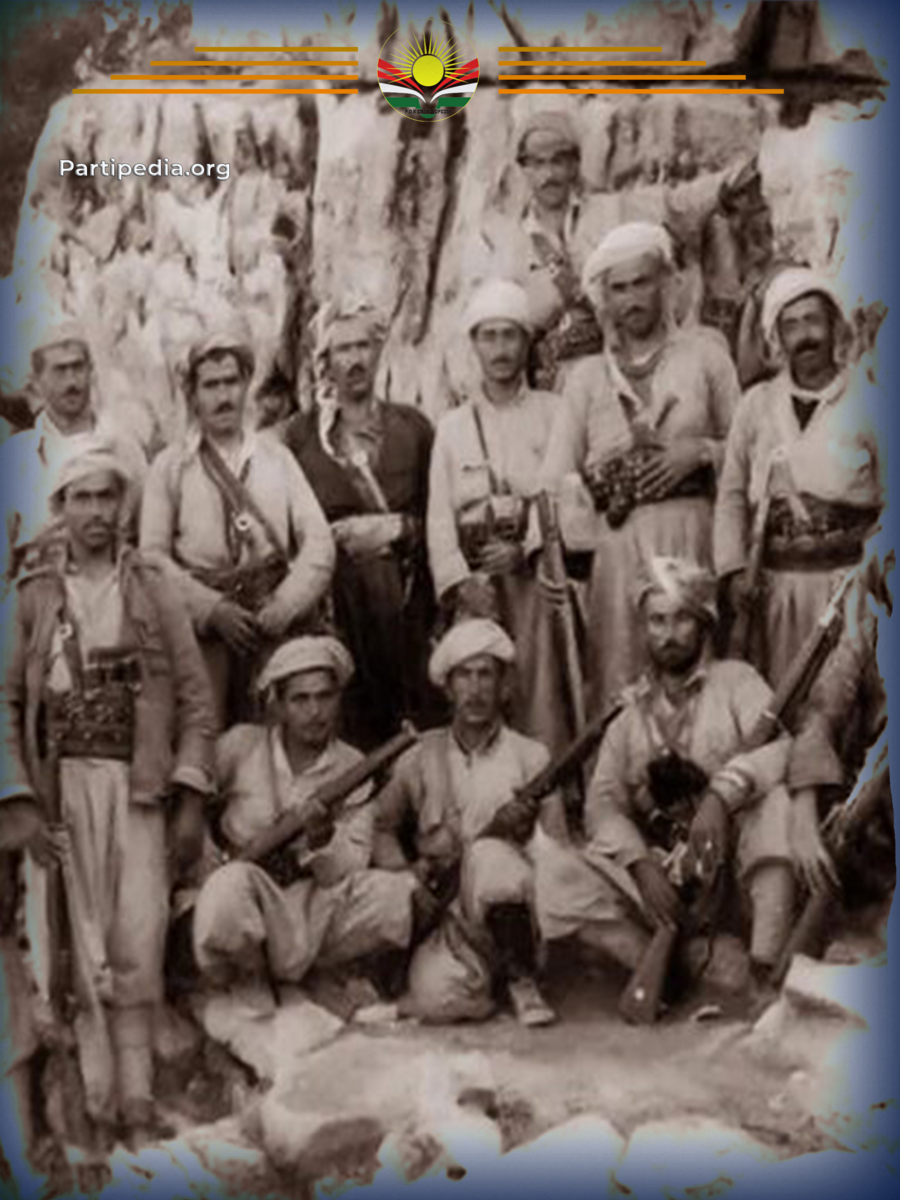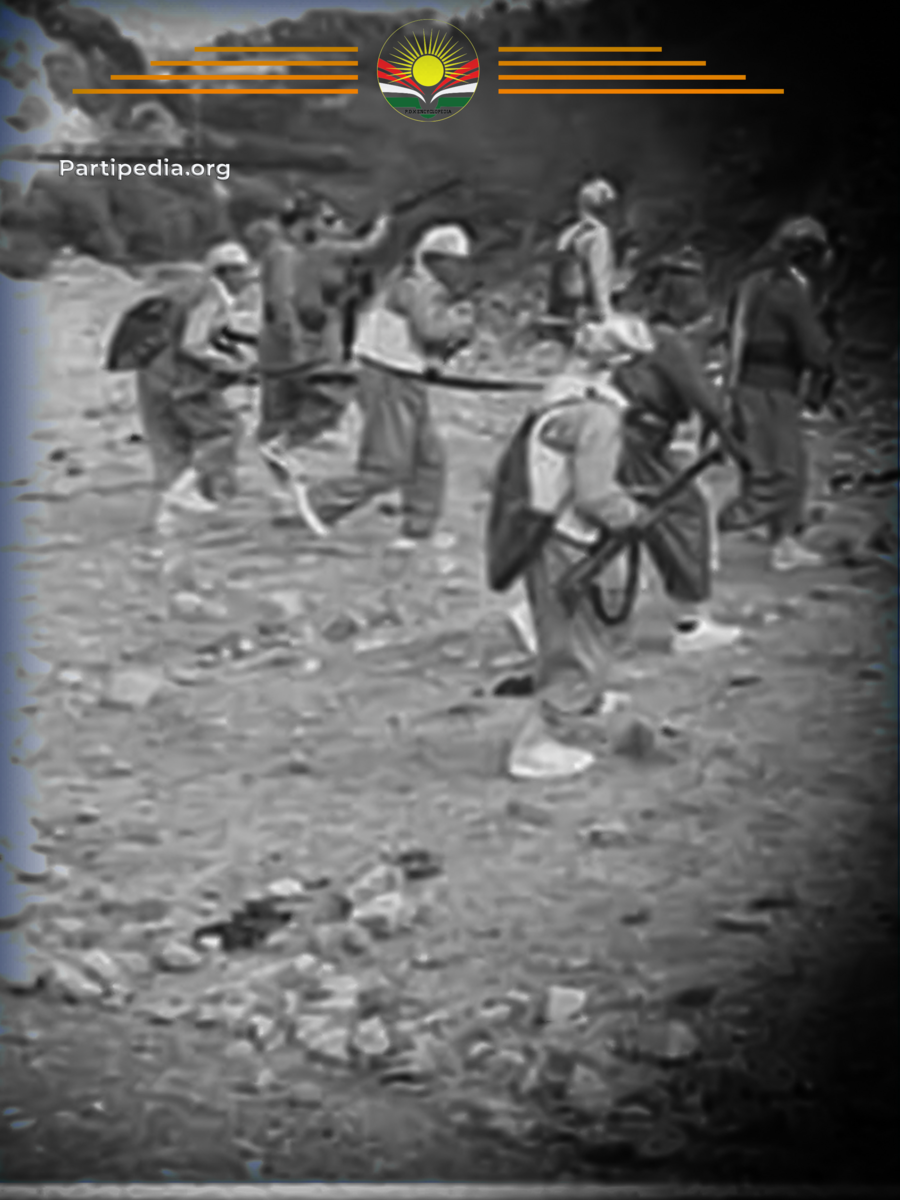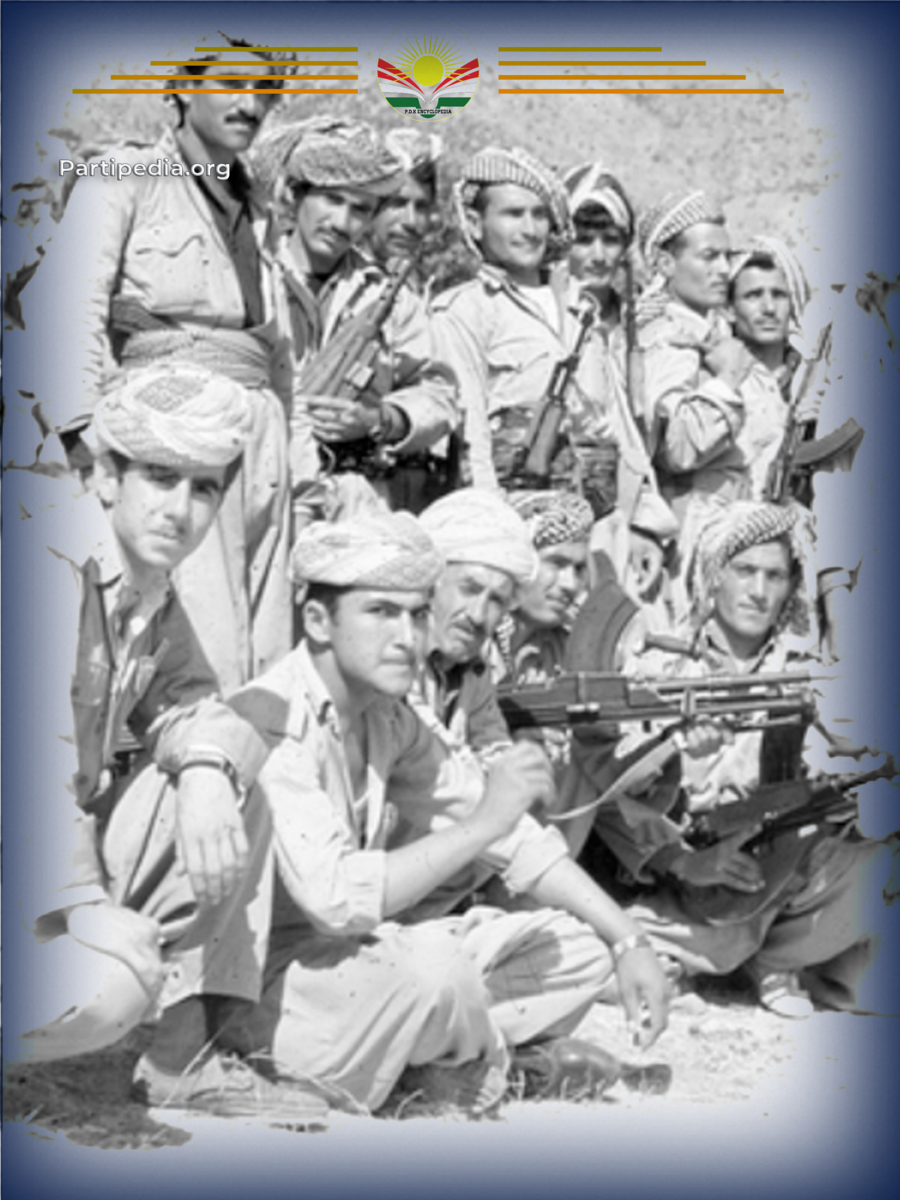


The Korê saga is one of the decisive battles and clashes that the Kurdistan Peshmerga fought against the Iraqi army on April 7-11, 1991. After the Iraqi army was defeated in the spring of 1991 by the Peshmerga forces of the Kurdistan Front and the wave of public demonstrations in southern Kurdistan, and all the cities and towns of Southern Kurdistan were liberated, the regime army was given the green light by the coalition forces in a short time and on March 27, 1991, it fought against the Peshmerga from Kirkuk and took control of many cities and towns until it reached the Korê Valley. In this difficult area, the Peshmerga forces established a strong defensive line. In order to prevent the advance of the Iraqi army, they attacked the town of Korê with two major infantry attacks supported by tanks, artillery, armored vehicles and combat helicopters, but it was badly defeated.
Developments in the story of the Blind Man
After the eight-year war between Iraq and Iran, the Ba'ath regime was presenting itself as a global power, its arrogance and arrogance had crossed the limits of humanity, violating human rights, violating civilian lives, crossing international borders with the aim of occupying with military operations on the pretext of having a large military force and being the fifth largest army in the world in terms of numbers and weapons (Gherdi, 2021, 305). This was an important reason for the Ba'ath regime's attack on Kuwait on August 2, 1990, and taking control of the country within 24 hours. All this led to international outrage against the regime and the implementation of United Nations Resolution 687, which later found itself in the midst of an economic crisis and the outbreak of the Gulf War (Charles Tripp, 2013, 336). The defeat of the Iraqi army against the allied forces and the weakness and distrust of the Ba'ath leaders towards the Iraqi people, thus accelerated the events and paved the way for the revolution and uprising of the Iraqi people, and in particular the Kurdish people, who did not hesitate to establish party and military institutions in the south and north of the country (Mohammed Aziz, 2024, 226) and as a result, in the spring of 1991, the masses of the people rebelled against the army, armed forces and security forces of the Ba'ath regime and a nationwide uprising took place (Omer Osman, 2008, 155). The 1991 uprising in Southern Kurdistan was a historic stage in the life of the Kurdish people (Barzani, 2020, 43).
On March 5, 1991, the fire of the uprising first set fire to the party and military institutions of the Ba’ath regime, and first in the city of Ranya and then in other cities and towns of Southern Kurdistan, the Ba’athists were purged and expelled one after another, and on March 21, 1991, Kirkuk also fell into the hands of the revolutionary forces and the uprising’s masses (Heme Elî, 2016, 186-191). The rapid successes confirmed that the uprising was the largest Kurdish revolution in the history of the Kurdish liberation movement, because for the first time, the Kurds were able to liberate all of Southern Kurdistan, including Kirkuk, from the Iraqi regime (Qadir, 2022, 62).
Iraqi army conscription to once again occupy Kurdistan
The defeated army of the Gulf War, after losing all the cities and towns of Kurdistan, was looking for an opportunity to launch a counterattack against Kurdistan and regain the liberated cities and towns. Although the Kurdish forces, which had established a war front within the framework of the Kurdistan Front, held a meeting on March 27, 1991 to attack the Khalid military base in Kirkuk, which was still under the control of the Iraqi army, due to negligence on the part of one side of the Kurdistan Front, the attack was not carried out. On the contrary, the Iraqi army stood against the Peshmerga Forces with tanks, artillery, armored vehicles, and warplanes (Heme Elî, 2016, 192). On March 28, 1991, under the supervision and planning of Ezzat Douri and Ali Hassan Majid, who were appointed by Iraqi President Saddam Hussein to occupy Kurdistan, the regime’s first attack on the Peshmerga began in Kirkuk (Qadir, 2022, 63). In this conflict, the Peshmerga forces suffered heavy losses and a large number of Peshmerga and rebels were martyred and injured at the Khalid Training Base. As a result, the army was able to capture Kirkuk and began operations to capture Hewler and Sulaymaniyah (Ismail, 2019, 257).
The Iraqi army attacked Kurdistan from Kirkuk with a comprehensive plan and great military capabilities from warplanes, Katyushas, long-range artillery, tanks and armored vehicles. Although the Peshmerga forces attacked them several times, they did not have much effect in stopping the Iraqi army's attack. On the one hand, due to the division of political forces and the inexperience of some of the Peshmerga in frontline warfare, and on the other hand, due to the inequality in terms of strength, weapons and logistical capabilities, they were forced to retreat (Omer Osman, 2008, 166). The Iraqi army continued its advance with the highest morale until they occupied most of the liberated areas. Perhaps this was not the reason for the defeat of the Peshmerga as mentioned, but there were other reasons, such as the unusual division of the Peshmerga into defensive positions and the non-combatant Peshmerga of all parties, which expanded the ground for the Iraqi army's advances.
It is worth noting that the advances of the Iraqi army caused great fear and anxiety in the hearts of the city dwellers, because the citizens were informed about the oppression of the Ba'ath regime in the past and there was a risk that it would show a hostile attitude and reaction against the rebels, therefore, most of the city dwellers migrated to the border areas, thus starting a million-strong movement (Qadir, 2022, 63). Many of those refugees were refugees in both Iran and Turkey, which opened their borders to refugees (Zêbarî, 2015, 517).
The Iraqi army attack and the Peshmerga defense line
When the Baath regime army succeeded in suppressing the rebellion in southern Iraq, it reorganized itself to reoccupy Kurdistan and suppress the Kurdish people's rebellion. It first captured Kirkuk and then advanced to occupy Erbil and Sulaymaniyah. The Peshmerga forces, which were then composed of the Kurdistan Front parties, intensified their efforts to prevent the Iraqi army's attack on the village of Sherawe near the town of Pirdê (Seyidkake, 1997, 252), but they were unable to stop the attack and therefore turned to Qoshtepe, south of Erbil. The Iraqi army in the Qoshtepe plain indiscriminately bombarded the people fleeing from the plain with tanks, artillery, armored vehicles and helicopters, and it did not take long for them to take Qoshtepe. To stop their advance, the Peshmerga forces established a new battle front against them and confronted them at night, but these efforts were unsuccessful and they retreated after a while, until the Iraqi army's advance reached the city of Erbil and on March 31, they took full control of the city (Omer Osman, 2008, 167).
Before the Iraqi army entered the city of Erbil, the Kurdistan Front forces met to discuss the situation of the war and to stop the advance of the Iraqi army. At the meeting, the parties had different views on how to confront the army's attack, some thought that they could not fight and confront the regime, while one side, for the sake of bargaining, thought that they could fight with the army and decided to fight. According to information, a military official of one of the parties also believed that they could not defend themselves inside Erbil, but together with the leader of that party who said that they were fighting, they visited the defense line of the Kirkuk-Dibega road where the forces had been deployed, but they saw that not a single peshmerga was left in place and had left the battlefield (Seyidkake, 1997, 252-253).
According to one account, the reason for the Iraqi regime’s recapture of Erbil and Sulaymaniyah is that the Peshmerga forces in the Kurdistan region did not have enough forces to resist the regime’s larger forces, and the civilian forces were not well organized, but participated haphazardly. While the Iraqi army was advancing from Kirkuk to Sulaymaniyah and Erbil, its progress was rapid against the weak defenses of the Peshmerga, and most of the population began to migrate and took their families and children to the borders of Iran and Turkey, thus beginning the million-strong movement (Ismail, 2019, 257).
After the Iraqi army completely controlled Erbil, the attempt to occupy all the cities and towns of Kurdistan continued. For this purpose, the 28th Division, commanded by Lieutenant Colonel Hamed Hemo, was assigned to control the Pirmam resort. On April 5, 1991, that force began to operate. The Peshmerga forces set up another defensive line near Mullah Omar to stop the army's advance, but the decrease in the number of Peshmerga forces, the fragmentation of the Peshmerga forces, and the failure of some of the Peshmerga forces to obey the orders of their leaders caused them to retreat to Khanzad on the slopes of the Pirmam resort. The army's advances increased and they were approaching Pirmam, although the Barzan forces had established positions in Bastore, and they tried to stop the army there, but due to the disparity in strength, weapons, and ammunition, they were unable to stop their advance (Qadir, 2022, 71).
In order to stop the advance of the Iraqi army, the leadership of the Kurdistan Front continued to try to prevent the further advance of the Iraqi army, for which a meeting of the military leaders of the Kurdistan Front parties was held in Pirmam, to establish a strong defensive line in Pirmam. At the meeting, it was decided to divide the war front into two fronts on the main road between Erbil and Shaqlawe, the first front below Serê-Raş was entrusted to the forces of the Patriotic Union and the Socialist Party, and the second front was handed over to the forces of the Democratic Party and the Communist Party, above Avrêjê and the village of Ziyaret. The Peshmerga forces remained in these areas for several days, but the army's advances towards Pirmam continued. By the time they reached the left bank of Pirmam, the Peshmerga defense was not strong enough to stop the advance, the Peshmerga defense line there was also broken and they turned towards Kor.
The Iraqi army continued to advance and captured region after region. The situation in Kurdistan was getting worse and worse, and the people were becoming more and more desperate and fleeing in droves. The Iraqi army was getting closer to occupying all of Kurdistan. The Peshmerga defense was very weak, and the people's morale and hope were destroyed. Because the sides did not defend themselves properly, the only force that responded to the Iraqi army's attack was the force that, along with Masoud Barzani and had machine guns to prevent the helicopters from harming the Peshmerga and the people. The army was getting closer and closer to Pirmam and on April 6, 1991, a small Peshmerga force led by Dr. Saeed Barzani, Hali Dolameri and several other Peshmerga units resisted the Iraqi army, but they were unable to stop them and the town fell into the hands of army units. The Peshmerga forces retreated to the village of Hujan near the Kor Valley, and this is interpreted as a military strategy, as the geographical location of the Kor Valley was much more favorable for the small Peshmerga forces to establish a defensive line against the large Iraqi army. The Peshmerga forces were divided into two strategic positions, the heights of the Kor town in the west were occupied by the KDP forces, and the eastern front was entrusted to the PUK forces, each led by Hamid Effandi from the KDP and Kosrat Rasul from the PUK (Qadir, 2022, 72-75).
Army advances towards Korea
The Iraqi army had planned to reoccupy all the cities and towns of Kurdistan, with the aim of crushing the Kurdish uprising in the same way as it had crushed the uprising in southern Iraq, but the Battle of Korê has become a bright spot and a historic point in the history of the Kurdish liberation movement. It is clear that this place is surrounded by rugged mountain ranges to the east and west due to its difficult geographical location, overlooking a valley on both sides through which the main Erbil-Şaqlawe road passes. The Peshmerga forces decided to build a strong defense against the advance of the Iraqi army in order to prevent the advance of the regime forces. Of course, after controlling the Permam resort on April 7, 1991, the Iraqi army advanced towards the town of Korê with a large force of advanced infantry forces consisting of tanks, artillery and armored vehicles (Qadir, 2022, 79).
• First attack:
On April 7, 1991, the Iraqi army attacked the town of Korê with tanks and armored vehicles from the town of Pirmam, advancing towards Korê without encountering any Peshmerga resistance. When they reached Korê, a force of Peshmerga Peshmerga (KDP) under the command of Dr. Saeed Barzani and Hali Dolameri, on the heights overlooking the Korê Valley, under the command of Hamid Effendi, the military commander of the front, with a small force and limited logistical capabilities, confronted the attack, and a fierce battle began. The Peshmerga forces achieved their goal and became a strong and powerful fortress, and they defeated the army's advances in the Valley and were able to defeat the attack (Qadir, 2022, 79). In this battle, the Peshmerga inflicted heavy losses on the Iraqi army, including the destruction of 4 tanks, armored vehicles, and a number of military vehicles (Seyidkake, 1997, 255).
With the destruction of tanks and armored vehicles that the Peshmerga targeted with RPG weapons at the heights, hand-to-hand combat began in the lower part, with the Peshmerga attacking tanks, armored vehicles, and armored vehicles. In this heated battle, the Peshmerga escaped unharmed, but the Iraqi army forces lost more than 14 of their soldiers, whose bodies remained on the battlefield, and a number of others were taken prisoner.
In this battle, the Peshmerga achieved a great victory, and after these defeats, the commander of the Iraqi army's military division emphasized the development and continuation of the attack, but the Peshmerga defense was very strong and far from the expectations of the army commanders. When the division commander realized that the army could no longer advance, he was forced to give the order to retreat to the Pirmam resort, in order to have a stronger plan and another stronger attack on the Kor Valley, in order to break the Peshmerga's defense line and reach Shaqlawa (Qadir, 2022, 80).
While the Peshmerga forces were recording a major victory against the Iraqi army, information reached the Peshmerga that the Iraqi army was planning to attack the Kori Valley positions again. The Kurdistan leadership, in particular, Masoud Barzani The leader of the Kurdistan Democratic Party (KDP), who also led the Kurdistan Front, increased all his efforts to reorganize the battlefield or defense line, and for this reason, he asked the leadership of the Kurdistan Front parties to return their forces to the battlefield and divide them into defense lines, in order to prevent the regime from advancing any further and to put a limit to its arrogance. At this time, several other Peshmerga forces of the parties returned to the battlefield.
On April 9, 1991, at the suggestion of Peshmerga Leader Hassan Necar, who was planning a counterattack, in order to show the Peshmerga's strength and ability to attack, not only defensively, but also to give the Peshmerga courage and morale that the enemy's strength was not so great that the Peshmerga could not defeat it.
To carry out this attack, Hassan Necar divided his forces into three groups:
The first group was a support force consisting of Sayyid Fakhr, Khalid Anwar, and Sayyid Iskander, and its mission was to bombard Iraqi army bases and units before the attack.
The second group, commanded by Zeynel Ahmed, was tasked with attacking the strategic Rabayan on the right flank of the army.
The third group was led by Hesen Necar himself, and the plan was implemented as planned.
The attack used a 106 mm cannon, which played an important role in weakening the Iraqi army, as it heavily shelled army bases and centers. The Peshmerga offensive reached the borders of the Iraqi army and the operation was very successful. The aim of this attack was not to regain lost territories, but rather a war tactic, to demonstrate the power and capabilities of the Peshmerga. In this attack, the Iraqi army suffered heavy blows, while the Peshmerga escaped unharmed (Qadir, 2022, 92-93).
• Second attack:
In order to carry out its plan to break the Peshmerga defense line in the valley and the heights of the town of Kor, all the brigade officers gathered for the second time on 11.04.1991 and tried their luck by launching a major attack on the Peshmerga positions. The Kurdistan Front Forces, which received information about the attack through an officer of the Kurdish army, led by senior party leadership officials, Masoud Barzani They met in the village of Hujan near the Kor Valley and reorganized the front line and divided the positions between the party forces:
• The eastern front of the Kor Valley was entrusted to the forces of the Patriotic Union, the Toilers' Party, and the People's Party.
• The western front of the Kor Valley was entrusted to the forces of the Democratic Party, the Communist Party, the Islamic Movement, the Socialist Party, and Hezbollah (Seyidkake, 1997, 256).
According to the plan for the second attack on the Peshmerga positions, on April 11, 1991 at 04:45 in the morning, the army began a heavy artillery barrage on the Peshmerga positions, then approached the Peshmerga positions in large force, supported by tanks and armored vehicles. At first, as planned, the Peshmerga hid until the army was completely close, somehow shocking the officers and soldiers that there was no defense, but when the tanks and armored vehicles approached the mountainside, they suddenly attacked them with all the weapons they had at once and opened fire on them. The Iraqi army was thrown into confusion, the tanks, armored vehicles and the front forces were completely destroyed, the soldiers of the 412th and 78th Brigades quickly fled back and left their dead on the battlefield by the side of the road (Qadir, 2022, 86-87).
Initially, the army's attack on the heights of the western front of the Valley was somewhat successful, and after a number of Peshmerga from the Barzan Force were martyred and wounded, several places fell into the hands of regime forces, but most of the Peshmerga on the front lines of the battle did not abandon their positions and fought, giving them a good hope for a counterattack and regaining lost ground. Later, other forces were called in to support all parties by order of the Masoud Barzani The leaders of the Kurdistan Front reached the battlefield and climbed the heights of Ermewan and other places and in a short time were able to retake the places that had fallen into the hands of the army. A group of peshmerga led by Hasan Necar, armed with 106 mm artillery, mortars, BKCs and snipers, played an effective role in destroying the army ranks and tanks and armored vehicles (Omer Osman, 2008, 171-172).
The focus of the attack was mainly on the western side of the Korean Valley, and there was not much attack on the eastern side, except for a hill near the main road that initially fell into the hands of the army, but was later attacked again and the regime forces were driven out (Seyidkake, 1997, 257).
It is worth noting that in this attack, the Peshmerga achieved a great and historic victory, disappointing the Iraqi regime in its dream of achieving its goal and taking control of the Peshmerga defense line and reaching other areas. The soldiers and officers were bored by the noise, fire, and weapons, and instead, fleeing and hiding at the mouth of the river was more important to them. Therefore, the failure and the complete loss of victory and reaching the areas they had planned to occupy made the Iraqi army completely despair of winning and reaching the areas they had planned to occupy and were forced to retreat and suffer heavy losses in the killing and wounding of their soldiers. In addition, a number of tanks, armored vehicles, and heavy weapons fell into the hands of the Peshmerga. After the government was convinced that it could no longer advance its forces to occupy other parts of Kurdistan, it declared a ceasefire and began negotiations to resolve the Kurdish issue (Omar Osman, 2008, 172).
Reasons for the defeat of the Iraqi army in the Korean War
Although the Peshmerga and the Iraqi army were largely unequal in terms of strength, weapons, and military capabilities, a small number of Peshmerga forces were able to withstand the Iraqi army and defeat its two major attacks. It is clear that the Peshmerga's victory or, conversely, the army's defeat in these two attacks was due to several reasons, such as:
- The role of the leader: The leader is the main pillar of power, especially in war, making decisions with courage, skill and knowledge and assigning duties and responsibilities to his subordinates who can carry them out well in all circumstances and have trust between them. The role of Masoud Barzani As the leader of the Kurdistan Front in the Korê war, he was very important because he had a plan for every development (Qadir, 2022, 102) and was in constant contact with the commanders of the political parties (Dolemeri, 2021, 298). In addition, in order to strengthen the defense line and prevent the army from advancing, he played an unprecedented role in gathering the Peshmerga forces of the Kurdistan Front parties and distributing them among the battle positions, as well as the readiness and direct observation of the war had a great impact on the morale of the Peshmerga, especially in a statement he made (Either the enemy must return to Kurdistan on our bodies or we will not allow ourselves to be defeated again) (Qadir, 2022, 102).
- The geographical location of any region plays an important role in armed conflict. Military leaders and armed forces who know how to plan a war always consider the geographical location to be important for the success of the war plan and confrontation. The Kor Valley is a narrow road because it is surrounded by difficult mountains on all sides, which was a strong factor in the success of the Peshmerga in two major attacks by the army, which was supported by tanks, artillery, armored vehicles and a great logistical ability, against a small Peshmerga force and few weapons and ammunition, but had a rich experience of operations and confrontation in the mountains, valleys and difficult hills that have always been the backbone of the Peshmerga, on the other hand, it was difficult for the Iraqi army to defeat the Peshmerga in a difficult mountainous area (Qadir, 2022, 103).
- The high morale of the Peshmerga and their sense of national and patriotic responsibility, their sacrifices and their willingness to sacrifice their lives to protect their land and country, were another strong factor in the Peshmerga's success, as they were able to defeat a large army in two major attacks with a small margin, while also teaching them a lesson that it is very difficult to try again in that way, and instead, they should resort to negotiations and peaceful solutions to solve problems (Omar Osman, 2008, 172).
Conclusions and implications of the Blind Man's Tale:
- The reorganization and strengthening of the defense line, which was the main factor in the success of the Peshmerga forces in facing two extensive attacks by the Iraqi army, which had started from Kirkuk with great military power and capability and reached the Kor Valley, but the Iraqi army was so defeated that it did not dare to attack the Peshmerga positions again (Seyidkake, 1997, 256).
- The failure of the Iraqi army to realize its dream of occupying all other parts of Kurdistan and suppressing the Kurdish uprising similar to the uprising in southern Iraq (Omer Osman, 2008, 173).
- The adoption of peaceful and diplomatic solutions such as dialogue and negotiations with the Kurdistan Front parties to find a solution to the problems, in which delegations of political parties visited Baghdad several times and met with the leaders of the Ba'ath Party (Omer Osman, 2008, 173). ), but due to the arrogance of the Iraqi regime leaders and their avoidance of a fundamental solution, the efforts were unsuccessful and the negotiations did not yield any positive results (Qader, 2022, 123).
- The issuance of United Nations Resolution 688 condemning the Iraqi regime for its atrocities and genocide against civilians in Iraq, especially Kurdish citizens, the provision of a safe zone above the 36th parallel, and the provision of urgent assistance to the areas, was achieved through the efforts and proposals of the French government in the Security Council (Mam Jalal, 2017, 190).
- When the 36th parallel was designated as a border point against the regime’s threats to Kurdistan, Baghdad withdrew its administrative institutions from Erbil, Sulaymaniyah, Duhok, and Garmian on November 24, 1991, creating an administrative vacuum for citizens to manage their own affairs (Qader, 2022, 131). To fill this vacuum and resolve this problem, the Kurdistan Front decided to hold elections for the Kurdistan Parliament, which were held in a peaceful and free environment on May 19, 1992, after which the Kurdistan Regional Government was established (Barzani, 2020, 45).
- The Kurdistan Region has become a haven for many Iraqi victims, freedom fighters, and opposition forces that govern the country today (Barzani, 2020, 45).
Source:
- Masoud Barzani, Barzani and the Kurdish Liberation Movement, Volume 4, Part 2, First Edition, Roksana Publishing House-2021.
- Masoud Barzani, for History, 3rd Edition, Roksana Publishing House-2020.
- Charles Tripp, History of Iraq, translated by Muhammad Hussein Ahmed and Abdulqadir Kalhor, edited by Dr. Muhammad Abullah Kakesor, 3rd edition, Rojhelat Press, Hewler – 2013.
- Mirza Ibrahim Qadir, The Blind Story of a Nation's Pride, Roksana Publishing House, Hewlêr-2022.
- Ghazi Adil Gerdi, a Peshmerga serving the Barzani cause – Haji Beroqi, Volume 2 – Second Edition, Turkey – 2021.
- Omer Osman, The Life of a Kurd, Volumes 1 and 2, Second Edition, Mukriyani Publishing House – 2008.
- Dear Muhammad, Digging into Memory, Edition 1, Hewlêr – 2024.
- Nuri Hame Ali, The History of a Peshmerga's Struggle Between Life and Death, Second Edition, Hewlêr-2016.
- Seyid Kake, Memories of a Peshmerga, 1st edition, Ministry of Education Press, 1997.
- Mihemed Ali Ismail, My Memories, Seventy Years and More Than Half a Century of Struggle, First Edition, 2019.
- Haji Mirxan Dolemeri, The Search for Justice, Volume 2, Second Edition, Kurdistan-2021.
- Mam Celal, Seeing the Age, Prepared by Salah Rashid, Part 2, First Edition, Karo Publishing House, 2017.
- Şimal Zebari, Some hidden truths in May Revolution in, 1st edition, Rojhelat Publishing House, Hewlêr-2015.