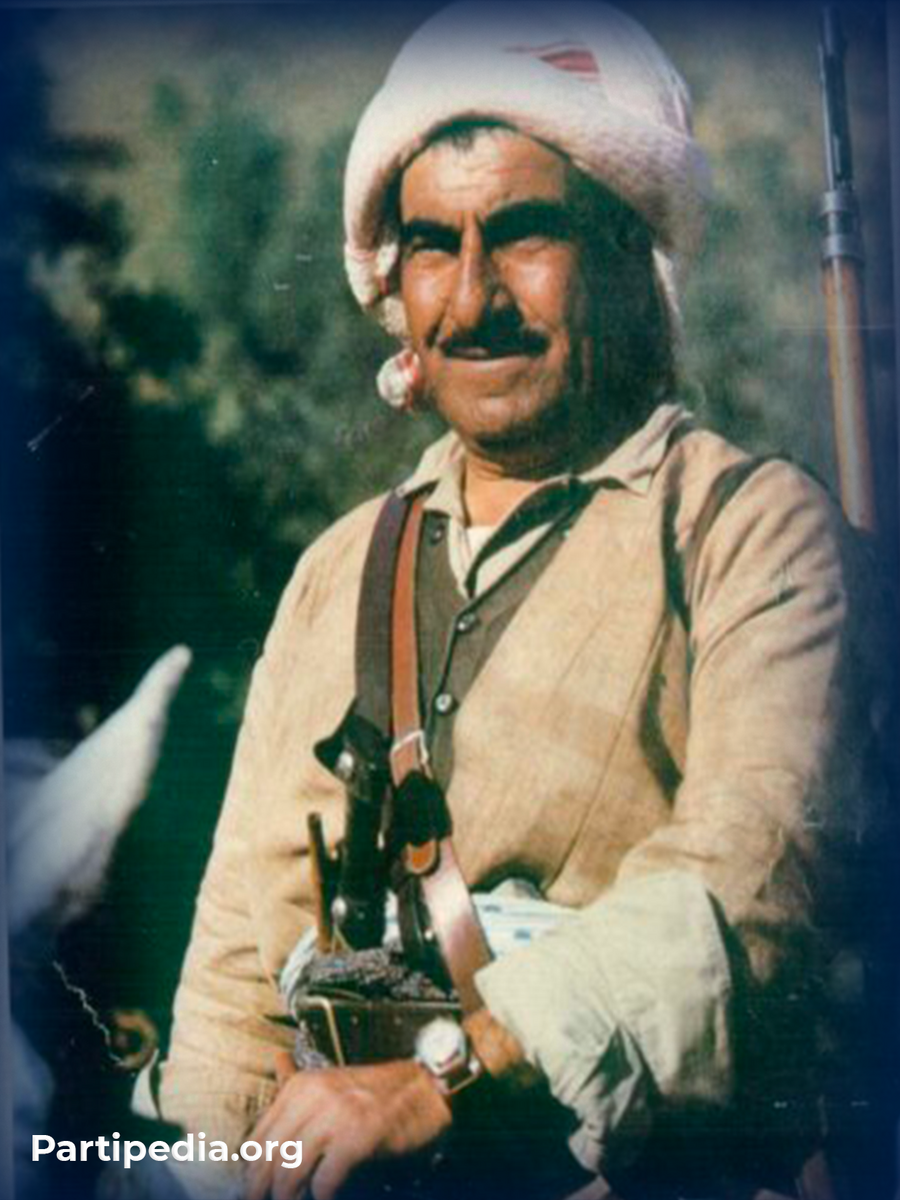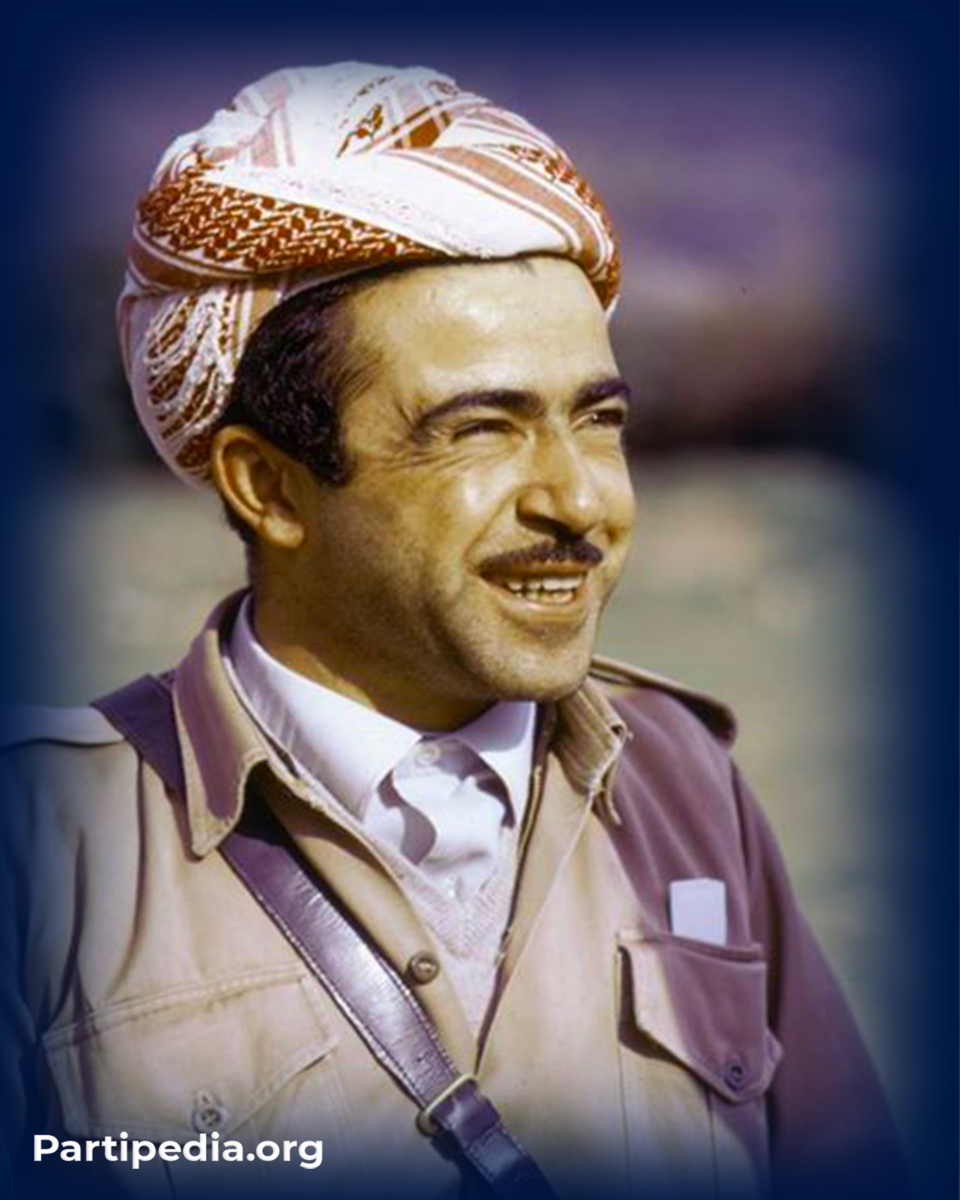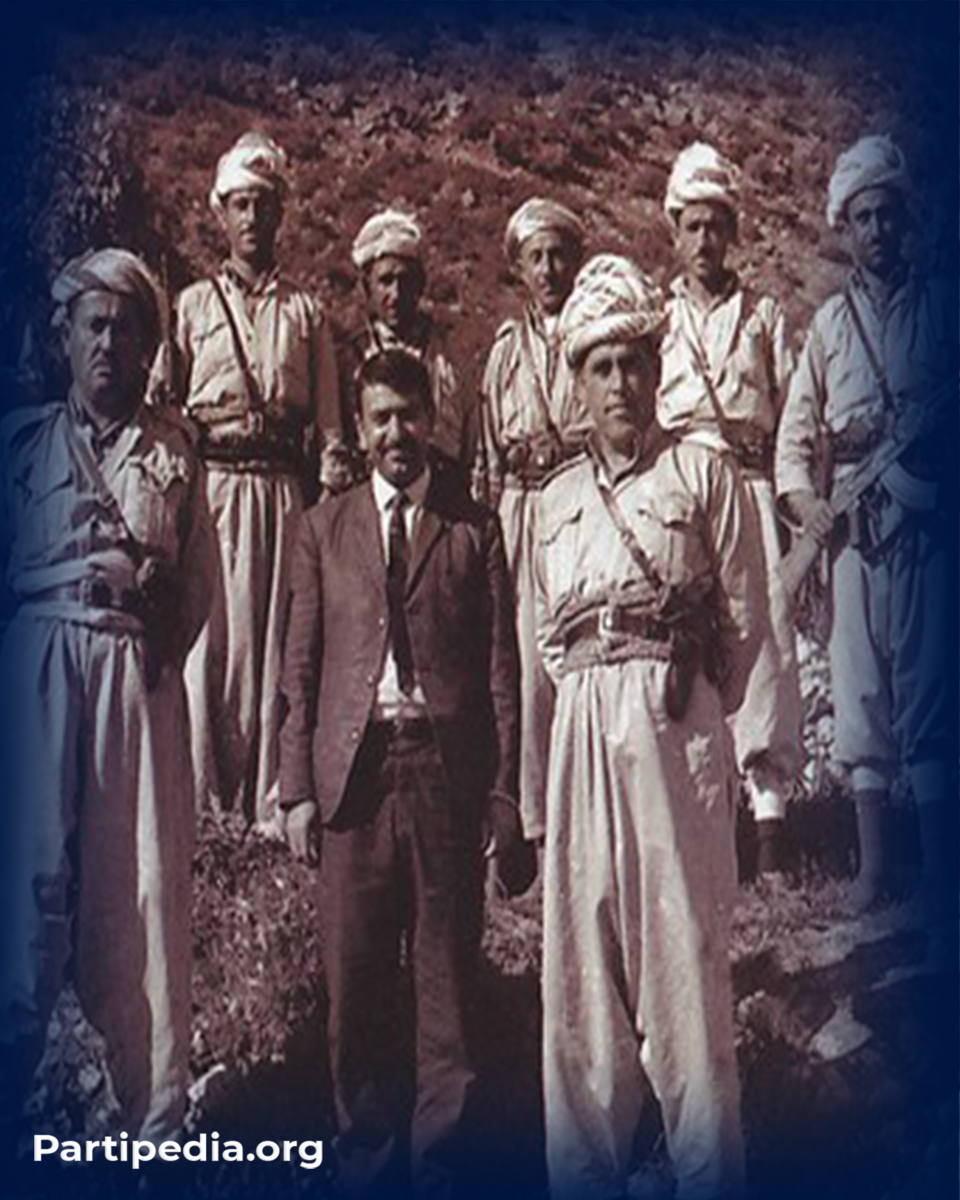


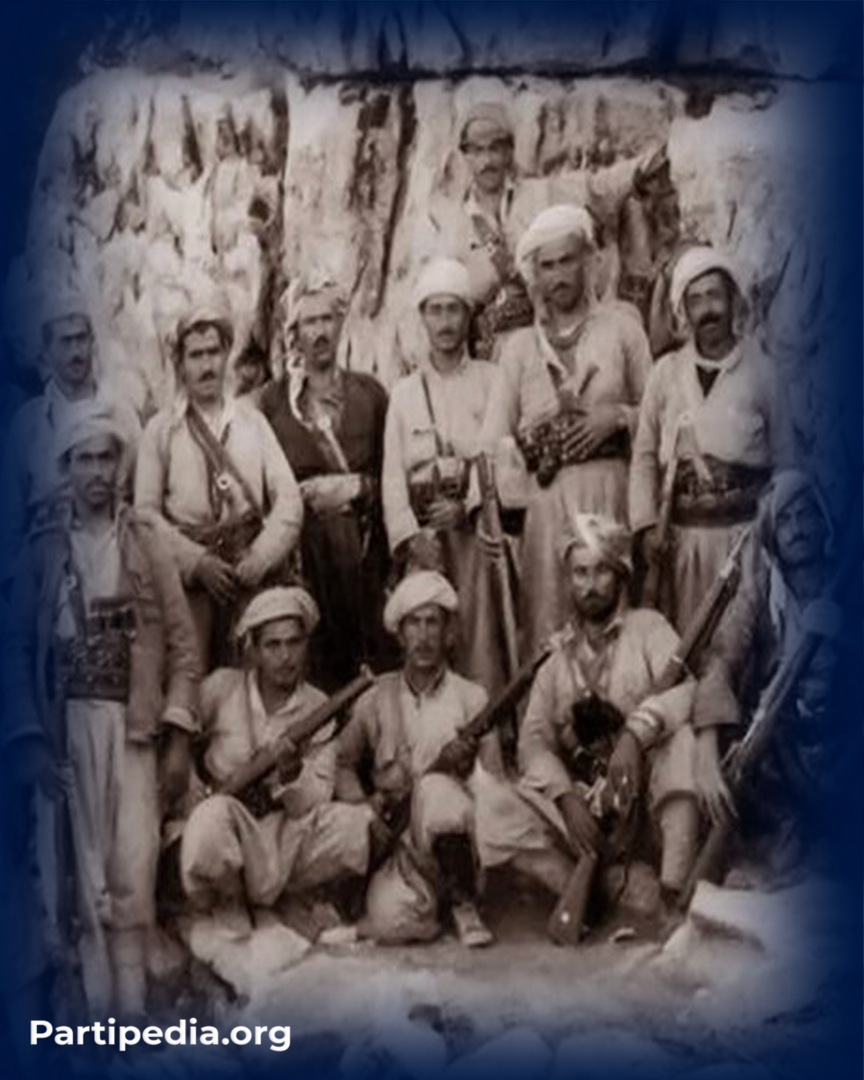
The beginning of the establishment of the Balek Force dates back to 1962 when it was organized within a battalion. In 1963, the Kurdistan Democratic Party (KDP) organizations were organized into two main political and military sections. The political section was the party organization, but often participated in defensive battlefields and military campaigns. Later, the Peshmerga section was expanded and organized into forces, battalions, and divisions. In 1965, the Balek Battalion developed significantly and became a large organized force consisting of four battalions, its mission was defense and military operations in the strategic locations of Balekayeti and Riwandize and that region. Later, due to the increase in Peshmerga forces and the expansion of the border, it was further developed in 1975 and 3 more forces were established.
The Balek force was also one of the forces that occupied a wide geographical area in Balekayeti, Biradost, Riwandiz, Geliye Ruste, Balekian, Xaneqa and Ako. Initially, the command of the Peshmerga force was under the responsibility of Mullah Taha, Mina Axa and Qadir Axa, later Muqadim Aziz Akrey, Aqid Kafi Nabewi, Abdullah Ismail and Mela Mator He was supervising the force.
In 1964, the revolutionary leadership established a battalion of Peshmerga forces in Galala under the supervision of Abdullah Agha Pishdari and Khazali Mirkhan Barzani, who was later replaced by Sadiq Effendi, France Hariri was responsible for administration and communications, Faris Shukri was the political leader of the Peshmerga, Dawud Abdullah was the director of the pen office, and Arif Kardo was responsible for the battalion's supplies, Muhammad Amin Kirat was the battalion headquarters commander, Abdulrahman Ismail Aqrawi was responsible for the engineering department, Taha Muhammad Sharif was responsible for the battalion's infantry, and Muhammad Kolekay was responsible for the headquarters' guards.
The battalion consisted of 8 companies and the leaders were:
1- Haji Beroqi
2- Hassan Xal Hamze
3- Arif Yasin
4- Hade Hasko
5- Mustafa Salih Narveyi
6- Mullah Amin Barzani
7- Ezzat Suleiman Beg
8. Raîs Kemal was an Arab leader of the Communists.
Balek Peshmerga strength from battalion to force
In July 1965, the revolutionary leader Mustafa Barzani decided to expand the 5th Battalion of Balek and reorganize it into a force, which had four battalions and later more, and all forces throughout Kurdistan should be directly under Barzani's control. Abdullah Agha Pishdari was the commander of that force, and Sadiq Effendi and Abdulrezaq Betoushi were his deputies. Francis Hariri was responsible for the force's defense, Hassan Nas was responsible for administration, Hakim Sadiq Khoshnaw was responsible for finance, and Taha Muhammad Sharif Akreyi, Nouri Heydar, Mevlud Ibrahim, and Audallah Mellazade were each responsible for the force's intelligence department for a time. Dawud Abdullah was responsible for the force's pen, and Hamedemin Kiret and Hamid Ahmed Qalasnji were each responsible for the force's headquarters for a time.
Balek Force Battalions in the years (1965-1970)
-
First Battalion
Haji Beroqi was the battalion commander, and Naji Beg and Arif Yasin Each of them was his deputy for a time. Hamid Said was in charge of the battalion's finances and pen, and the following were its leaders:
1- Zikr Yahya
2- Musa Shemed
3- Jadir Muhammad Mizuri
4- Abdulrahman Darwish Akreyi
5- Yasin Beroqi
6- Shepherd's Day
7- Cewher Bersyavi
8- Ali Shikak
The leaders were Aziz Khan, Desko Haji Beroxi, Hussein Suri, Said Ibrahim, Sheikh Homer, Mamend Axa Delze, Sabah Mirke Xeylani, Abdulrahman Derwesh Akrey, and Kemal Shewkel.
-
Second battalion
Mustafa Nerveyi was the battalion commander, Mohsin Haji Nerveyi was his deputy, Hussein Fatah was responsible for the battalion's administration, and the following were its leaders:
1- Hamid Effendi
2- Mirxan Hemedemin Mirxan
3- Sergeant Xano
4- Hade Hasko
5- Osman Salih Norwegian
-
Third battalion
Mullah Amin Barzani was the battalion commander, Omar Sayyid Nabi was his deputy, Haji Muhammad was in charge of administration, and these were its leaders:
1- Sayyid Salim Sayyid Nabi
2- Hameziyad Faqiani
3- Osman Hojrani
4- Mirkey Xeylani
5- Zubair Ali
6- Suleiman Abdullah
7- Shakir Beg Gerdi
4. Fourth Battalion
Izzet Sulêman Beg was the battalion commander and Mihemed Emin Faqe Hesen was his deputy, and these were its leaders:
1- Sayyid Mustafa
2- Majid Beg
3- Sayyid Abdullah
4- Uncle Elias Ruwandzi
5. Raîs Kemal was the leader of the Communists
Balek's strength in the second phase (1970-1975)
After the agreement of March 11, 1970, in accordance with the government's decision, the Border Protection Battalion was established within the Balek forces, consisting of 500 Peshmerga. Abdullah Axa Peshdari was the commander of the Battalion, Haji Beroqi was his deputy, Hamid Effendi was his assistant, Dawud Abdullah was his deputy assistant, and Mullah Omar Mullah Osman was the imam of the Battalion. The Syrian commanders were as follows:
1- Mustafa Salih Narveyi
2- Izzet Suleiman Beg
3- Mullah Amin Barzani
4- Arif Yasin Breastfeeding
5- Hamedemin Mirxan Mergasori
These were the commanders of Syria, consisting of 18 Syrians:
Asad Ali alias Fethi, Hasan Xidir Rasho, Seyid Salim Nebi, Osman Salih Narveyi, Mohsin Haji Salih, Chawshin Khano, Wesman Abdullah Hojrani, Zubair Ali, Becan Jundi, Seyid Abdullah Nebi, Eliko Nebi, Aziz Khan Muhammad, Hali Muhammad Dolemari, Cadir Muhammad Mizuri, Musa Shamed, Siwan Diri, Chawshin Obeyd Muhammad and Ramazan Muhammad Feqi.
This battalion also had 9 commanders and 6 Syrian commanders, 29 sergeants and 74 deputy sergeants, and 124 line guards. Those who were not included in this battalion, all those who were previously government employees, returned to their previous jobs, while the others were re-registered at the headquarters of the force and battalions, were assisted every month and were mobilized when necessary, and Nasir Hassan supervised them as the force commander.
Balek's strength in the third phase in the years (1974-1975)
After the outbreak of war in 1974, the Border Guard Battalion was disbanded and the Balek force was re-established on a larger scale, with Abdullah Agha Pishdari as its commander, each of whom was appointed deputy commander for a time: Milazim Yunis Rojbayani, Naqib Adil Akrey, Naqib Wirya Ma'ruf, and Naqib Azad Miran. The center of the force consisted of several main departments such as administration, finance, artillery, engineering, anti-aircraft, intelligence, defense, national defense, civil defense, health, courts, customs, and warehouses.
-
Administrative department
Hesen Nasir was the head of the department and Hamid Ahmed was the head of the center.
-
Finance department
Judge Sadiq Khoshnaw was in charge and Idris Hadi was his assistant.
-
Artillery section
It was an active part in supporting the Peshmerga. The types of artillery were 60 mm, 81 mm, 82 mm, 120 mm, 25 artillery pieces and 122 mm and 155 mm field artillery. Although the artillery pieces were old and not very good and the ammunition was also scarce, the Peshmerga artillery pieces were very capable when used on the battlefields, they were very effective in neutralizing the enemy and inflicting great damage. The Peshmerga members of the artillery were: Halî Dolêmêrî, Omer Osman, Arif Şêxe, Hamedêmin Reşashçî, Ēbdulrahman Bêşeyî, Dilawer Fayeq, Milazim Khidr Elwan, Milazim Anwer Mêrî, Milazim Xidir Debakh, Firyad Qadir, Asad Ali, Arif Jabar, Arif Asad Karwanchi, Arif Sediq Qadir, Jalal Suleiman Ashgeyi, Muhammad Mahmoud Herki, Nyib Zabit Cemal, Mam Tofiq Dergeleyi, Mustafa Dolameri, Omar Axa Dolameri and Ali Misteh Barzani. According to the agreement between the revolutionary leadership and Iran, Hali Dolameri, Ali Misteh Barzani, Mustafa Dolameri and Omar Axa Dolameri received training in the use of Iranian 120 mm mortars.
-
Engineering department
An important part of the Peshmerga forces during the revolution, the Peshmerga of this unit were tasked with clearing mines when necessary, as well as detonating bombs and napalms that did not explode during the Iraqi army's bombing and using gunpowder to make mines.
The Peshmerga members of the engineering department were Milazim Yusuf Pitros, Abdulrahman Ismail Akrey, Rais Urafa Salih, Tarq Abu Lehya, Haji Ibrahim Kori, and Muhammad Amin Rashid Kori.
-
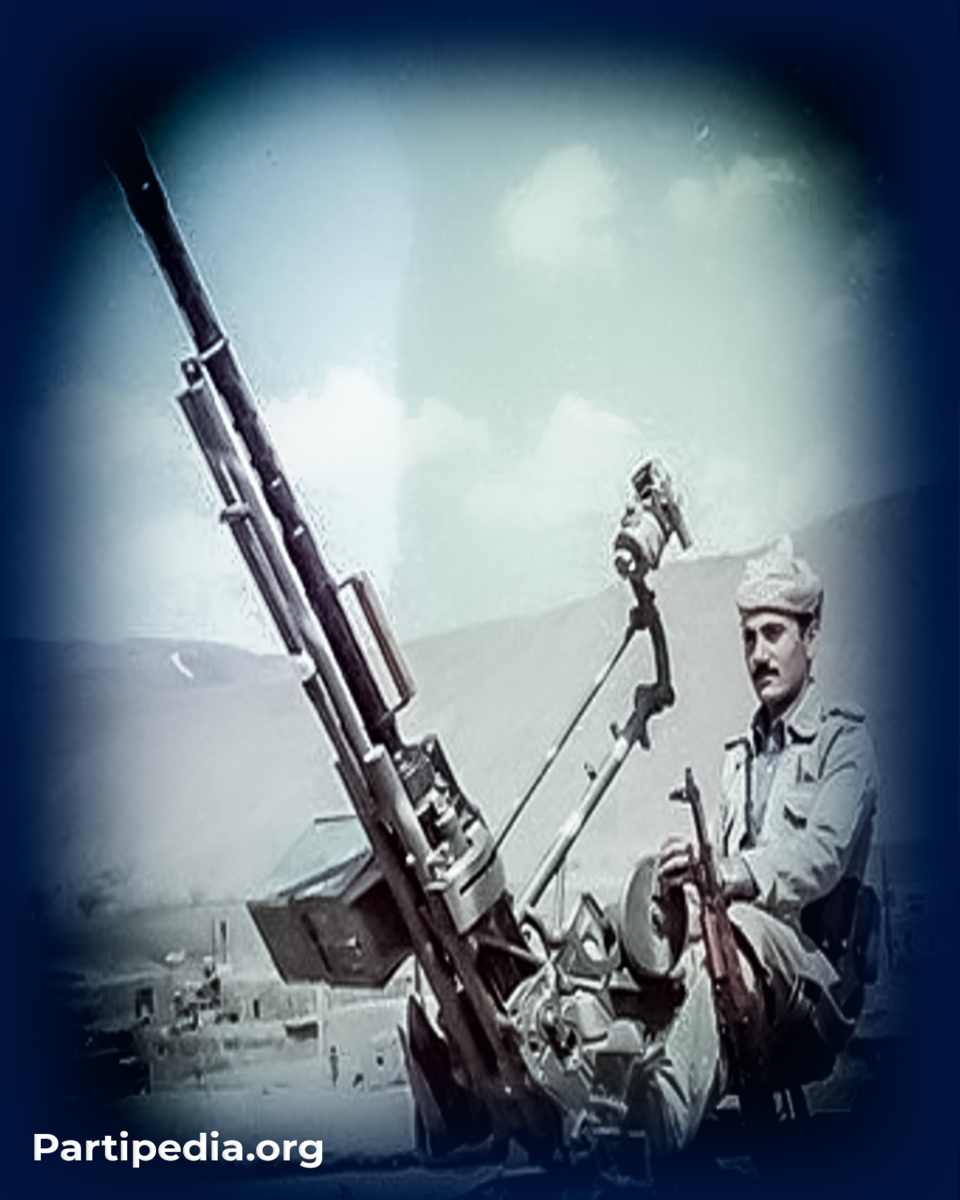
Anti-aircraft division
This was also a very important part of the Peshmerga forces to reduce the threat of air forces over the revolutionary areas. The anti-aircraft weapons were 12.5mm, 14.5mm and 32mm machine guns. Since the weapons were old, they were not very effective against the advanced aircraft of the time, but the Peshmerga, who were experts in using these weapons, were able to shoot down several Iraqi army aircraft such as the Alyoshin, Meg 19, Bajer and Meg 21.
-
Intelligence Department (Intelligence)
This section was established at the beginning of the establishment of the Balek force, which had a very important role in conveying the messages of the revolutionary leadership to the war fronts and vice versa. It was initially led by Taha Muhammad Sharif, Hişyar and Mewlud Ibrahim. In the years (1970-1974) it was given great importance, Abdullah Melazade became the general manager. Their equipment included five main Bethel stations, several Russian stations 104 and 105, and a radio station (airline monitoring) and 80 agencies (Hockey Tokey) and were distributed to the front lines of the Peshmerga defense positions.
All the Peshmerga of the intelligence force were ready at the front lines when necessary and conveyed the orders of the leadership directly to the front lines. They also reported the news of the Peshmerga front activities to the leadership and the Voice of Kurdistan, which was also broadcasted by the agency throughout Kurdistan. In addition to reporting the news, the wireless units of that force monitored the movement of the Iraqi army's artillery, tanks, aircraft and infantry through the (listening) system. They knew where the army wanted to attack or bomb. They immediately informed their superiors and the leadership made the necessary plans to confront and defend or withdraw from those areas. The wireless units were always strong, dealing a major blow to the Iraqi army.
-
To keep
This section was led by Abdulrahman Abu Awf and Abdulrahman Gerdi was his assistant. Milazim Hajar Kirkuki was responsible for the defense of the Akoyan Valley for a time, then Osman Khoshnaw was appointed in his place. They were tasked with gathering information on government forces.
-
national defense
This force was established in 1969 for two reasons, one of which was to prevent the government from using helicopters to land its forces behind the Peshmerga positions, and the second was to provide assistance to the battlefields when necessary. For this purpose, people from the Balek border villages were registered under the name of the National Defense Force (Karox) and weapons were distributed to them. For a while, Sheikh Muhammad Harsin was the commander of this force and Hassan Nasir was his deputy. After him, Abdullah Axa took charge of it and Hassan Nasir also assisted him.
-
Civil Defense
The Iraqi army soldiers who were killed on the battlefield and whose bodies remained on the battlefield were returned and buried by the civil defense in accordance with Islamic law. They also assisted and guided the local residents during the airstrikes and buried the bodies of the martyrs. Jawhar Hirani supervised the work and Mullah Ibrahim Rezani was his assistant.
-
health
This institution has provided many services to the Peshmerga. The Balek force had a special hospital run by the bandagers Ahmad and Maghdid Fatah. In 1974, the hospital was expanded and Dr. Xesrow Jamil Dizeyi and Dr. Kurdo each supervised it for a period of time, with the bandagers assisting them.
-
court
The court was one of the institutions of the revolution. In the Balek force, there was a court institution headed by Judge Hasan Pishdari. In 1974, Judge Saeed Yaqubi, Judge Tofiq and Judge Hussein Khosnaw became his assistants. Mamosta Mullah Qadir Siktanî, the judge of Galale, and Mullah Wais, the judge of Dola Rust, with the help of experts in Kurdish customs and traditions, cooperated with the rulers on the basis of Sharia. They resolved problems and made appropriate decisions on issues of education, land and family in order to reach a consensus between the conflicting parties.
-
Ammunition depots and warehouses (warehouses)
Naqib Wirya Ma'ruf was in charge of this department, and Milazim Cemal, Milazim Fuad, and Baqi Ma'ruf assisted him in providing military supplies.
Balek Force Battalions in the years (1974-1975)
-
First battalion
The composition of the battalion was as follows: Haji Beroqi was the battalion commander and Hamid Said Gurgo was responsible for the administration, and its leaders were:
Musa Shemed, Zikri Yehya, Ali Shikak, Cadir Mihemed Mizuri, Sabah Mirke Xeylani, Mamend Mustafa Delzey, Yasin Beroxi, Cewher Bersiyavi and Said Ibrahim Keletoki.
-
Second battalion
The battalion commander was Mustafa Nërweyi and Osman Salih Nërweyi was his deputy, and its leaders were:
Abdulwahid Nerveyi, Chawshin Xano, Hussein Fatah Nerveyi, Muhsin Haji Nerveyi and Abdullah Mela Xidir.
3. Third Battalion
Mullah Amin Barzani was the battalion commander and Haji Muhammad was his deputy, and its leaders were:
Wesman Hojrani, Seyid Selim, Hameziyad Feqiyani, Salih Akoyi, Zubair Ali and Suleman Abdullah Charboti.
4. Fourth Battalion
The battalion commander was Izzet Sulêman Beg and Mihemed Emin Faqê Hesen was his deputy, and its leaders were:
Seyid Mustafa, Majid Beg and Muhammad Ma'ruf.
5. Fifth Battalion
Arif Yasin The battalion commander and Ramazan Mihemed Doski were his deputy, and its leaders were:
Şiwan Dirî, Aziz Khan Muhajir and Hamid Bir Doski.
6. Sixth Battalion
Seyid Asi, Becan Cundi and Hamid Effandi were each commanders of the battalion for a time, and its leaders were as follows:
Hussein Hamedol Balek, Wasta Ismail, Eli Sor, Ismail Haji Qadir and Ferzende Effendi.
7. Seventh Battalion
The battalion commander was Eliko Nebi and Seyid Abdullah Nebi was his deputy, and its leaders were:
Mullah Sheikh Muhammad, Hadi Suleiman Nabi and Arif Ibrahim Abdullah.
The year 1975
In 1975, the Balek forces expanded further, its borders becoming a front led by Idris Barzani. Abdullah Agha Pisdari, the commander of that force at that time, was a member of the general military school along with Francis Hariri, both of whom helped in managing the front. The Balek force was divided into several forces whose geographical borders were defined as follows:
-
The Power of a Ball
The boundaries of his duties were within the Beşe Valley, Hasan Beg Mountain, Ash Xidir Axa, Ser Berdê, the Musaka River to the main Jundiyan-Galale road. Ali Khalil was the commander of that force and Milazim Yunis Rojbayani was his deputy, including four battalions:
1. 1st Battalion - Haji Beroqi
2. 2nd Battalion - Mustafa Nürwei
3. 5th Battalion - Arif Yasin
4. 6th Battalion - Hamid Effendi
2- The Power of the Hand
The border of this force was from the main road of Cundian-Galale to the Akoyan Valley and Korak. Initially, Sulêman Hacî Bedrî was appointed as the commander of this force, then Izzet Sulêman Beg became the commander of this force. His battalions were as follows:
1. 3rd Battalion Akoyan
2. 4th Battalion Hendrin-7th Battalion Eliko
3- The Power of the Head
The commander of that force was Mirxan Hamedemin Mirxan, Salih Mihemed Kekşar was his deputy, and Ehmed Salih Bekir was responsible for the administration. The force consisted of four battalions:
1. The first battalion was commanded by Ehmed Hesen Sulêman.
2. The second battalion was under the command of Mehdi Hesen Doski.
3. The third battalion was commanded by Shabaz Ahmed Shabaz.
4. The fourth battalion was commanded by Ibrahim Kuremarki.
4- Zozik Power
The Zozki Force was made up of Kurdish soldiers who had left the Iraqi army and joined the Kurdistan Revolutionary Army in 1973-1974. The force consisted of three battalions:
1. The first battalion was commanded by Naqib Hassan Barzani.
2. The second battalion was under the command of Lieutenant Colonel Yunis Rojbeyan.
3. The third battalion was commanded by Naqib Adil Akrey.
Source:
-
Ismail Gundejori: September Revolution in Balekayeti, Rojhelat Publishing House, Edition 1, 2018.
-
Ghazi Adil Gerdi: A Peshmerga serving the Barzani cause Haji Beroqi, volume 1, second edition, Turkey, 2021.
-
Abdullah Rehman Melazade, The Military Structure of the Great September Revolution, second edition, Duhok, 2012.
-
Hawkar Karim Hame Sharif: September Revolution 1961-1970, 1st Edition, Salaheddin University Press, Erbil, 2012.
-
Senger Ibrahim Khosnaw: Military Events of September Revolution 1970-1975, 1st Edition, Hewlêr, 2022.
-
Omer Osman: The Life of a Kurd, Mukriyani Publishing House, 2nd edition, volumes 1 and 2, 2008.
-
Milazim Xhidir Abdullah Debakh: My Memories and the Artillery of the Great September Revolution, third edition, Roshnbirî Publishing House, Hewlêr, 2020.