

Biography
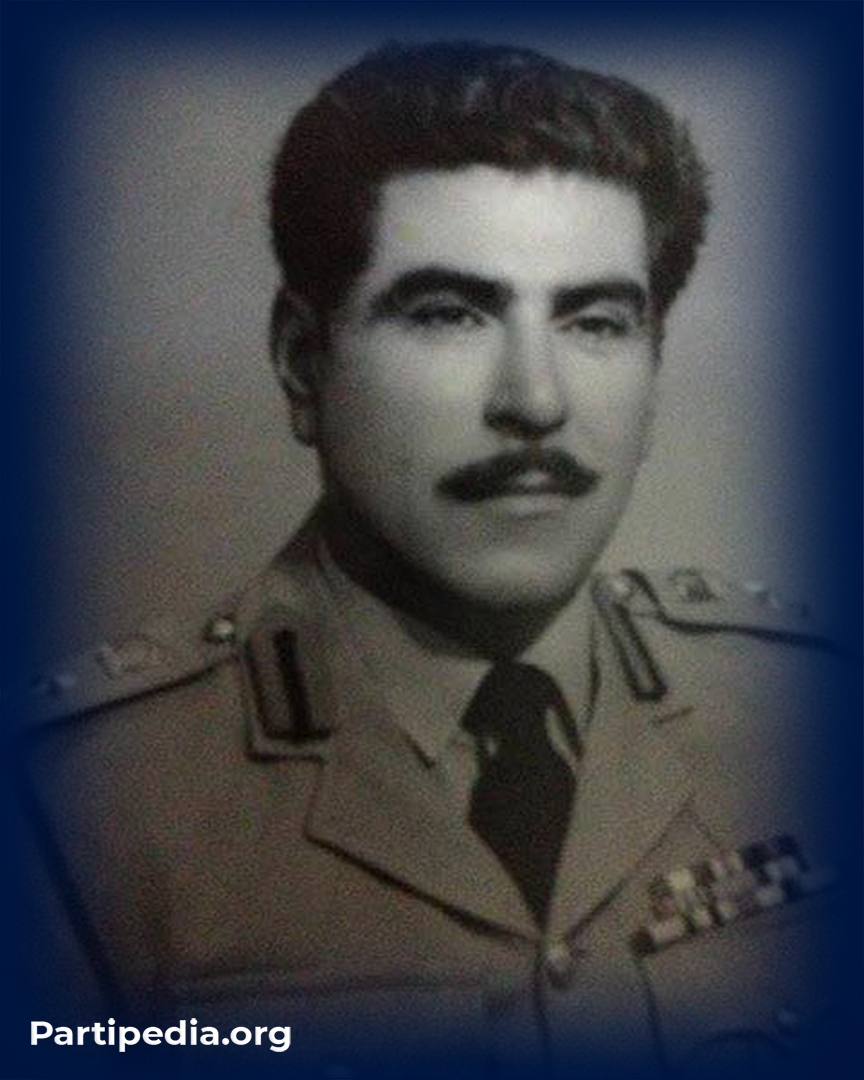
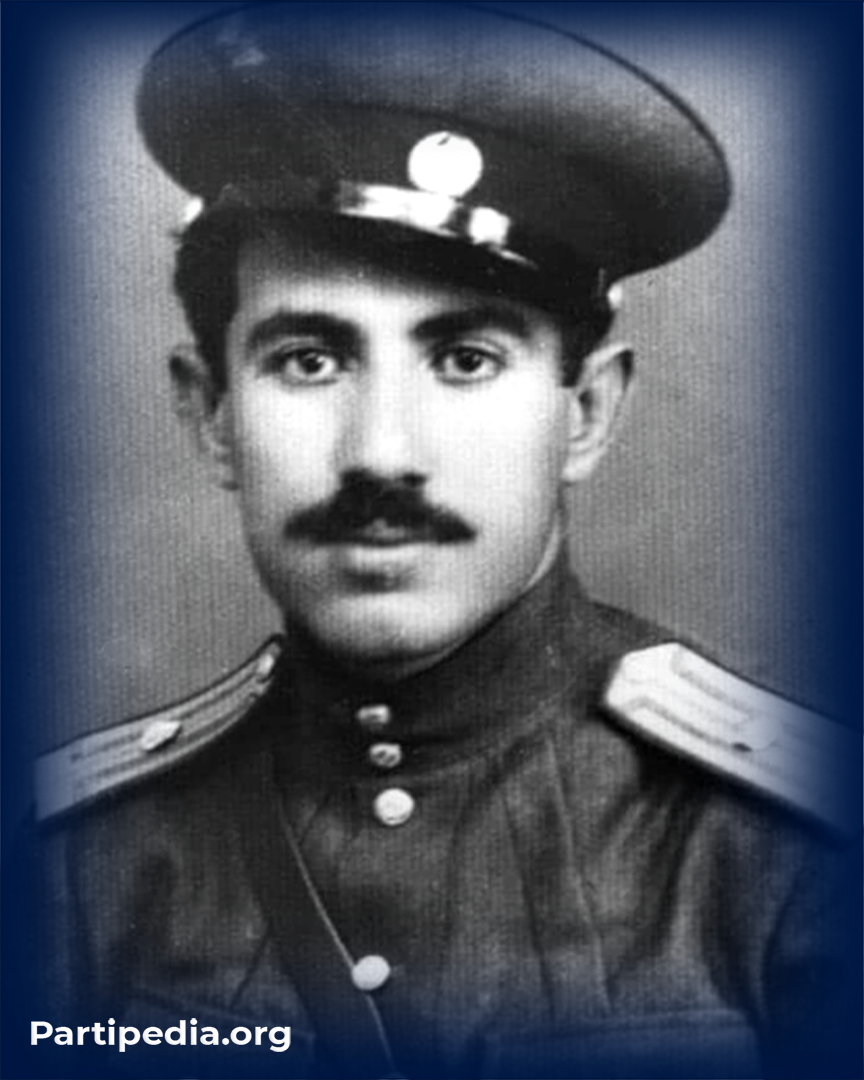
Nuri Ahmed Taha Abdullah Axa, known as Sherdil, was born in Sulaymaniyah in 1921. He is originally from the Mukriyan tribe. His grandfather, Abdullah Agha Dibukri, left the Dibukri region of Mukriyan in Eastern Kurdistan in the mid-nineteenth century and migrated to Sulaymaniyah. He is the brother of the two poets Kamiran Ahmed Taha (1929-1986), known as Kamiran Mukri, and Ahmed Derwesh Abdullah (1911-1998), known as Exol.
Nuri Ahmed Taha initially began his religious studies in Hujra, completed his primary and secondary education in Sulaymaniyah, completed high school in Kirkuk in 1939, entered the Baghdad Military College in 1939, graduated from the Baghdad Military College in 1941 with the rank of second lieutenant, and joined the Hiwa Party in the same year. In 1941, he married Najibe Abdi Amini.
In 1975, after the death of September Revolution, emigrated to Iran, then to the Syrian Arab Republic, then to Germany and returned to Iraq on October 21, 1977. After the Kurdistan Uprising of 1991, he migrated to Eastern Kurdistan and passed away on May 21, 1991 in the city of Sardasht in Eastern Kurdistan and was buried in Girê Seywan in the city of Sulaymaniyah. He was fluent in Kurdish and Arabic.
Worksheet
In 1935, he joined the ranks of the Kurdish Freedom Association, in 1936, he attended the funeral ceremony of General Mustafa Pasha Yamulki (1866-1936) in the city of Sulaymaniyah, in 1939, he was an active member of the Darker Association, in 1941, he joined the Kurdish Hîwa Party, in 1941, he served in the Qarexan military base near Khanaqin in the Germasir region, in 1943, he met with President Mustafa Barzani (1903-1979) in the city of Sulaymaniyah, in 1944, he joined the ranks of the Kurdish Revival Association (J.K), in 1944, he was imprisoned for five years for his pro-Kurdish stance and then escaped from the central prison in Baghdad with the help of three Kurdish soldiers, in 1945, he became a member of the Freedom Committee, in In 1946, he went to Eastern Kurdistan. In the summer of 1946, he led a group of sixty peshmerga who received artillery duty in the Patriotic Republic of Azerbaijan. In 1946, he was among the founding members of the Kurdish Democratic Party. In 1946, he commanded an organized and safe retreat of the Kurdistan Democratic Republic Army on the Saqz front. On December 21, 1946, he was a member of the Southern Kurdistan delegation to Tehran to negotiate with Iranian, American and British officials for the return of the southern Kurds to their lands. In 1946, after the collapse of the Kurdistan Democratic Republic, he was a member of the Kurdish delegation in the town of Nakhedeh to negotiate with Sergeant Ghafari, a representative of the Iranian army. In 1947, he returned to Southern Kurdistan and was arrested in the village of Zinway Sheikh in Erbil province and was sentenced to death for participating in the Kurdistan Democratic Republic army. He was imprisoned in Baghdad's central prison in Kurdistan and was released by royal decree in 1953. At the end of 1952, he was transferred to Sulaymaniyah prison. In 1953, in an Arabic newspaper in Baghdad, he attributed his release to public pressure on the government.
In 1953, he was elected as a member of the Central Committee of the Kurdistan Democratic Party - Iraq by the representatives of the third congress. In 1954, he ran for the Council of Representatives of the Kingdom of Iraq from the city of Halabja, which was then part of the Sulaymaniyah province, but was prevented by the authorities and taken to Khurmal in the Halabja province. In June 1954, he was a member of the joint committee of the Kurdistan Democratic Party - Iraq and the Communist Party of Iraq. In 1954, he was in charge of the Fourth League committee. In October 1956, he was a member of the committee to welcome the body of Sheikh Mahmud Said (1881-1956), also known as Sheikh Mahmud al-Hafid. On the occasion of his funeral ceremony, he was briefly detained by the Mounted Police of the Kingdom of Iraq at the Sarshaqam police station after demonstrations in Sulaymaniyah. In 1956, he became a member of the Central Committee of the Kurdistan Democratic Party - Iraq. The United Kurdistan (Second Unification), in 1958, he visited Prague with several figures for the return of General Mustafa Barzani (1903-1979) to the country, on September 19, 1958, he arrived at Cairo airport with President Mustafa Barzani and was welcomed at the Dome Palace by President Gamal Abdel Nasser (1918-1970), on October 6, 1958, he arrived at Musnad airport in Baghdad with President Mustafa Barzani and was welcomed by the Kurdish and Arab people, in May 1959, he was executed by the authorities for participating in the Second Barzan Revolution, in 1959, he visited Sulaymaniyah with General Mustafa Barzani, in 1959, he visited the graves of martyrs Mustafa Khoshnaw and Muhammad Mahmud Qudsi, the founders of the Kurdish Democratic Party, and then visited the homes of the two martyrs, in 1959 he was elected as a member of the Central Committee of the Kurdistan Democratic Party - Iraq by the representatives of the fourth congress, on March 23, 1959, he was reinstated in the Iraqi army with the rank of Naqib by a republican decision signed by the Iraqi Sovereignty Council, in 1959 the army was established with the rank of district commander and the rank of Naqib.
In 1960, he was elected as a member of the Central Committee of the Kurdistan Democratic Party by the representatives of the Fifth Congress. In November 1960, he was a member of the Revolutionary Organization Committee and responsible for Sulaymaniyah. On December 17, 1961, he retired with the rank of Naqib by a republican decree. In 1961, he joined the ranks of the Peshmerga Forces. In 1961, he supervised the Peshmerga in the city of Sulaymaniyah, where they carried out military activities. In 1961, he was responsible for the fourth division committee. From December 18 to 23, 1961, he attended the meeting of the Central Committee of the Kurdistan Democratic Party (KDP) in the village of Ewdalan in Sulaymaniyah province, to continue the work of the Peshmerga. September Revolution voted for negotiations with the government of Abdulkarim Qasim (1914-1963), in 1961, at the beginning of September Revolution In 1964, he began a secret struggle in Sulaymaniyah under the pseudonym Sherdil and supervised the Xebat printing house. In 1964, he was a supporter of peace between the leader's wing and the Political School group. In 1964, he was arrested for supporting the Political School Group and its decisions. Mawet ConferenceHe was expelled from the ranks of the Kurdistan Democratic Party (KDP) at the 6th congress of the Kurdistan Democratic Party (KDP), after the Ibrahim Ahmed-Jalal Talabani group joined the Iraqi government on December 28, 1966, and turned their backs on it. September Revolution on February 21, 1966, with Engineer Ali Abdullah Amin (1926-2017) and Engineer Nouri Shawes (1922-1981) wrote a letter to President Mustafa Barzani and offered to serve September Revolution and the KDP showed its readiness, retiring from the Iraqi army on October 2, 1966.
Source:
-
Archives of the Encyclopedia Committee of the Kurdistan Democratic Party.
-
Be kuşış, kambız rizim ara ü kawe bayat, xatirat ü asnad siphebd hac'lı rizim ara, (Tihran published by Pirdis Danış Telaye Afaq Press 1393 a.h.), 180.
-
Osman Ali, Dirāsat fī El-hereka El-kurdye El-m'asīre 1833 1946 Dirāsat tarīxye wesaqye, (Erbil mekteb El-tefsīr metbe'e El-seqafe 2003m), 701.
-
Qadir Emin Qudsi, Mukriyan and its events during the Safavid era, (Seqiz, Gutar Publishing House, 2016), pp. 190-191,211.
-
William Ixiltin El-ibin, Mahabad republic 1946 El-Kurdye, translated by Cercîs Fethulla, (Erbil, Aras, published and edited by El-Jamel, 2012), 100.
-
Fazil Resûl, Kurdistan welsiyase El-suvîtiye fî elşerq elewset, translated by Xesan Nu'man, (El-Sulîmanye mekteb elifkir welwe'î fî El-itthad elwetenî elkurdistanî metbe'et mosese Hemdî liltîba'e welneşr 2008m), ê 259, 264.
-
Feysel Rasul Khoshnaw, Biographies of Kurdish Officers, Part II, (Tehran - Rojhelat Publishing House - 2020), pp. 322-325.
-
Kirîs Kuçra, cinbiş milî kird, tircmey abrahîm younisî, çap dum, (tihran musse antişarat Nigae 1377hi ş), ê 226, 238, 253.
-
Mehdi Mohammed Qadir, Political Developments in Iraqi Kurdistan 1945-1958, (Sulaymaniyah, Kurdistan Strategic Research Center, 2005), pp. 116, 122, 132, 134, 162, 299, 348-349.
-
Abdurrahman Sharafkendi, The Mistake of the Wise, (Paris, 1997), pp. 356, 361.
-
Cemal Nebez, Memories of Days That Will Never Return, (Sulaymaniyah - Şivan Press - 2017), pp. 52, 333-334.
-
Tofiq Mullah Sadiq, Memories of the Partisan Days, the Peshmerga and My Expulsion, 2nd Edition, (Hewlêr, Shehab Press, 1996), pp. 16, 21, 73.
-
Ehmed Dilzar, Memories of My Days, (Hewlêr – Ministry of Culture and Youth – Shehab Press – 2019), p 127.
-
Ahmed Bawar, Contemporary History of Iraq 1914-1968, (Sulaymaniyah, Karo Press, 2018), pp. 268, 357.
-
Afrasyaw Hawrami, Barzani Mustafa in Some Soviet Documents 1945-1958, (Hewler, Aras Publishing House, Ministry of Education Press, 2002), p 132.
-
Ebulhasen Tefrisyan, qiyam efisran Khirasan, print dum, (tihran intisharat etles 1367hi ş), 116.
-
Bekir Abdulkarim Hewazi, A Journey to the Republic of Mahabad, My Memories in Eastern Kurdistan 1944-1947, (Hewlêr, Aras Publishing House, 2001), pp. 19, 30, 37, 38, 101.
-
Salar Hafid, Ali Al-Askari, the best of history, (no matter where you are), 28.
-
Habib Muhammad Karim, History of the Democratic Party of Kurdistan (in the context of the leadership) 1946-1993, (Duhok, Xebat Press, 1998), pp. 33, 50, 57, 61, 68.
-
Hesen Erfe', ten and one historical and political essays, (bî ca bî ta), ê 79, 139.
-
Hema Ferec Halabja, From Shinriw to Stockholm, 3rd edition, (Sulaymaniyah - Karo Press - 2015), pp. 15-16, 25, 152.
-
Dana Admiz Şimdit, Rihle ila rical şic'an fî Kurdistan, translated and edited by Cercîs Fethulla, (Erbil, Aras, Ministry of Education, Press, 1999), 168.
-
El-Diktur Kemal Foad, member of the Islamic League of the Kurdish People, El-Diktur newspaper, El-Diktur, the center of the Kurdish People's League, page 495, Al-Sulaymaniyah, Friday, November 18, 2002, 11.
-
Zahir Sawz, Aha Baçkolî Xeyat, a Caravan of Untouchables and the Struggle for Pride, Brayati Newspaper, Organ of the Kurdistan Democratic Party - United, issue 1881, Hewlêr, Thursday, 24.02.1994, pp. 6-7.
-
Sheikh Talib Sayyid Ali, Summary of Memories of My Life, Drafted and Edited by Abdul Khalid Sabir, (Sulaymaniyah - Karo Press - 2014), p 56.
-
Abduljabar Abdulmistefa, experience in the field of medicine 1921-1958, (Baghdad, published in 1978), 142.
-
Abdul Khalid Saber (Mamosta Khalid), Genealogy of the Sulaymaniyah Patriarchate from 1784 to 1914, Second Edition, (Beirut, Glory Green Press, 2010), pp. 789-790, 793.
-
Ali Sincari, The Kurdish and Arab Elasticulture in the Middle East, Elcuz Alsalis, (Duhok Press Xanî 2012), 186.
-
Ali Abdullah, History of the Democratic Party of Kurdistan of Iraq until the Third Congress, (Unpublished, September 1968), pp. 52, 74.
-
Faruq Ibrahim Sharif, alzubat alkurd fi aljaysh aliraqi munz tesise am 1921, elcuz alsalis, (El-ilîmanye 2018m), 52.
-
Kaws Qeftan, a Kurdish nationalist and revolutionary in Kurdistan between 1958 and 1964, (Al-Silîmanye al-mudîrye al'ame lîltîba'e welneşr 2004m), pp. 161-162.
-
Public decree number 33, newspaper of the Iraqi government, Ministry of Foreign Affairs in Iraq, number 4890, otherwise, Baghdad, 7 February 1961, 1.
-
Masoud Barzani, Barzani and the Kurdish Liberation Movement, Volume Three, Second Edition, (Hewlêr - Ministry of Education Press - 2002), pp. 144, 215, 244.