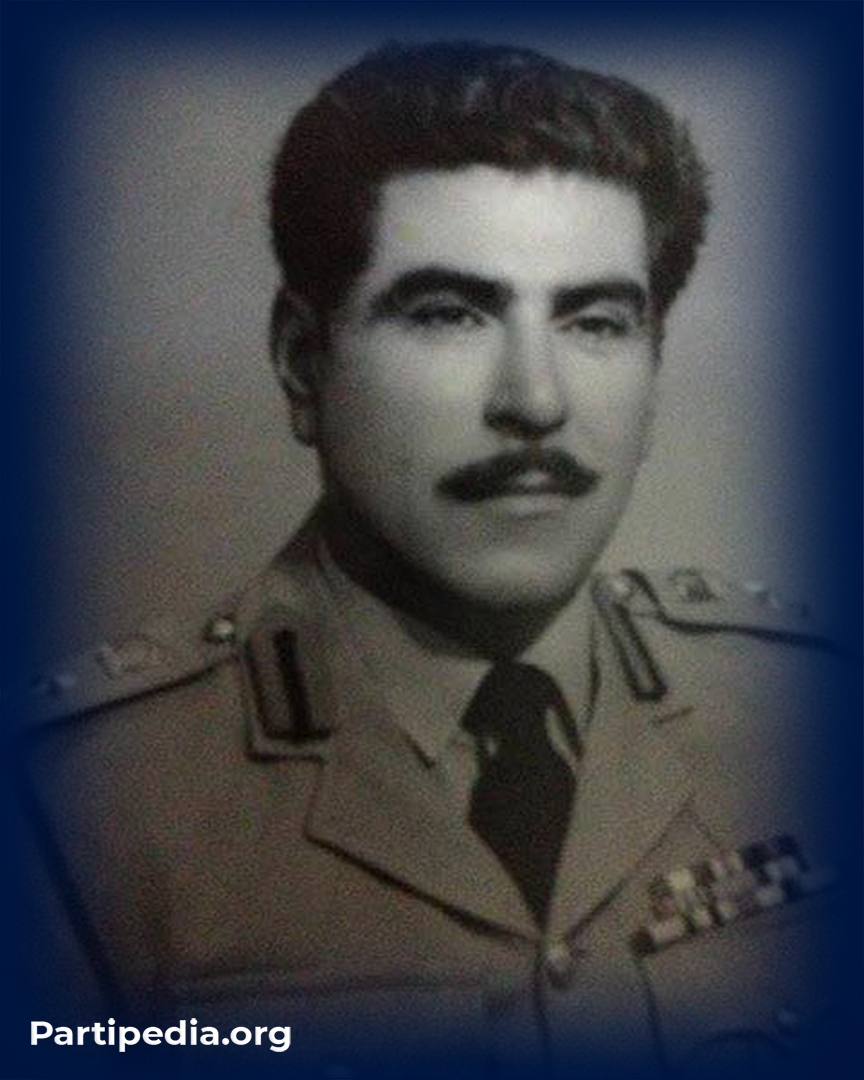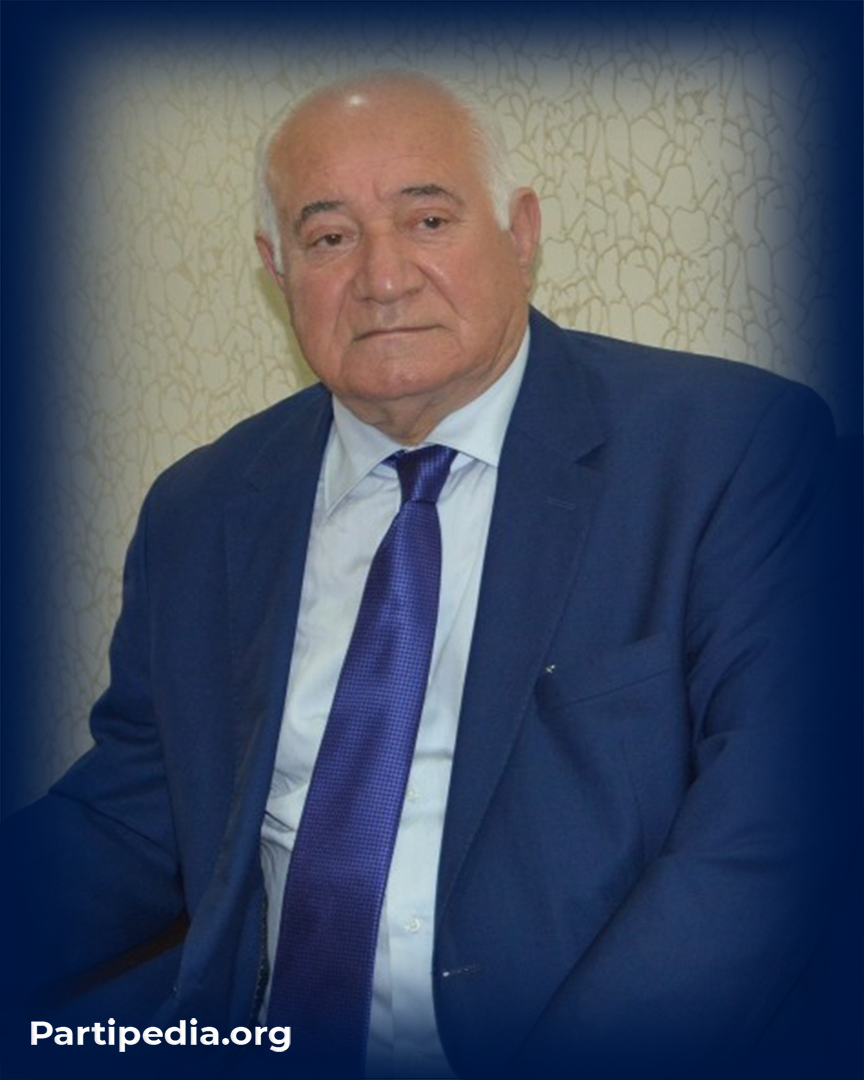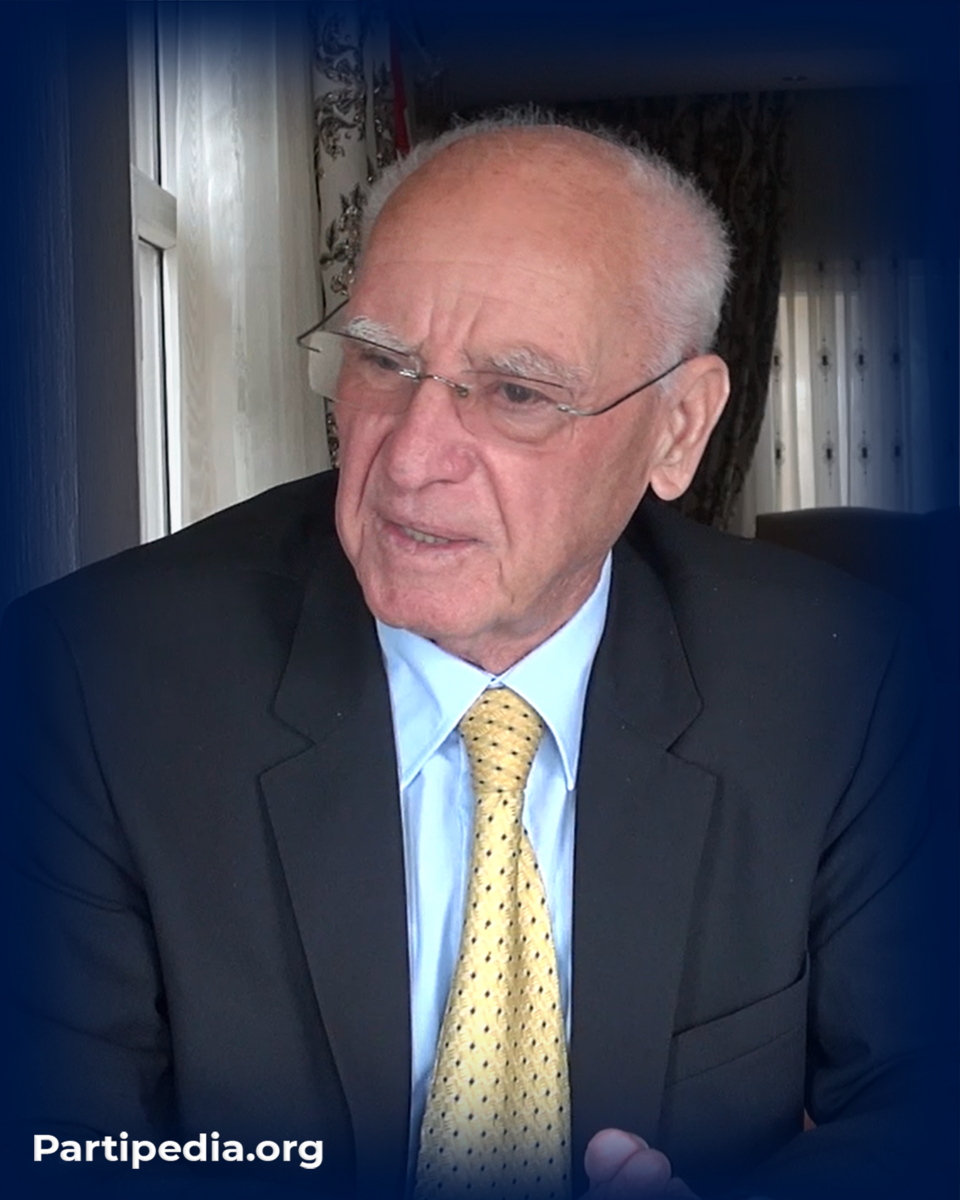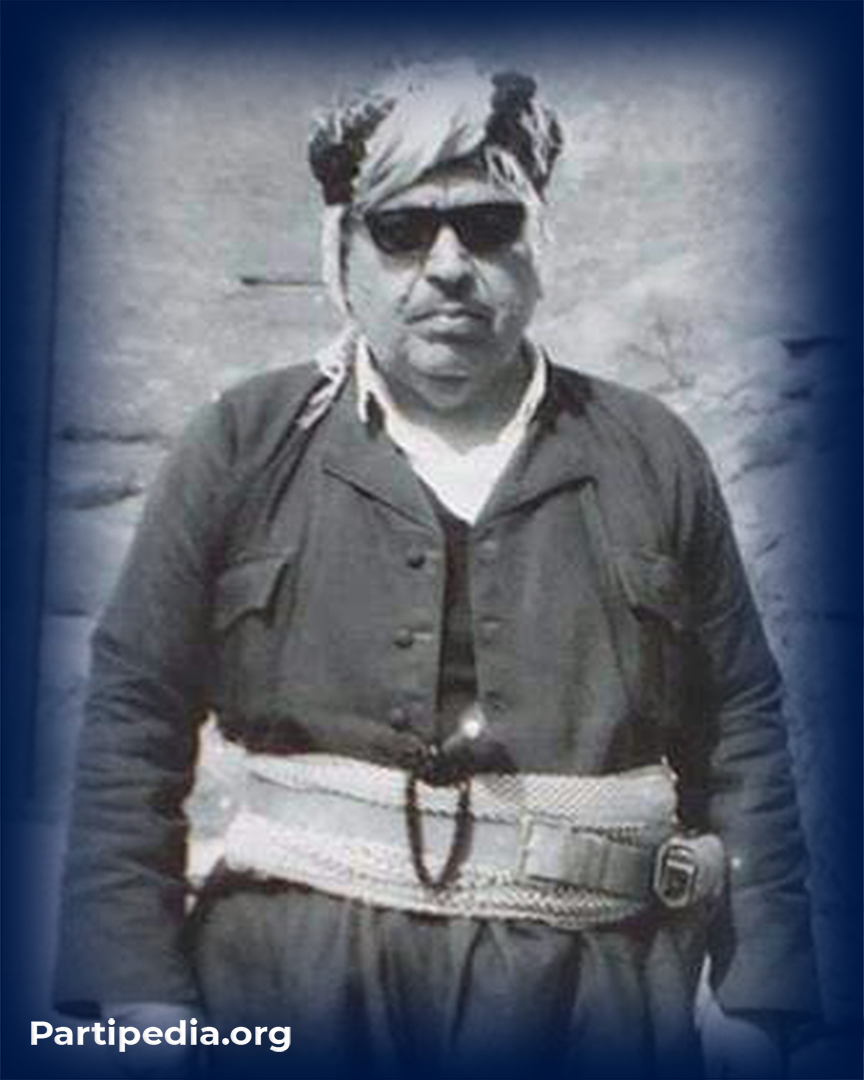


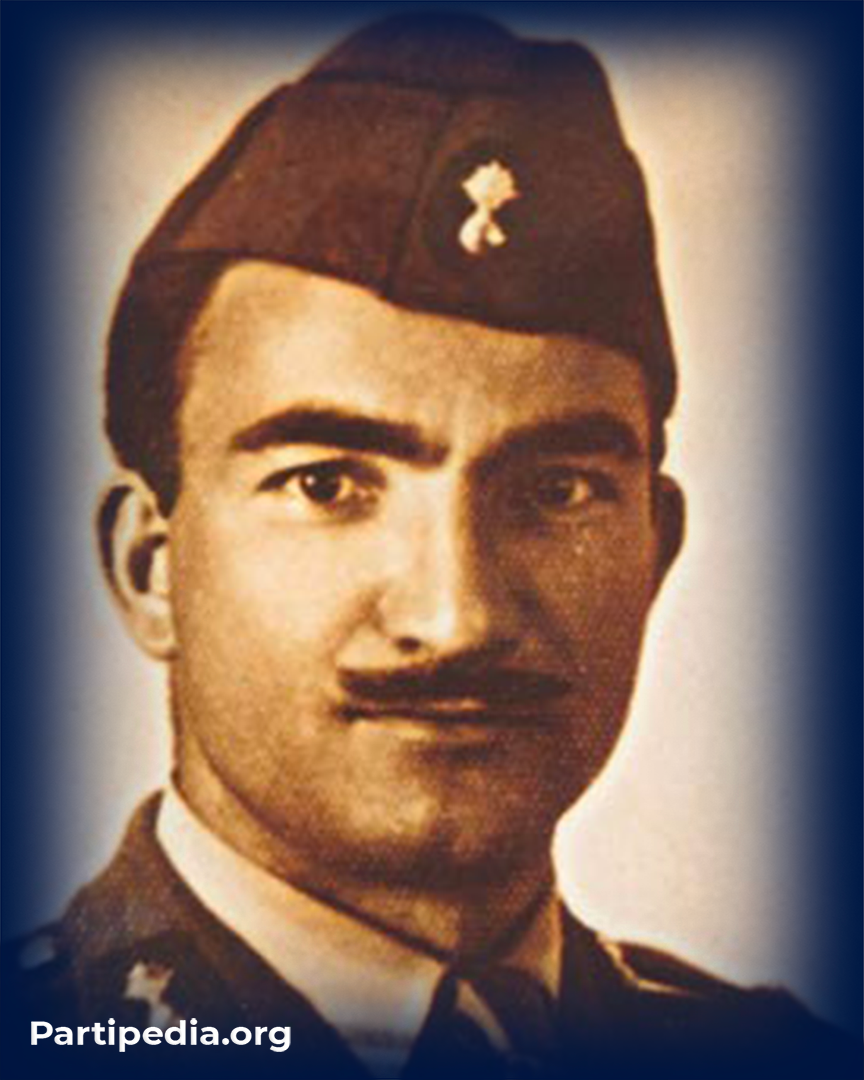
Officer and politician, Mirhac Ahmed Tahir, known as (Mirhac Akreyî), became a member of the Darker Association in 1939 and contacted the ranks of the Kurdish Youth Party on the 7th of May 1939. In 1944, he was one of the participants in the second Barzan revolution (1943 - 1945). In 1846, he was a member of the founding board and the working committee of the central committee of the Kurdish Democratic Party (established the Congress). In 1948, he was appointed a member of the leadership of South - East Kurdistan (Baku Conference). In 1953, at the third congress, he was elected a member of the central committee of the Kurdistan Democratic Party - Iraq.
Biography
Mirhaj Ahmed Tahir was born in 1911 in the city of Acre, in the province of Mosul. He completed his primary education in 1923. In 1923, he went to Baghdad to study at the middle school level. In 1929, he completed his preparatory education in Baghdad. In 1929, he wanted to enter the Baghdad Military College, but was not accepted because he was a Kurd. He graduated from the Baghdad Teachers' College in 1931. In 1931, he was appointed as a primary school teacher in Baghdad. In 1935, he was accepted as a student at the Baghdad Military College. On September 15, 1936, in the fifteenth class of the Baghdad Military College, he graduated with the rank of Second Officer. He graduated from the Military College on July 4, 1937 with the rank of Second Artillery Officer and a Bachelor of Military Science. In 1939, he became First Officer. In 1943, he was promoted to the rank of Naqib (Chief) in the Iraqi army. During his military service, he served in artillery and aviation. He was fluent in Kurdish, Arabic, Turkish, English, Russian and Persian.
Worksheet
In 1939, he became a member of the Darker Association and on May 7, 1939, he joined the ranks of the Kurdish Youth Party. On August 16, 1946, with the companionship of Mustafa Mustafa, known as Mustafa Mustafa Khoshnaw (1912 - 1947) was present at the founding meeting of the Kurdish Life Association (J.K) in the Sise garden of the city of Mahabad in Eastern Kurdistan. In August 1943, together with Mustafa Mustafa Mustafa (1912 - 1947), known as Mustafa Khoshnaw He is a member of the delegation of the Kurdish Air Force Party and has visited Eastern Kurdistan to meet with Soviet Union officials and Kurdish figures. In June 1944, he visited the city of Urmia with the aim of contacting Soviet Union authorities and Kurdish revolutionaries in Eastern Kurdistan. In January 1944, in the company of Mustafa Khoshnaw In the city of Urmia, he met with Stalin's Special Representative for Iran-Kurdish Affairs, Naqib Vilchevski, with the aim of coordinating and supporting the Kurdish cause, and in the city of Tabriz, he met with General Lubov, Chairman of the Soviet War Staff, and General Eteksyof, with the same aim. On January 25, 1944, the liaison officer of the Iraqi authorities met with the revolutionaries of the second Barzan revolution (1943 - 1945) on the Acre front in the province of Mosul and tried to get the support of all Kurdish leaders. Mustafa Barzani to comply with his demand for Kurdish rights.
In 1944, in collaboration with Mustafa Khoshnaw and Aziz Shamzini, representing the Kurdish Hiva Party, met with Mustafa Barzani and about the coordination and cooperation between the two sides. In 1944, he was arrested by the Iraqi army at the Emara checkpoint on charges of collaborating with the second Barzan revolution. On April 28, 1945, he was expelled from Baghdad on the road to Muhammad Amin Agha Akre and on April 29, 1945, he fled from the city of Mosul to the town of Akre and then entered the Barzan region, the center of the second Barzan revolution. On May 1, 1945, he reached the liberated areas of the second Barzan revolution and contacted the ranks of the second Barzan revolution. In 1945, he was one of the founders of the Azadi Committee during the second Barzan revolution. On August 19, 1945, due to his participation in the second Barzan revolution (1943 - 1945), an order was issued by the Iraqi Criminal Court to seize all his transferred and non-transferred assets. On November 11, 1945, after the defeat of the second Barzan revolution, he emigrated to Eastern Kurdistan. On March 21, 1946, in the city of Mahabad, he was assassinated by General Mustafa Barzani and held meetings with Peshwa Qazi Muhammad, President of the Kurdistan Republic, regarding the formation of the Barzan force. In 1946, he became the commander of the third battalion of the Barzan force on the Saqiz front on the border of the Democratic Republic of Kurdistan (Eastern Kurdistan). In 1946, with President Mustafa Barzani met with American diplomat Archie Roosevelt in the city of Mahabad.
In 1946, a special meeting was held for Lawyer Rashid Ismail Aziz (1960 - 2001), known as Rashid Bacalan He made arrangements with Qazi Muhammad, the President of the Democratic Republic of Kurdistan, and he himself prepared for this meeting. In 1946, he was among the founding members of the Kurdish Democratic Party. In 1946, he participated in the Mamshay battle against the Iranian army. In 1946, he was elected a member of the Central Working Committee of the Kurdish Democratic Party by the representatives of the first congress (Constituent Congress) in Baghdad. In 1946, he was appointed commander of the third battalion of the Barzani force in the Army of the Democratic Republic of Kurdistan with the rank of Aqid. In 1946, he was responsible for receiving supplies, weapons and explosives from the National Republic of Azerbaijan for the Barzan force in Taqi Awa on the border between the two republics. At the end of 1946, during the defeat of the Democratic Republic of Kurdistan, by order of General Mustafa Barzani The fortress was taken with the aim of facilitating the retreat of the Barzan forces and the forces supporting the Azerbaijan National Republic on the Saqqiz front towards the city of Mahabad. On January 21, 1946, a member of the negotiating delegation of Southern Kurdistan under the leadership of General Mustafa Barzani (1903 - 1979) for the city of Tehran, the capital of Iran, with the Iranian, American and British authorities with the aim of returning the Southern Kurds to their lands. In 1946, after the defeat of the Democratic Republic of Kurdistan, he visited Peshwa Qazi Muhammad and tried to persuade him not to surrender.
In 1946, after the defeat of the Democratic Republic of Kurdistan in the town of Nakheda, he was a member of the Kurdish delegation for negotiations with Sergeant Khafari, the representative of the Iranian army. On April 8, 1947, he arrived in Gader with the Peshmerga forces and decided to join General Mustafa Barzani to defend themselves and not surrender to the Iraqi authorities. On May 28, 1947, under the supervision of President Mustafa Barzani participated in the extensive meeting of the Kurdistan Workers' Party in the village of Kurdistan in Eastern Kurdistan with the aim of organizing the Peshmerga forces and planning to advance towards the Soviet Union. In 1948, he was appointed as a member of the leadership of South-Eastern Kurdistan (Baku Conference). In 1953, without his presence, he was elected as a member of the Central Committee of the Kurdistan Democratic Party-Iraq by the delegates of the third congress. In the fifties of the last century, he studied at the Political Institute of the Communist Party of Uzbekistan for three years and obtained a bachelor's degree in political sciences. On September 17, 1958, he arrived at Prague Airport by plane. On September 19, 1958, accompanied by the President Mustafa Barzani arrived at Cairo Airport and was welcomed at the Dome of the Rock by Gamal Abdel Nasser (1918 - 1970). At the end of September 1958, with President Mustafa Barzani laid a wreath at the tomb of Egypt's missing soldiers in Cairo.
In 1958 with General Mustafa Barzani The death sentence against him was lifted by the Iraqi Sovereignty Council on his return to Baghdad. On October 7, 1958, the Arabic-language newspaper (Al Hurriye) in Baghdad published the news of his return from the Soviet Union. Throughout 1958, he strengthened his ties with more Kurdish officers in the Iraqi army and with President Mustafa Barzani introduces them. In 1959, along with Asad Khoshvi, President Mustafa Barzani He was assigned to speak with the wives of Barzani's friends to discuss life in Southern Kurdistan until they voluntarily returned. On April 18, 1958, he arrived in the city of Erbil with two boats and Barzani's friends and was welcomed by Sheikh Ahmed Barzan (1897 - 1969) and the city's population, and on this occasion he read a speech to the population. On March 23, 1959, he was promoted to the rank of Major in the Iraqi army by a republican decree and by the Iraqi Sovereignty Council.
On Saturday, April 18, 1959, at the port of Basra in southern Iraq, the ships carrying the comrades were welcomed. Mustafa Barzani He returned from the Soviet Union and presented a paper to them. On February 8, 1963, after the Arab Socialist Ba'ath Party coup against the ruler Fariq Rukin Abdulkarim Qasim (1914 - 1963), he was retired from the Iraqi army. In 1977, he was offered a ministerial position by Ahmed Hassan Bakr (1914 - 1982), but he did not accept it. In 1979, he secretly sent condolences to President Mustafa Barzani (1903 - 1979). He passed away on November 13, 1988, in Baghdad and was buried in the Pirban cemetery in the town of Acre, in the province of Duhok.
Source:
1 - Archives of the Encyclopedia Committee of the Kurdistan Democratic Party.