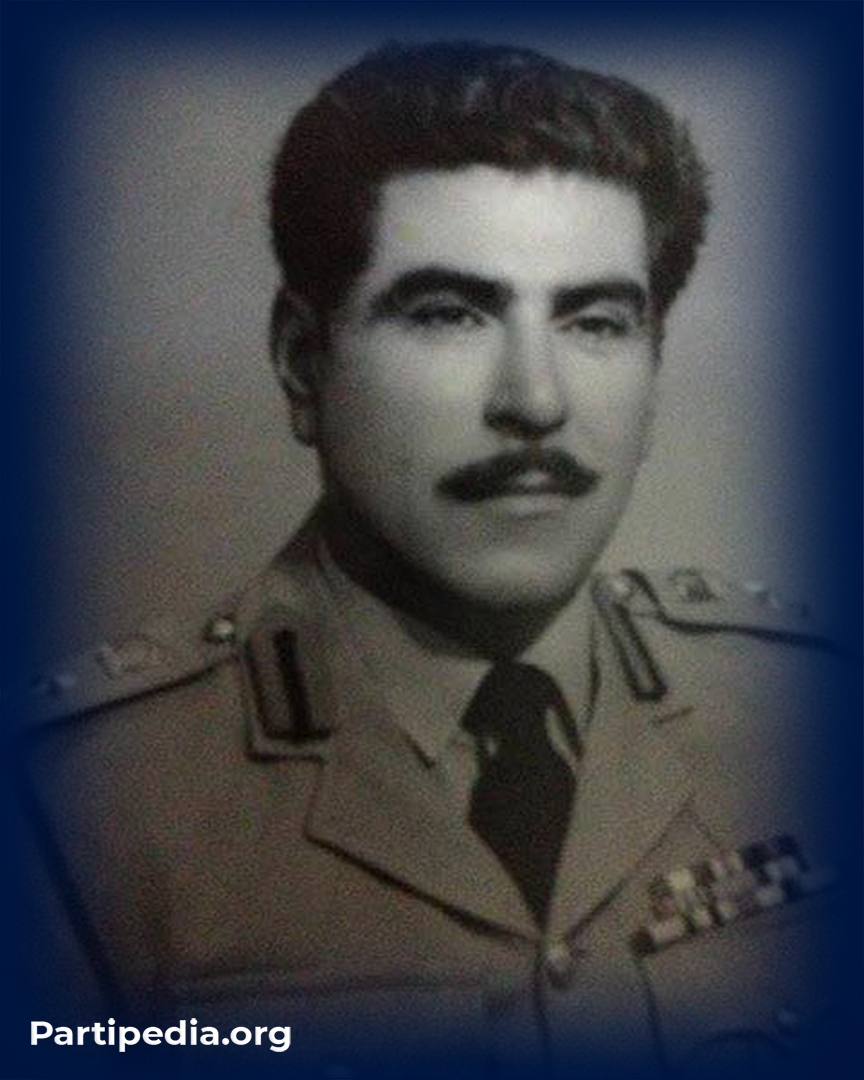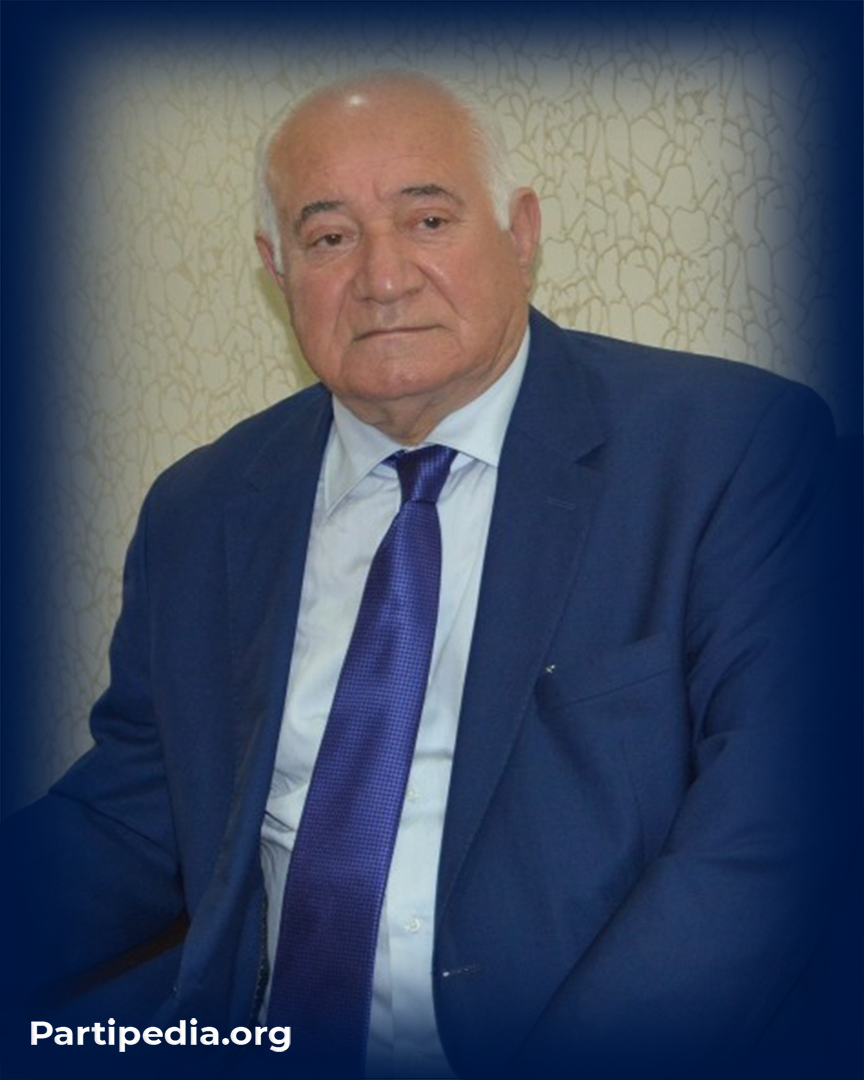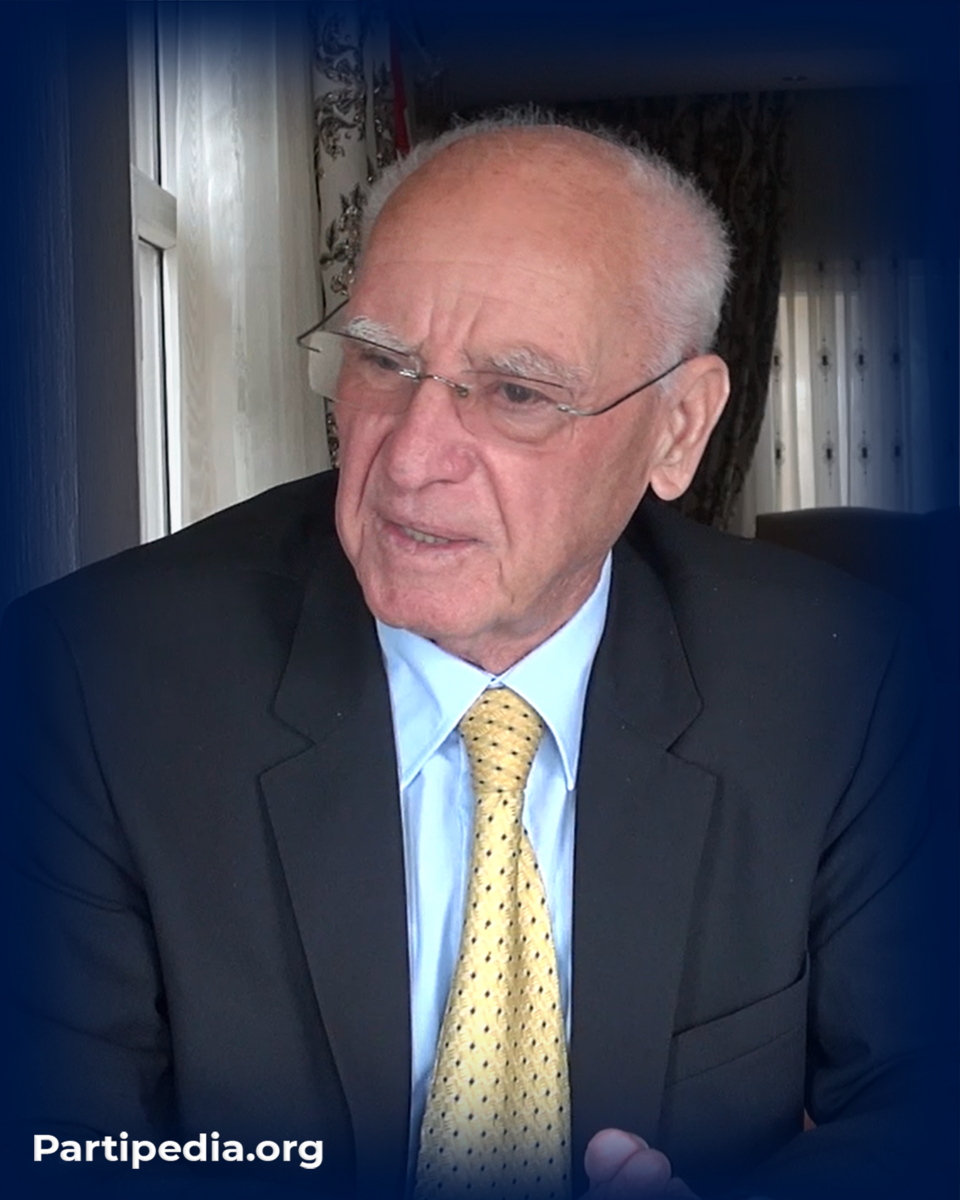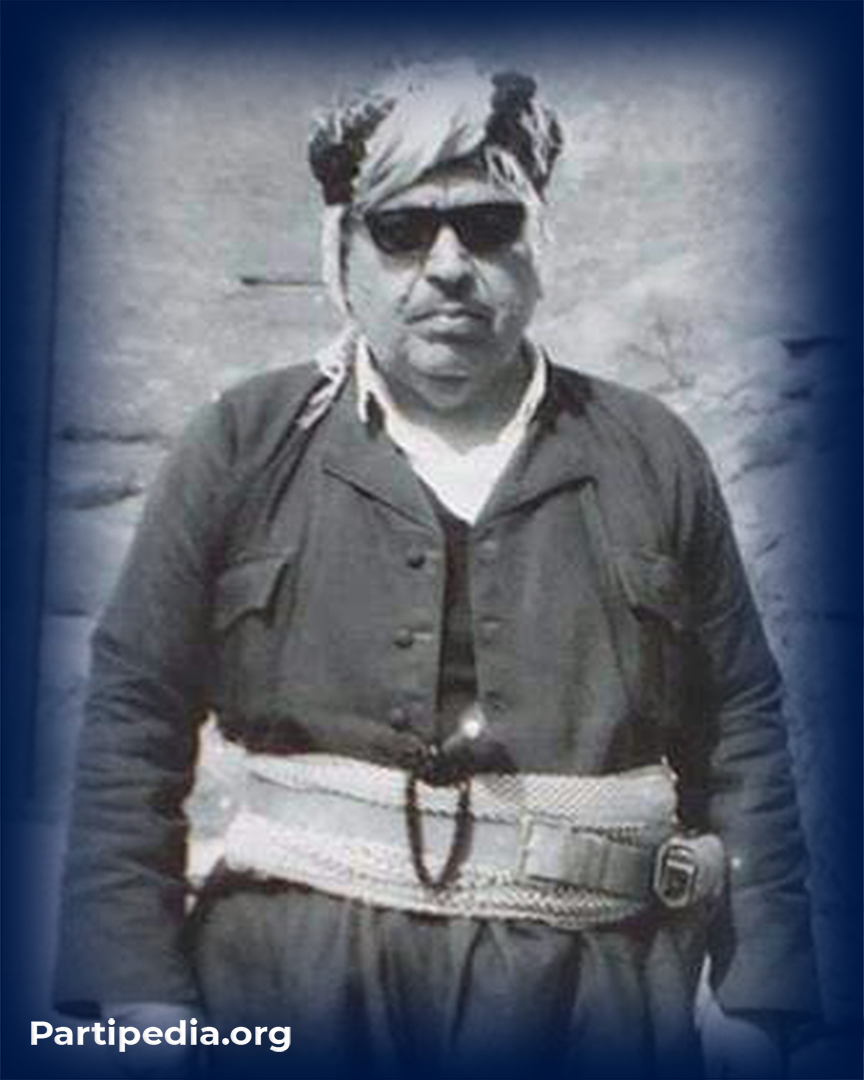


Muhammad Tahir Abdulla Mustafa was known as Muhammad Haji Tahir. He joined the ranks of the Kurdistan Democratic Party in 1946. In 1953, he was a delegate to the third congress of the Kurdistan Democratic Party. In 1959, he was a delegate to the second Baghdad conference and the same year, he was a delegate to the fourth congress of the Kurdistan Democratic Party. In 1960, he became a member of the central committee of the Kurdistan Democratic Party at the fifth congress. In mid-1963, he became a member of the joint committee of the Kurdistan Democratic Party and the Iraqi Communist Party in Khanaqin. In 1964, he participated in the Mawet general meeting to support the formation of the political school.
Biography
Muhammad Tahir Abdullah Mustafa, known as (Muhammad Haji Tahir), was born in 1931 in Sulaymaniyah province to a merchant family and was engaged in business. He graduated from the second grade of the central high school. In 1948, he participated in the Baghdad demonstration against the Portsmouth Agreement between the British Empire and the Iraqi Empire, which promised freedom for the Barzani prisoners. In the 1950s, he owned the Mevlevi radio station on Mevlevi Street in Sulaymaniyah. He was fluent in Kurdish, Persian and Arabic. He passed away on March 13, 2020 in Erbil and was buried in the Sheikh Ahmed Cemetery in Erbil.
Worksheet
Muhammad Tahir Abdul Mustafa joined the ranks of the Kurdistan Democratic Party in 1946. In 1947, he became a member of the Koya district committee. In 1949, he became the head of the Sulaymaniyah district committee. In 1953, he was a delegate to the third congress of the Kurdistan Democratic Party. In June 1954, he became a member of the joint committee of the Kurdistan Democratic Party and the Iraqi Communist Party. In 1954, he was a lawyer for the election of the Iraqi Council of Representatives (1914 - 2000). Ibrahim Ahmed Fatah went to the Qaradakh area with a group of Kurdistan Democratic Party supporters and was arrested by the then regime police near the city of Sulaymaniyah on his way back and sent to the Sara prison in Sulaymaniyah and then transferred to the Kirkuk prison and released on bail after 15 days. In 1956, he was among the founders of the Penjwen district committee. In 1956, he was the point of contact between the Kurdistan Democratic Party and the Iraqi Communist Party in the city of Sulaymaniyah. In 1956, he participated in the demonstration at the Sara gate to demand a respite for Latif Mahmud Saeed (1917 - 1972), known as Sheikh Latif Hafid, to perform the death prayer over his father's body, but they were violently attacked by the police.
In 1958, he became the head of the Sulaymaniyah district committee of the Kurdistan Democratic Party. In 1959, he was a delegate to the second Baghdad conference and the same year, he became a delegate to the fourth congress of the Kurdistan Democratic Party. In 1960, he became a member of the central committee of the Kurdistan Democratic Party at the fifth congress. He also became the head of the Sulaymaniyah district committee of the Sulaymaniyah branch committee and in the same year, he became a member of the Sulaymaniyah peace committee. In 1961, he lived secretly in the city of Sulaymaniyah and was engaged in organization and communication work. In 1961, he became the head of the branch committee of the second branch committee under the leadership of Ali Abdullah. In 1961, he joined the ranks of the Peshmerga forces and was promoted to the rank of Sergeant in Dolbeshk (Sulaymaniyah). In 1961, he became the commander of the Peshmerga forces in the Mawet district. In 1963, he became a member of the joint committee of the Kurdistan Democratic Party and the Iraqi Communist Party in Khanaqin and was able to resolve the conflict between the two parties peacefully. In the years (1963-1964), he was appointed as the third worker of the second branch of the Kurdistan Democratic Party and the head of the branch. In 1963, he became a representative of the Koye congress. In 1963, he became a member of the negotiating delegation to the Iraqi government with the aim of resolving the Kurdish issue. In 1965, after returning to the political school in Hamadan and their forgiveness by the President Mustafa Barzani He has been in charge of the fourth division board.
Source:
1 - Archives of the Encyclopedia Committee of the Kurdistan Democratic Party.
2 - Husên Hacî Qadir, life and achievements and some songs of the late artist Tahir Tofîq, (Hewlêr - Pak Press 2002) - page 158.
3 - Ma'ed Fayyaz, President of the Peshmerga, translated by Saman Suleimani, (Tehran - Published by Mansur Publishing House, 1393 Shamsi), page 126.
4 - The journey of the people's path, the Kurdistanî Niwê newspaper, the organ of the Kurdistan Patriotic Union, number 2.670, eleventh year, Sulaymaniyah, Tuesday, January 21, 2002 - page 1 6.
5 - Commemoration of the martyred leader in a special ceremony Omar Debabe is being done, Kurdistanî Niwê newspaper, organ of the Patriotic Union of Kurdistan, number 2.670, eleventh year, Sulaymaniyah, Tuesday, January 21, 2002 - page 1.
6 - Mihemed Hacî Tahir, Teacher Ibrahim Ahmed was a brave man and an enlightened and optimistic politician, Kurdistanî Niwê newspaper, organ of the Kurdistan Patriotic Union, number 2.428, tenth year, Sulaymaniyah, Monday, April 16, 2001 - page 7.
7 - Meetings and gatherings of Mam Celal, Kurdistanî Niwê newspaper, organ of the Patriotic Union of Kurdistan, number 2,400, tenth year, Sulaymaniyah, Tuesday, March 13, 2001 - page 3.
8 - Ehmed Banixelani, My Memories, (Stockholm 1997) - page 180.
9 - Mehdi Muhammad Qadir, Political Developments in Iraqi Kurdistan 1945 - 1958 - (Sulaymaniyah - Kurdistan Strategic Research Center 2005) - page 162.
10 - Ehmed Dilzar, memories of the days of my life (Hewlêr - Ministry of Culture and Youth - Shehab Publishing House - 2019) - page 127.
11 - Şiwan Mihemed Emin Teha Xoşnaw, A historical study of the political situation in Hewlêr between 1963 and 1970, (Hewlêr - Salaheddin University Press 2016) - page 109.
12 - Citizens' Album, Sulaymaniyah magazine, Sulaymaniyah Municipality, number 32, second issue, Sulaymaniyah, Şivan Printing and Publishing House, May 2003 - page 45.
13 - Prepared by: Salah Rashid, Mam Celal Didari from childhood to the Republic Palace, first cover, (Sulaymaniyah - Karo Publishing House 2017) - page 188.
14 - Abubakir Ahmed Abdullah, a man from Mevlevi Street, first part, Sulaymaniyah magazine, Sulaymaniyah municipality, number 46 - second issue, Sulaymaniyah - Diler Publishing House, May 2004 - pages 17 - 18.
15 - Ehmed Khoja, What I Saw, fourth volume, third edition, (Sulaymaniyah - Binkeya Jîn - Şivan Publishing House - 2016) - page 611.
16 - Ahmed Bani Xelani, Negotiations (Baghdad, Dar al Rawad al Muzdehere lil Taba'a, Wal Nashir, Wal A'lan, 1995) - page 136.
17 - Rojin Celebi Munir, Zakho, July 14, 1958 - March 6, 1975, (Unpublished - Zakho Center for Kurdish Studies 2018) - page 226.
18 - Reading and writing: Abdullah Karim Mahmud, foggy days and the complete memories of Refat Mella, (Sulaymaniyah - Karo Publishing House - 2008) - page 23.
19 - Jabar Jabarî, history of the Kurdish literature in Iraq, (Baghdad - Directorate of the Kurdish Literature - Alam Press 1975) - page 69.
20 - All of Ferec Halabja, translated from Stockholm, third edition, (Sulaymaniyah - Karo Publishing House - 2015) - pages 293, 294.
21 - Khurshid Shere, Work and Blood: Memories of Years of Peshmerga Work, third edition, (Hewlêr - Hacî Hashim Publishing House 2015) - page 117.
22 - Al Dr Kemal Fuad, the author of the book "The National Unity of Kurdistan", Al Atihad newspaper, the central page of the National Unity of Kurdistan, number 495, Al Sulaymaniyah, Friday, November 18, 2002 - page 11.
23 - Zahir Sawz, "This is a small study, a caravan without words and a work of self-knowledge," Birayeti newspaper, the organ of the United Kurdistan Democratic Party, issue 1881 - Hewlêr, Thursday, February 24, 1994 - pages 6 - 7.
24 - Abdulstar Tahir Sharif, The struggle for life (memories) 1935 - 1971, first volume - (Kirkuk - Arabxa 2005) - page 103.
25 - Abdulstar Tahir Sharif, al-Jami'at wal-Minazamat wal-Ahzab al-Kurdish 1908-1958, - (Baghdad - Dar Al-Shawin al-Saqafî 1989) - page 182.
26 - Abdulstar Tahir Sharif, history of the Kurdistan Party, second edition (Baghdad - manuscript of the Kurdistan Party 1979), pages 142 - 170 - 172 - 182 - 236.
27 - Abdulrahman Gomeshini, part of my memories, (Sulaymaniyah - Qan'i Press 2003) - page 15.
28 - Keyfi Hadi, shares his memories about the beginning of the Peshmerga's work and mission for the readers of our magazine, Derin magazine, the organ of the Erbil Second Division Press School, issue 1 - Erbil, Ministry of Education Press, Saturday, June 4, 2005 - page 8.
29 - Fifth Congress of the Kurdistan Democratic Party, Roji Niwë magazine, number three, first year, Sulaymaniyah - Kameran Publishing House, June 1960 - page 56.
30 - Leqa Du, Leqa Du gave the middle of the century of struggle, (Hewlêr - Aras Publishing House 2010) - page 38.
31 - Masoud Al Barzani, Al Barzani and the Kurdish Revolutionary Movement, the Journal of the Salesian Movement, the Second Edition, (Erbil - Ministry of Education Press 2002) - page 144.
32 - Mustafa Salih Karîm, Miracî' al abtal, wetelîiye al şuheda, sahîfe al atihad, al sahîfa al merkezîye lil atihad al watâni al Kurdistanî, al a'dad 323, al sane al saminiye, al Sulaymaniyah, al Friday 18 June 1999 - page 4.
33- From the document of the Kurdish national movement for the revolution, written by Metin, the first secretary of the Democratic Party of Kurdistan - al-Muhad, number 47, Dihok, Hawar Press, first half of the year, first draft 1995 - page 81.
34 - Mahmud Mullah Izzet, The Endless Caravan, (Sulaymaniyah - Serdem Publishing House 2000), pages 87 - 88.
35 - Nermin Osman, a young woman and a brave revolutionary wife, Kurdistanî Niwê newspaper, organ of the Kurdistan Patriotic Union, number 7.840, year twenty-eight, Sulaymaniyah, Wednesday, April 17, 2019 - pages 8 - 9.
36 - Student Association Representative, Roji Niwe magazine, issue 8, first year, Sulaymaniyah, Kameran printing house, second printing, 1960 - page 18.
37 - Hewal ü deng ü bas ü rüdaw, Rojî Niwê magazine, number 1, first year, Sulaymaniyah, Kameran Press, April 1960 - page 101.
38 - Farhad Ewnî, 36 letters and a few personalities from my court, (Hewlêr - Salaheddin University Press 2019), pages 59 - 63.