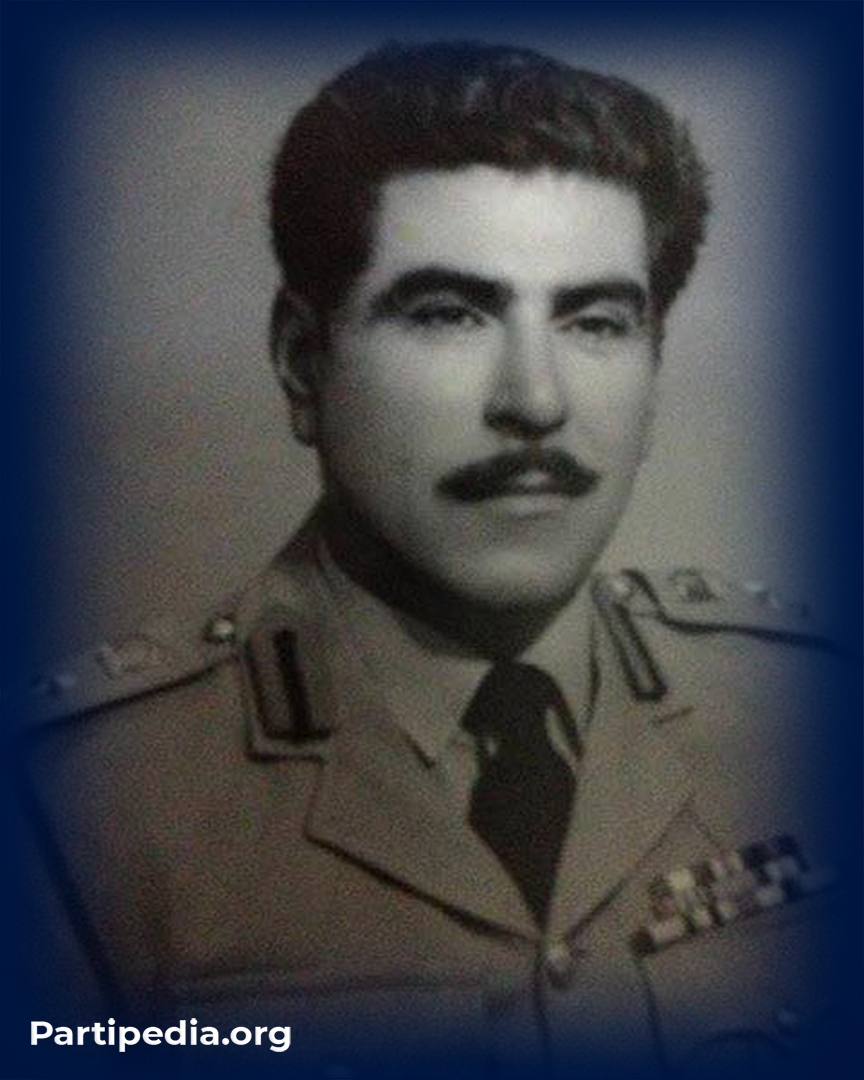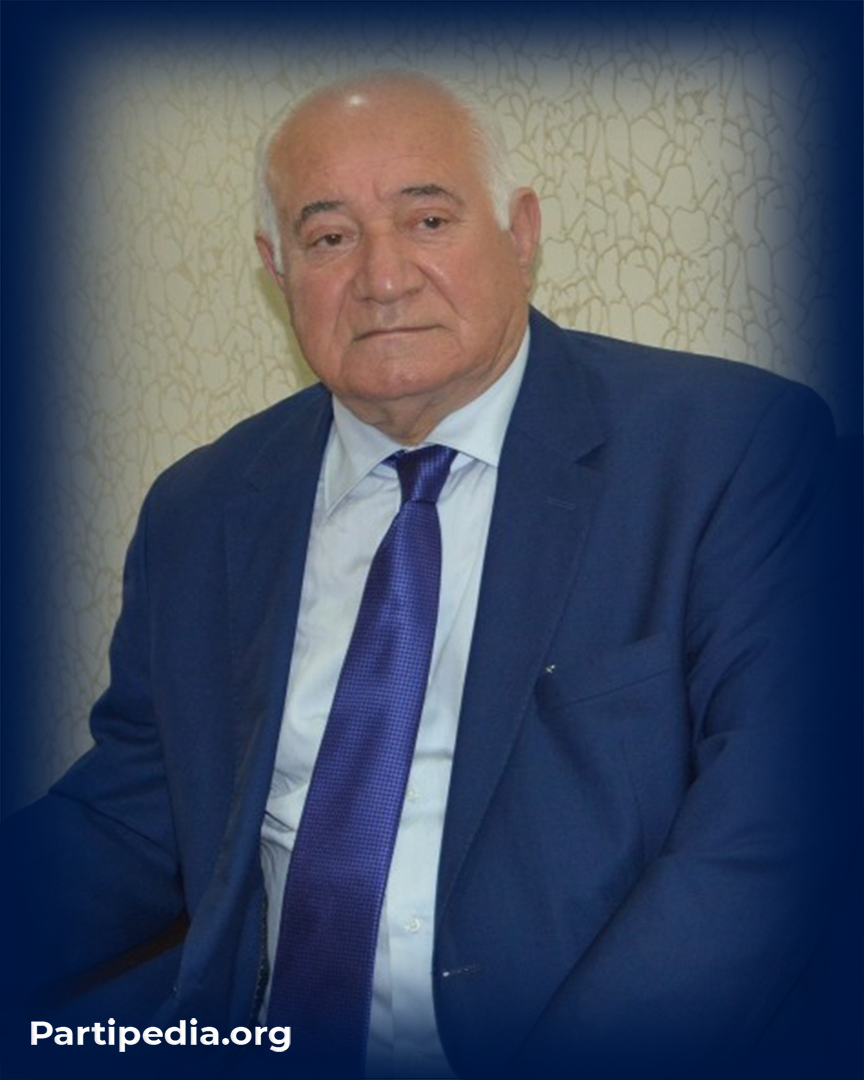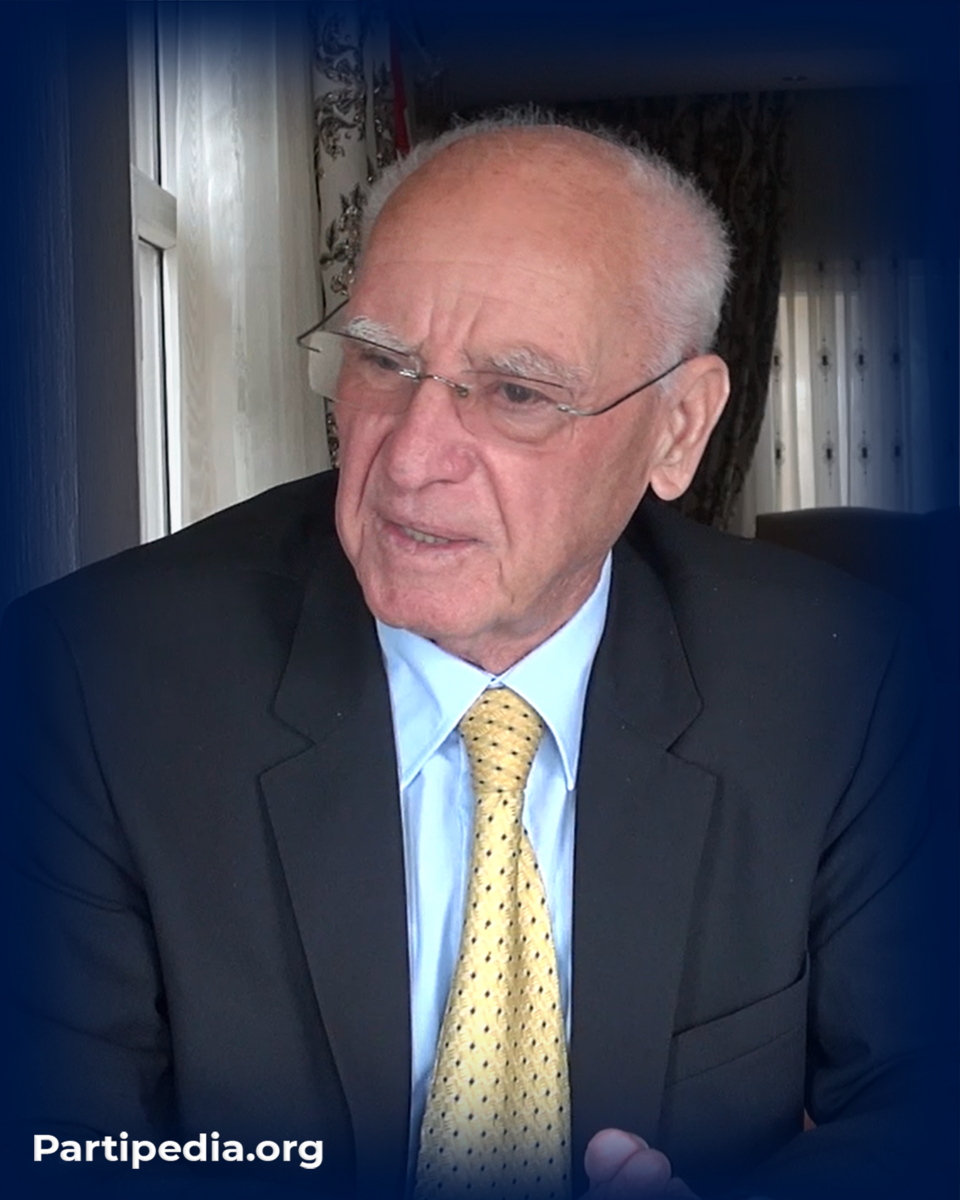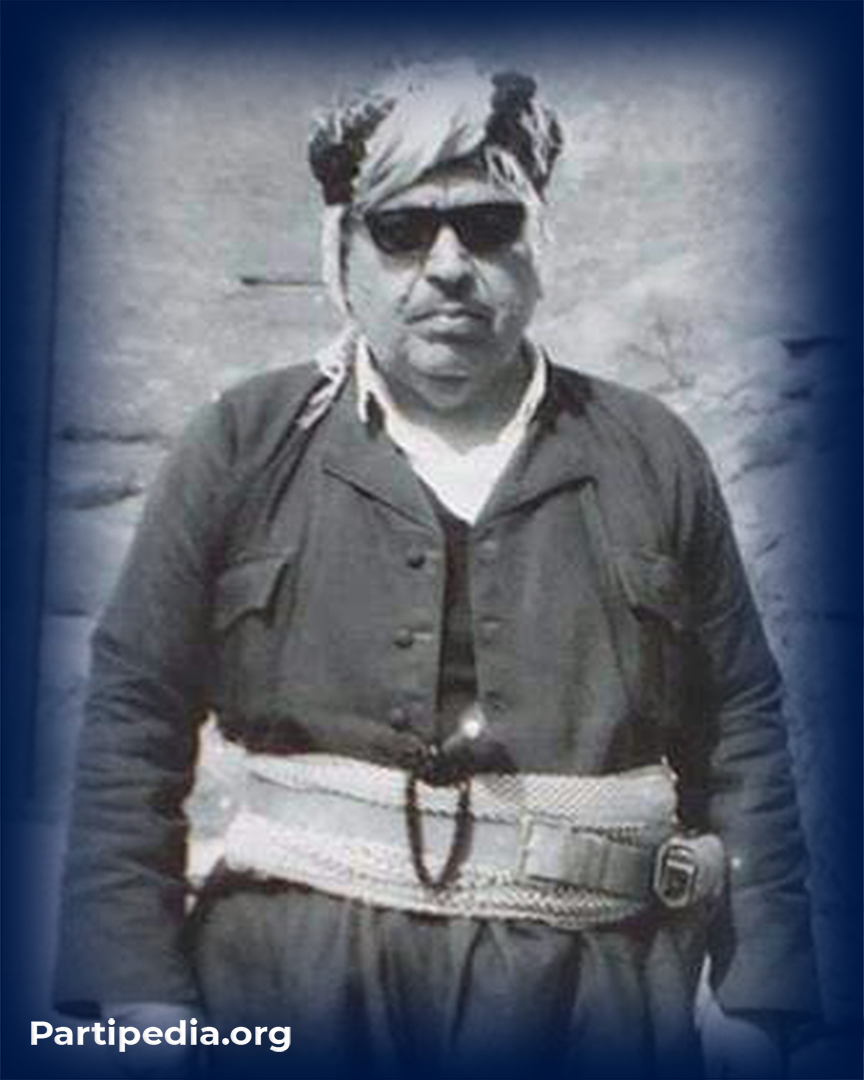


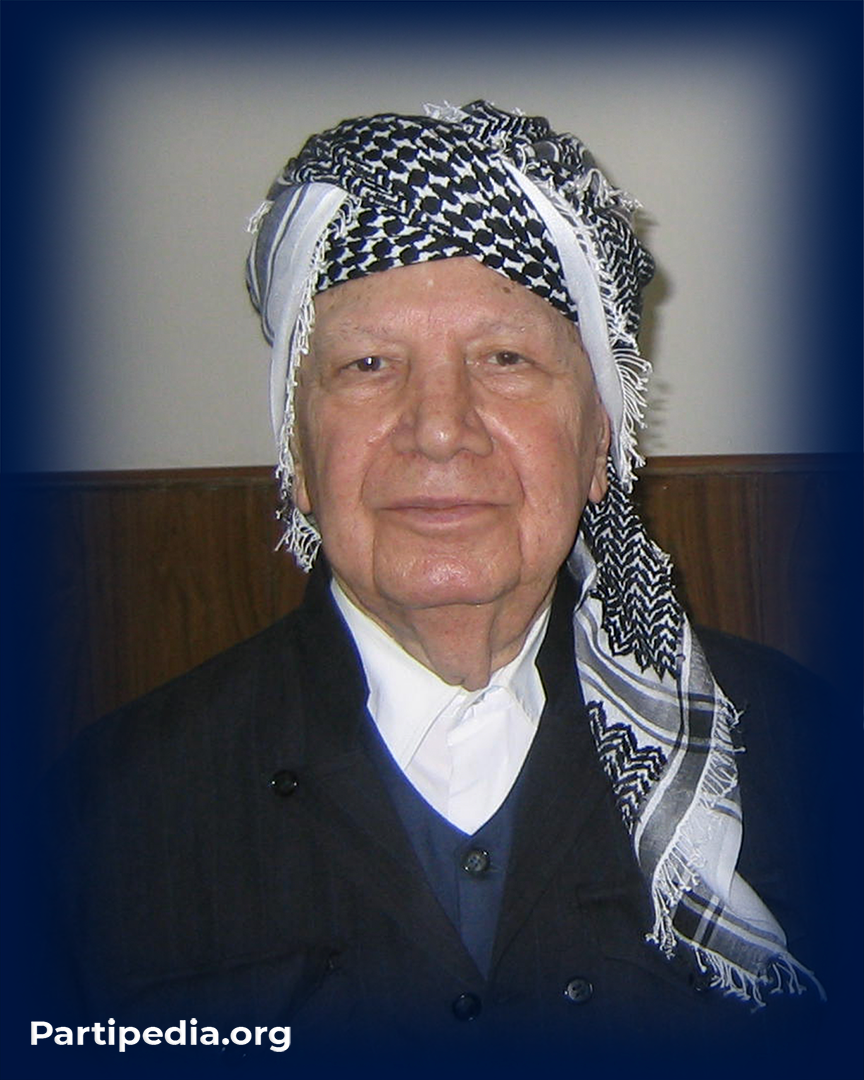
Ali Abdulla Amin, known as (Coş), was a party teacher, engineer and politician. He joined the Hiwa Party in 1941. He worked in the Millet Association in 1943. He became a member of the Struggle Union (Wahde Al Nizal) in 1944. He became a member of the Revolutionary Party's political school in 1945. He became the Secretary of the Kurdish Liberation Party in 1945. In 1946, he was elected as a member of the central working committee and then the political school of the Kurdish Democratic Party at the first congress. In 1953, he was elected as a member of the central committee and the political school of the Kurdistan Democratic Party - Iraq at the third congress. In 1959, he was elected as a member of the central committee of the Kurdistan Democratic Party - Iraq at the fourth congress. In 1960, he was elected as a member of the central committee and political school of the Kurdistan Democratic Party at the fifth congress. In 1966, he was elected as a member of the central committee and political school of the Kurdistan Democratic Party at the seventh congress. In 1970, he was elected as a member of the central committee and political school of the Kurdistan Democratic Party at the eighth congress. In 1976, he was one of the members of the provisional leadership of the Kurdistan Democratic Party at the Berlin conference.
In 1979, he was elected Secretary of the Kurdistan Democratic Party at the ninth congress. In 1989, he was elected Vice President of the Kurdistan Democratic Party at the tenth congress. In 1993, he became Vice President of the Kurdistan Democratic Party - United at the eleventh congress. In 1999, he became Vice President of the Kurdistan Democratic Party for the third time at the twelfth congress.
Biography
Ali Abdullah Amin was born in 1926 in the city of Koya to a prominent family. He received a bachelor's degree in civil engineering from the Baghdad College of Engineering. In 1941, he joined the ranks of the Kurdish Hîwa Party in the city of Koya. In 1943, he worked in the ranks of the Millet Association. In 1944, he became a member of the Union of Struggle (Wahdiye Al Nizal). In 1944, he became a member of the board of writers of the Union of Struggle magazine. In the early summer of 1944, with the aim of unifying the Union of Struggle association and the Iraqi Communist Party in Baghdad, he met with Yusif Salman Yusif (1901 - 1949), known as Fahd, and the Secretary of the Iraqi Communist Party, but he unconditionally accepted their membership. In 1945, he became a member of the political school of the Revolutionary Party. In 1945, he became the Secretary of the Kurdish Liberation Party. In 1945, he became a member of the editorial board of the Revolutionary newspaper, an organ of the Iraqi Kurdistan Communist Party. In 1945, he became a member of the editorial board of the Rizgari newspaper, an organ of the Kurdish Liberation Party. In 1946, the joint publishing house of the Iraqi Kurdistan Communist Party and the Kurdish Liberation Party was established in the same house in Baghdad where he was buried. In 1946, he established the Haji Qadir Koy library in the town of Koy with the aim of promoting intellectual development among the public. In 1946, he was appointed by a lawyer Hamza Abdullah Omar (1915 - 1998) was assigned to negotiate with lawyer Ibrahim Ahmed Fatah (1914 - 2000), head of the Jiyanewey Kurd (J.K) association in Sulaymaniyah, with the aim of joining the Kurdish Democratic Party. He was the last member of the leadership of the first congress and led the ranks of the Kurdistan Democratic Party for 71 years, until on Monday, September 25, 2017, he voted (Yes) in the Kurdistan independence referendum due to his poor health. He passed away before noon on Tuesday, November 24, 2017, due to illness near the city of Erbil and was buried in the city of Erbil. He was fluent in Kurdish, Arabic, Persian and English.
Worksheet
Ali Abdullah Amin In 1946, he was elected as a member of the central working committee of the Kurdish Democratic Party by the congress delegates at the first congress. In 1946, he was elected as a member of the political school at the first meeting of the central committee. In 1946, he was known by the pseudonym (Coş) within the organizations of the Kurdistan Democratic Party - Iraq. In 1950, he became a member of the Central Working Committee of the Kurdish Democratic Party at the Koye conference. In 1951, he was briefly expelled from the city of Mosul with six other Kurdish Democratic Party figures and was released by the court after reviewing the decision. In 1952, he was imprisoned in the Mosul prison for his Kurdish activities. In 1953, he was elected a member of the Central Committee of the Kurdistan Democratic Party - Iraq by the representatives of the third congress. In 1953, he was elected a member of the political school at the first meeting of the Central Committee. In the years (1953 - 1954), due to his search by the Iraqi government, he and a few of his friends went into hiding in the village of Qortelas in the Erbil province. In 1956, during the merger between the KDP and a group of members of the Iraqi Communist Party, which is considered the second merger, he became a member of the central committee of the Kurdistan Democratic Party. In 1957, due to the addition of other members of the Iraqi Communist Party to the KDP, which is considered the third merger, he became a member of the central committee of the Kurdistan Democratic Party.
On January 10, 1958, he led a joint demonstration of the Democratic Party of the United Kurdistan and the Communist Party of Iraq in the town of Koya in support of Zeim Rukin Abdulkarim Qasim (1914 - 1963). On July 26, 1958, he participated in a meeting in Koya with the aim of forming a Kurdish delegation to visit Baghdad and congratulate the authorities of the new Iraqi Republic and present the demands of the Kurdish nation, and on July 27, 1958, he met with Zeim Rukin Abdulkarim Qasim at the headquarters of the Iraqi Ministry of Defense. In 1958, he was in charge of the second branch of the Democratic Party of the United Kurdistan. In 1959, he was elected a member of the central committee of the Democratic Party of Kurdistan - Iraq by the representatives of the fourth congress. In 1959, he was elected as a member of the political school at the first meeting of the central committee. In 1959, he was appointed as the head of the second branch of the branch after the lawyer Shamsedin Muhammad Osman (1933 - 2012), known as Shamsedin Mufti, became his supervisor. In early 1959, he became a member of the National Front of Koya and coordinated with the Iraqi Communist Party to resolve all issues. In June 1959, he received Sheikh Ahmed Sheikh Muhammad Sheikh Abdulsalam (1892 - 1969), known as Sheikh Ahmed Barzani, as a representative of the Kurdistan Democratic Party - Iraq, and led the delegation to the town of Koya and read the welcoming speech. He was among the founding members of the Kurdistan Democratic Party on Saturday, January 8, 1960. He was elected as a member of the central committee of the Kurdistan Democratic Party by the delegates of the fifth congress in 1960. He was elected as a member of the political school at the first meeting of the central committee in 1960.
In 1960, the third division of the second division, led by teacher Jalal Abdulrahman Amin (1928 - 1987), known as Jalal Beg, was appointed as the second division's supervisor. From 18 to 23 January 1961, he attended the meeting of the central committee of the Kurdistan Democratic Party in the village of Awalan in the Sulaymaniyah province, with the aim of continuing the September Revolution, which he was involved in. In 1961, he was arrested and did not surrender and hid in the city of Erbil. In 1961, he supervised all military activities of the Peshmerga forces in the city of Erbil and encouraged the officers and ranks of the Kurdistan Democratic Party in the Iraqi army to join the Peshmerga forces. On August 8, 1961, he launched a plan to seize the arsenal of the Erbil Police Headquarters and succeeded in this act. In 1962, he became the head of the second division committee and led the organizations of the Kurdistan Democratic Party in the city of Erbil through a secret life. In 1964, he participated in the Mawet general meeting. In 1964, he was expelled from the sixth congress of the Kurdistan Democratic Party for supporting the political school within the ranks of the Kurdistan Democratic Party. After joining the Ibrahim Ahmed group, Jalal Talabani On January 28, 1966, and their participation in the Iraqi government and their support for the September Revolution, on February 21, 1966, Engineer Nuri Sadiq Ali (1922 - 1983), also known as Nuri Shaweys and Nuri Ahmed Taha (1921 - 1991), wrote a letter to the President Mustafa Barzani (1903 - 1979) expressed his readiness to serve the September Revolution and the Kurdistan Democratic Party.
In 1966, he was appointed as a member of the preparatory committee of the seventh congress by the central committee of the Kurdistan Democratic Party. In 1966, as a mark of respect for his work and commitment to the revolution, he was elected as a member of the central committee and later as a member of the political school of the Kurdistan Democratic Party at the seventh congress. In 1966, he became the head of the financial school of the Kurdistan Democratic Party. In 1966, he became a member of the leadership council of the revolution of Kurdistan in Iraq. In 1966, he became a member of the working office (al mekteb al tanfizi) of the leadership council of the revolution of Kurdistan in Iraq. On June 22, 1966, he was a member of the delegation of the Kurdistan Democratic Party, headed by Habib Faili, Secretary of the Kurdistan Democratic Party, to the Iraqi Government, which led to the resumption of the June 29 declaration and the signing of the Iraqi Prime Minister Dr. Abdulrahman Bezaz (1914 - 1973), on May 15, 1967, under the supervision of the President. Mustafa Barzani He participated in the military-political conference of Kani Simaq (Hewler) as a member of the political school of the Kurdistan Democratic Party. From October 1968 to February 1968, he was the historical teacher of the Kurdistan Democratic Party at the first class of the cadre communication school in the village of Çoman, in the Hewler province. From April 1969 to August 1969, he was the historical teacher of the Kurdistan Democratic Party at the cadre communication school of the Kurdistan Democratic Party in the village of Navpirdan, in the Hewler province. On June 1, 1970, he became the editor-in-chief of the newspaper Birayeti. In 1970, he was elected a member of the central committee of the Kurdistan Democratic Party by the representatives of the eighth congress. In 1970, he was elected a member of the political school at the first meeting of the central committee. From July 1970 to October 1970, he was a teacher of historical painting for the Kurdistan Democratic Party in the third grade of the Kurdistan Democratic Party's cadre training school in Baghdad. On January 27, 1970, he was appointed governor of Sulaymaniyah and served until March 1, 1974. He was the owner of the Xebat newspaper. On Tuesday, February 3, 1971, the people of Sulaymaniyah warmly welcomed him in the town of Duzkhurmatu in Kirkuk province and went all the way to Sulaymaniyah to express their joy at his inauguration as governor.
On Monday, November 30, 1970, he visited Belgrade at the invitation of the Yugoslav authorities to clarify the political situation in Iraq. On Monday, February 1, 1971, he attended the graduation ceremony of the third class of the Kurdistan Democratic Party's cadre training school at the headquarters of the Kurdistan Democratic Party's fifth branch in Baghdad. On February 3, 1971, he was appointed as the governor of Sulaymaniyah. On Tuesday, June 1, 1971, as the governor of Sulaymaniyah and a member of the political school of the Kurdistan Democratic Party, he received a delegation from the Central Committee of the Communist Party of Bulgaria. On August 16, 1971, he read a speech as the governor of Sulaymaniyah at the silver jubilee celebration or the 25th anniversary of the establishment of the Kurdistan Democratic Party in Sulaymaniyah. On Wednesday, October 20, 1971, he received in Sulaymaniyah province Alexan Kirakosyan, Deputy Prime Minister of the Soviet Republic of Armenia, and Karn Dimitrian, Secretary of the Communist Party of Armenia. On March 30, 1972, as the governor of Sulaymaniyah, he delivered a speech at the seventh congress of the Kurdistan Students' Union. In October 1972, he visited Yugoslavia and Bulgaria at the official invitation of the Communist Party of Yugoslavia and the Bulgarian Patriotic Front. On Sunday, April 8, 1973, he received a joint delegation of the Communists of Yugoslavia at the headquarters of the fifth branch of the Democratic Party of Kurdistan. In 1973, he became a historical art teacher of the Democratic Party of Kurdistan in the fourth semester of the Kurdistan Democratic Party's cadre training school in the village of Navpirdan. On Friday, February 1, 1974, as a member of the political school of the Kurdistan Democratic Party and the governor of Sulaymaniyah, he participated in the opening ceremony of the fifth congress of the Kurdistan Teachers' Union in the city of Sulaymaniyah.
On March 12, 1974, he submitted his resignation to Ahmed Hassan Bakr (1914 - 1982), President of the Republic of Iraq, due to the failure of the Iraqi government to implement the March 11 agreement. On April 2, 1974, he was dismissed from the governorship of Sulaymaniyah by order of the Revolutionary Leadership Council. In 1974, he was appointed as the Secretary General of the General Financial Secretariat during the September Revolution. From May 7, 1974 to August 8, 1974, he was a lecturer on the program and internal affairs of the Kurdistan Democratic Party and the method of establishing the Kurdish Democratic Party at the fifth class of the Kurdistan Democratic Party cadre training school in the village of Ziniway Sheikhi in the Haji Omaran district of Erbil province. In 1974, after the enactment of the law on the legislative council and the working council of the Kurdistan Region, he was appointed Minister of Finance (Executive and Legislative Council). In 1975, after the defeat of the September Revolution, he took refuge in the Shah of Iran. In 1976, he became a member of the interim leadership of the Kurdistan Democratic Party (Berlin Conference). In 1977, his house was used as a place of refuge for those who brought the message of the interim leadership of the Kurdistan Democratic Party to Idris Barzani. In 1979, he became responsible and then chairman of the preparatory committee of the ninth congress of the Kurdistan Democratic Party. In 1979, he was elected a member of the central committee of the Kurdistan Democratic Party by the representatives of the ninth congress. In 1979, he was elected Secretary at the first meeting of the central committee. On November 28, 1980, with the President Masoud Barzani and with the representation of the Kurdistan Democratic Party, he signed the agreement of the Democratic Patriotic Front (al cebhe al wetaniye al demoqratiye) which was called the Separate Front, with the Iraqi Communist Party and the Kurdistan United Socialist Party for the purpose of cooperation. In 1981, he was appointed editor-in-chief of the newspaper Xebat, the organ of the Kurdistan Democratic Party, for the mountain stage. On Wednesday, April 1, 1981, he participated in the opening ceremony of the seventh session of the cadres' conference. From April 1, 1981 to July 7, 1981, he was the military law instructor of the seventh session of the cadres' conference of the Kurdistan Democratic Party in the village of Rajan in Eastern Kurdistan. In 1982, he tried to reconcile the Kurdistan Democratic Party and the Kurdistan People's Democratic Party.
From November 30, 1985 to April 3, 1986, he was the historical teacher of the Kurdistan Democratic Party and the eighth congress of the Kurdistan Democratic Party cadres' conference in the village of Rajan in Eastern Kurdistan. On June 12, 1988, he signed the Kurdistan Front program and the Kurdistan Democratic Party's delegation at the Xwakurk Headquarters of the Iraqi Communist Party. In 1989, he was appointed as the Vice President of the Kurdistan Democratic Party at the tenth congress. In 1989, at the tenth congress of the Kurdistan Democratic Party, he was awarded the title of President for his work from the first to the tenth congress. Masoud Barzani He was awarded the Barzani Medal of Honor. From January 12, 1991 to February 18, 1992, he was the history teacher of the first, second and third congresses of the Kurdistan Democratic Party at the ninth session of the Kurdistan Democratic Party cadres' conference in the town of Pirmam, Erbil province. On March 19, he participated in the meeting of the Kurdistan Front aimed at determining the date of the elections to the Kurdistan National Council and the economic and security situation in Southern Kurdistan. On Sunday, August 16, 1992, he published an article in the newspaper Xebat, the organ of the Kurdistan Democratic Party. In 1993, he received an official term from the Ministry of Education of the Kurdistan Regional Government as the owner of the privilege of the newspaper Xebat, the organ of the Kurdistan Democratic Party. In 1993, he became the Vice President of the United Kurdistan Democratic Party at the eleventh congress. Wednesday, November 9, 1994 at the Secretariat Headquarters Jalal Talabani He organized a joint meeting of the political school of the Kurdistan Democratic Party - United and the Patriotic Union of Kurdistan in the city of Erbil in order to prevent conflicts between them. In 1999, at the twelfth congress, he became the Vice President of the Kurdistan Democratic Party for the third time. On December 6, 2000, he was elected President of the Kurdistan Democratic Party. Masoud Barzani with the aim of opening the main headquarters of the high-ranking Eylul institution in the town of Shaqlawe, located in Erbil province. In 2010, at the thirteenth congress of the Kurdistan Democratic Party, President Masoud Barzani He was known as the party's teacher. He was the last member of the first congress leadership who led the Kurdistan Democratic Party for 71 years until he voted (Yes) in the Kurdistan independence referendum on Monday, September 25, 2017, despite his poor health. He passed away before noon on Tuesday, November 24, 2017, due to illness near the city of Erbil and was buried in the city of Erbil. He was fluent in Kurdish, Arabic, Persian and English.
His works:
The history of the Kurdistan Democratic Party - Iraq until the establishment of the third congress in 1968.
Source:
Archives of the Encyclopedia Committee of the Kurdistan Democratic Party.