

Circumstances and causes
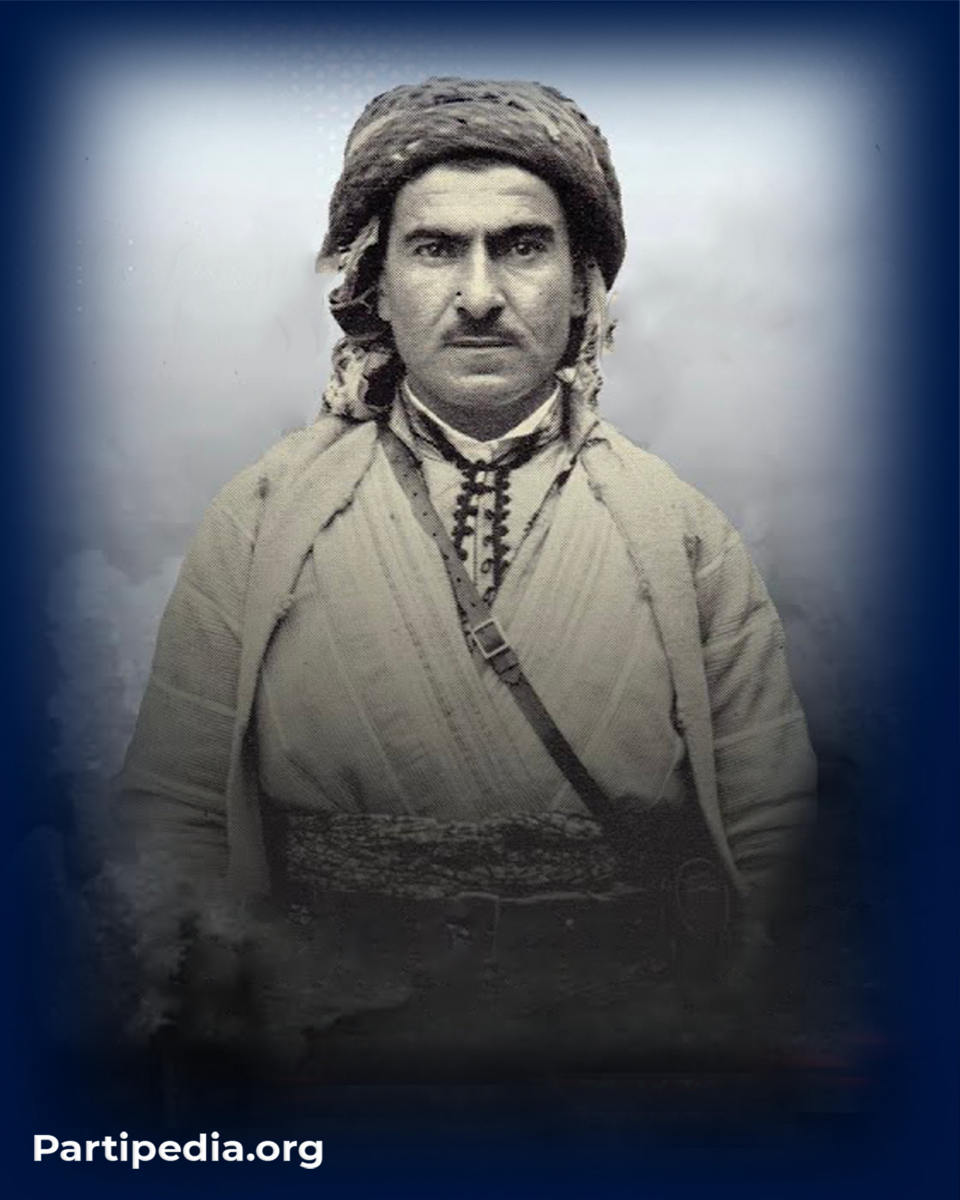
As a result of the Algiers Agreement of March 6, 1975, between Iran and Iraq, the armed revolution in South Kurdistan (The September Revolution) After a broad meeting in Haji Omeran on March 18, 1975 by order of the President Mustafa Barzani he stopped With the end of the revolution, most of the PKK leadership, a large number of Peshmergas and civilians from South Kurdistan fled to Iran as refugees after an agreement with the Iranian government, thus almost all the PKK organs and institutions They were practically dissolved in South Kurdistan, including the party leadership.
After several months of exile to Iran, the leadership of the Kurdistan Democratic Party (KDP) decided to reorganize its ranks under his supervision Massoud BarzaniOn April 15, 1975, on a spring outside Naghdeh called Hawt Cheshma, he secretly met with Jawhar Namiq, Karim Sinjar, Arif Taifur and Hama Reza At the meeting, it was decided to reorganize the PKK. Later, at a secret meeting in Karaj in early November 1975, it was decided to form a new leadership consisting of former members of the Central Committee and young party cadres to replace the old party leadership. On this occasion, a statement was prepared and published on December 10, 1975 under the name of the Interim Leadership (Qiada al-Muqtada). Eleven members, including Massoud Barzani, Idris Barzani, Sami Abdulrahman, Jawhar Namiq, Karim Sinjar, Arif Taifur, Hama Reza Sargalo, Azad Barwari, Nuri Shawes, Ali Abdullah and Kamal Kirkuk. . . .
The appointment of the members of the interim leadership of the Kurdistan Democratic Party (KDP) required a congress, because according to the approved rules and programs of the Kurdistan Democratic Party (KDP). Eighth Congress In 1970, the members of the party's central committee had to be elected at the congress. If the conditions were not favorable for holding a congress, the party could hold a conference anywhere, provided that it was conducted by a member of its committee The former center should be supervised. Since the situation of the PKK and the region did not allow for a congress, the party leadership decided to hold a large conference in Europe.
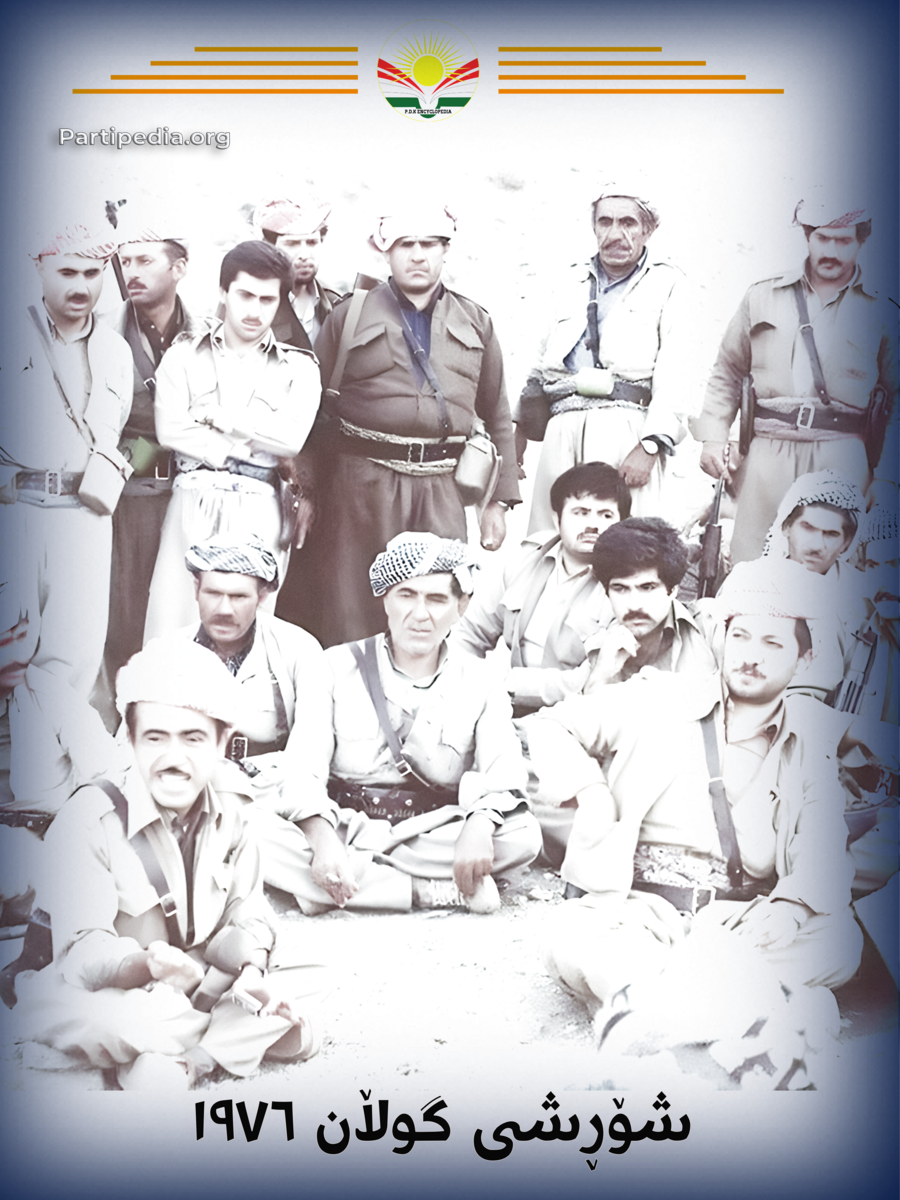
In the summer of 1976, the European border was opened to Kurdish refugees through the efforts of the Sixth Branch of the Kurdistan Democratic Party (KDP). PKK Relations in Tehran A number of refugees, including a number of members of the new PKK leadership, were sent to Europe They were divided into party organizations, thus reviving the party situation in Europe and on May 26, Sami Abdulrahman Kurdistan Regional Government (KRG) has announced the resumption of the armed revolution in South Kurdistan.The May Revolution) announced. At the same time, the PKK leadership decided to hold a party conference in Europe.
Conference Preparations
The sixth European branch of the Kurdistan Democratic Party (KDP) began preparations for the conference, as the branch headquarters was in West Berlin, the city was designated as the venue for the conference Europe was allowed to send its representatives to Berlin, each regional committee was assigned at least two representatives, and the regional committees voted among themselves to elect a member directly to the conference with the head of the regional committee The hall of the University of Berlin was rented to hold the conference meetings. The conference preparatory committee was formed Sami Abdulrahman, Nuri Shawes, Hama Reza and Arif Taifur. . . .
On August 11, 1976, he was appointed Sami Abdulrahman The Organizing Committee, the conference began its meetings, the number of members of the European Regional Committees of the Sixth Branch was forty members, on average with the members of the interim leadership, the cadres who had just arrived in Europe The number of guests, including Ismet Sharif Wanli, reached forty-eight to fifty people, including Tarq Akreyi, head of the sixth branch, Aziz Sheikh Reza, Siamand Banna, The symbol of Sha'ban , Dr Pirot Ahmad, Hamid Akreyi, Pola Maghdid Qasab Koyi, Mohammed Salih Juma, Fawzi Assad, Mohammed Miso, Jamal Alamdar, Dr. Omar Oremari, Farhad Sofi (Farhad Jubrail), Tofiq Faily, Majid Faily, Ezadin Barwari, Abdulqadir Barwari, Abdulsalam Barwari, Faiq Nerwayi, Mohammed Amin Dalawi, Aza Mahmoud Khafaf, Warya Saati, Abdul Rahman gave it to you, Ghazi Zebari, Mohammed Hassan Awnat, Dr. Sabah Mariwani and ...etc.
Holding a conference
The conference lasted from August 11 to 16. At the beginning of the meetings, Sami Abdulrahman read out a draft of an eighty-page booklet entitled “The Way of the Liberation Movement”. الكوردیة) by the Conference Supervisory Committee in particular Sami Abdulrahman and Nuri Shawes It was a critical pamphlet about him The September Revolution Written under the influence of the strong leftist thought of Marxism-Leninism, the booklet was discussed and voted on by the members of the conference. The second item of the conference's tasks was to establish the names of the eleven members of the interim leadership who had already been elected as members of the interim leadership, and to add four more members to it They will be elected to return to South Kurdistan after the announcement of their names Warya Saati, Dilshad Miran, Brave Khafaf and Abdul Rahman gave it to you They were elected as new members of the leadership and added to the list of members of the interim leadership, thus bringing the number of members of the interim leadership to fifteen and legally established.
In addition to the work and tasks of the Berlin Conference, several political decisions were made at the conference, including the re-election of the president Mustafa Barzani As the leader of the Kurdistan Democratic Party (KDP) and creating the conditions for it Ninth Congress of the PKK They were among the most important decisions.
After the end of the work and duties of the interim leadership and the election of new members and their establishment, the conference continued by the sixth branch Tarq Akreyi was re-appointed as the branch head and Siamand Bana and Abdulsalam Barwar were elected as the branch administrators Dr. Jarjis Hassan and Hamid Aqrawi were added to the branch executive committee.
The conference lasted six days and ended on August 16, 1976, which was the same date of the establishment of the Kurdistan Democratic Party Due to the sensitivity of the political situation at that time, no statement was issued on the occasion of the end of the conference. A booklet entitled “The Path of the Kurdish Liberation Movement” was issued The interim leadership of the Kurdistan Democratic Party (KDP) was approved from 11 to 15 August 1976.
Sources:
- Farooq Mohammad Mohammad Amin, Iran's Policy towards the Kurdish Liberation Movement in South Kurdistan (1975-1989), (Sulaimani, Re New Printing House, 2014).
- History of Kurdistan Democratic Party, Congress and Conference (Program and Internal Rules), Kurdistan Democratic Party Encyclopedia Committee, Volume 1, (Erbil - Roxana Printing House - 2021).
- Salah al-Khursan, Political Preparations in Iraqi Kurdistan, Reading in the Files of Kurdish Movements and Parties in Iraq 1946-2001, (Beirut – Al-Bagh Printing House – 2001m).
- Chris Kuchra, Jinbsh necked, t Ebrahim Younesi, Second Edition, (Tehran, Negah Publishing House, 1998).
- OPEC Summit Conference organized by Akhtar Bumdin Bagharb, Information newspaper, No. 14651, Wednesday, 14 January 1974.
- Omar Osman, Kurdish Life, (Erbil- Haji Hashim Printing House- 2005).
- د. Ali Tatar Nerway, Kurdish Nation's Liberation Movement in Iraqi Kurdistan in the Years of the Iraq-Iran War (1980-1988), 1st Edition, (Erbil-Haji Hashim Printing House-2008).
- Draft of the Internal System of the Democratic Party "Seventh Constitution" (1970), Chapter Four (Party Systems - Duties and Powers), Article 10 - Committee النركزية, paragraph
- Hamid Gawhari, Idris Mustafa Barzani and the Barzanis Better Knowledge Oral History, (Stockholm-2014).
- Mohammed Mullah Qadir, Khabatname, Short History of the PKK and the Late Barzani, Third Edition, (Erbil- Aras Printing House- 2012).
- Archive of the Kurdistan Democratic Party Encyclopedia.
- Kurdistan Democratic Party (KDP) Interim Leadership, Path of the Kurdish Liberation Movement, Assessment of the September Revolution and the New Program of the Kurdistan Democratic Party (KDP).