

Biography
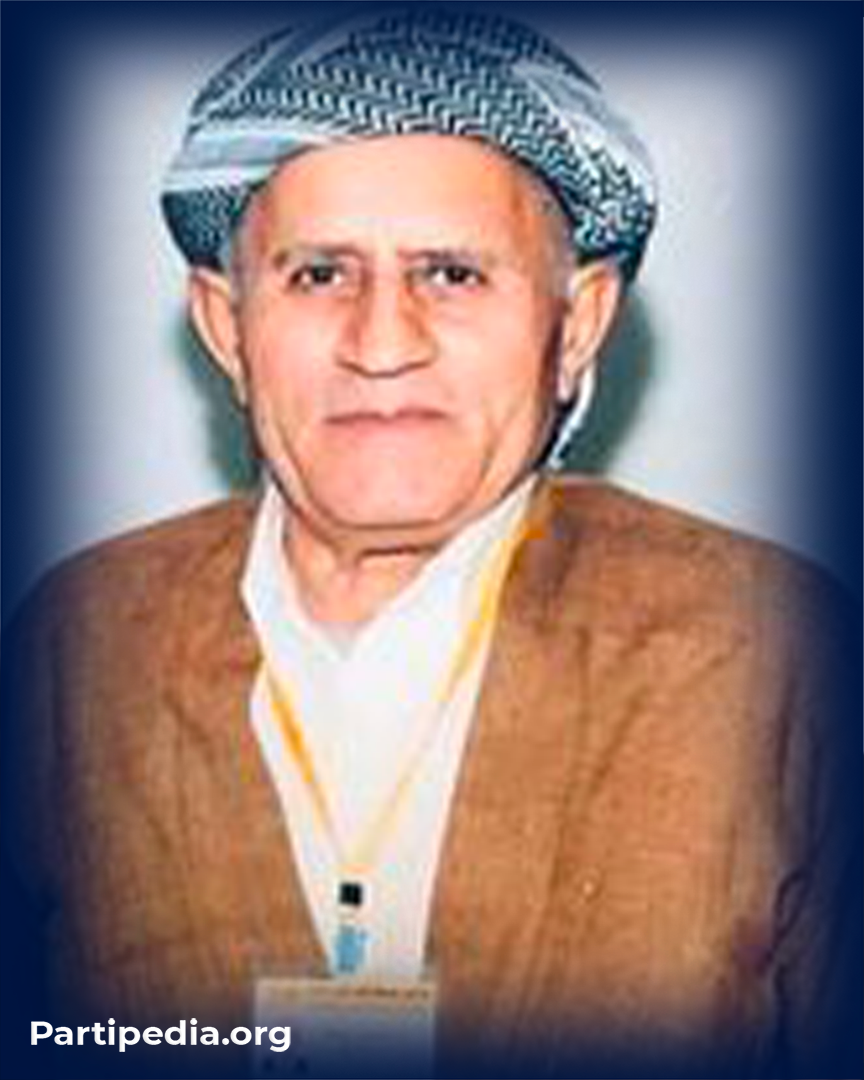
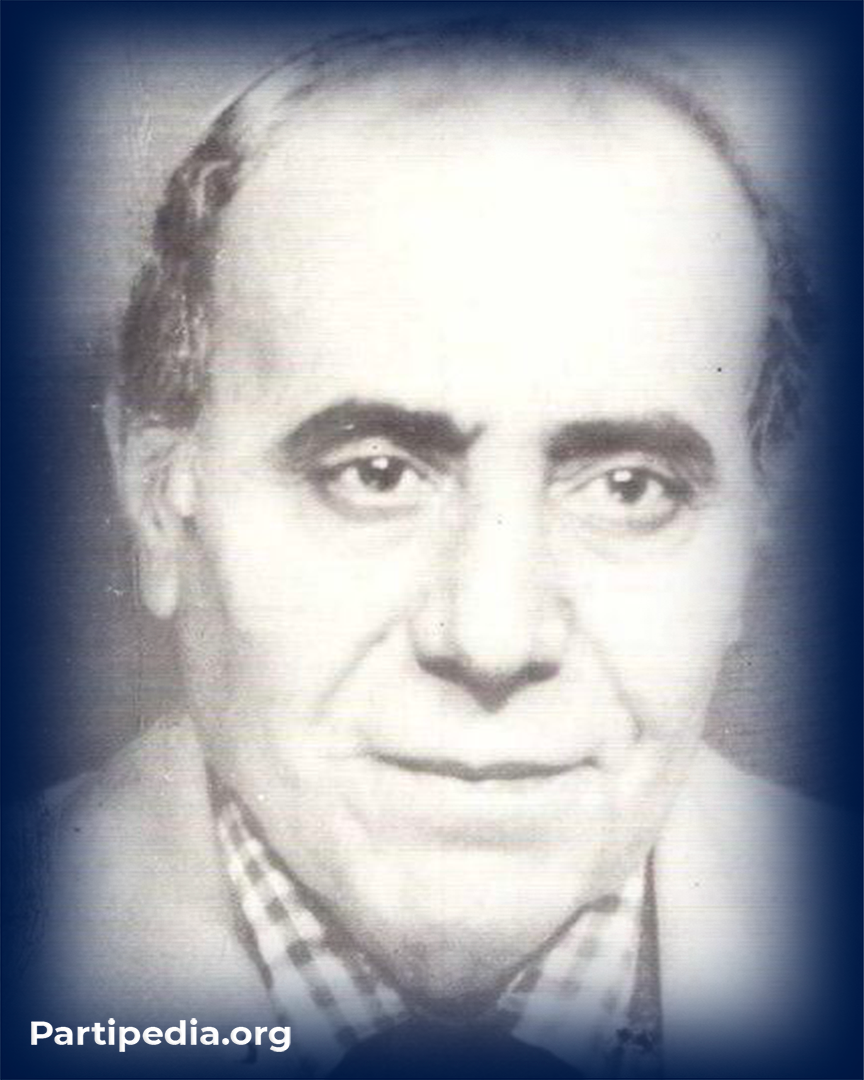
Nuri Sediq Ali Rasul, known by the pseudonym Engineer Nuri Shawis, was born in 1922 in the city of Sulaymaniyah. He is the son of Sediq Shawis, an officer during the reign of Sheikh Mahmud al-Hafid (1881-1956) who participated in the Battle of the Baziyan Pass against the British army.
He is married to Nahide Sheikh Salam Ehmed (1922-2005), also known as Nahide Salam, a member of the Central Committee of the Kurdistan Democratic Party. His father, Dr. Roj Nuri Shawes, is a member of the Political School of the Kurdistan Democratic Party (PDK) and Bruce Nuri Shawes is a member of the Central Committee of the Kurdistan Democratic Party (PDK).
He graduated from the College of Engineering in Baghdad in 1945, was transferred to Hil in 1946 as an engineer, was deported to Hil in 1948 by the authorities of the Kingdom of Iraq, was appointed as the deputy director of works and housing in Baghdad in 1962, was a teacher in the only central school of the revolution in Galala in 1964, and was appointed as the Minister of Roads and Bridges in the cabinet of Ahmed Hassan Baker (1914-1982) on March 29, 1970.
In 1970, he underwent heart surgery at Cleveland Hospital in the United States. In 1972, he attended the funeral of Sheikh Latif Hafidi in Sulaymaniyah with Ali Abdullah on behalf of President Mustafa Barzani. On Sunday, July 2, 1972, he was summoned to Moscow by Soviet authorities for a month of treatment.
In September 1972, he was a founding member of the Salaheddin Family Club in Baghdad, was appointed Minister of State by a republican decree on August 12, and became Secretary General of the Secretariat of Housing and Municipalities in early 1974. September Revolution, was established as Minister of Transport and Roads in 1974, after the enactment of the law on the legislative and executive councils of the Kurdistan Region, and was removed from the cabinet of Ahmed Hassan Bekir by a republican decree on April 7, 1974.
On April 28, 1974, after the Iraqi government seized his home, his family was expelled to liberated areas. In 1975, after the defeat of the September Revolution He emigrated to Iran, in November 1976, he requested political asylum in the United Kingdom, was granted political asylum in the United Kingdom on May 14, and passed away in the United Kingdom on November 15, 1983. He was fluent in Kurdish, Arabic, and English.
Worksheet
Engineer Nouri Shawes In 1935, he joined the ranks of the Kurdish Freedom Association. In 1936, he participated in the demonstration for the funeral of General Mustafa Pasha Yamulki (1866-1936) in Sulaymaniyah. On March 20, 1937, he was arrested by the police for setting off the Newroz fireworks on Mameyare Hill in Sulaymaniyah. In 1937, he was involved in publishing the Kurdish Freedom Association's statement against the Saadabad Agreement. In 1937, he was involved in collecting signatures to remove the governor, police chief, and judge of Sulaymaniyah who were anti-Kurdish. In 1937, he did political work in the Kurdish Brotherhood Association in Sulaymaniyah. In 1937, he was one of the founders of the Darker Association in Kirkuk. In 1939, he was one of the founders of the Kurdish Hîwa Party in Kirkuk. In 1939, he was elected as vice-president at the first congress of the Kurdish Hîwa Party. In 1940, he was the confidant of the president of the Kurdish Hîwa Party in Sulaymaniyah. In 1947, he attended the ceremonies and burials of two martyrs named Mustafa Mustafa (1912-1947) under the pseudonym Mustafa Khosnaw and Muhammad Mahmud Muhammad (1922-1947) under the pseudonym Muhammad Qudsi. In 1948, he participated in the demonstrations against the Portsmouth Treaty. In 1951, he was elected as a member of the provisional central committee of the Kurdistan Democratic Party (KDP) at the second congress.
In 1953, he was elected by the members of the congress as a member of the leadership of the Kurdistan Democratic Party - Iraq (third congress). In 1955, he and Jalal Talabani (1933-2017) sent a letter of protest from the Iraqi Communist Party to the British Communist Party on behalf of the Kurdistan Democratic Party - Iraq. In 1959, he was the representative of the First League Committee at the Fourth Congress. After the Fourth Congress, he was appointed as the chairman of the First League Committee from the fourth and fifth groups. In 1959, he was elected by the members of the congress as a member of the Central Committee of the Kurdistan Democratic Party (fourth congress). In 1959, he was involved in suppressing the coup of Colonel Abdulwahab Shawaf (1916-1959) in Mosul. On June 28, 1959, he He sent a letter of support to Iraqi President Abdulkarim Qasim on the national unity front. He became a member of the Iraqi Engineers Union in 1959 and became its vice president in 1959. In April 1959, he delivered a speech on behalf of the Kurdistan Democratic Party (KDP) at the People's Hall in Baghdad on the return of Barzani's friends from the Soviet Union.
On Saturday, December 8, 1960, he was a member of the founding committee of the open phase of the Kurdistan Democratic Party - Iraq. In 1960, he was a member of the conference committee of the fifth congress of the Kurdistan Democratic Party - Iraq in a part of the Germiyan region. In 1960, he supervised the conferences of the Kurdistan Democratic Party - Iraq in the Germeser region to elect representatives for the fifth congress. In 1960, he was elected by the congress representatives as a member of the Central Committee of the Kurdistan Democratic Party (KDP) for the fifth congress. In 1960, he submitted his resignation from the Party to Mustafa Barzani, the party leader, but his request was not accepted. In 1961, he attended the last meeting of the leadership of the Kurdistan Democratic Party (KDP) at the house of Dr. Murad Aziz in preparation for the revolution. In 1961, before being arrested by Iraqi intelligence forces, He fled and hid in Baghdad for a while. In September 1961, he met with Cemal Heyder Asim (1926-1963), known as Cemal Heyderî, a member of the Political School of the Iraqi Communist Party, to help them in the revolution in Southern Kurdistan, from 18 to 23 December 1961, to continue the September Revolution He attended the meeting of the Central Committee of the Kurdistan Democratic Party (KDP) in the village of Ewalan in Sulaymaniyah province. He joined the ranks of the Peshmerga Forces in 1962. On 19.12.1963, he was a member of the negotiating delegation of September Revolution He was with the Iraqi government representative in Ranya, Sulaymaniyah province. In 1963, he was interviewed by David Adamson, a journalist for the British Sunday Telegraph. In 1964, he participated in the opening of the 9th Congress of the Kurdish Students Association in Europe in the city of Hannover, Germany, as a representative of the Kurdistan Democratic Party.
In 1964, he supported the wing of the Political School to fight against the president's wing. In 1964, he was expelled from the KDP at the sixth congress of the Kurdistan Democratic Party (KDP) for supporting the decisions of the Mawat plenary meeting. After the Ibrahim Ahmed-Jalal Talabani group joined the Iraqi government on December 28, 1966, they backed him. September RevolutionOn February 21, 1966, together with Ali Abdullah and Nuri Ahmed Taha, he wrote a letter to President Mustafa Barzani expressing his readiness to serve. September Revolution and the KDP, in mid-1966 he was appointed by the central committee of the Kurdistan Democratic Party (PDK) as a member of the Preparatory Committee of the Seventh Congress, in 1966 he was elected as a member of the Central Committee of the Kurdistan Democratic Party (PDK) at the seventh congress as a tribute to his position, in 1966 he was elected as a member of the Political School at the first meeting of the Central Committee, in 1966 he was appointed as a member of the Revolutionary Leadership Council in Iraqi Kurdistan, in 1966 he was appointed as a member of the Executive Office of the Revolutionary Leadership Council in Iraqi Kurdistan, on April 15, 1967, under the supervision of President Mustafa Barzani, he was a member of the Political School of the Kurdistan Democratic Party (PDK) as a representative of the Military-Political Conference of Kani Simaq (Hewlêr), in November From 1968 to February 1969, he was the teacher of the Kurdistan Democratic Party (PDK) program and internal regulations at the first stage of the KDP cadre school in the Choman district of Erbil province. From April 1969 to August 1969, he was the teacher of the Kurdistan Democratic Party (PDK) program at the second stage of the KDP cadre school in the village of Nawpirdan in Erbil province. On December 10, 1970, he was a member of the 9-member delegation of the Kurdistan Democratic Party (PDK) for negotiations on the Autonomy of Southern Kurdistan with the Ba's Party officials in Baghdad. On March 11, 1970, he was a member of the Kurdistan Democratic Party (PDK) delegation for the ratification of the March 11 Agreement on the Autonomy of Kurdistan by President Ahmed Hassan Bakr (1914-1982).
In 1970, he was elected as a member of the Central Committee of the Kurdistan Democratic Party (PDK) at the 8th congress. In 1970, he was elected as a member of the Political School at the first meeting of the Central Committee. On Friday, June 12, 1970, by order of President Mustafa Barzani, he became a member of the delegation of the Kurdistan Democratic Party (PDK) to visit Najaf in western Iraq to attend the funeral ceremony of Ayatollah Abdul Mohsen Hakim (1889-1970), the world's highest Shiite cleric. On Sunday, August 16, 1970, he attended the celebration of the 24th anniversary of the founding of the Kurdistan Democratic Party (PDK). From July 1970 to November 1970, he was a teacher of the program and internal regulations of the Kurdistan Democratic Party (PDK) in the third course of the KDP cadre school in Baghdad. In 1970, he was a member of the delegation of the Kurdistan Democratic Party (PDK) to the third course of the KDP cadre school in Baghdad. Kurdistan Democratic Party (PDK) was with the Ba'th Party to reach an agreement between the Kurdistan Teachers' Union and the Central Union of Iraqi Teachers, which failed to achieve victory over the Peshmerga due to the stubbornness of the opposing side. At the end of October 1970, he was a member of the Kurdistan Democratic Party (PDK) delegation to prevent the Ba'th Party from interfering in the Qutb (student) elections in Kirkuk province. In 1971, he was a teacher of the third course of the cadre school in Baghdad. On Monday, February 1, 1971, he attended the graduation ceremony of the third phase of the cadres of the Kurdistan Democratic Party (PDK) at the headquarters of the Fifth League Committee in Baghdad. On Sunday, May 30, 1971, he received the delegation of the Central Committee of the Bulgarian Communist Party in Baghdad, along with Habib Feyli. On August 16, 1971, he attended the celebration of the 25th anniversary of the founding of the The Kurdistan Democratic Party (KDP) was at the headquarters of the fifth league committee in Baghdad.
On Thursday, June 1, 1972, he met with Saddam Hussein (1937-2006) along with a delegation from the Kurdistan Democratic Party and a delegation from the Iraqi Communist Party and discussed the nationalization of Iraqi oil. In 1972, he visited the city of Zakho in the province of Dohuk to visit government institutions and the Kurdistan Democratic Party (KDP). In August 1972, at the request of the Soviet Communist Party, he met with Soviet officials with a delegation from the Kurdistan Democratic Party (KDP) and discussed bilateral relations. On Tuesday, July 17, 1973, he met with Sharaf Rashidov, a candidate for the Political School of the Communist Party of the Soviet Union, at the Soviet Embassy in Baghdad. In 1973, he was a teacher of the program and internal regulations of the Kurdistan Democratic Party (KDP) in the fourth year of the KDP cadre school in the village of He was a member of the Political School of the Kurdistan Democratic Party (PDK) and a state minister in the cabinet of Ahmed Hassan Bakir (1914-1982) in Sulaymaniyah. On March 12, 1974, he submitted his resignation to Iraqi President Ahmed Hassan Bakir due to the Iraqi government's implementation of the March 11 Agreement. On March 6, 1975, at the last meeting of the Central Committee of the Kurdistan Democratic Party (PDK), he supported the continuation of the war with the Iraqi army. In 1976, he was a member of the Political School of the Provisional Leadership of the Kurdistan Democratic Party (PDK) (Berlin Conference). In 1979, he was a member of the 9th Congress of the Kurdistan Democratic Party (PDK). He was elected to the Kurdistan Democratic Party (PDK), and in 1979, he was elected as a member of the Political School of the Kurdistan Democratic Party (PDK) at the first meeting of the Central Committee. In 1979, he left the Kurdistan Democratic Party (PDK), and from July 26 to 30, 1981, he was elected as a member of the Political School of the Kurdistan People's Democratic Party (PGDK) at the First Congress. In 1982, he made efforts to reconcile the Kurdistan Democratic Party (PDK) and the Kurdistan People's Democratic Party (PGDK), and from December 26 to 30, 1989, the Second Congress of the Kurdistan People's Democratic Party (PGDK) was held in his name.
In his works:
- From my diaries - 1985.
Source:
- Kurdistan Democratic Party Encyclopedia Committee Archives.
- Abdul Majid Shawqi Al-Bakri, The Story of Mosul in the Shame of the Communists, (Mosul - Al-Cumhuriye Publishing House - 1963 AD), p. 62.
- Felakeddin Kakeyi, The Spiritual Revolution, translated by Sherzad Heynî, (Hewlêr – Shahab Press – 2016), p 74.
- Yasin Qadir Barzenci, Sulaymaniyah Theaters in 1926-1961, (Sulaymaniyah, Serdam Publishing House, 2001), p. 49.
- Aso Omer Suwara, Sulaymaniyah and its land, (Sulaymaniyah - Şivan Publishing House - 2019), pp. 366, 503.
- Aziz Hassan Barzani, The Kurdish National Liberation Movement in Iraqi Kurdistan 1939-1945, (Duhok – Publishing House - Spirez Press of the Ministry of Education - 2002), p. 124.
- Zeki Khayrî, The Voice of Years in the Memory of a Veteran Iraqi Communist, (Stockholm - 1994), p. 231.
- Aqila Rwandzi, Yad u Aferin, (Hewlêr, Şawşka Center for Cultural Activities, Education Press, 2005), pp. 159-161.
- Farhad Awnî, The secrets and mysteries of student elections in Kirkuk province 32 years ago, Golan Al-Arabi Magazine, Golan Culture and Communication Department, Issue 66, Year 6, Erbil, Ministry of Education Press, 30.11.2001, p. 135.
- Chris Kuchra, The Kurdish National Movement, translated by Ebrahim Younesi, second edition, (Tehran, Negah Publishing House, 1998), pp. 169, 188, 244, 255, 260, 327, 338, 344, 384.
- Newzad Ali Ahmed, Press of the Democratic Party of Kurdistan Abroad, (Sulaymaniyah - The Living Institute for the Revival of Kurdish Documentary Heritage and Journalism - 2010), p. 11.
- David Adamson, The Struggle for Kurdistan, translated by Jawad Hatifî, (Tehran - Ataî Publishing House - Muhammad Ali Elmi Printing House - 1348 AH), pp. 125, 131.
- Mehdi Mohammed Qadir, Political Developments in Iraqi Kurdistan 1945-1958, (Sulaymaniyah, Kurdistan Strategic Research Center, 2005), pp. 95, 126, 129, 132, 134.
- Shwan Mihemed Emin Taha Xoşnaw, Hewlêr between 1958 and 1963, a study on the political situation, (Hewlêr, Rojhelat Press, 2012), p 293.
- Shwan Mihemed Emin Taha Xoşnaw, Hewlêr between 1963-1970: a historical study of the political situation, (Hewlêr, Salaheddin University Press, 2016), pp. 61, 149, 155, 171, 331.
- Abdurrahman Sharafkendi, The Strange Case, (Paris, 1997), p. 356.
- Prepared by: Salah Rashid, Meeting the Age, Part 1, Second Edition, (Sulaymaniyah - Karo Press - 2017), pp. 183-184.
- Ekram Saleh Reshe, Sulaymaniyah, Volume 5, (Sulaymaniyah - Rahand Press - 2018), p 555.
- Andrews Bakuri, Ezge, (Hewler - Shahab Press - 2009), pp. 175, 177.
- Dismissal of five ministers and appointment of five ministers, Al-Taxi newspaper, issue 1512, Baghdad, Times Press, Monday, 08.04.1974, p. 1.
- Ministerial Order No. 99, Iraqi Al-Waqa' Newspaper, Ministry of Guidance in Iraq, Issue 480, Third Year, Baghdad, Tuesday, February 7, 1961, p. 3.
- Saadi Osman Herutî, Kurdish-Soviet Relations in Three British Documents, Rugeh Magazine, Zakho Kurdish Research Center, Issue 6, Spring 2019, p 35.
- 5 Kurdish ministers were removed from the cabinet, Itilaat newspaper, issue 14373, Tehran, Dushanbe, April 19, 1353 AH, p. 2.
- The Establishment of the Salaheddin Club, Al-Taxi newspaper, issue 1132, Baghdad, Times Press, Saturday, September 9, 1972, p. 4.
- Jarcis Fathallah, lawyer, Iraq during the Qasim era, Views and opinions 1958-1988, Part Two, (Sweden – Nebez Publishing House - 1989), p. 728.
- Habib Muhammad Karim, History of the Democratic Party of Kurdistan of Iraq (main branches) 1946-1993, (Duhok, Xebat Press, 1998), pp. 28, 47, 50, 57, 61, 67-68, 117, 124, 147, 152, 159, 488.
- Sami Şoreş, Kurdistan and the Kurds, second edition, (Hewlêr - Rojahlat Press - 2019 AD), p. 125.
- Sami Abdul Rahman, from my memories, (Kurdistan - Publications of the People's Democratic Party of Kurdistan - People's Press - 1991), pages 29-31.
- Shaban Saeed Mihemed, Me and the Competition and the Waves of Sorrow, (Duhok - Sharia College Press - 2000), p 42.
- Shekib Aqrawi, The Years of Trouble in Kurdistan, The Most Important Political and Military Events in Kurdistan and Iraq from 1958 to 1980, second edition, (Hewlêr - Manara Press - 2007), pp. 152, 303.
- Shawkat Mullah Ismail Hassan, Days of History September Revolution,, Second Edition, (Hewlêr - Tafsîr Office - 2016), p 210.
- Ismet Sherif Wanli, Kurdistan of Iraq, a National Identity (A Study on the 1961 Revolution), translated by Suad Mihemed Xidir, (Sulaymaniyah - Dezgeha Jîn - Şivan Press - 2012), pp. 326, 328.
- Republican Decree No. 180, Iraqi Al-Waqa' Newspaper, Iraqi Ministry of Information, Issue 1867, Year Twelve, Baghdad, Tuesday, April 14, 1970, p. 11.
- Nuri Shewes, from my memories, (Bê Cih - Publications of the Democratic Party of Kurdistan - 1985), pages 10 - 12, 14, 18, 20 - 21, 25, 34, 52, 62, 79, 81, 83. - 85, 89 - 90.