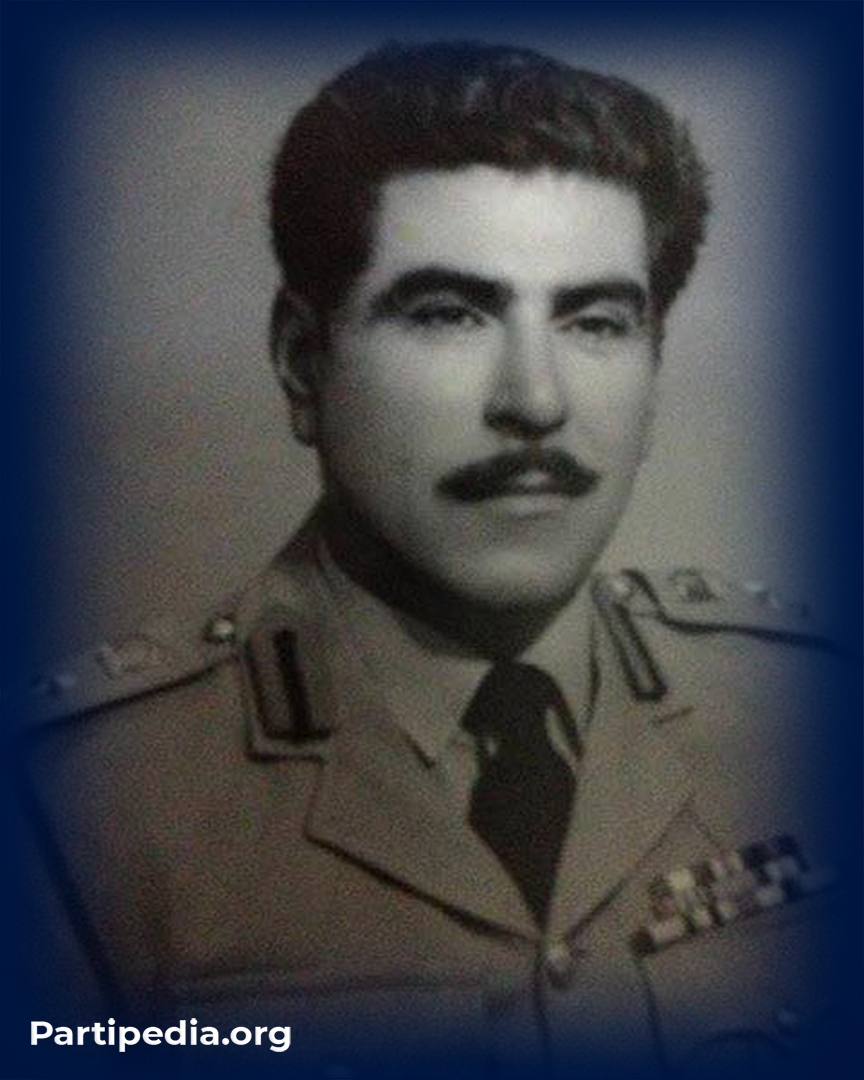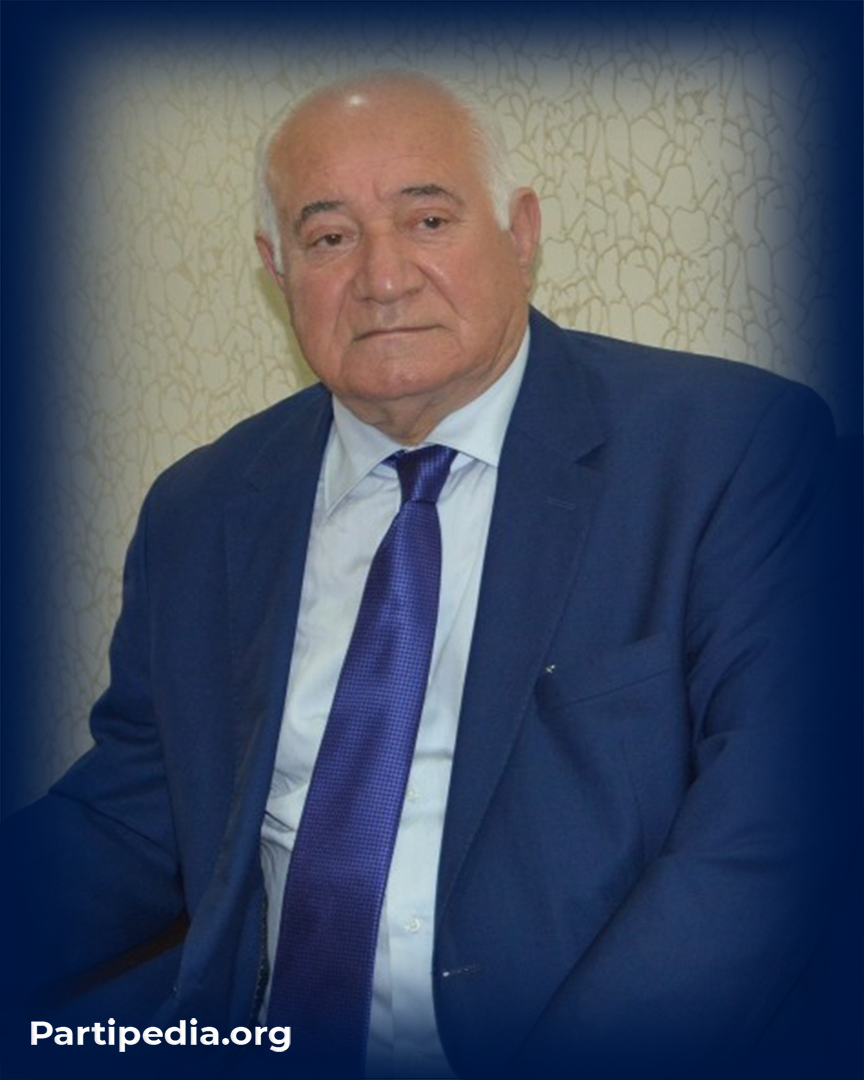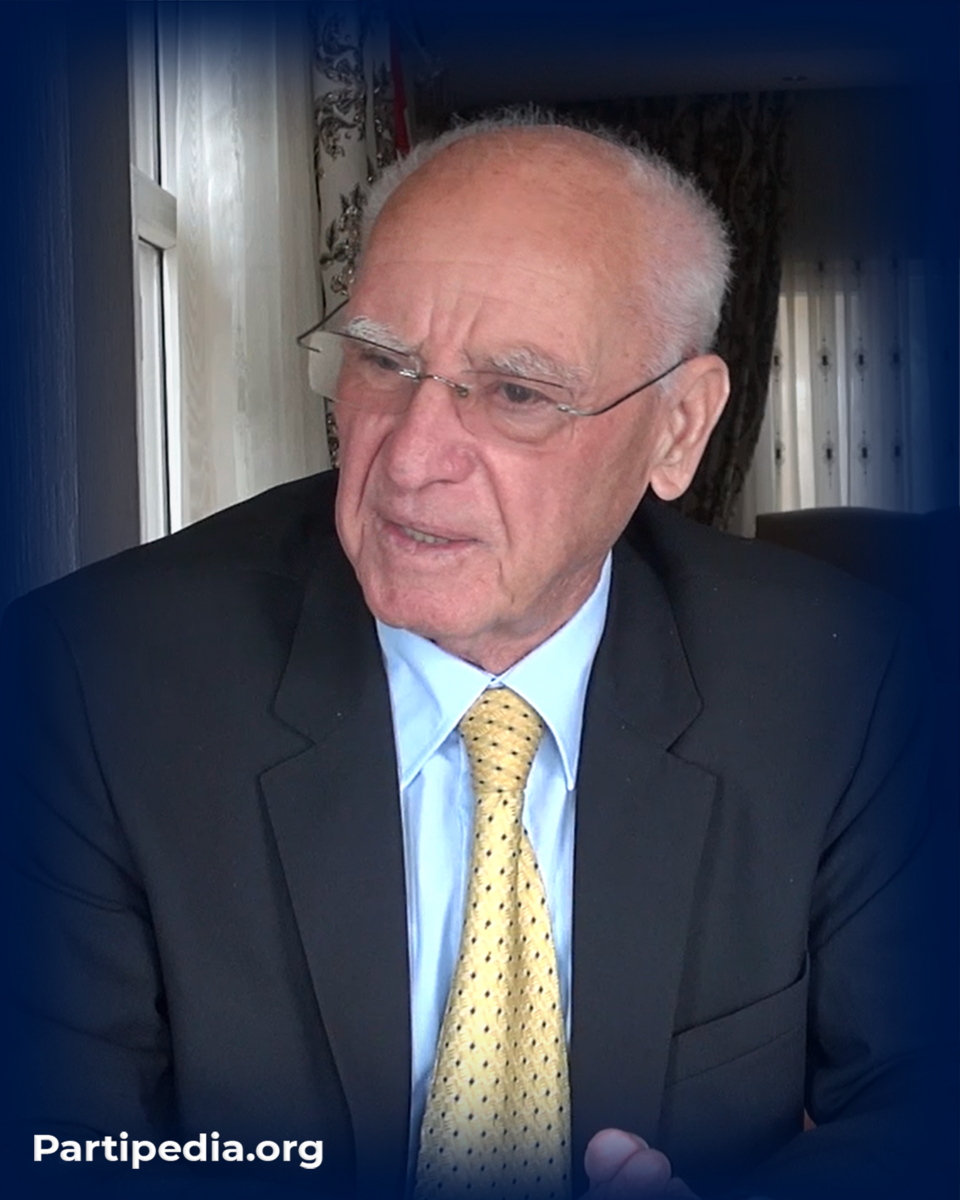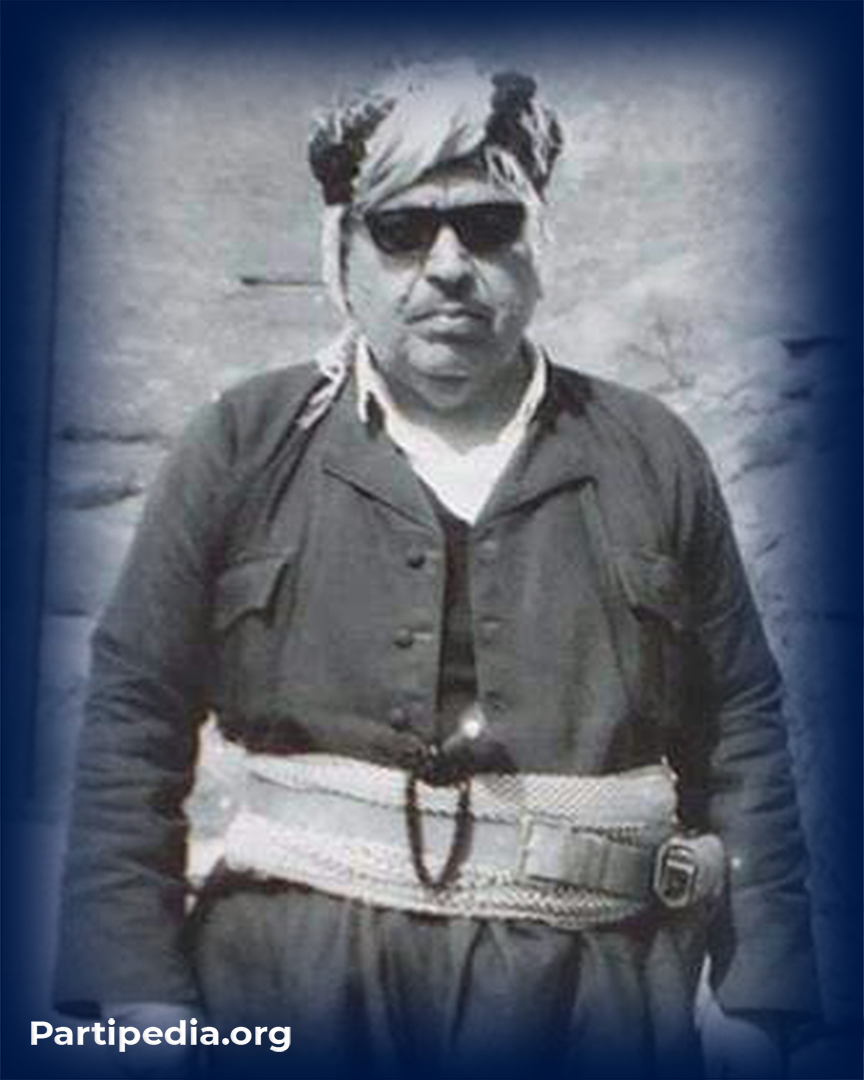


Officer and politician Murad Aziz, known by the names (Dr Murad, Serwan Murad Rizim Awer, Sergurd Murad Rizim Awer and Murad Rehberi). In 1941, he was an officer of the Iranian army in Urmia. He had a secret relationship with officers of the Tudey party in Iran. At the fourth congress in 1959 and the fifth congress in 1960, he was elected as a member of the Central Committee and a member of the Political School of the Kurdistan Democratic Party - Iraq. In 1974, he openly opposed the Kurdistan Democratic Party and the September Revolution and collaborated with the Ba'ath Party of Iraq.
Biography
Murad Aziz was born in 1918 in the city of Kermanshah and belongs to the Leki tribe of the Feyli people of Eastern Kurdistan. He was admitted to the Department of Political Sciences of Baku University in 1949. In 1953, he was admitted to the Doctorate stage at Moscow University and received his Doctorate in Oriental Studies in 1957. He passed away on April 10, 1980 in Las Palmas, Spain, due to cardiac arrest and was buried in the Brook Moody Cemetery in London, Britain. He was fluent in Kurdish, Persian, Russian, Turkish, Arabic, French and English.
Worksheet
Murad Aziz joined the ranks of the secret societies of the officers of the Iranian Tudey Party in 1941. In 1945, he held the rank of Peshang (Naqib) in the Iranian Army Artillery and was active in the secret military organization of the Iranian Tudey Party. In 1946, he fled to the Soviet Union near the city of Qazvin by the intelligence men of the Iranian army and settled in the city of Baku, the capital of the Republic of Azerbaijan. Later, they sent him to the city of Tabriz to form the Azerbaijani national army. In 1947, after the collapse of the Azerbaijan National Republic, he went to the Soviet Union.
In 1957 Jalal Talabani (1933 - 2017) met with him in Moscow and introduced him to General Mustafa Barzani (1903 - 1979) and in 1959, along with Barzani's friends, arrived at the port of Basra in southern Iraq on the ship Groziya and was welcomed by President Mustafa Barzani He has since received Iraqi citizenship as a Barzani.
In 1959, he was appointed as the Chairman of the Preparatory Committee of the Fourth Congress of the Democratic Party of Kurdistan - Iraq and was elected as a Member of the Central Committee of the Democratic Party of Kurdistan - Iraq at the congress and was elected as a Member of the Political School at the first meeting of the central committee. In 1960, at the Fifth Congress, he was elected again as a Member of the Central Committee and then of the Political School.
After the coup d'état of February 8, 1963, he left Baghdad and went to Moscow, returning to Baghdad in 1968. In 1969, with the cooperation and support of the Ba'ath Party authorities and the Soviet Union's KGB, he contacted General Teymur Bakhtiyar and carried out activities against the rule of Mohammad Reza Shah Pahlavi under the name (Leader) and in the same year, he worked as a military advisor to introduce Russian weapons to the Iraqi army in the port of Basra.
In 1969, at the request of Saddam Hussein, Vice President of the Republic of Iraq, he worked with other officers of the Iranian Tudey Party for the project of General Teymur Bakhtiyar, and in 1970, he accompanied Saddam Hussein (1937 - 2006) to the village of Nawpirdan in Erbil province with the aim of negotiating between the authorities of the Iraqi Government and the leadership of the September Revolution.
In 1974, he openly opposed the Kurdistan Democratic Party and the September Revolution, and collaborated with the Arab Socialist Ba'ath Party. He died of a heart attack in Las Palmas, Spain, on April 10, 1980, and was buried in Brooke Moody Cemetery in London, England.
Source:
1- Kurdistan Democratic Party Encyclopedia Archive
2- History of the Kurdistan Democratic Party, congresses and conferences (Programs and internal proceedings), Encyclopedia of the Kurdistan Democratic Party, first cover, (Hewlêr - Roksana Press - 2021)
3- Fazil Resul, Kurdistan Walsiyase alsufîtiye fî alşerq alawsat, translated by Xisan Na'man, (Al Silêmaniye - Mekteb alfikir waluwî fî alatihad alwutanî al Kurdistanî - Matbaa Mosese hemdî liltebaa walneshir 2008).
4- In the path of peace and harmony, in the path of unity and harmony, (Baghdad - Altaxhi Press - Altaxhi Press, 1973).
5- Be killed: Hamid Ahmadi, mahim dr ayn xane haqî darîm (Remember Najmi Aluy), Çap Sum, (Tehran - Neşir Axtehran 1387 - semsî).
6- Ahsan Tabari, Kej Rahe, Sum Press, (Tehran - Moesese Antisharat Amir Kebir - Sipehr Press 1367 Shamsi).
7- Habib Muhammad Karim, History of the Democratic Party of Kurdistan in Iraq (In the context of the Presidency) 1946 - 1993 (Dihok - Xebat Press 1998).
8- Hamid Melazadeh, The Street of Memories, (Tabriz - Antisharat Ark 1373 Shamsi).
9- Eft mahbaz, necmi aluy payegizaran cenbush zinan ayran bi hiç heqî az an xane, BBC Persian website, www.bbc.co.uk.
10- Idalle Karim, Sevre Aylul Altehrriye, weqae wedelalat, Altaxhi newspaper, Ala'ded 4309 Baghdad, Alahad, September 12, 2004.