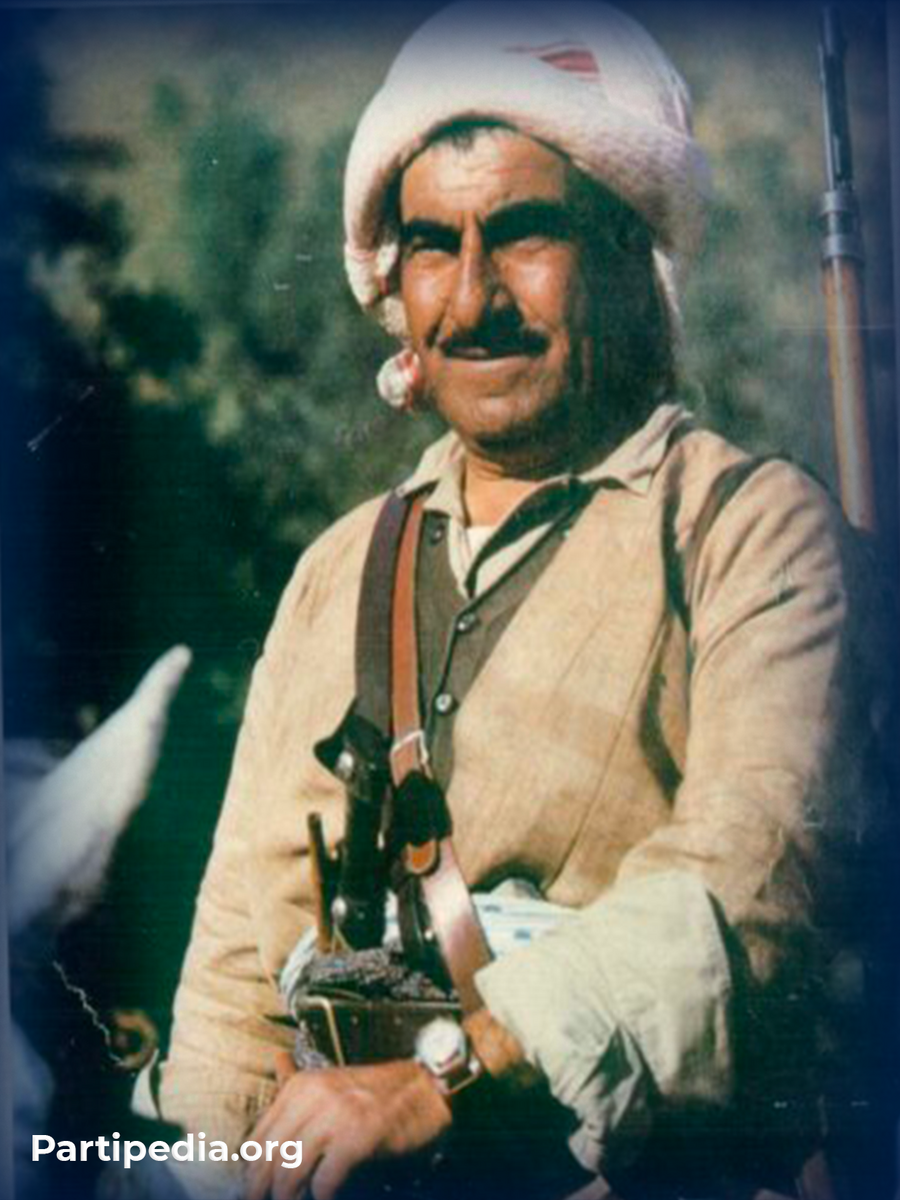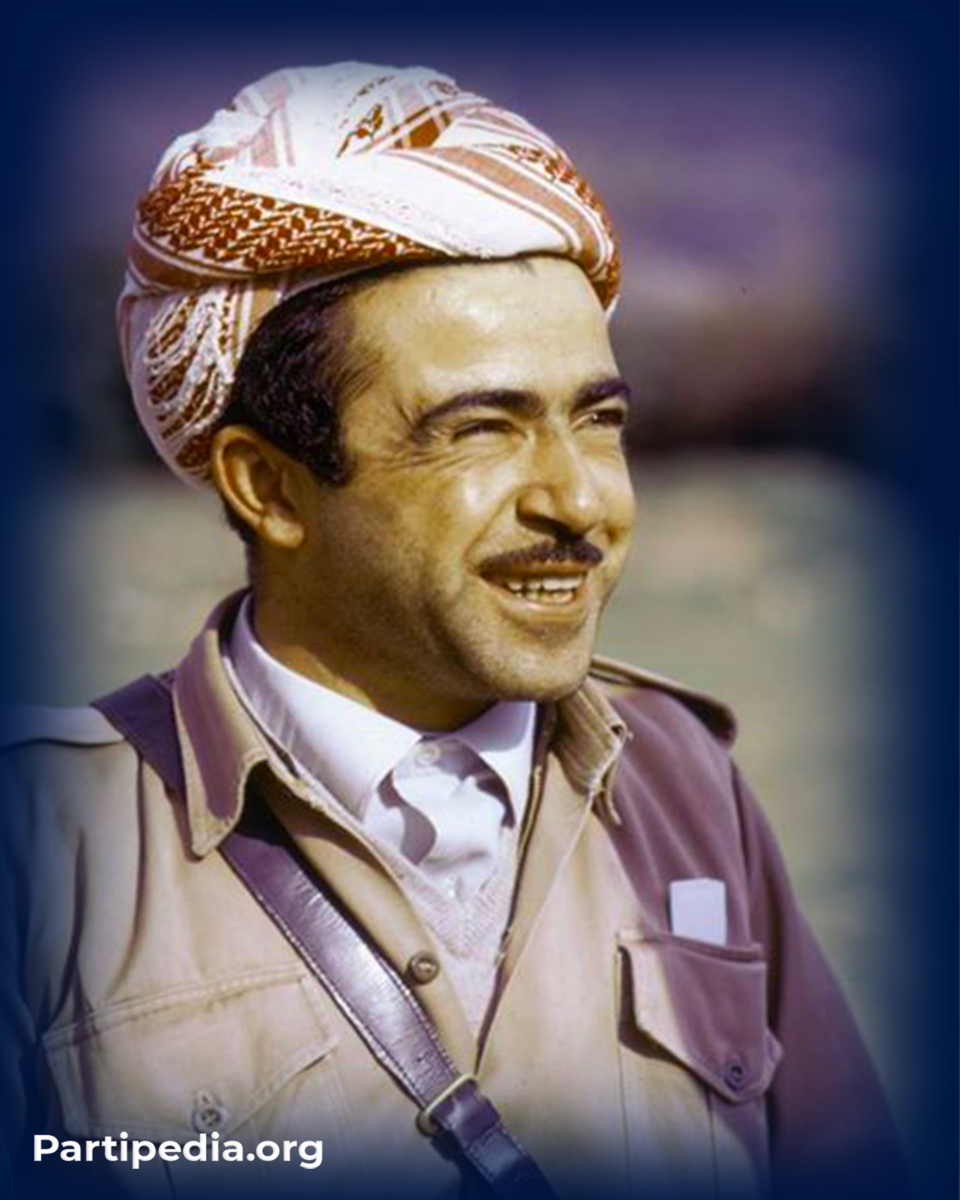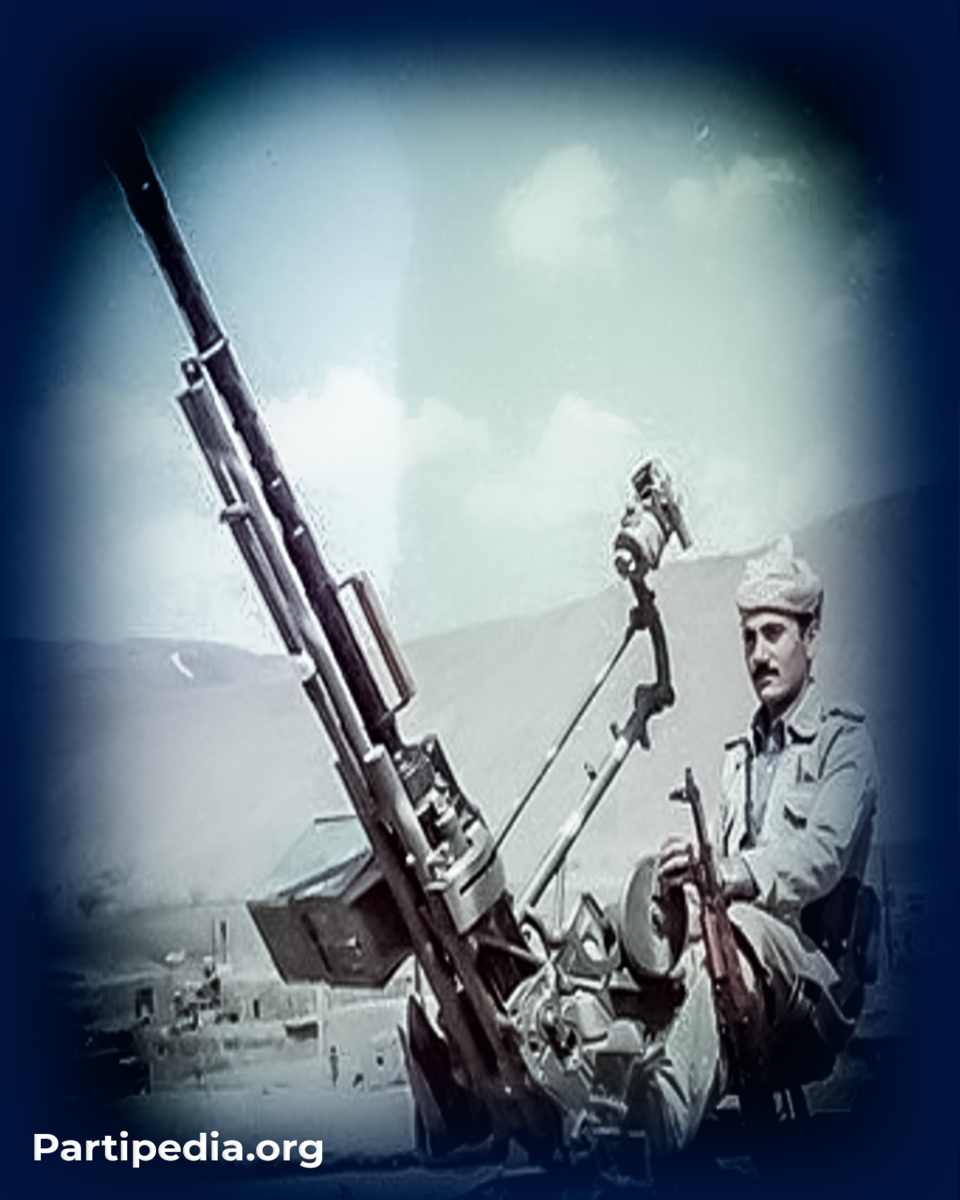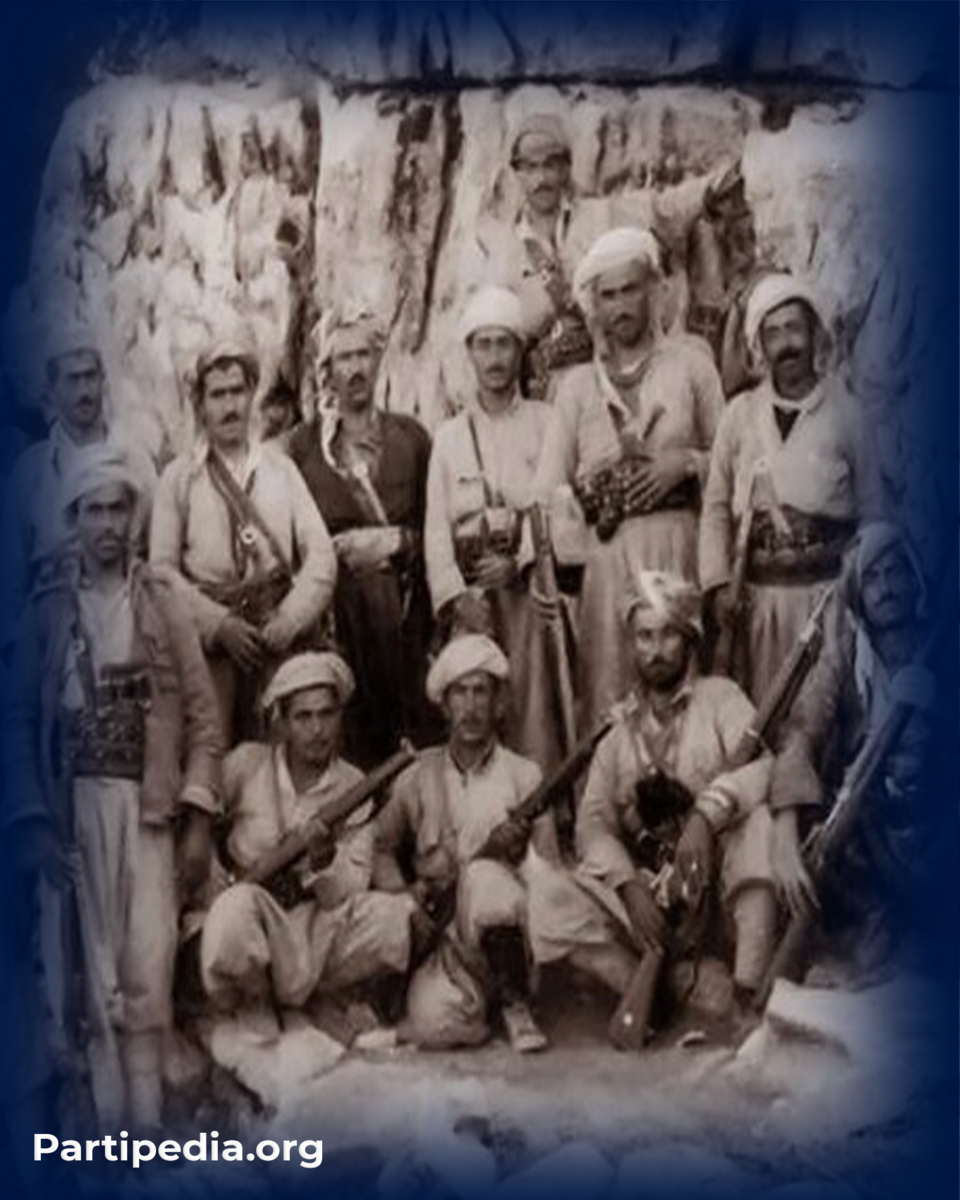


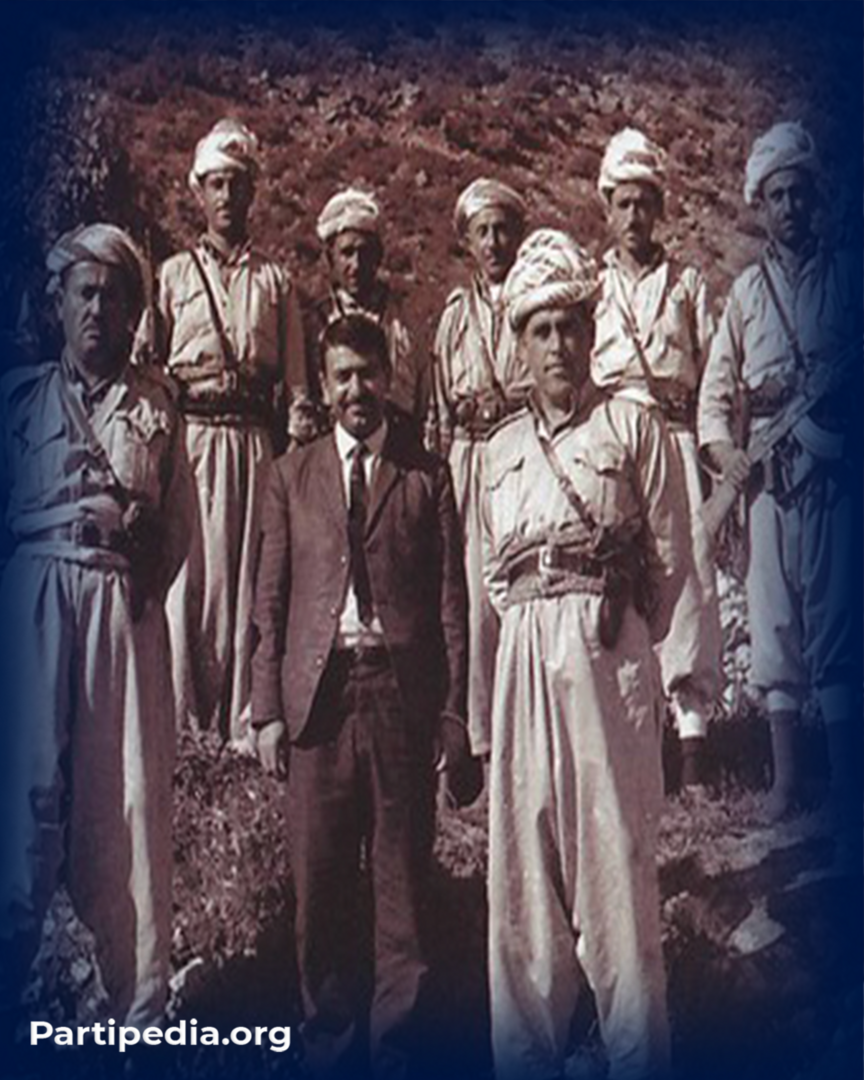
In May 1962, after most of the villages in the Behdinan region came under the control of the revolution, except for the district and district centers that were still under the control of the Iraqi government, the people joined the revolution in droves and joined the Peshmerga forces. At the beginning of the revolution, the Peshmerga forces were not organized, but in order to reorganize the Peshmerga forces in a unified manner, in order to have a military structure, an attempt was made to organize the administrative and military affairs in the Behdinan region upon the proposal and decision of the leader of the revolution, Mullah Mustafa Barzani. A commander was appointed for each region, with Isa Suwar as the commander of the Zakho region, Ali Khalil as the commander of the Duhok region, Heso Mirkhan Dolameri as the commander of the Sheikhan region, and Mihemed Amin Mirkhan as the commander of the offensive forces, and Asad Khoshvi as the commander-in-chief of the region. Several Peshmerga units were formed and organized under the names of Qol, Liq, Sector, serliq and sector commanders, as in the Iraqi army system, forces, battalions, liq and pel were designated for the Peshmerga forces.
The Power of Zaxo one of the forces September Revolution It was a large geographical area that had been taken over, after Isa Suwar was appointed as the commander of the Zakho region, he went to the region with 60 peshmerga, the base of that force was established in the village of Ermişt and later in the village of Bêzih. After settling in the region, Isa Suwar established several headquarters, each with 60 to 100 peshmerga, each in a different area, such as the clan of Ali Ali Seyfeddin, Hashim Marozi, Naif Ahmed Mijdin, Ali Halo, Arif Darwish, Ali Rasho, Musa Behrawi, Farhan Keshani Guli, Mullah Hassan Haji Sadiq Guli, Salman Khorshid, Abdulrahman Dino, Sayyid Abush Abdi Khazala, Yasin Rashid Betasi, Sharif Musa Michuli and Abush Mustafa. These branches were in the form of tribal groups, which remained in this form until 1964. Between 1961 and 1963, the Peshmerga forces did not have a salary system and most of them were volunteers, and most of the Peshmerga expenses were borne by the local population.
In March 1962, due to the lack of weapons, the commander of this force in the region began to collect weapons, as a result of which 75 weapons were donated by the people and the Peshmerga forces began to attack two military posts on the Bêxêrî mountain, which included 17 police officers. The first point was in Kalfrîn and the second point was near the villages of Türkija. This military operation was the first step towards the start of other wars in the region.
After the military coup of February 8, 1963 and the arrival of the Arab Socialist Ba'th Party and the formation of the new Iraqi government, which opposed the solution to the Kurdish issue and used the excuse to solve the Kurdish issue, after negotiations between the revolutionary leadership and the Iraqi government, the situation in Kurdistan collapsed once again and the Iraqi government started fighting again. During the Iraqi government's attack on Mount Matini in 1963, the First Army and The Power of Zaxowho, with 300 reserve Peshmerga led by Isa Suwar, were able to drive government forces out of Mount Matini. After the February 10, 1964 agreement between the revolutionary leadership and the Iraqi government and the ceasefire, the revolutionary leadership began political and military organization, forming the first army in Bahdinan under the command of Asad Khoshvi, the second army in Erbil under the command of Rashid Sindi, and the third army in Sulaymaniyah and Kirkuk under the command of Aziz Akrayi, the first army in Bahdinan from The Power of Zaxo The force was commanded by Îsa Suwar, the Duhok force was commanded by Ali Xelîl, and the Şêxan and Acre force was commanded by Hiso Mîrxan Dolemêri.
After the agreement of March 11, 1970, the military organization changed and four border guard battalions were formed on the border of the First Army, consisting of 2,000 Peshmerga, the 3rd Battalion of Amadea under the command of Selim Asad, the 4th Battalion of Zakho under the command of Isa Suwar, the 8th Battalion of Duhok under the command of Ali Khalil, and the 9th Battalion of Sheikhan under the command of Hiso Mirkhan Dolameri, each battalion consisting of 500 Peshmerga. After the outbreak of the war in 1974, the border guard battalions were disbanded and the First Army was formed as usual with some changes.
Composition The Power of Zaxo:
The Power of Zaxo which was affiliated with the First Army, was established in 1964 and in the years (1962-1965) its headquarters was in the village of Bêzihê and later in the villages of Ermiştê and Asihê, it also had a hospital located in the village of Ermiştê, this force consisted of five battalions:
-
The first battalion, commanded by Eli Halo, consisted of three divisions and under the supervision of Eli Reşo Cundî, Omer Eli Halo, and Ehmed Teyar İsmail. It was located in the Sindiyan area and the village of Behrava.
-
The second battalion, commanded by Seyid Abush Silêvaneyi and his deputy Ramazan Salihbu, consisted of three battalions and was under the supervision of Ismail Haji Badri, Farhan Abdullah Ali and Mullah Taha Haji Tahir. It was located in the Silêvaneyan area, in the village of Bavya.
-
The third battalion, commanded by Ali Ali Seyvdin and his deputy Boz Ahmed Ali, consisted of three divisions commanded by Seid Haji Mehmud Boseli, Simo Salih Sindi, and Remezan Mirza Ibrahim Gul.
-
The fourth battalion, commanded by Abdulqadir Hussein Muhammad, consisted of three divisions under the command of Hussein Abdulkerem Rasho, Musa Ahmed Bashar, and Ahmed Sime Ahmed.
-
The fifth battalion, commanded by Ahmed Abdullah Shane and his deputy Ali Taha Qumri, consisted of four divisions and was under the supervision of Shawkat Birindar Qumri, Ramazan Rashid Mustafa, Suleman Mahmud Ibrahim and Naaman Haji Marwan Taha.
Each battalion of this force was divided into three or four platoons, and the platoon consisted of three platoons. Each battalion had a support unit such as artillery, mines, RBGs, and machine guns, and each battalion had a chemical unit consisting of five to six people.
The engineering unit was the engineering class command of that force under the command of Muhammad Khalid Boseli and his assistant Ahmed Remo.
The chemical unit within the boundaries of this force was commanded by Abdulkarim Osman Eskander and assisted by Seyid Hamid Mustafa. There were two chemical teams led by Abdulaziz Xeyat and Suleman Arif Çifitkı.
at the border The Power of ZaxoThere were three types of cannons: Eyüb Omer was in charge of the 120 mm cannons, Salih Emin Salih was in charge of the 82 mm cannons, and Salih Teyar was in charge of the 62 mm cannons.
Ahmed Yusuf Qasim was also in charge of the Bethel and his assistants Arif Salih and Suleiman Muhammad Ali were in charge. The Power of Zaxo to be.
After the March 11, 1970 agreement, the revolutionary forces were transformed and became border guard battalions under the supervision of the Iraqi government. The Power of Zaxo It was organized as the fourth battalion of the border guard forces under the command of Isa Suwar with the rank of leader, the deputy of this battalion was Remezan Isa and the assistant was Bahcet Amedî, this battalion consisted of 500 Peshmerga and its headquarters was in Tilkebar. The leaders of the border guard battalion were Bozê Ehmed Mîrza, Mullah Taha (chief of the 'urafa wahde), Ali Ali Zêwki, Arif Darwêş, Seyîd Ebûsh Ebdi Xezala and Saîd Halo.
After the war between the revolutionary leadership and the Iraqi government began in 1974, the Iraqi government decided to disband the border guard battalions and The Power of Zaxo It was reorganized as before until the defeat in 1975 when Isa Suwar was the commander of that force, Seyid Abush Abdi Khazala, Arif Darwish, Ali Ali Zewki and Haji Qado Giravi were the battalion commanders, while the headquarters The Power of Zaxo was transferred from Ermişte to the Lef area.
Wars and activities The Power of Zaxo:
-
The battles of 1962: The capture of the military battalion in Asih, the battle of the Zakho Valley, the battle of Batifa, the Ain Zale operation, the battle of the Coast, the Battle of Nergiziye.
-
In 1963, the battle of Mount Metini, the Zakho valley, the Silêvaneyan plain.
-
In 1965, the Battle of the Lef Plain.
-
The Battle of Banya Nërgiziye in 1967.
-
The wars of 1974-1975, such as the battles of the Silêvaneyan plain, Kalfirîn, Mount Bêxêrî, Bavya, and the Zakho valley.
Source:
-
Masoud Barzani, Kurdish Liberation Movement, Volume III, Part I, pp. (67-68), (92-95), (158-160), 187.
-
Rojin Chalbi Munir, Zakho, July 14, 1958-March 6, 1975, (Zakho Center for Kurdish Studies, 2018), pp. 145, 148, 149, 154, 158, 159, 165, 168, (209-211), (252-253), (309-311).
-
Ari Faruq Nanekeli, Kurdistan Democratic Party Institutions and September Revolution between the years 1961-1975, p. 144.
-
Abdullah Rehman Melazade, The Military Structure of the Great September Revolution in 1965-1975, pp. 15-17, 25.
-
Muqadim Rukin Senger Ibrahim Khosnaw, Military Events of September Revolution 1970-1975, (Hewlêr, Danışfer Press, 2022), pp. 67-68.
-
Wasfi Hesen, Introduction September Revolution in the Behdinan Region 1961-1963, (Duhok, Xanî Press, 2012), pp. 65,80.