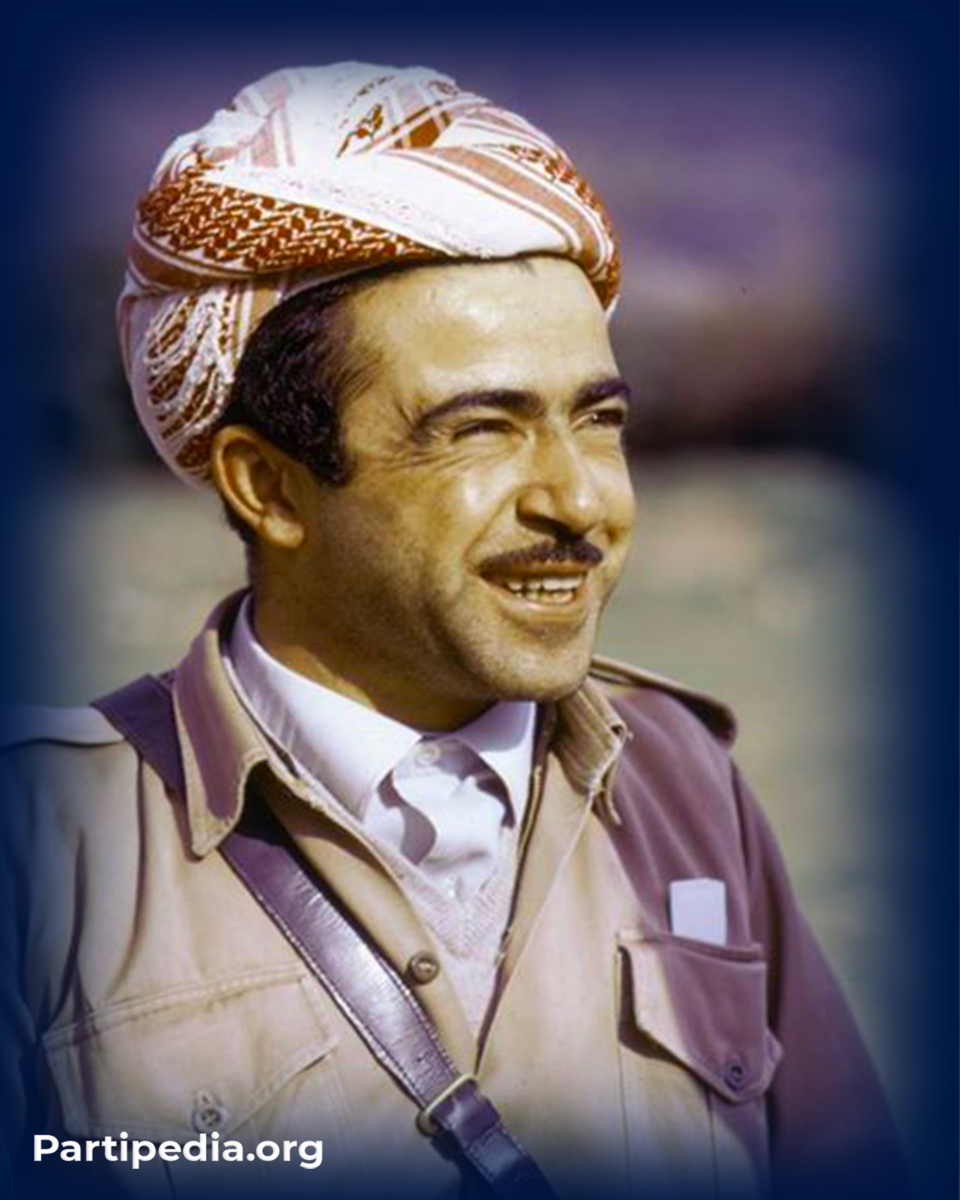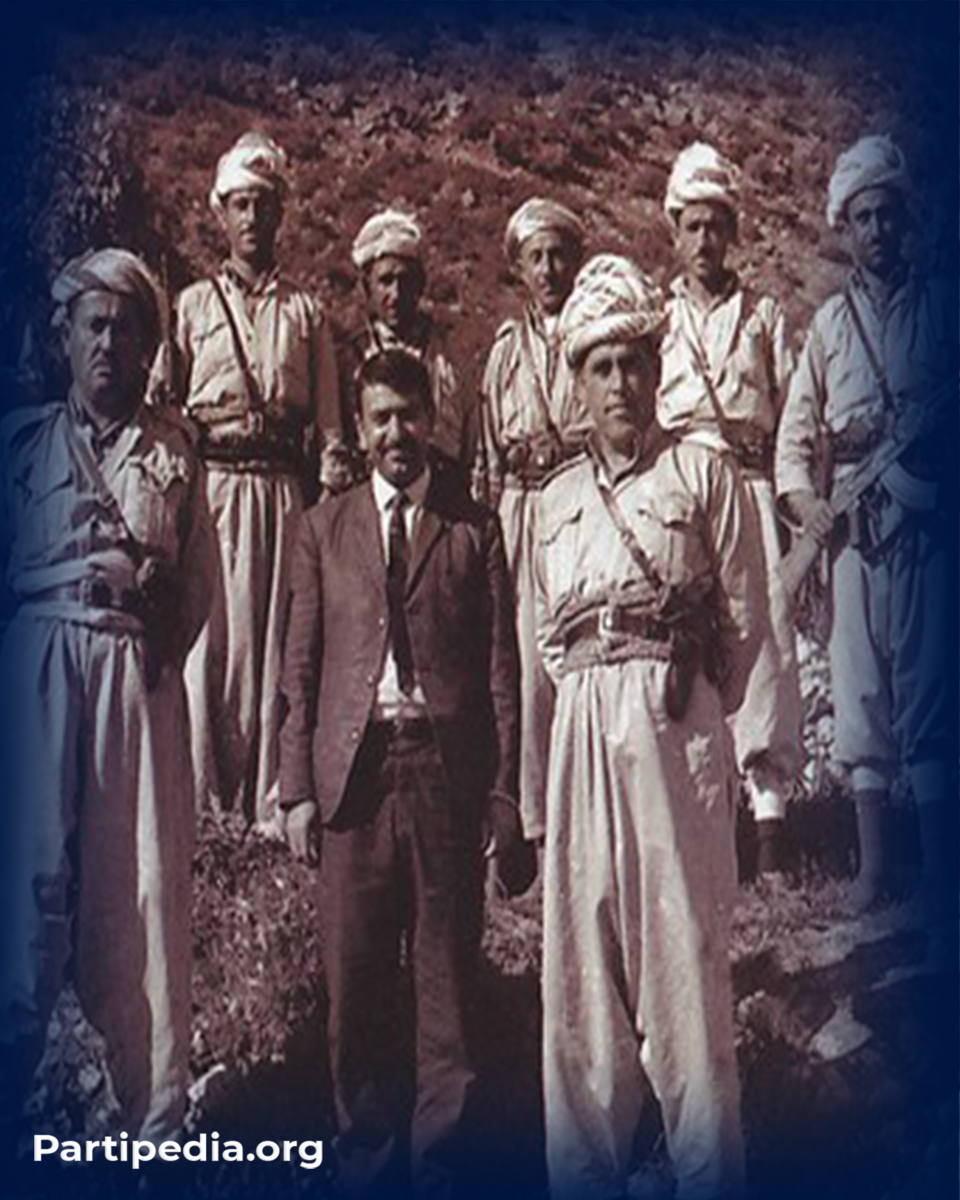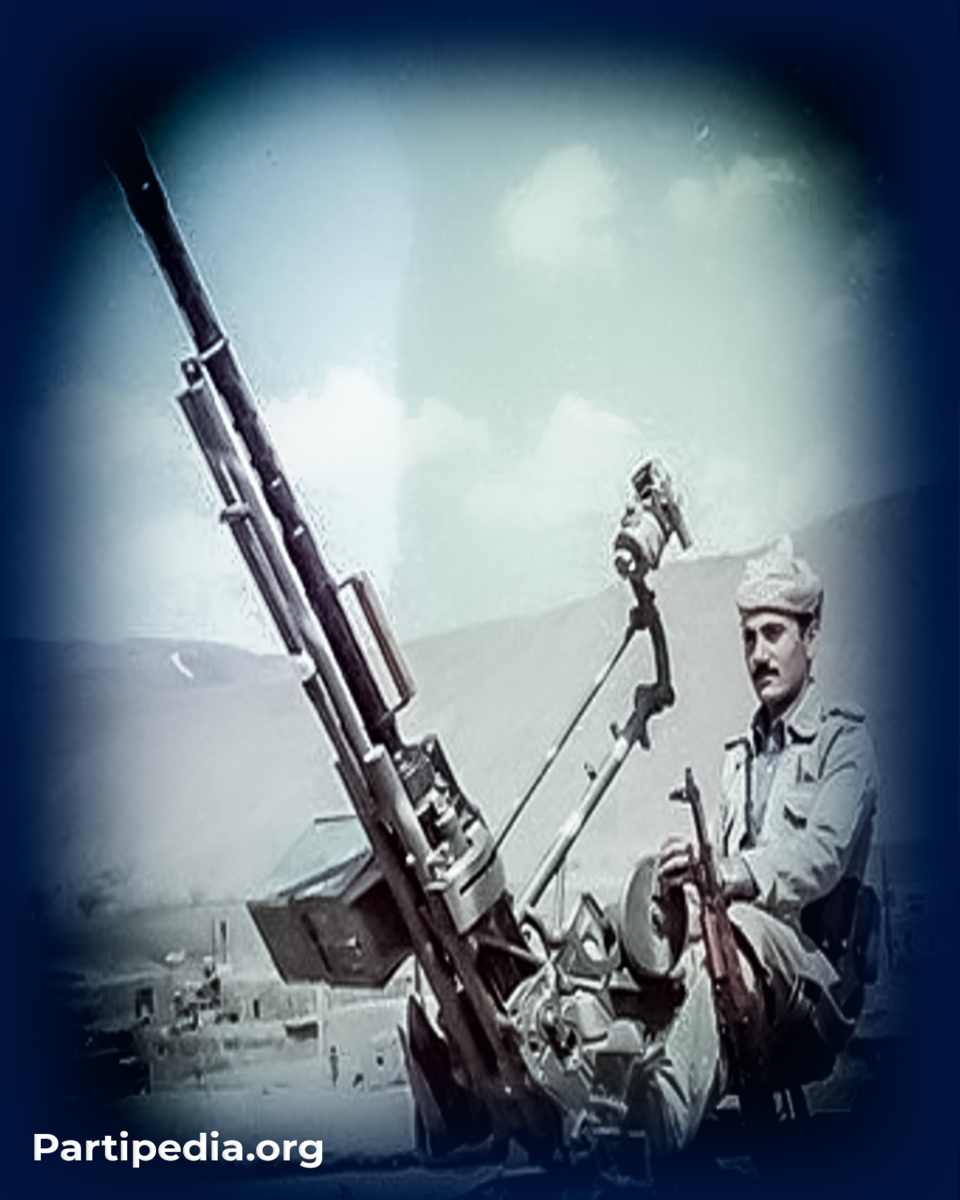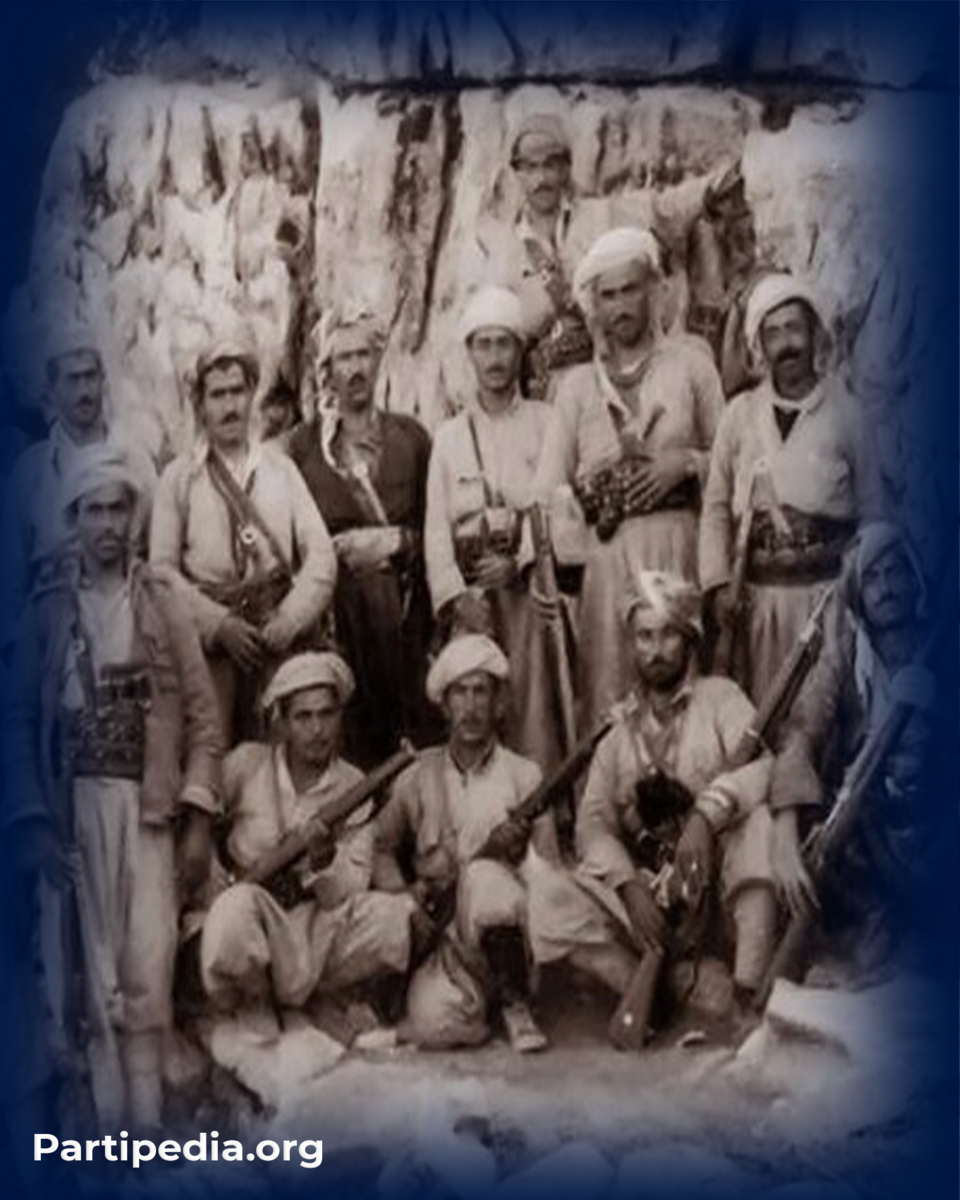


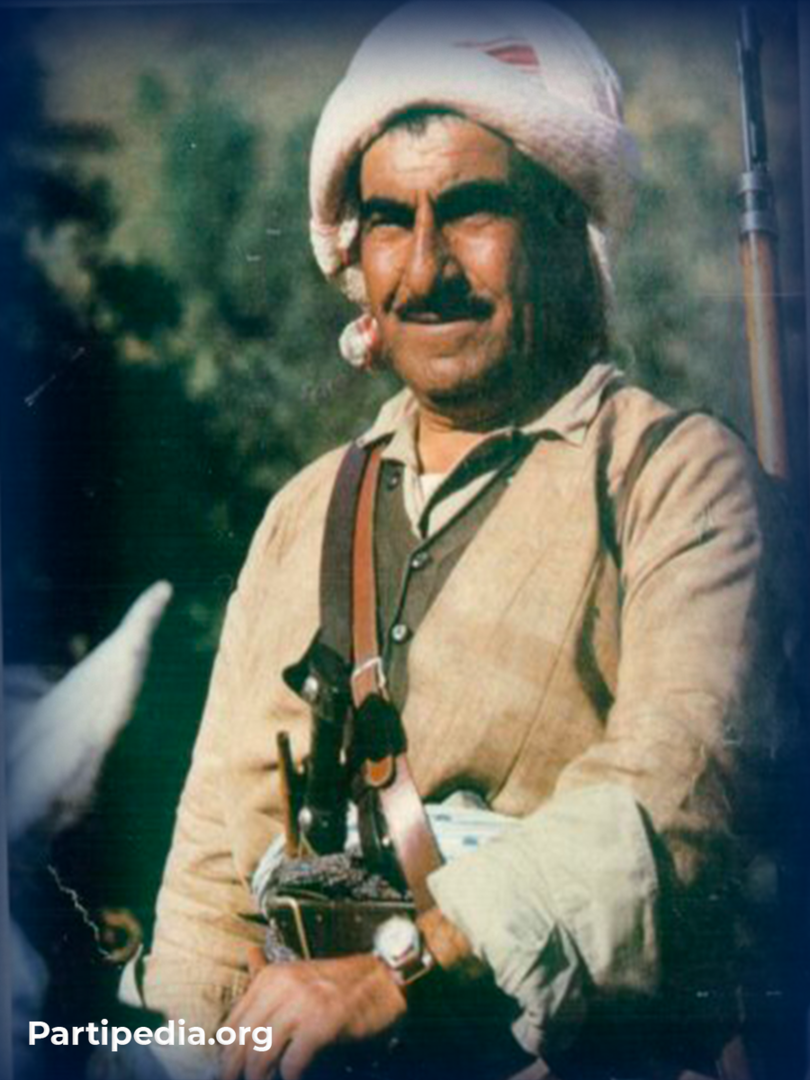
The first step towards his destruction began with his arrest and deportation at the age of three. The Ali Osman Empire imprisoned him and his family in Mosul due to the revolution of Sheikh Abd al-Salam Barzani and then decided to deport them to Sulaymaniyah. After this, Barzani reached the age to take up arms and rely on himself in the war, and gradually his name became on the lips of every Kurd.
First: the attempted assassination of Mullah Mustafa Barzani in 1936
After the suppression The First Barzan Revolutionand the surrender of Sheikh Ahmed Barzani and Mullah Mustafa Barzani They and their families were arrested in Mosul by the Turks for the monarchy of Iraq. Also, after Khoshvi Awdish started the Khoshvi revolution, the pashayat government, especially Hassameddin Juma, who was at that time both the police chief and the former governor Omar Nezmi's administration, believed that Mullah Mustafa was the one who encouraged the Khoshvi movement and drew inspiration from him, so in 1936 he tried to assassinate Mullah Mustafa. Mustafa Barzani They poisoned him and put the poison in his coffee. After this, Mullah Mustafa remained unconscious for two weeks and miraculously survived.
In the attempt to save Mullah Mustafa, the following names are mentioned: Sheikh Ajil Yawer and the Kashmule and Abawin families, and there are also rumors that a French doctor living in Syria played a role in treating Mullah Mustafa.
Second: Attempted assassination of Mullah Mustafa Barzani in 1961
After starting September Revolution of September 11, 1961 and the Peshmerga's victory in several battles, it appeared that the Iraqi government was trying to reach an agreement with the Kurdish political leadership, especially General Mustafa Barzani, to approach and negotiate, but they secretly attempted to assassinate Mullah Mustafa several times and repeatedly announced his death and assassination.
Abdulkarim Qasim, who had completely lost his temper and was trying to further strengthen his dictatorial rule in Iraq, wanted Mullah Mustafa Barzani give up the legitimate rights of the people of Kurdistan and go and settle in Barzan for himself, for this purpose he sent a letter to Sheikh Ahmed Barzani and asked him to be the President Mustafa Barzani Sheikh Ahmed did not refuse and sent two of his representatives to Mulla Mustafa to agree to meet with Abdulkarim Qasim's representative, Major General Hassan Abudi, who was in charge of the fifth brigade. Masoud Barzani In the first part of the third volume of his book entitled (Barzani and the Kurdish Liberation Movement), he says:
On December 17, the government had first designated a place near Sarsang for the two negotiators, but Barzani did not go there and stayed in a place near the village of Bamarne, then messengers were sent to the place designated for the meeting, to wait for Hassan Abboud to arrive and take him to the place Barzani had chosen for the meeting. His view turned out to be correct and Qasim wanted to kill him and his representative Hassan Abboudi together at the meeting place. As soon as Hassan Abboud left his place and went to Barzani's representatives, four planes arrived and bombed the place very heavily and accurately. Hassan Abboud witnessed the heavy bombing from a distance and was very embarrassed and this attitude was very difficult for him.
As this story shows, the experience and foresight of the immortal Barzani thwarted the enemy's plan and prevented their wishes from being realized, and their terrorist attempt was thwarted. Barzani told Hassan Abudi: "I don't want anything from Qasim, give me anything. Let him give me the rights of the Kurdish people and I will leave Iraq."
Third: Attempted assassination of Mullah Mustafa Barzani in 1971
Blow up September Revolution Although it had achieved some of its goals, and for the first time, Kurdistan's autonomy was officially recognized, the enemies of Kurdistan and the President Mustafa Barzani They did not give up their efforts and continued with their plans to kill him.
On September 15, 1971, two religious scholars, one of whom was the Sunni cleric Abdul Jabar Azami and the other the Shiite cleric Abdul Hussein Dakhili, visited Mustafa Barzani and he warmly welcomed them. The two religious scholars said that they made this visit due to the bad situation between the revolution and the Iraqi regime and the impact of this situation on public opinion, and they also informed that they intend to launch a campaign among religious scholars and the public in general, to reduce conflicts and strengthen the existing peace, therefore they need the President's opinion. Mustafa Barzani i don't like.
Barzani expressed his views to them and appreciated their efforts and supported them. So far, things have been normal, but what is unusual is that the driver who brought the two mullahs was a man from the Iraqi intelligence service to see about the security measures to protect the mullah. Mustafa Barzani, also came to get to know the geography of the area and the Barzani base, and to see where Barzani lives and where he receives his guests.
On September 29, 1971, a delegation arrived in Haji Omaran, consisting of Abdul Hussein Dakhili, Sheikh Abdul Jabar Azami, Sheikh Abdul Wahab Azami, Sheikh Ibrahim Khanim Khuzai, Sheikh Ahmed Hitti, Sheikh Baqir Muzafar, Sheikh Ghazi Al-Dilami, Sheikh Nur Yasin, and Sheikh Abdul Jalil Al-Musawi, to resolve the problems between the revolution and the Iraqi government. The delegation arrived in two cars, one a Toyota pickup truck and the other a 1963 Chevrolet, driven by Suleiman Koxhi and Muhammad Kamil Ismail, both of whom were affiliated with the Baghdad intelligence service.
Vehicles were not allowed to pass through the Haji Omar checkpoint, but delegation member Abdul Jabar Azami threatened the guards that if they were not allowed to pass, he would complain to the President. Mustafa Barzani do, so they were allowed to pass.
When the delegation arrived, the President Mustafa Barzani, Dr. Mahmud and Masoud Barzani They were together. Barzani was informed that his guests had arrived and the names of the guests were given to him. Barzani decided to meet them after the evening prayer.
The guests had brought a Quran and another book of Sharia to Melam Mustafa, who accepted it and thanked them. After this, the tea-maker of the center came in and asked Sheikh Hadi Khazraj, who was standing in front of the President, Mustafa Barzani He sat down and started to pour tea. Sheikh Hadi, who had secretly brought a voice recorder with him to record Mullah Mustafa's voice, seized the opportunity and the tea-maker stopped him and put his finger on the recorder, but instead of recording, the recorder exploded and the sheikh was blown to pieces and the room filled with smoke.
Masoud Barzani who was with the President before the explosion Mustafa Barzani After hearing the explosion, he went straight to the scene of the explosion, he says: At first I thought my father's house had been blown up, then it became clear to me that my father had gone to see the guests earlier than he had indicated and that was where the terrorist attack took place. I thought my father had been killed, but one of his bodyguards told me that the President Mustafa Barzani Only a part of it has fallen and is still alive.
Masoud Barzani The events following the terrorist attack are as follows:
In the reception room, 4 people were killed by a bomb. The people on the right and left seats of my father were also injured, and the one who could have escaped fled. Barzani left the room and told the peshmerga: "Don't kill any of them, but the two drivers didn't reach the Chevrolet - which, like the other one, had been bombed and rockets were attached instead of the tail lights so that if the drivers succeeded and escaped, they could see them and follow them in the car. As these two drivers were walking, they threw hand grenades... At five twenty-five minutes, everything was stopped by killing the plotters.
In this terrorist act, 9 clerics and 2 drivers were killed, 2 peshmerga were martyred and fourteen were injured. Also, when they dispersed all the people, the planned Toyota also exploded, but no damage was caused.
For condolences to Barzani and their happiness! with the release of the General Mustafa Barzani Regarding the terrorist attempt, the leadership of the Iraqi Ba'ath Party first sent a letter, then the leader of the Kurdistan Workers' Party, Abdul Sattar al-Jawari, who was a minister, sent it to President Barzani on his own behalf, and both expressed their ignorance of the terrorist act.
A joint committee was formed to uncover the facts and identify those involved in the terrorist act, but it was unsuccessful, because according to information obtained by the Revolutionary Guard, the regime had prepared this plan itself.
Nazim Gizar, the head of Iraq's intelligence agency at the time, may have had an influential role in implementing the plan, but the decision-maker was above him, and he was merely an executor.
Masoud Barzani In the third page of the second part of his book, Barzani and the Kurdish Liberation Movement, he says that Mam Jalal told me that when he was in Baghdad for negotiations in 1983, Saddam had admitted that he was aware of the attempt to assassinate Mullah Mustafa and that he was very upset when this attempt failed.
Fourth: Attempted assassination of Mullah Mustafa Barzani in 1972
After the terrorist attempt by the Iraqi intelligence service at Barzani's headquarters, the agency did not learn its lesson and continued its terrorist activities. On July 15, 1972, a person named Ibrahim Gabari came to Iraq from Syria and it was claimed that the Syrian government was looking for him. Gabari frequently visited the fifth division of the Kurdistan Democratic Party (KDP) and established contacts with the Iraqi intelligence service, which assigned him a job.
Nazim Gizar, who was in charge of Iraqi intelligence at the time, ordered Ibrahim Gabari to approach Barzani's base and attempt to assassinate him, and if he could not, then either Idris Barzani or Masoud Barzani who were the sons of the leader of the Kurdistan Liberation Movement, kill one of them. Gabari accepts and heads to the liberated areas under the control of the revolution, where he demands to see Masoud Barzani He does it because he has an important secret.
Masoud Barzani He meets with Gabari and Gabari requests Iraqi intelligence. Masoud Barzani He tells him, he still tells him not to give up and continue his work, even if they ask him for something else.
The Iraqi intelligence service, believing that he was close to Barzani's base, asked Gabari to contact the President. Mustafa Barzani, Idris Barzani and Masoud Barzani to take pictures, this request from Gabari Masoud Barzani By taking the photos to Nazim Gizar, he convinced Gabari and sent a bag full of TNT to the liberated areas under the control of the revolution, to kill Mullah. Mustafa Barzani and if he couldn't, he could detonate TNT with one of his two sons.
The TNT bag was handed over to the Revolutionary Intelligence Service and then the news of the attempted assassination of Barzani was published in the Xebat newspaper, but the Ba'ath regime, like its previous terrorist acts, denies this terrorist attempt and declares its ignorance, and the Ministry of Interior denies the involvement of any Iraqi government agency in this terrorist attempt.
Saddam Hussein formed a fact-finding committee consisting of Abdul-Khaliq Samarai, a representative of the Ba'ath Party, Mukarem Talabani, a representative of the Communist Party, Muhammad Mahmud Abdul-Rahman, a representative of the Kurdistan Democratic Party, Aziz Sharif, Dara Tawfiq, and Ihsan Sherzad. The committee examined the Nawpirdan and documents and met with Ibrahim Gabari, who confessed to everything and revealed the names of the officers who participated in the conspiracy, including Officer Basil Araji and Abdul-Khaliq Samarai, and Ibrahim Gabari headThe officers asked and his words were true, because he knew them. Samarai promised to report the results of the investigation committee to his superiors, but the Ba'ath Party took no action against this incident until Nazim Gizar staged a coup on June 20, 1973, to remove President Ahmed Hassan Bakr from power and seize power in Iraq. The Ba'ath regime then admitted that the terrorist attacks of September 29, 1971 and July 15, 1972 were the work of Nazim Gizar and carried out by foreign hands.
In addition to these attempts, there were several other terrorist attempts aimed at undermining the security of the revolution, but due to the vigilance of the revolutionary security agencies, they were unable to do anything. What is more important is that the leadership of the revolution has never, under any circumstances, responded to terrorist attempts with terrorist attempts, and the Revolution and the Kurdistan Liberation Movement have always avenged those who committed these terrorist acts, not women, children, and innocent people. This was the only thing that the President Mustafa Barzani He had complete confidence in him and always encouraged those around him and the leaders of the Kurdistan Peshmerga Forces to never carry out an operation that would result in the killing of innocent people.
Source:
- Masoud Barzani, Barzani and the Kurdish Liberation Movement, vol. 1, 1931-1958, First Edition (Hewlêr, Peshmerga Ministry Press, 2004).
- Masoud Barzani, Barzani and the Kurdish Liberation Movement, Volume III, Part II, September Revolution 1961-1975, First Edition (Hewlêr, Peshmerga Ministry Printing House, 2004).
- Kurdistan Democratic Party Encyclopedia Committee Archives.