

Open work phase
After the victory of the July 14, 1958 revolution, the political parties of the Iraqi National Union Front began to operate freely. The revolutionary leadership promised to give official permission to Iraqi parties to operate after the transition period but this authorization was delayed until December
On December 6, 1960, the Sovereign Council of the Iraqi Republic passed a law on a number of associations to license political parties in 46 articles A number of political goals, subject to several conditions, including that all party members must be Iraqi citizens and that the armed forces, state officials in the diplomatic department, and primary and secondary school students are not allowed to become party members.
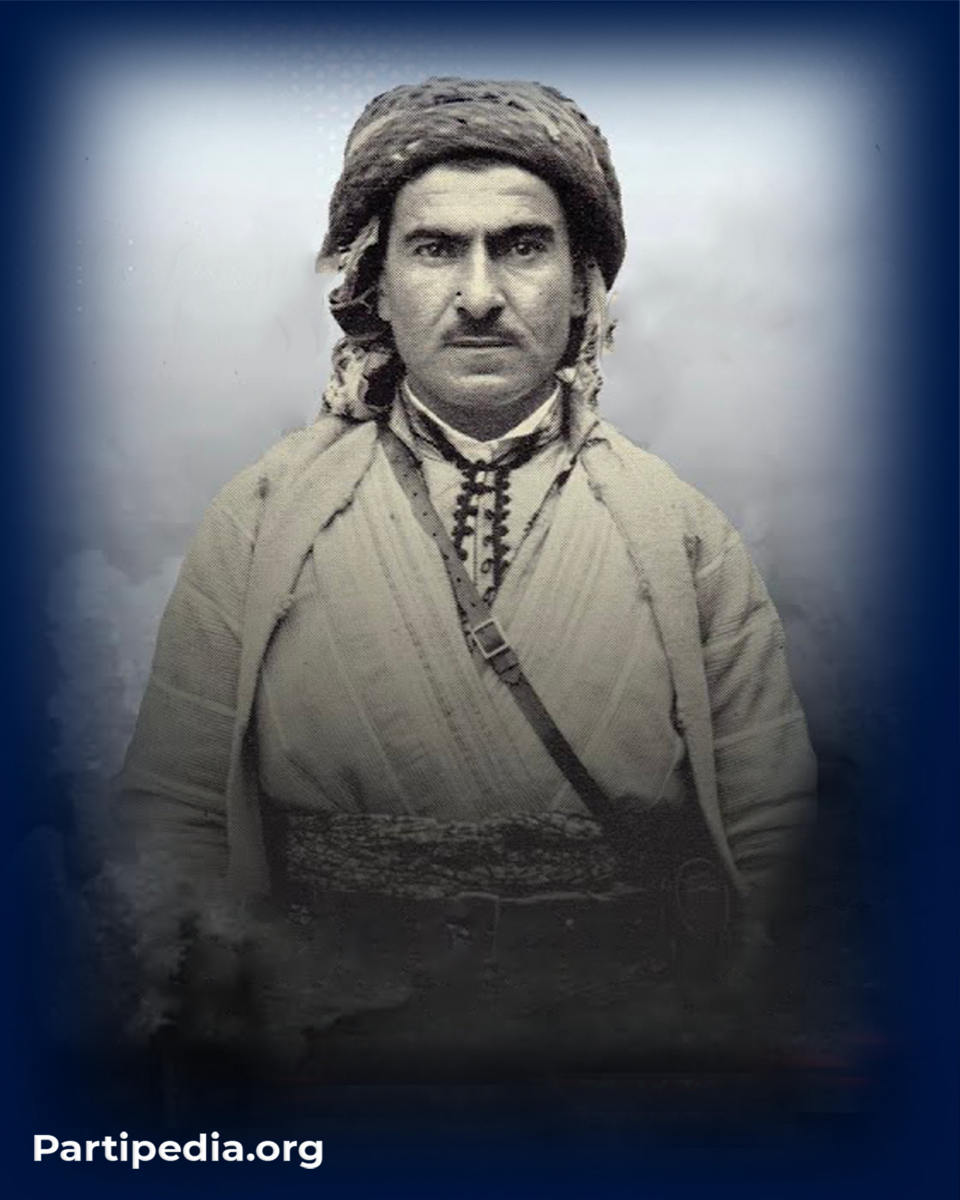
After the enactment of this law, the leadership of the Kurdistan Democratic Party (KDP) - Iraq, a ten-member committee headed by the president Mustafa Barzani On February 6, 1960, the Iraqi Ministry of Interior officially licensed the Kurdistan Democratic Party (KDP) to operate He was allowed to publish his central newspaper, Khabat.
The members of the establishment committee of the open work phase consisted of:
- Mustafa Barzani, the president
- Ibrahim Ahmad, Secretary
- Nuri Shawes
- Omar Mustafa
- Ali Abdullah Amen
- Ali Askari
- Mullah Motor
- Hilmi Ali Sharif
- Ismail Arif
- Shamsaddin Mufti
Holding a congress
After the Iraqi Interior Ministry recognized the Kurdistan Democratic Party (KDP) as a political entity with the right to openly operate throughout Iraq, the KDP leadership worked to hold a new party congress, although the KDP held its own congress in it was frozen.
After the local conferences in all branch committees, regional committees and mass organizations, the representatives of the congress were legally and openly elected, then in the presence of the president Mustafa BarzaniThe fifth congress of the Kurdistan Democratic Party (KDP) was held in Baghdad on May 5, 1960, in the presence of 168 delegates.
the beginning Ibrahim Ahmad He read the report of the previous Central Committee, then Nuri Shawes The financial report and the organization report were read out by Omar Mustafa, as well as the report of the Higher Monitoring and Inspection Committee. Then the congress decided to form several committees to review the complaint report, rules and programs Rules, Reports Investigation Committee, Finance and Bodies Committee and Complaints Committee.
Due to the political changes in Iraq, the Fifth Congress made some changes in the program, such as removing Article 3, which referred to the use of Marxist-Leninist theory, and amended the paragraph related to The right to independence of Kurdistan in all parts of Kurdistan and the article was changed to (struggle to support our Kurdish brothers wherever they are in the struggle they are waging for the completion of their freedom and national rights and ensure the support of the Iraqi Republic). materially and spiritually).
The structure of the Kurdistan Democratic Party (KDP), based on the internal rules of the fifth congress, included cells, organizational committees, regional committees, branch committees, central committee, political bureau, central committee secretary and president.
From the preparations to the end, the congress was held in a democratic atmosphere and unanimously the president Mustafa Barzani She was re-elected as president, then a leadership was elected by the members of the congress and for the first time a woman reached the leadership:
- Mustafa Barzani, the president
- Ibrahim Ahmad, Secretary
- Nuri Shawes
- Omar Mustafa
- Dr Murad Aziz
- Ali Abdullah
- Salih Yousfi
- Ali Askari
- Hashim Akrayi
- Jalal Shuani
- Nahidah Sheikh Salam
- (Mullah Motor) Abdullah Ismail Ahmed
- Ahmad Amedi
- Ali Hamdi Moses
- Abdul Hussein Faily
- Sayed Aziz Shamzini
- Nuri Ahmad Taha
- Jalal Talabani
Each of the Sayed Aziz Shamzini, Nuri Ahmad Taha and Jalal Talabani Their names were not disclosed as leadership members because they were Iraqi army officers who were not allowed to become members of any political party.
The reserves of the Central Committee were as follows:
The members of the party's political bureau were elected by the members of the central committee Ibrahim Ahmad, Nuri Shawes, Ali Abdullah, Dr Murad Aziz, Omar Mustafa.
The High Supervisory Board (High Oversight) was directly elected by the delegates of the Congress Habib Mohammed Karim, Zakia Ismail Haqi, Hormuz Nissan, Khalid Hassan Yousfi, Omar Hassan Bamarni, the reserve of the High Inspection Committee were Abbas Hussein and Yadullah Faily. . . .
Another decision of the congress was to support the Iraqi government against its opponents, because the PKK had an official license for the first time and could operate freely Pay attention to the news.
Sources:
- Massoud Barzani, Barzani and the Kurdish Liberation Movement, 1958-1961, Volume II, (2012).
- Law of Associations, Iraqi Newspaper, Ministry of Guidance in Iraq, No. 283, Baghdad, Saturday, December 2,
- Habib Mohammed Karim, History of the Kurdistan Democratic Party - Iraq (in the headquarters) 1946 - 1993, (Duhok - Khabat Printing House - 1998m).
- Permission of the Democratic Party of Kurdistan of Iraq, Khabat Newspaper (Al-Nidhal), No. 141, Baghdad, Sunday, 9 December
- 5th Congress of Kurdistan Democratic Party, Roji Nuw Magazine, No. 3, Year 1, Sulaimani, Kamran Printing House, June 1960.
- Dr. Sherko Fathullah Omar, Kurdistan Democratic Party and the Kurdish Nation's Liberation Movement 1946-1957, p. Suwara Qaladzeyi, (Shahid Azad Hawrami Printing House - 2013).
- Abdulstar Tahir Sharif, History of the Kurdistan Revolutionary Party, Second Edition, (Baghdad, Revolutionary Publications, 1979).
- General Conference of the Kurdistan Democratic Party, People's Union Newspaper, No. 88, Second Year, Baghdad, Tuesday, May 9,
- Kurdistan Democratic Party (KDP) – Iraq, 5th Congress.
- Journal of the National Democratic and Kurdistan Democratic Parties, People's Union Newspaper, No. 86, Baghdad, Friday, May 6,
- History of the Kurdistan Democratic Party (KDP), Congress and Conference (Program and Internal Rules), Volumes 1 and 2, (Erbil-Rojhelat Printing House-2021).