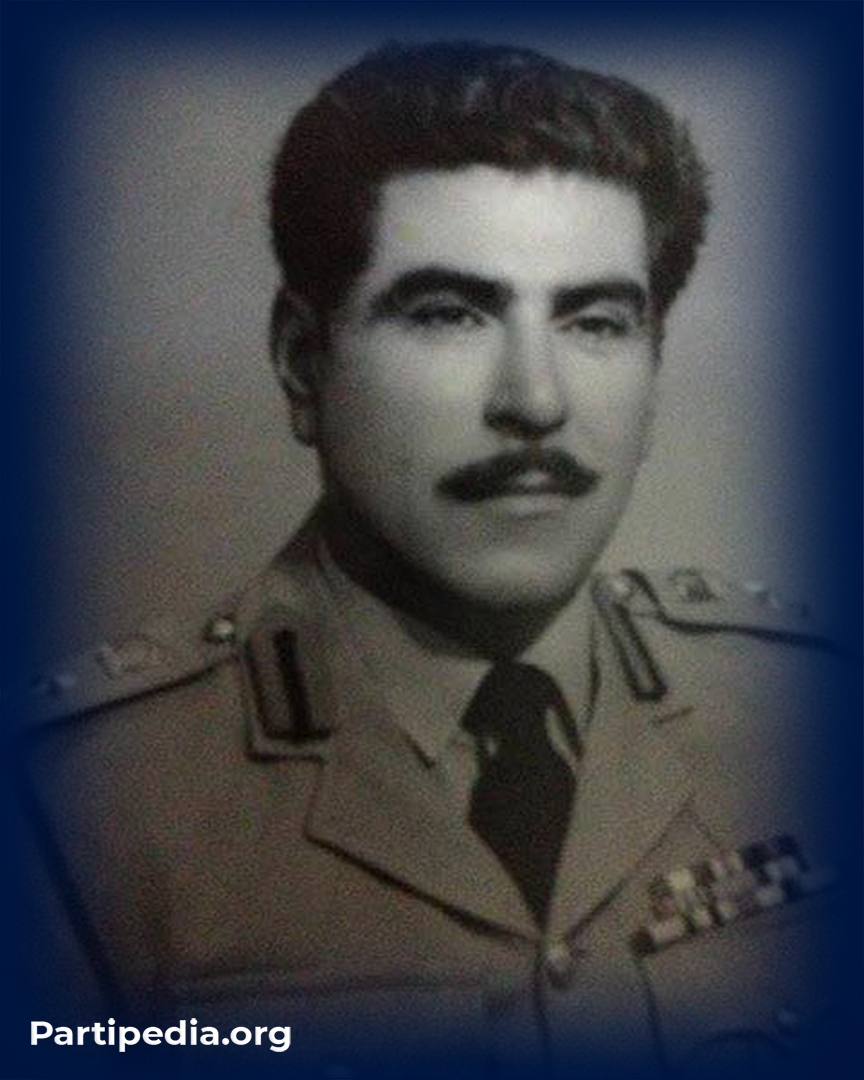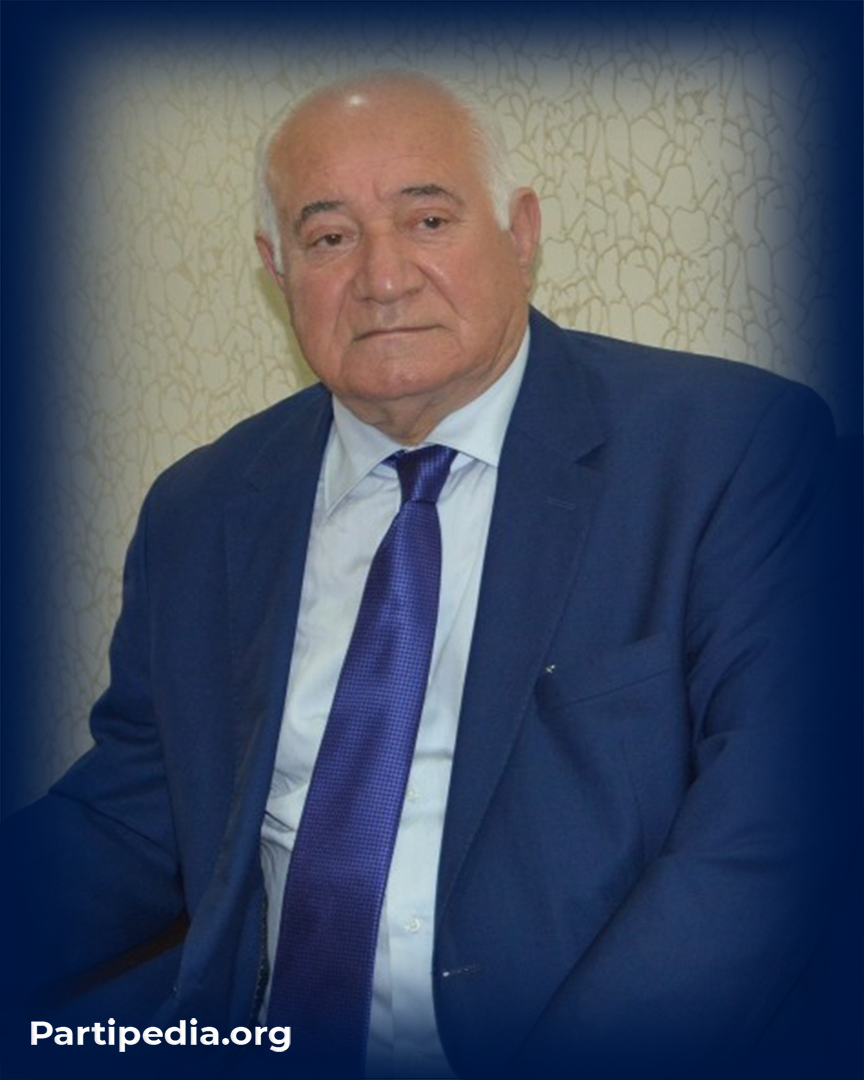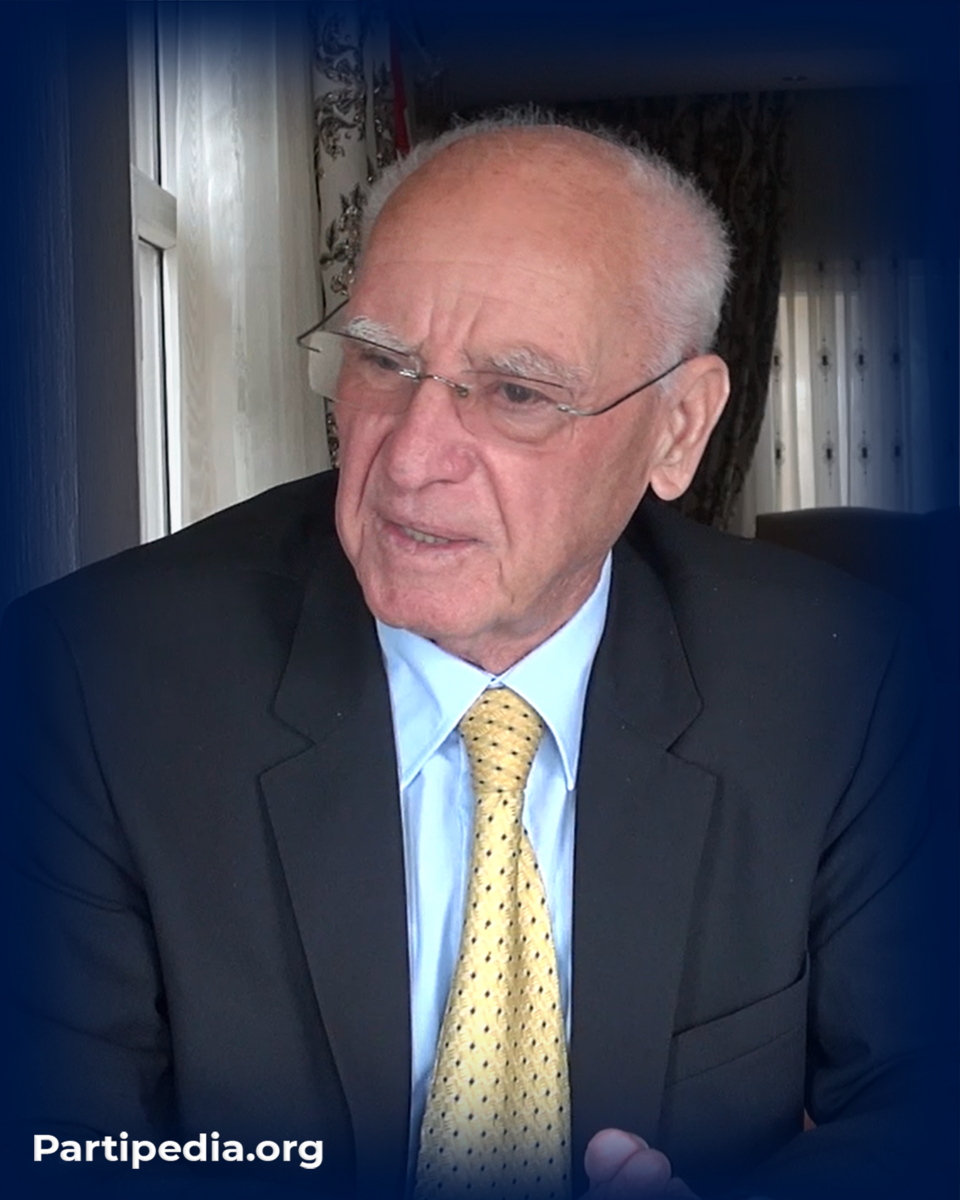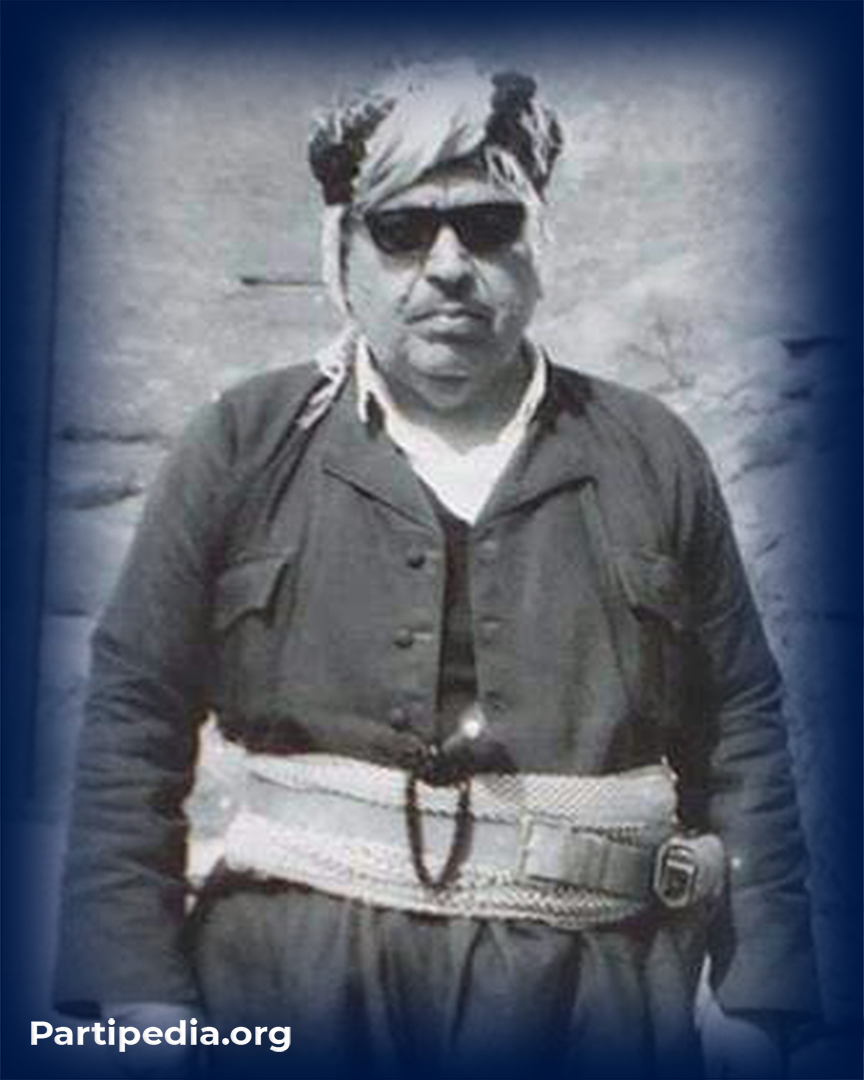



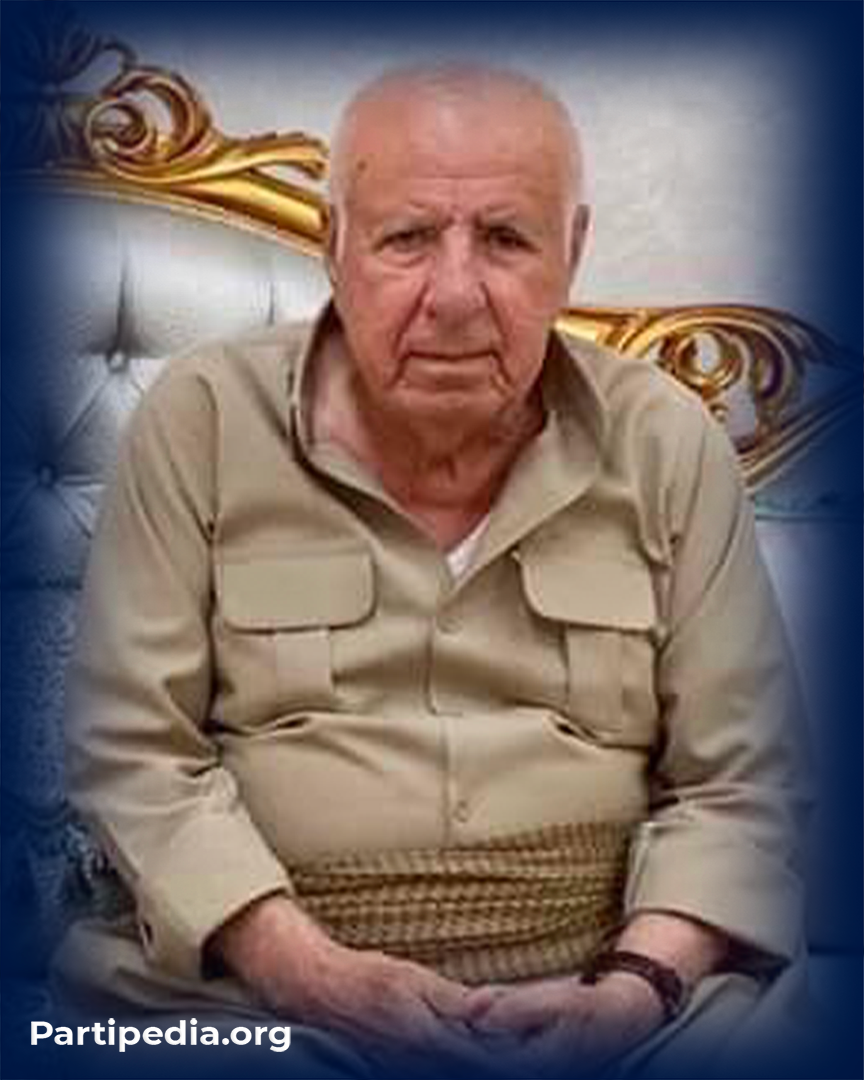
Khurshid Selim Shere, known as Khurshid Shere, joined the ranks of the Kurdistan Democratic Party in 1954. In 1954, he carried out activities as an active cadre of the Erbil plains farmers. In 1958, he became responsible for the military side of the Kurdistan Democratic Party. In 1979, he became a member of the preparatory committee of the ninth congress of the Kurdistan Democratic Party and was elected a member of the central committee of the Kurdistan Democratic Party. After the 1991 uprising, he held several executive positions in the cabinets of the Kurdistan Regional Government, such as general manager and attorney, etc. In 2005, he became a member of the Kurdistan Patriotic Council.
Biography
Khurshid Shere was born in 1938 in Erbil. He completed his secondary education in 1953. In 1959, he married Mamiz Khedir Pirot Shere, and in 1963, his mother and wife were arrested by Iraqi government officials, and their second son was born in the Erbil detention center.
In 1992, he became the Director General of the Interior Ministry in the first cabinet of the Kurdistan Regional Government. In 1994, he became the Assistant Minister of Agriculture and Water Resources of the Kurdistan Regional Government. He was the Governor of Erbil from 1994 to 1996. In 2000, he was appointed Assistant Minister of Endowments and Religious Affairs of the Kurdistan Regional Government. In 2005, he became a member of the second term of the Kurdistan National Council. He is fluent in all three languages, Kurdish, Arabic and Persian.
Worksheet
Khurshid Shere became the head of the military wing of the Kurdistan Democratic Party in 1958. He was a member of the preparatory committee for the fifth congress in 1960, the sixth in 1964, the seventh in 1966, and the eighth in 1970 of the Kurdistan Democratic Party, and participated in the congresses.
In 1962, according to his information, which was in the ranks of the Iraqi army, the second battalion of the third brigade of the Iraqi army was ambushed by Peshmerga forces in the Zakho valley and was eliminated. In the same year, he joined the ranks of the Peshmerga forces of the September Revolution and participated in the Battle of Balisan Mountain, the Battle of Kospi Spi, the Second Battle of Safin on the border of Erbil province, and the Battle of Qaradagh on the border of Sulaymaniyah province against Iraqi army forces. At the end of 1963, he became a serleq in the first battalion of the Kawe force in Laqa Asos.
In 1965, he became the head of the Koye district committee of the Kurdistan Democratic Party's Second District Committee, and in the same year, he became a member of the staff of the Second District Committee and was appointed as the District Committee's secretary.
In 1965, he participated in the Battle of Safin and was wounded. In the same year, he became one of the commanders of the Six-Party War (the Battle of Sharqeh) in the Koya area, which faced the Iraqi army and recorded victory. He also participated in the Battle of the Hewler Plain, the Second Battle of Safin, and the Battle of Bestan.
He remained with the Lek office until the defeat of the September Revolution and emigrated to Iran in 1975 after the defeat of the September Revolution. In 1979, he became a member of the preparatory committee of the ninth congress of the Kurdistan Democratic Party and was elected a member of the central committee of the Kurdistan Democratic Party and appointed as the head of the Lek office.
In 1989, he was a member of the preparatory committee for the tenth congress of the Kurdistan Democratic Party in Eastern Kurdistan. In 1991, he was one of the commanders of the Peshmerga forces of the Kurdistan Democratic Party that reached the Pishder area and participated in the liberation of the towns of Ranye and Koye and Erbil.
In 1992, he became the Director General of the Interior Ministry in the first cabinet of the Kurdistan Regional Government. In 1993, he was appointed as the Chairman of the Executive Committee of the Eleventh Congress of the Kurdistan Democratic Party - United. In 1994, he became the Assistant Minister of Agriculture and Irrigation of the Kurdistan Regional Government and served as the Governor of Erbil from 1994 to 1996.
In 1999, he was a delegate to the twelfth congress of the Kurdistan Democratic Party in the city of Erbil and was recognized for his work in the September Revolution and May Revolution and the stage of the uprising in Southern Kurdistan and the stage of sovereignty, by the President Masoud Barzani He has received the Barzani Immortal Medal.
In 2000, he was appointed as the deputy minister of the Ministry of Endowments and Religious Affairs of the Kurdistan Regional Government in the fourth cabinet. In 2005, he was elected as a member of the second term of the Kurdistan National Council and at that time he became a member of several different committees of the Kurdistan National Council. In 2010, he was a delegate to the thirteenth congress of the Kurdistan Democratic Party in the city of Erbil.
His works:
Work and blood, memories of the years of Peshmerga work in 2006.
Source:
1- Asad Edo, The Six-Tribe War or the War of the East, Brotherhood Newspaper, Organ of the United Kurdistan Democratic Party, No. 1765, Hewlêr, Saturday, November 9, 1993.
2- Ali Sincari, Al Qeziye Al Kurdiye wel hizb al Ba'es al Arabi al Ishtiraki fî al Iraq, al cuz al sales, (Dihok - Matbaa Xanî 2012).
3- Şiwan Mihemed Emin Teha Khoshnaw, A study of the political situation in Hewlêr between the years (1958 - 1963), (Hewlêr - Rojhilat Press 2012).
4- Şiwan Mihemed Emin Teha Khoshnaw, A historical study of the political situation in Erbil between 1963 and 1970, (Erbil - Salaheddin University Press 2016).
5- Ari Faruq Hesen Nanekeli, founders of the Kurdistan Democratic Party and the September Revolution between 1961 and 1975, (Hewlêr - Ravza Publishing House 2012).
6- Cemal Murtke, The Mountain Writes, first cover, (Hewlêr - Hêvî Publishing House, 2012).
7- Ehmed Şerîf Lek, commentary on historical events, second volume, (Hewlêr - Rojhilat Publishing House - 2019).
8- Hamid Gewheri, Barzani Medal, the highest literary award, second volume, (Hewler - Barzani Charity Organization - Haji Hashim Publishing House 2015).
9- Habib Muhammad Karim, History of the Democratic Party of Kurdistan in Iraq (with reference to the leadership) 1946 - 1993 (Dihok - Xebat Press 1998).
10- Khurshid Shere, We practiced Peshmerga so that we could die and the nation could live, Xebat newspaper, organ of the Kurdistan Democratic Party, number 1531, Hewlêr, Monday, August 16, 2004.
11- Khurshid Shere, Work and Blood: Memories of the Years of Peshmerga Work, third edition, (Hewlêr - Hacî Hashim Publishing House 2015).
12- Ali Kemal Barzi, Famous Kurdish Personalities in the Twentieth Century, first volume, (Hewlêr - Barzi Project - University Press 1999).
13- Fatih Rasul, A few pages from the history of the work of the Kurdish people, first cover, (Sweden - Halabja Press 1991).
14- Keyfi Hadi, shares his memories of the beginning of the Peshmerga work for the readers of our magazine. Derin Magazine, the organ of the second-level board of communication school of Hewler, issue 1, Hewler, Ministry of Education Press, Saturday, June 4, 2005.
15- Mullah Şahî, The Liberation and Liberation of Kirkuk, second edition, (Kirkuk - Martyr Azad Hewrami Publishing House 2012).
16- Comrade Gulabax narrates part of the epic of the uprising, Birayeti newspaper, Organ of the Kurdistan Democratic Party - United, No. 1889, Hewlêr, Saturday, March 5, 1994.