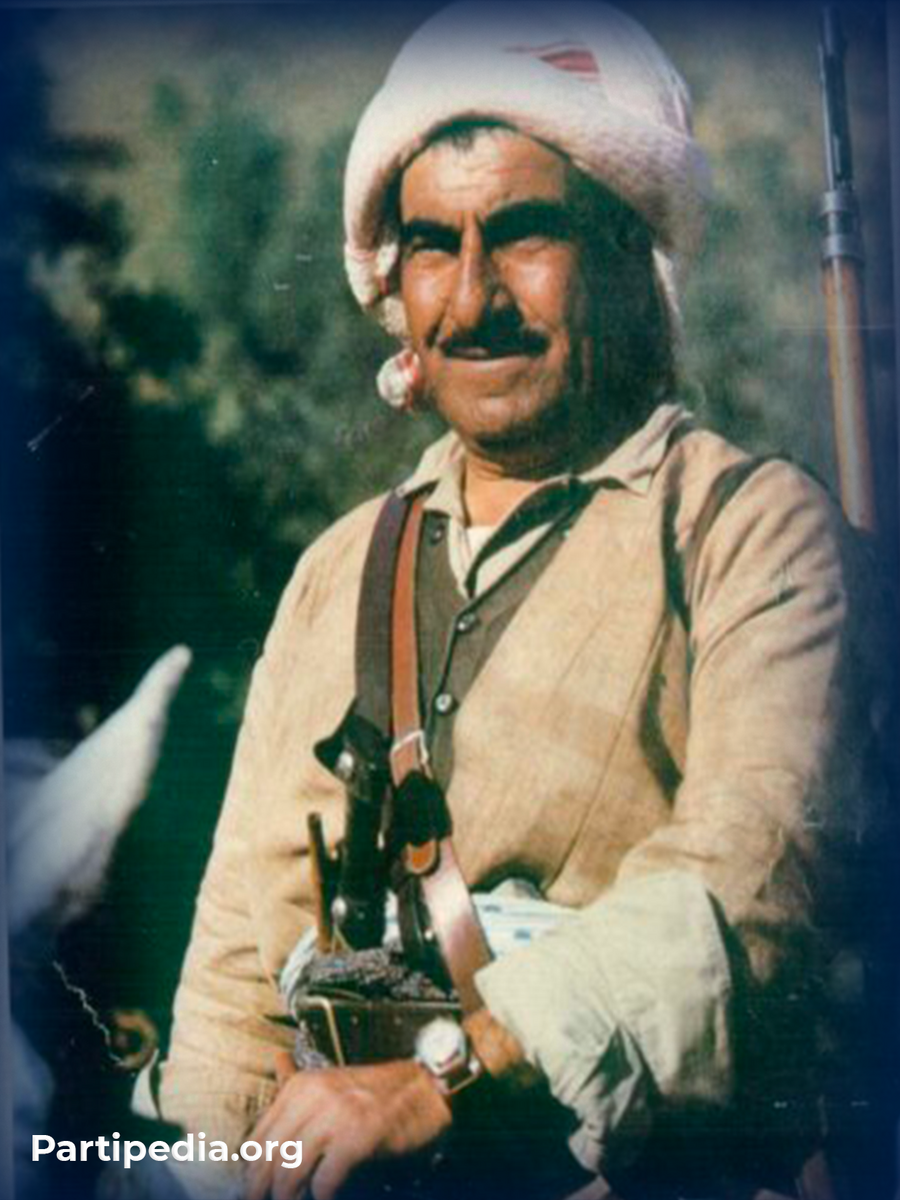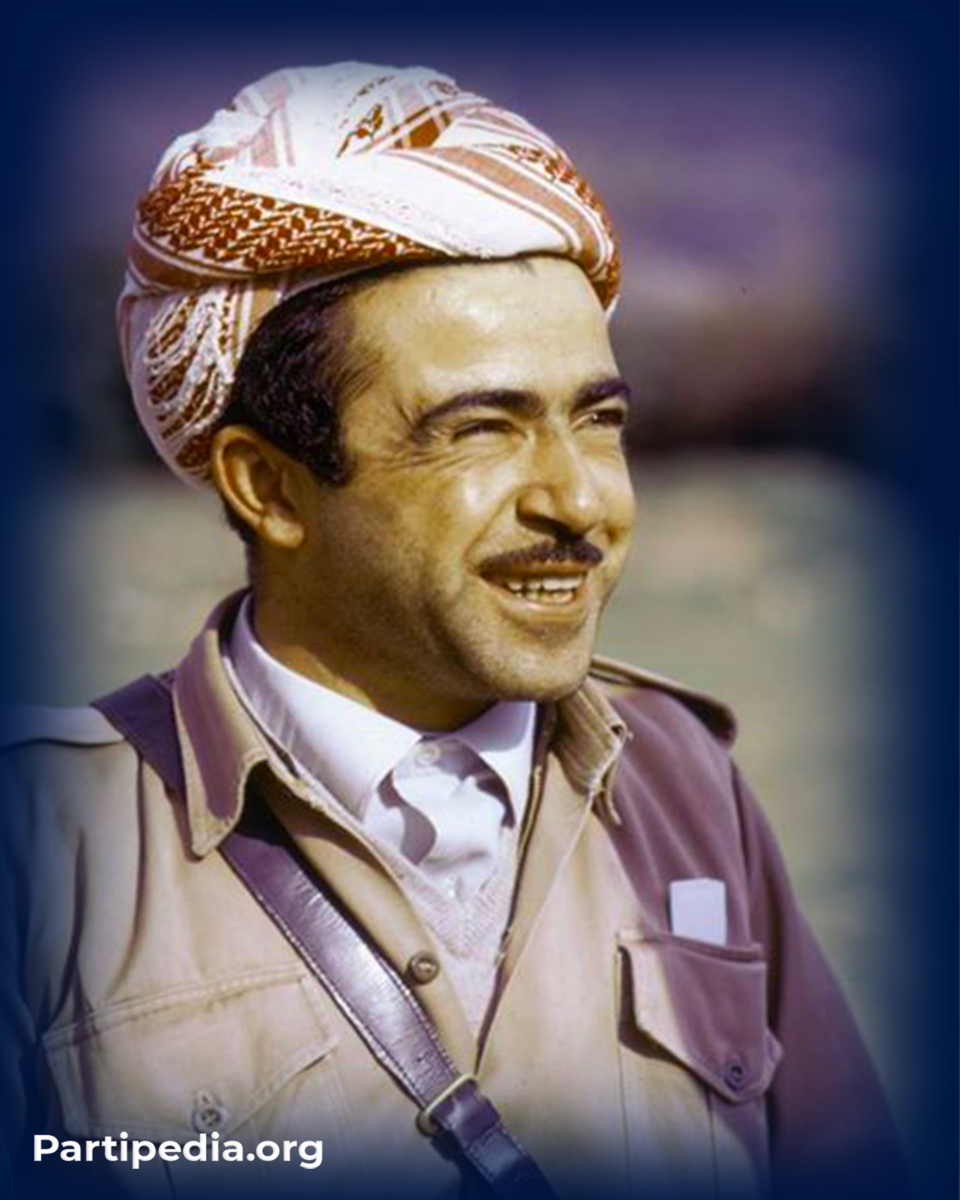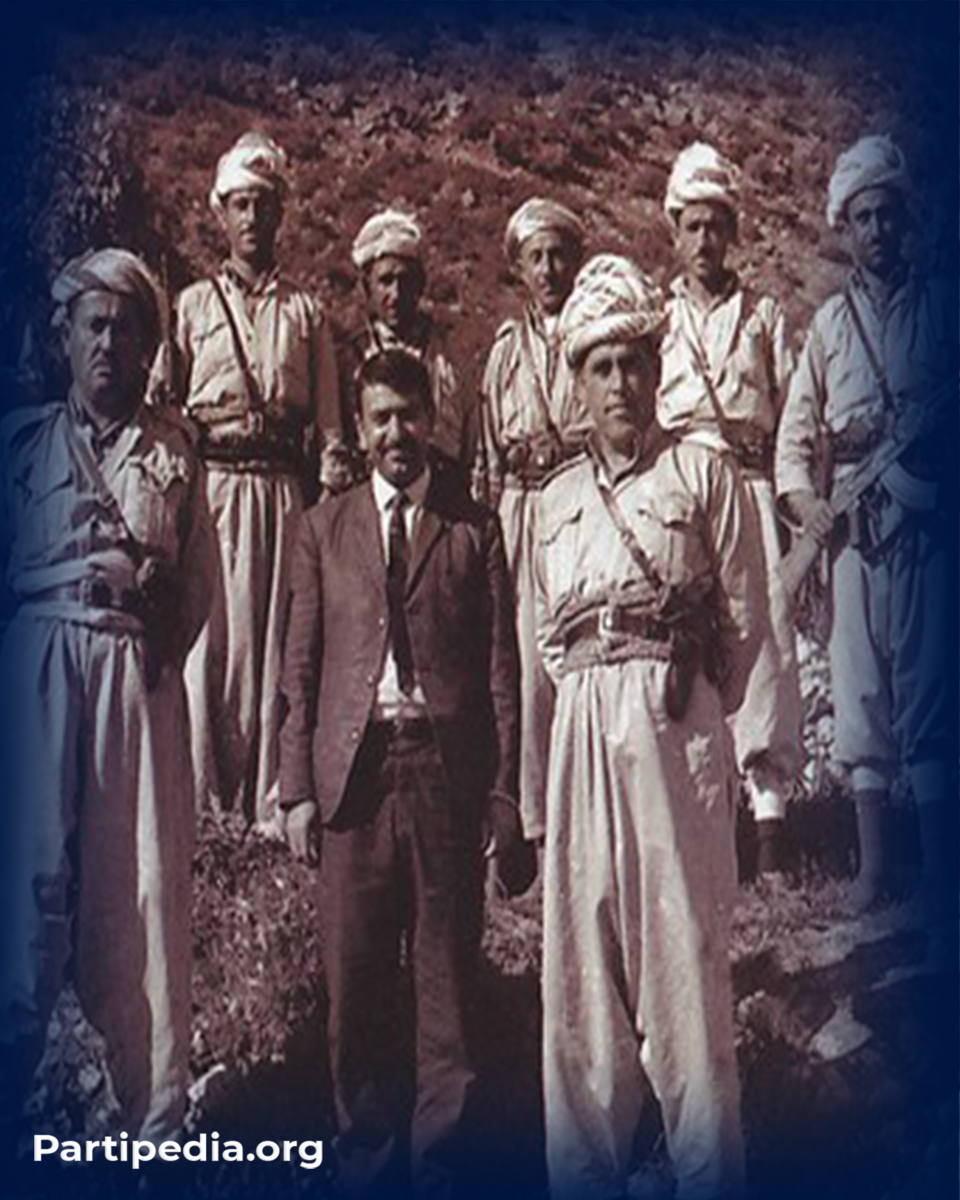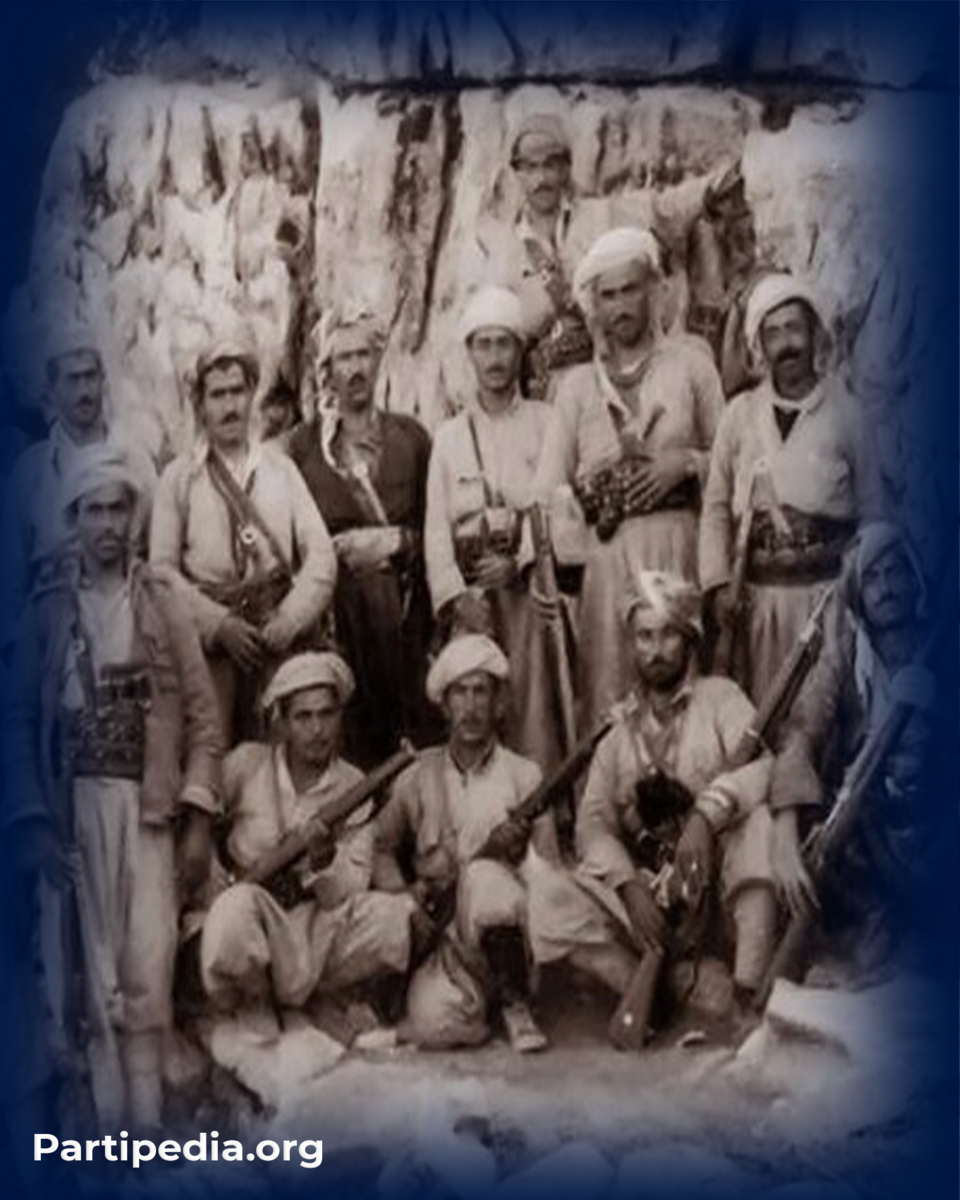


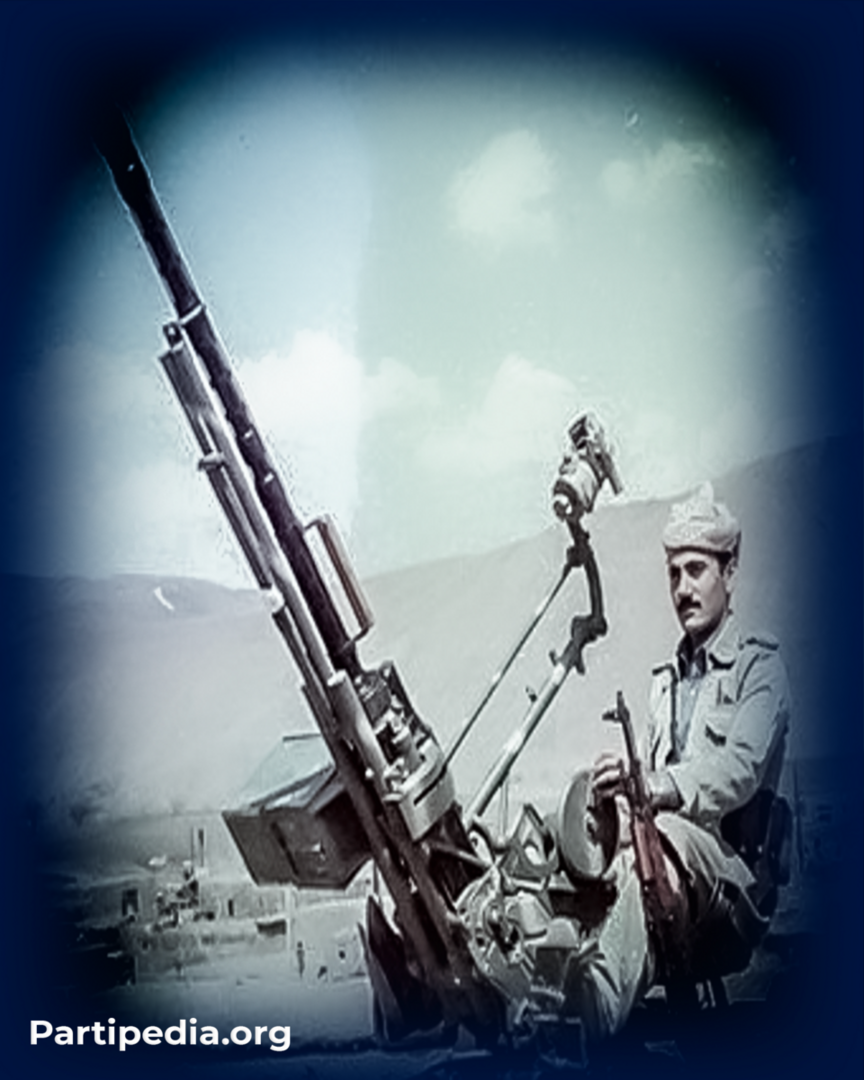
At the beginning September Revolution In 1965, due to the lack of weapons, ammunition, and weapons expertise, artillery was scarce, especially large-caliber artillery and mortars. In 1965, the revolutionary leadership managed to secure 8 81mm mortars and 4 120mm mortars. After the weapons reached the hands of the revolution, some Iraqi army officers and soldiers, who had been trained and skilled in the army's artillery section, joined the ranks of the Peshmerga.
Then, to strengthen the artillery section, the revolutionary leadership sent 8 people to a special course with 120 mm mortars, they were:
1- Chairman Bekir Abdulkarim
2- The servant Xidir Debakh
3- Milazim Khalid Shamseddin
4- Milazim Nowzad Khoshnaw
5- Omer Axa Dolameri
6- Ali Dolamari
7- Hali Dolameri
8- Mustafa Reşo
Revolutionary Artillery It made significant progress in the years 1965-1965, with its weapons including 60 mm mortars, American 81 mm mortars, 120 mm mortars, 25 beam cannons, 122 mm and 155 mm. During this period, many talented artillerymen were commissioned, some of whom were Kurdish officers from the Iraqi army, but during the negotiations between the revolutionary leadership and the government, the leadership decided to return to the ranks of the Iraqi army, such as Lieutenants Nawzad Khoshnaw, Lieutenant Ismail Nadir, Lieutenant Khalid Shamseddin, Lieutenant Tariq Chawshin and Lieutenant Ali Rubitin.
The others who were responsible for managing the artillery were: Hali Dolameri, Omar Osman Mergesori, Arif Sheikha, Hamedemin Reshashchi, Abdulrahman Besheyi, Dilawer Fayiq, Milazim Xidir Elwan, Milazim Enwer Miri, Milazim Xidir Debakh, Firyad Qadir, Asad Ali, Arif Jabar and Arif Asad Karwanchi, Arif Sediq Qadir, Jalal Sulêman Ajgeyi, Mihemed Mahmud Harki, Nayib Zabit Jalal, Nayib Zabit Cemal, Mam Tofîq Dergeleyi and Mustafa Dolameri.
In the summer of 1967, another artillery course was opened at the Çoman military center, under the supervision of Milazim Khedir Alwan, a skilled officer and expert in artillery and military maps of the Iraqi army under the Communist Party. In that course, participants learned to use 25-mm cannons, 60, 82, 120 mm mortars, bazookas and other weapons, as well as military maps, compasses, charts, binoculars, military charts, sights, using artillery to support their own forces, striking enemy positions and hiding artillery.
Obviously, due to the importance of the revolutionary leadership, the artillery was growing day by day. Different courses were opened on 81 mm and 120 mm mortars, reconnaissance (observation) and military maps. In the years 1970-1974, several other courses were opened for learning 25-barrel, 122 mm and 155 mm artillery. In April 1974, a 40-day course on 120 and 60 mm mortars was opened in Gelale with the participation of 25 peshmerga. In May 1974, another course was opened for learning the 122 mm cannon and in June another course was opened for learning the 122 mm cannon under the supervision of Milazim Faraidoon. In the summer of 1974, several peshmerga were sent to Iran to participate in a course on the use of artillery at the Peswe military base, which was taught by Iranian and foreign instructors. After After completing the course, they returned to Kurdistan and some of them became teachers under the supervision of First Lieutenant Kemal Pedawî. Revolutionary Artillery.
In 1974, when the war resumed, the revolutionary artillery was a strong support for all forces and battalions. At that time, there were only 6 large 25-barrel cannons with 812 such shells. During the attacks, the 75 mm cannons, 120 mm mortars and 25-barrel cannons had special names requested by Bethel for the battlefield, for example, the names Şemal 1, 2, 3, 4, 5, 6 for the 75 mm cannons, the names Birzo 1, 2, 3, 4, 5, 7 for the 120 mm mortars and the names Lafaw 1, 2, 3, 4. were used for the 25-barrel cannons.
Finally, artillery played a major role in attacking Iraqi military bases and centers throughout Kurdistan, especially in the Balekayeti area.
Role Revolutionary Artillery in some wars and epics
In 1965, three Iraqi army positions were shelled in the Korek Mountain Range, causing great damage to all three positions and the Peshmerga were able to capture two of them. In 1965, the revolutionary artillery was able to shell the Ranya military base, causing great damage to the military base and setting fire to the ammunition depot. In 1974, when the war resumed, the revolutionary leadership decided to capture the Gorez Mountain Reba and expel the Iraqi army. In this campaign, Revolutionary Artillery played an important and decisive role, especially in the final battle of Reba, where the soldiers defended strongly, but when the artillery was able to hit the target and inflict heavy damage on the Reba soldiers, the Peshmerga captured Reba in a short time without any casualties.
In 1974, the revolutionary leadership ordered the capture of the Spilki military base west of the town of Xelifan, but the Peshmerga failed in this move, so it was decided to heavily bombard the base, as there were many soldiers ready to attack and advance. For this, the artillery commander Hali Dolemari was directly assigned to carry out the orders. In order to carry out the orders, two artillery pieces were delivered to Xelan Biyaw overnight. On Mount Baradost, the artillery command and the command of the 2nd Zozik battalion supervised the artillery. At dawn, the artillery was ordered to start operating. After the heavy bombardment, the base suffered major damage, such as explosions in the ammunition and fuel tanks inside the base.
In 1974, during the Iraqi army's attack on the Omar Axa Valley in the Diyana Plain, Revolutionary Artillery They played a very important role in defeating the attack, inflicting heavy damage on the Iraqi army, and the attack was defeated.
Source:
-
Muqaddam Rukin Senger Ibrahim Khosnaw, Military Events of September Revolution, 1970-1975, 1st Edition, Hewlêr, 2022.
-
Milazim Xidir Abdullah Debax, Memory and Artillery of the Great September Revolution – Third Edition – Roşnbîrî Publishing House – Hewlêr, 2020.
-
Ismail Gundejori, September Revolution in Balekayeti, Rojhelat Publishing House, Edition 1, 2018.
-
Abdullah Rahman Melazade, The Military Structure of the Great September Revolution, Second Edition, Duhok, 2012.
-
Omer Osman, The Life of a Kurd, Mukriyani Publishing House, 2nd edition, volumes 1 and 2, 2008.
-
Interview, Gorgîs Yelda Tarxan, Peshmerga September Revolution, Encyclopedia Archive.
-
Ghazi Adil Gerdi, a Peshmerga in the service of Barzani... Haji Beroxi, volume 1, Second Edition, 2021.