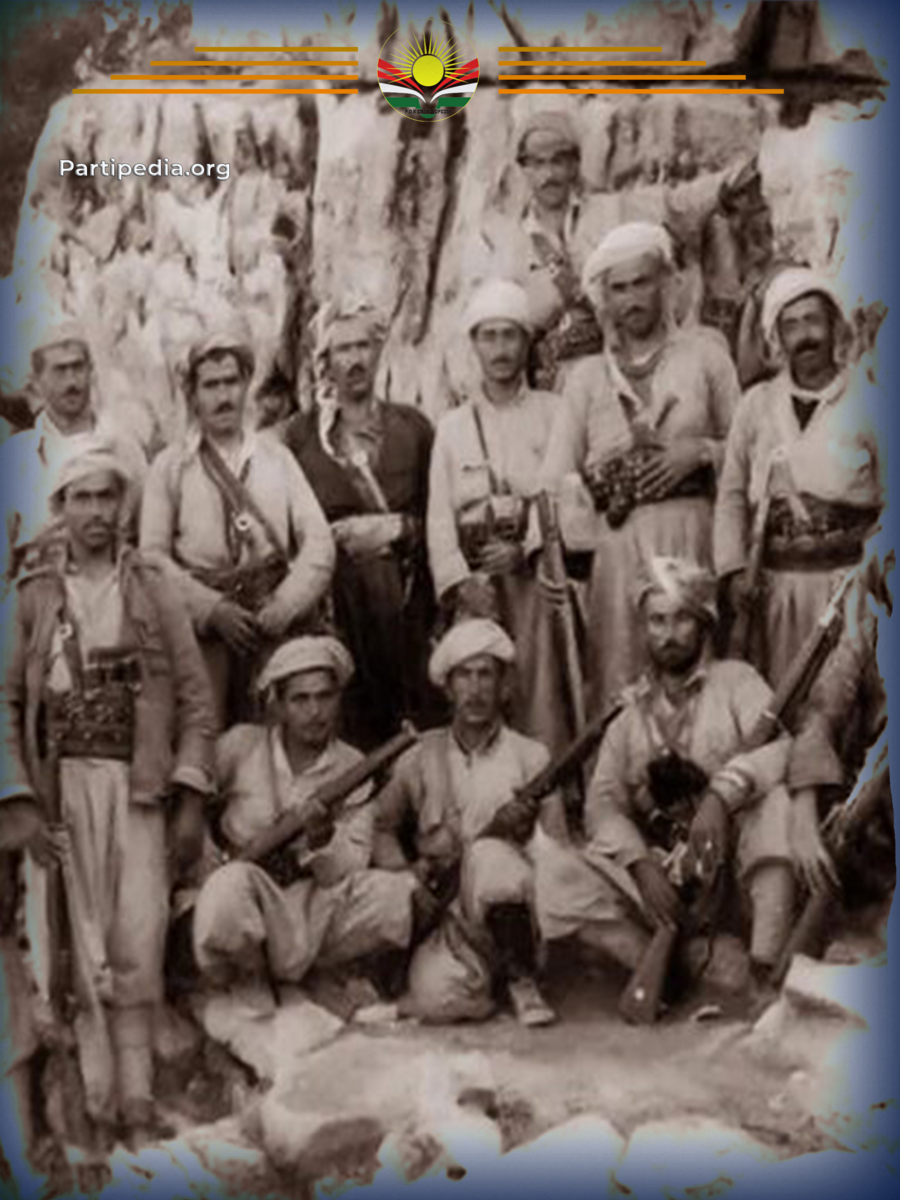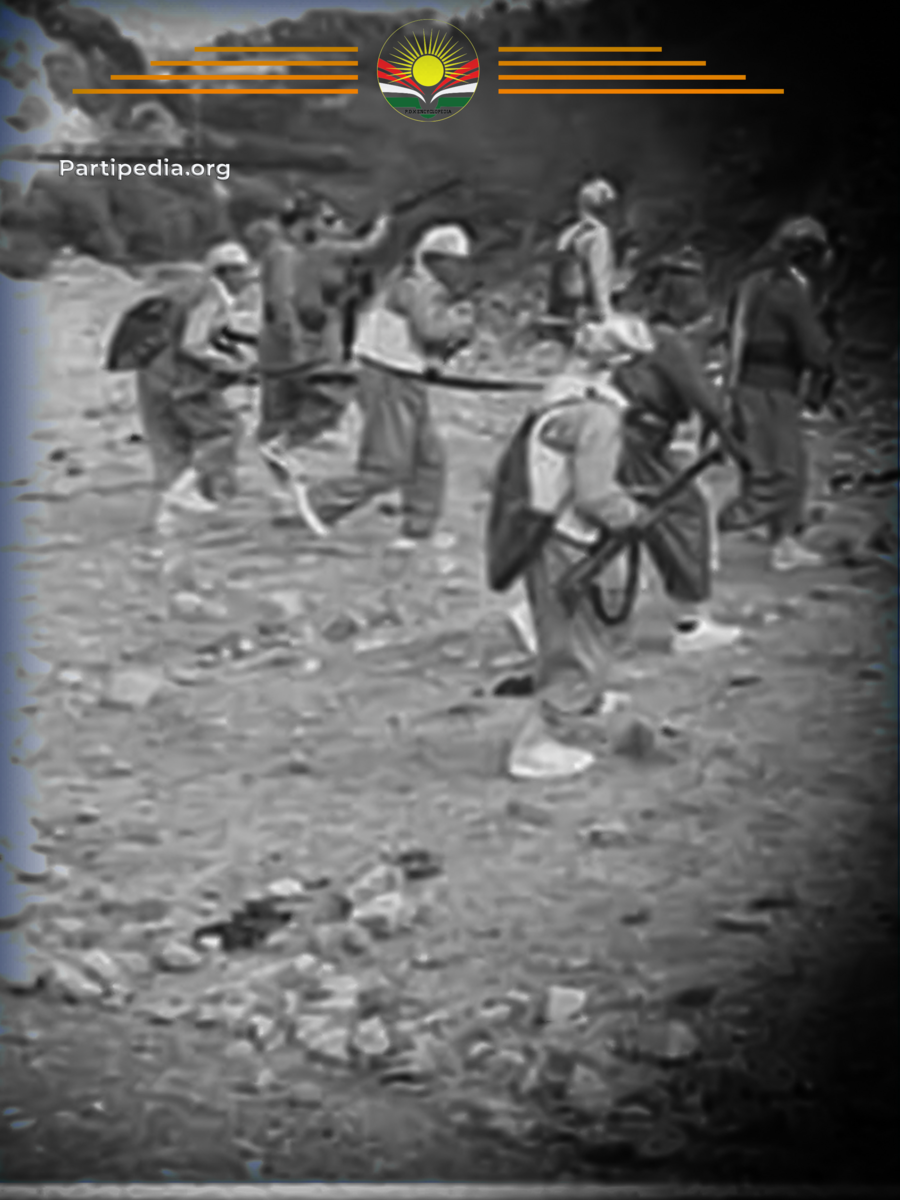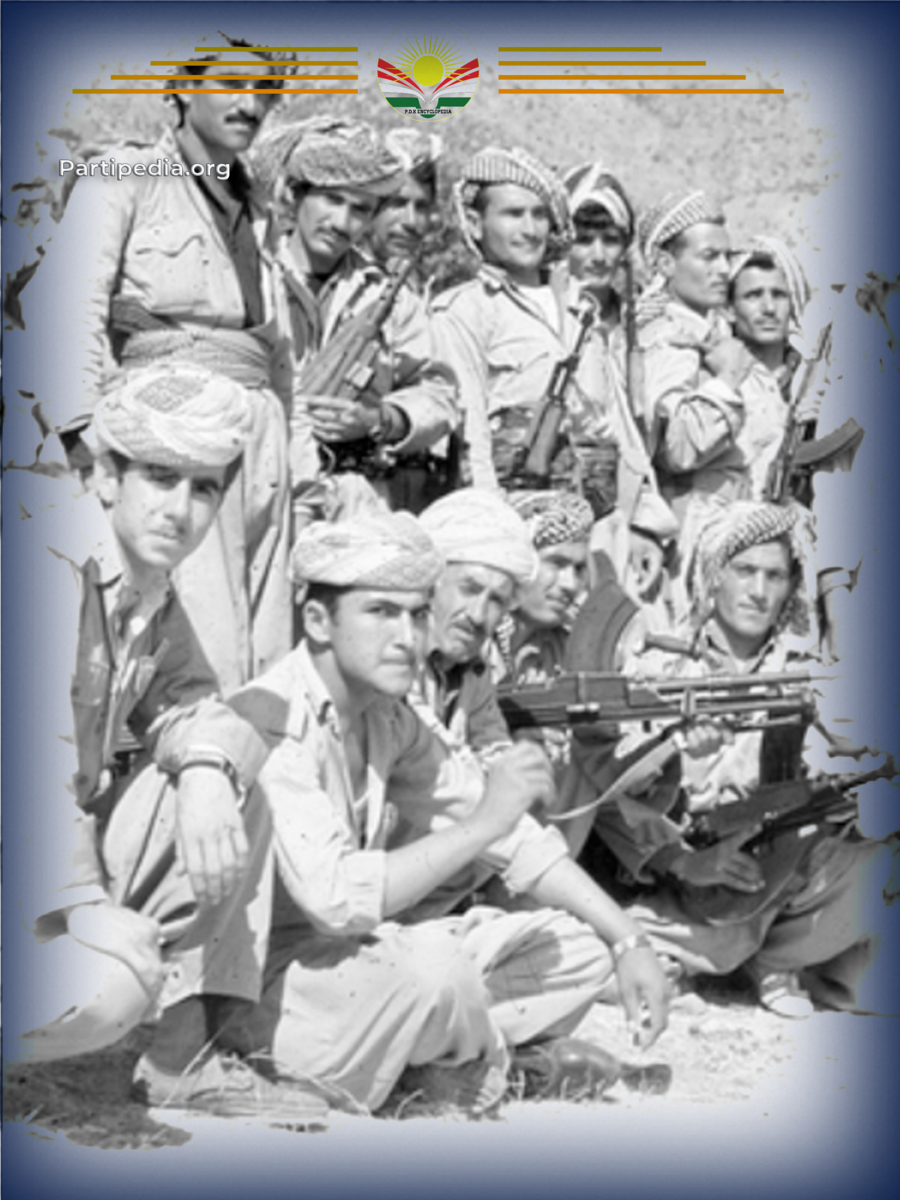


The Iraqi government, which declared war on the Kurdistan revolution in 1974, launched a major offensive on Kurdistan, deploying a massive army of a quarter of a million with heavy weapons, including hundreds of modern tanks, all types of air weapons, and air forces, to suppress the Kurds and abolish September Revolution dedicated, according to the Treaty of Friendship and Cooperation between Iraq and the Soviet Union.
The Garmiyan region, like all other areas of Kurdistan, was subjected to military occupation by the army and attacked from three sides, sending forces from the north, south and west, that is, from Sulaymaniyah, Halabja and Kirkuk to occupy the entire Garmiyan region. The Commander-in-Chief of the Iraqi Army, Major General Abdul Jabbar Shenshal, and the Commander of the Northern Region, General Saeed Hamo, attributed the capture of Garmiyan to several reasons, including the fact that it includes a large area and several large cities such as Khurmal, Halabja, Sirwan, Arbat, Sayyid Sadiq, Derbentiqan, Sangaw and Qaradax. The high mountains of the region have always been a pillar of the revolution and a major threat to the government, the closure of part of Iran's borders with Kurdistan, and the narrowing of the revolutionary areas to prevent the Peshmerga from entering the cities and attacking the Iraqi army.
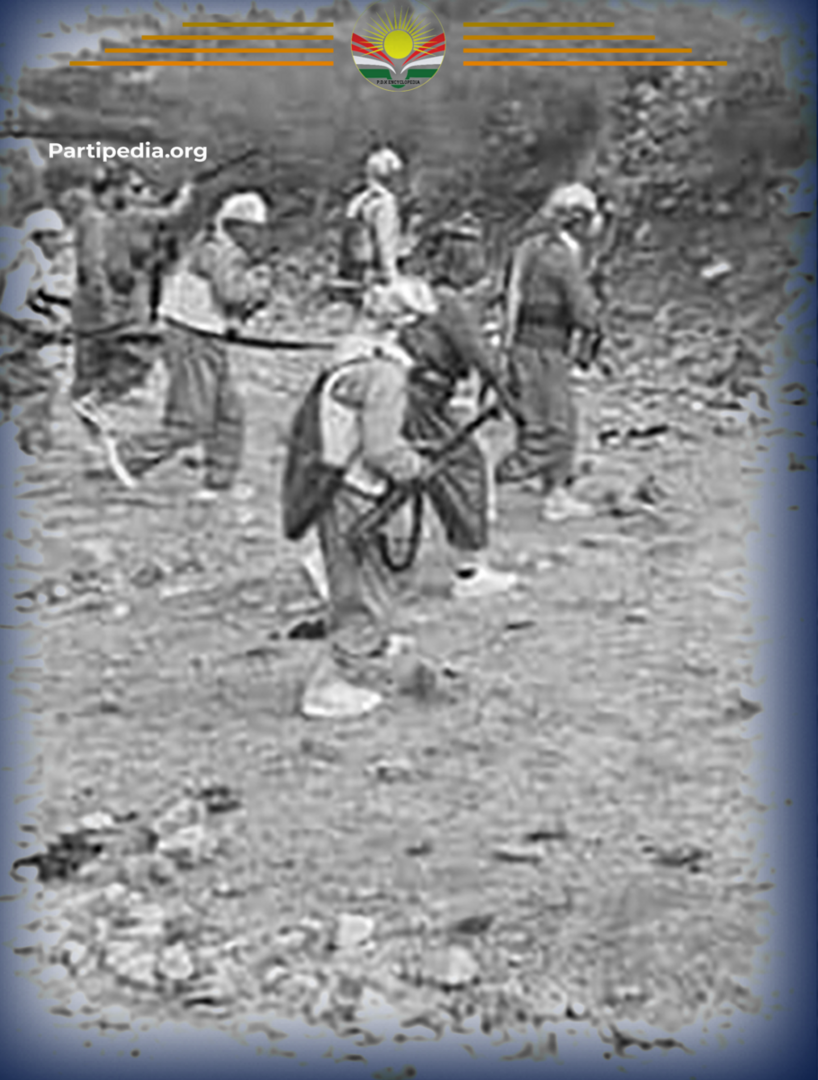
The Iraqi army deployed many military units to carry out the attack, including the 14th Division under the command of Colonel Abdul Jabar al-Safi, the Tank Battalion under the command of Sergeant Raad Hamdani, the Air Force, and mercenary fighters (jash). On June 1, 1974, Iraqi army units began preparing for the attack in the Qalyasan district south of Sulaymaniyah, which lasted for three days. Then, on the morning of June 4, 1974, the soldiers began to move. In response to this attack, the Kurdistan Peshmerga forces blocked the soldiers in the village of Farajawa and were able to disrupt the advances of the Iraqi army and inflict great damage on them. This battle continued until noon, and as a result, a large number of soldiers and gangs were killed and wounded. Approximately 20 soldiers and gangs were taken prisoner by the Peshmerga forces. On the revolutionary side, 3 peshmerga were martyred and a number of peshmerga were also injured. After the army suffered a major defeat, the Iraqi army's artillery began shelling the villages in the area and the Peshmerga positions. make a.
The next day, the Iraqi army continued its attacks with the support of warplanes and mercenaries (cash). They were able to capture Arbet and continue their advance towards Derbendikhan. Before reaching their destination, they clashed with the Peshmerga again on the Tanjaro bridge in Zerayen. A heated battle broke out between them. Although the Peshmerga forces were able to inflict damage on the army's advances, their forces were very small compared to the larger army forces, which included the 16th Armored Division under the command of Colonel Mahmud Wahib, who had arrived from Celawila. Therefore, they were no longer able to resist and retreated with their forces, allowing the army to enter Derbendikhan.
A few days later, on June 9, 1974, Peshmerga forces attacked the Iraqi army in the Qaradag area to inflict damage on the army units. On June 11, they attacked again the 90th Reserve Force, which was responsible for defending Zaryan. It is clear that these were guerrilla actions by the Peshmerga to inflict damage on the army and not to think that if they captured these areas, the Peshmerga would stop and would no longer be able to face them.
Source:
- Shawkat Mullah Ismail Hassan, A day in history September Revolution, 1961-1975, Ministry of Education Printing House, Erbil – 2007.
- Karwan Jewher Mihemed, Idris Barzani 1944-1987 Life and Political and Military Role in the Kurdish Liberation Movement, Hêvi Press, Hewlêr, 2019.
- Masoud Barzani, Barzani and the Kurdish Liberation Movement, Volume III, Part II, September Revolution 1961-1975, First Edition – Erbil, 2004.
Senger Ibrahim Khosnaw, Military Events of September Revolution 1970-1975, Danışfer Printing House, 1st Edition, Hewlêr,