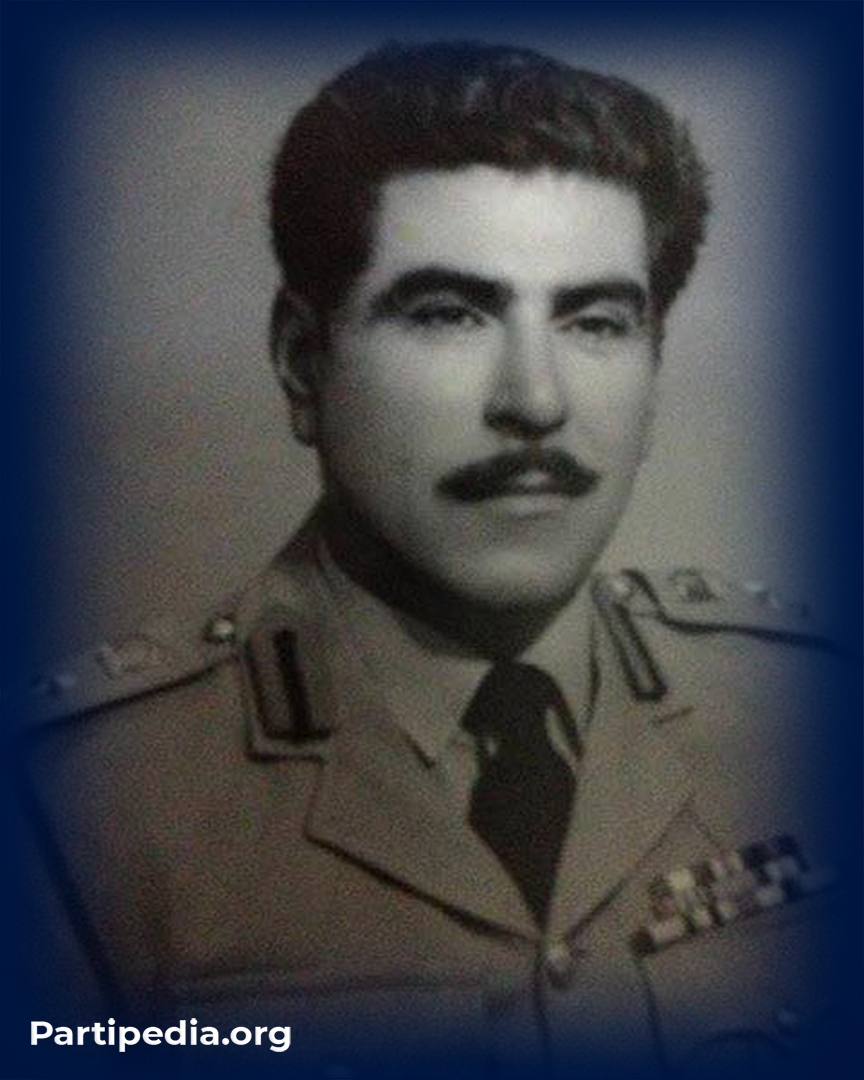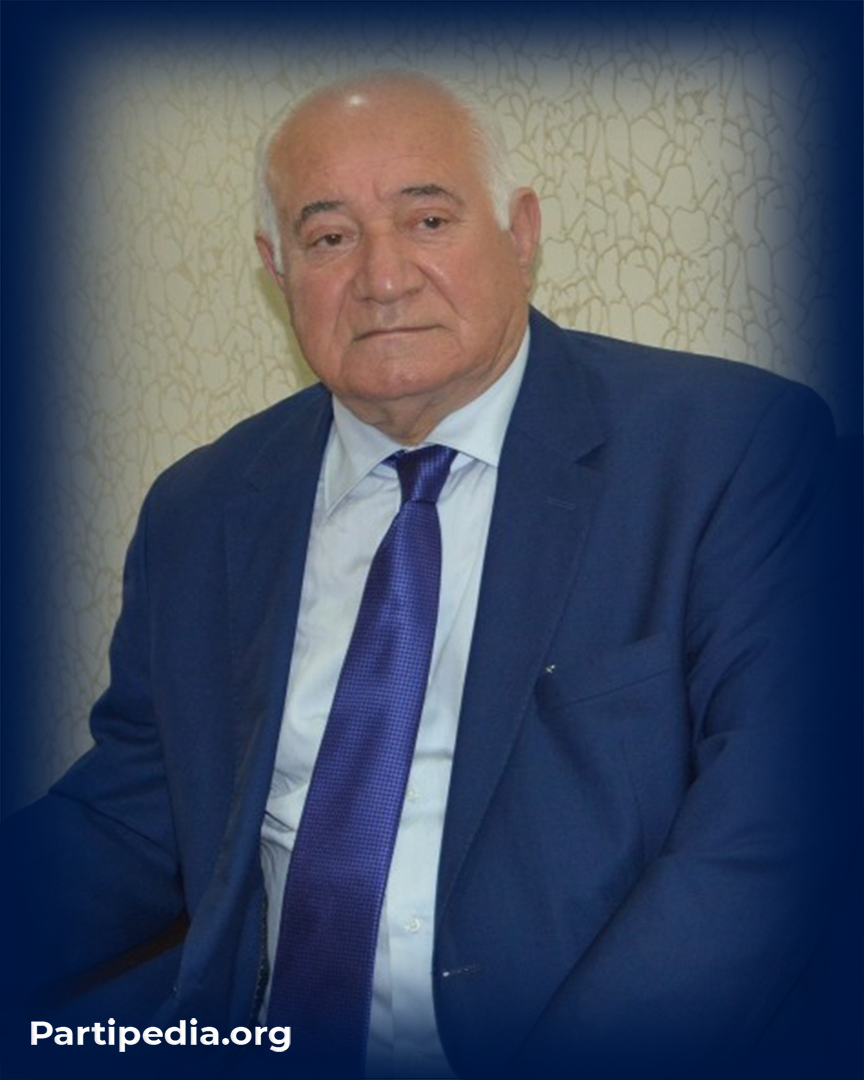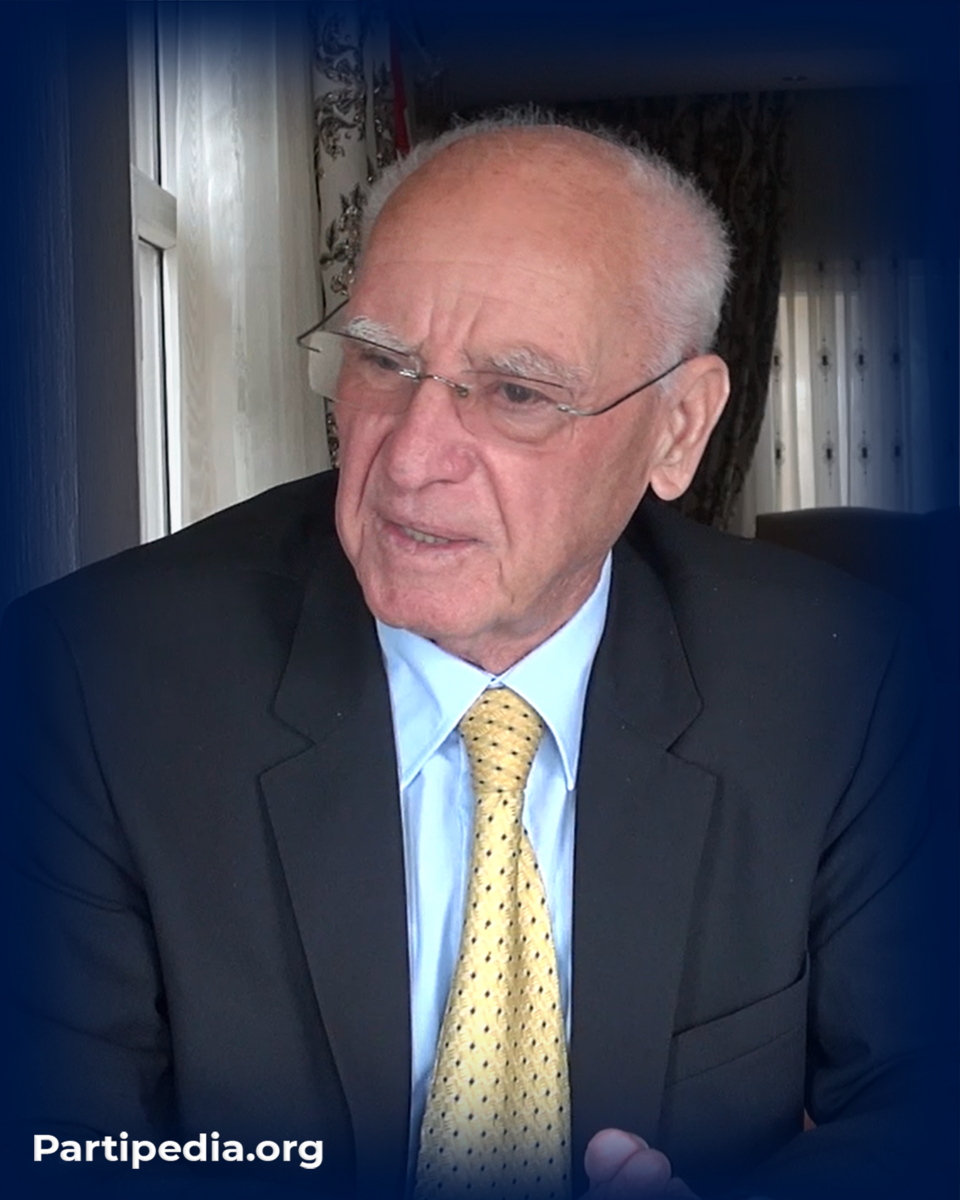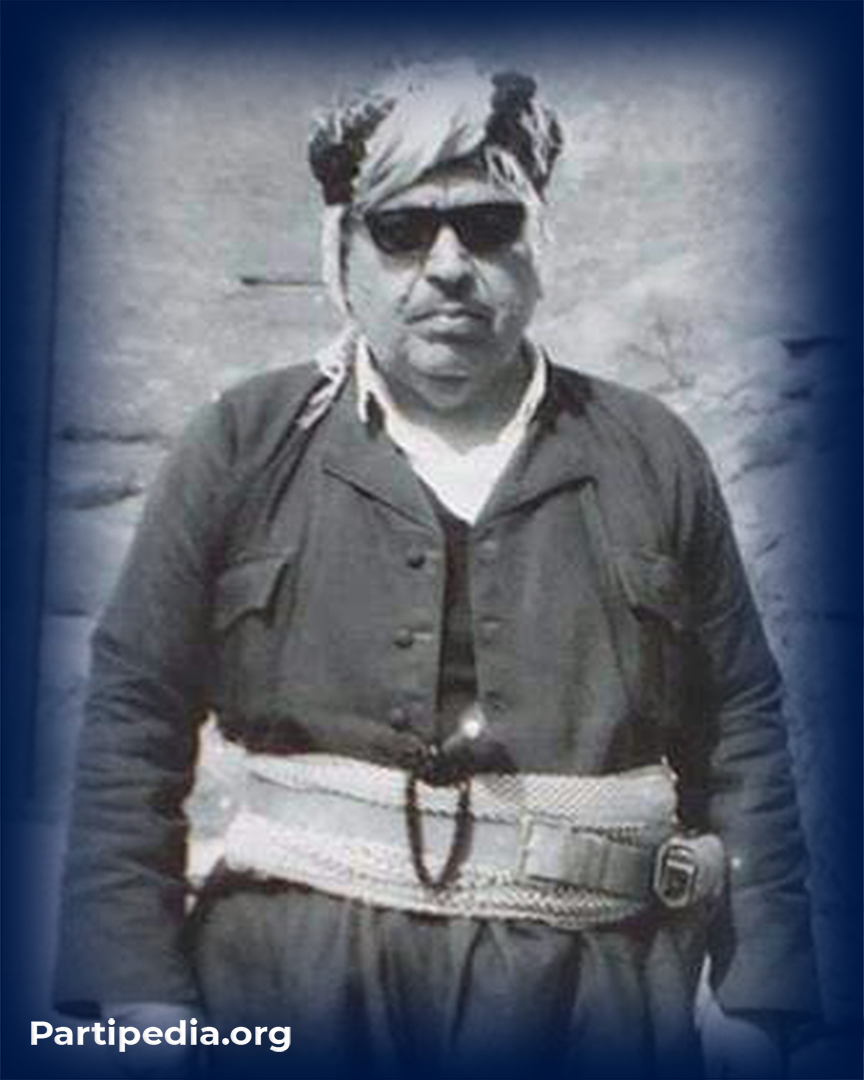


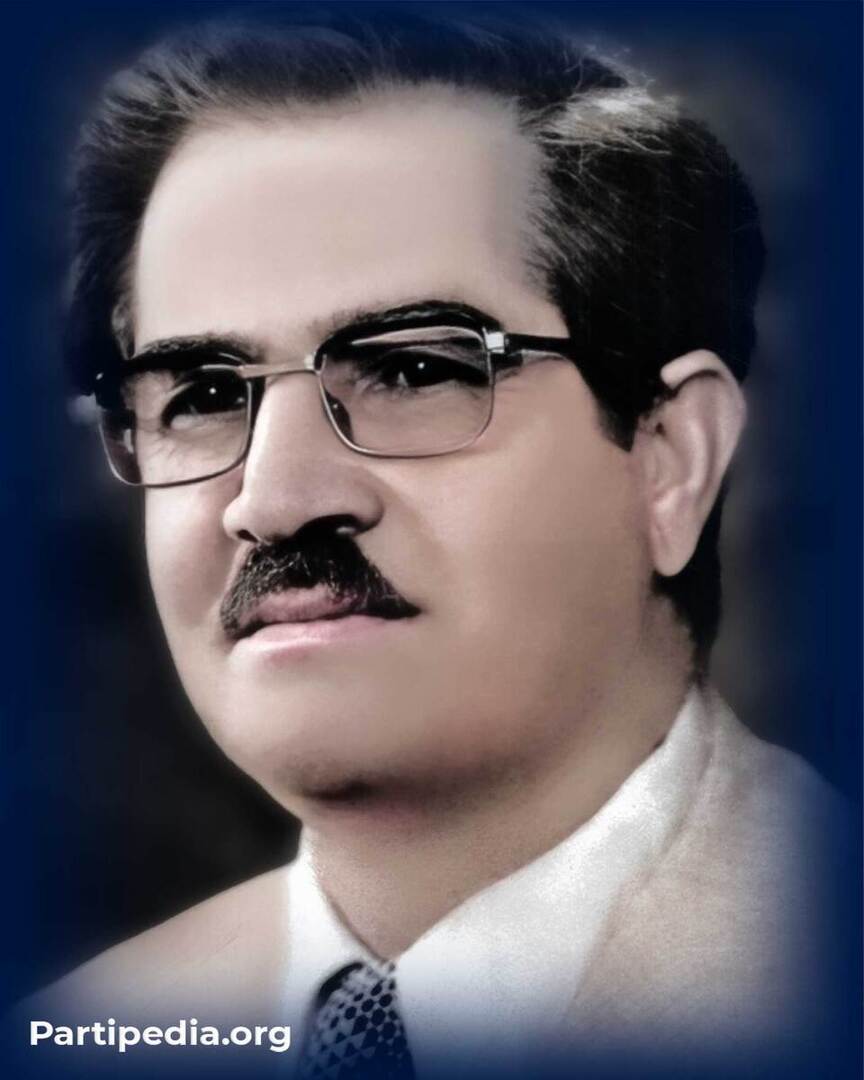
Politician Salih Heyder Asim, known by the names Salih Heyderî and Bakhtiyar. In 1957, he joined the ranks of the United Kurdistan Democratic Party and was appointed a member of the political school of the Kurdistan Democratic Party. In the years (1957-1958), he was on the editorial board of the newspaper Xebat, an organ of the United Kurdistan Democratic Party. In 1959, at the second Baghdad conference, his name was removed from the membership of the leadership of the Kurdistan Democratic Party due to leftism, and in the same year, at the 4th congress, he was removed from the ranks of the Kurdistan Democratic Party - Iraq due to leftism. In 1963, he joined the ranks of the Peshmerga forces and became a member of the editorial board of the Voice of Kurdistan of Iraq Radio during the September Revolution. In 1968, he became the editor-in-chief of the magazine Kadir, an organ of the Kurdistan Democratic Party. In 1971, he became a member of the editorial board of the newspaper El Teaxhi.
Biography
Salih Heyder Asim was born in 1922 in the city of Erbil and is from the Heyderi family. His uncle, Ibrahim Effendi, had the rank of Islamic Sheikh in the Ottoman Empire in 1919 and was appointed Minister of Endowments during the period of the Iraqi Empire. His mother, Fazıle Veli Çelebi (1898 - 1983), was from a merchant family in Erbil and a relative of the martyr Xeyrula Abdulkarim He completed his secondary education at the central high school in Baghdad in 1940 and was admitted to the Baghdad Teachers' College in the same year. He left school in 1942 and was appointed to the Baghdad Military Academy, and in the same year he was transferred to the Erbil Criminal Court, and in 1943 he was transferred to the Baghdad Court.
He graduated from the Faculty of Law of the Baghdad College of Law in 1943 and was expelled from his studies for political activities. In the years (1947-1948) he was arrested by the authorities of the Iraqi Empire and imprisoned and under observation in the prisons of the Baghdad prison, the criminal investigation in the city of Baghdad, the center of Baghdad, Kut and Nugra Salman.
He graduated from the Faculty of Law at the University of Baghdad in 1961 and was commissioned as a second lieutenant in the Iraqi Army Reserve College. He is fluent in Kurdish and Arabic.
Worksheet
Salih Heyder Asim joined the ranks of the Kurdistan United Democratic Party in 1957 and was appointed a member of the political school of the Kurdistan United Democratic Party (in the third unification) and carried out activities under the pseudonym Bakhtiyar. In 1957, he was appointed as the head of the second division of the Kurdistan United Democratic Party. In the years (1957 - 1958) he was on the board of writers of the newspaper Xebat, the organ of the Kurdistan United Democratic Party. In 1958, he was a member of the founding board of the Iraqi Journalists' Union and was the privileged editor-in-chief of the magazine Rizgari.
In 1959, at the second Baghdad conference, he was expelled from the leadership of the United Democratic Party of Kurdistan for being leftist, and in the same year, at the fourth congress of the KDP, he was expelled from the ranks of the Kurdistan Democratic Party - Iraq for being leftist.
He graduated from the law department at Baghdad University in 1961 and was commissioned as a second lieutenant in the Iraqi Army Reserve College, achieving the rank of second lieutenant.
In 1963, he joined the ranks of the Peshmerga forces and became a member of the editorial board of the Voice of Kurdistan of Iraq (Radio). In 1968, he became the editor-in-chief of the magazine Kadir, the organ of the Kurdistan Democratic Party. In 1969, he distanced himself from the September Revolution and founded the Liberation Party with the help of lawyer Ewnî Yusif Ehmed (1908 - 1988) and Hamid Osman Ebubekir (1927 - 1993), but this party disbanded after the March 11, 1970 agreement.
In 1974, he supported the September Revolution and was appointed a member of the central committee of the Iraqi Ba'ath Party, which was founded by the Iraqi government. In 1990, he returned to his home city of Erbil and passed away on August 6, 2001 and was buried in the Sheikhala cemetery in Erbil.
His works:
On religion and state, manuscript.
Kurdistan, the world's most important people, 1939 - 1945 manuscript.
Rehliye al meta'ab 1947 - 1980 manuscript.
The relationship between homeland and Kurdish example 1969 - 1975 manuscript.
The negotiations and the history of the homeland movement in Syria, Kurdistan and Iraq, manuscript.
The negotiations and the history of the homeland movement in Syria, Kurdistan and Iraq, manuscript.
Source:
1- Archives of the Encyclopedia Committee of the Kurdistan Democratic Party.
2- Aziz Husen Al Barzani, The Kurdish National Movement in Iraqi Kurdistan - 1939 - 1945 (Dihok, published by the Ministry of Education, 2002).
3- Mehdi Muhammad Qadir, Political Developments in Iraqi Kurdistan 1935-1958 (Sulaymaniyah - Kurdistan Strategy Research Center 2005).
4- A'dad Mumtaz Al Heyderî, the author of the book "Al-Tabah al-Sanjî", (al-Sulaymanî - Matbaa Renc 2004).
5- Jabar Jabarî, History of Kurdish Literature in Iraq, (Baghdad - Directorate of Kurdish Literature - Al-Am Press, 1975).
6- Habib Muhammad Karim, History of the Democratic Party of Kurdistan - Iraq (with reference to the leadership) 1946 - 1993 (Dihok - Xebat Press 1998).
7- Salih Al Heydarî, my mukhtarat min muzekerat Salih Al Heydarî, al tabia al sanî, (al Sulaymaniyah - Renj Press 2004).
8- Ali Abdullah, History of the Kurdistan Democratic Party - Iraq until the establishment of the third congress (Unpublished 1968).
9- Mumtaz Heydari, Heydariname, first cover, (Hewler - Mumtaz Heydari Library and Archives - Rojhilat Publishing House 2018).