

Biography
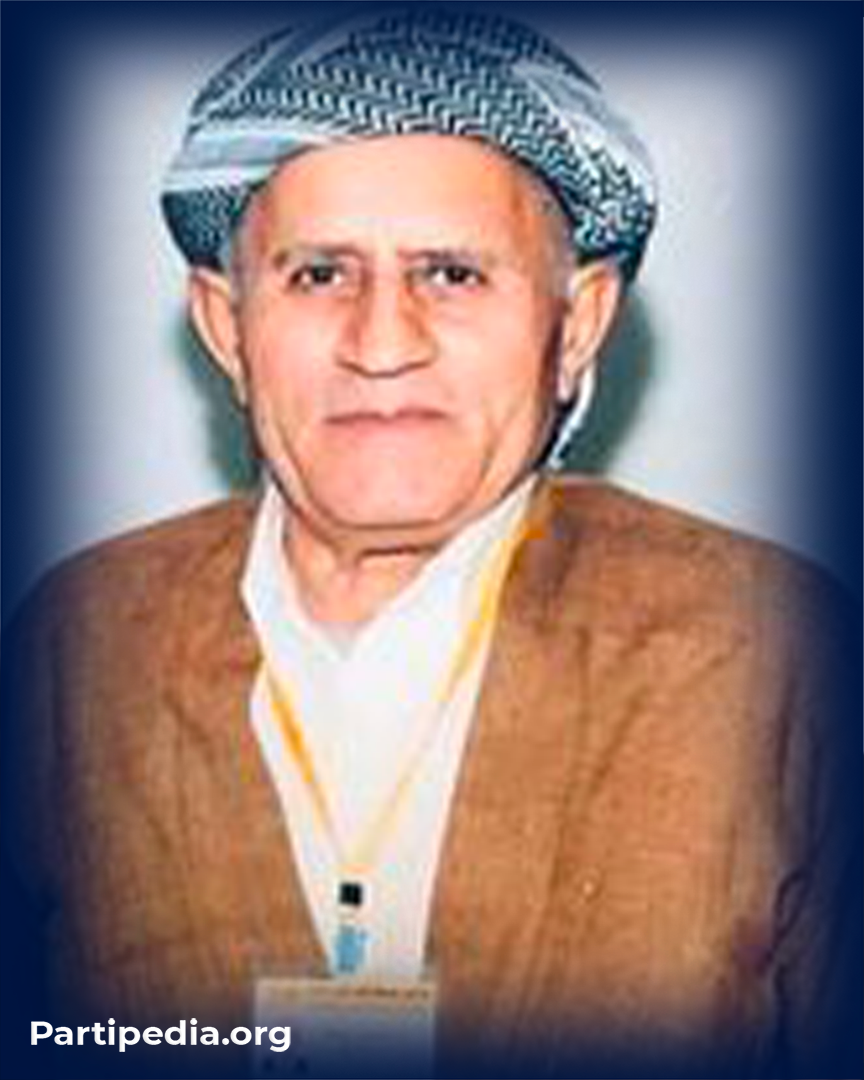
Mishir Rasul Haji was born in 1951 in the village of Gwane in the Diyana district. He did not go to school due to lack of education, but later learned to read and write. In 1975, after the defeat of the September Revolution He emigrated to Iran and settled in the city of Kermanshah, then was transferred to the city of Ahvaz. From there he was transferred to Khanaqin and taken to the city of Karbala, and was detained by the Iraqi government in the city of Najaf for two months. He speaks Kurdish, Arabic and Persian.
Worksheet
Mishir Rasul Haji joined the Peshmerga through Hamid Effendi in 1966. September Revolution He became a Peshmerga in the first unit of the Balek force, remained on duty until the March 11, 1970 Agreement and continued his Peshmerga activities. In 1974, when the fighting and clashes between the revolution and the Iraqi army resumed, he was on duty in Serê Bardê, and participated in the battle of Mount Gorez, in which two of his cousins, Abdulwahid Hamed Law and Wasu Hamed Law, were martyred, and he was also seriously injured. He was sent to the city of Urmia for treatment.
In 1978, after being granted permission, he returned to his village of Gwane, but again contacted the Peshmerga forces through Hamid Effendi. May Revolution He went to the Goste Valley between Northern and Southern Kurdistan with several relatives. After joining the Peshmerga forces, he received the rank of unit commander and served as a Peshmerga in the areas of Baradost and Balekayeti.
On October 2, 1979, he went to Eastern Kurdistan to attend the 9th Congress of the Kurdistan Democratic Party (KDP) and attended the ninth congress in the village of Zewa. He stayed in Eastern Kurdistan until 1980, then returned to Southern Kurdistan to fulfill his duty. After going to the village of Shepeta in Northern Kurdistan to buy food and daily necessities for the Peshmerga, he fell into the Rubarok River, but was rescued by the locals. He was injured by the waves of the river and was beaten to death due to the lack of health centers and medical treatment.
In 1981, he was promoted to unit commander in the Peshmerga Forces. In the same year, while on duty near the village of Kevnegund in the Mergasur district, he was ambushed by Iraqi soldiers and gangs and, after a very tough defense, was barely able to escape.
In 1985, he was transferred to the Balekê area and became a member of the Rwandan Military District Committee, continuing his duty until 1988, participating in several battles that same year, including the battles of Wartê, Konekotir, Hiran and Nazanin. He was exposed to chemical weapons due to the chemical attack on the Melekan area and suffered from a debilitating illness for a while.
In 1991, he participated in the uprisings in Soran, Hewlêr, and Acre, along with President Masoud Barzani He returned to Ranya and actively participated in the Erbil uprising with Omer Osman Mêrgesorî and Cemal Murtke.
In 1992, after the establishment of the Joint Forces in Rwanda, he was appointed as a regiment commander and continued his duty until 1994. During the establishment of the Sixth Army, he was appointed as the commander of the sixth battalion under the command of Mustafa Narveyi. In 1995, he was assigned to the 5th Spilki Army and was responsible for the movement of the army. In 1999, he became a member of the Halgurd Command, and currently continues his duty with the rank of Lieutenant.
In 2014, he participated in the fight to defend the territorial sovereignty of the Kurdistan Region against ISIS terrorists on the Mahmudiyya, Zumar, and Bashiqa fronts.
Source:
1. Archives of the Encyclopedia Committee of the Kurdistan Democratic Party.