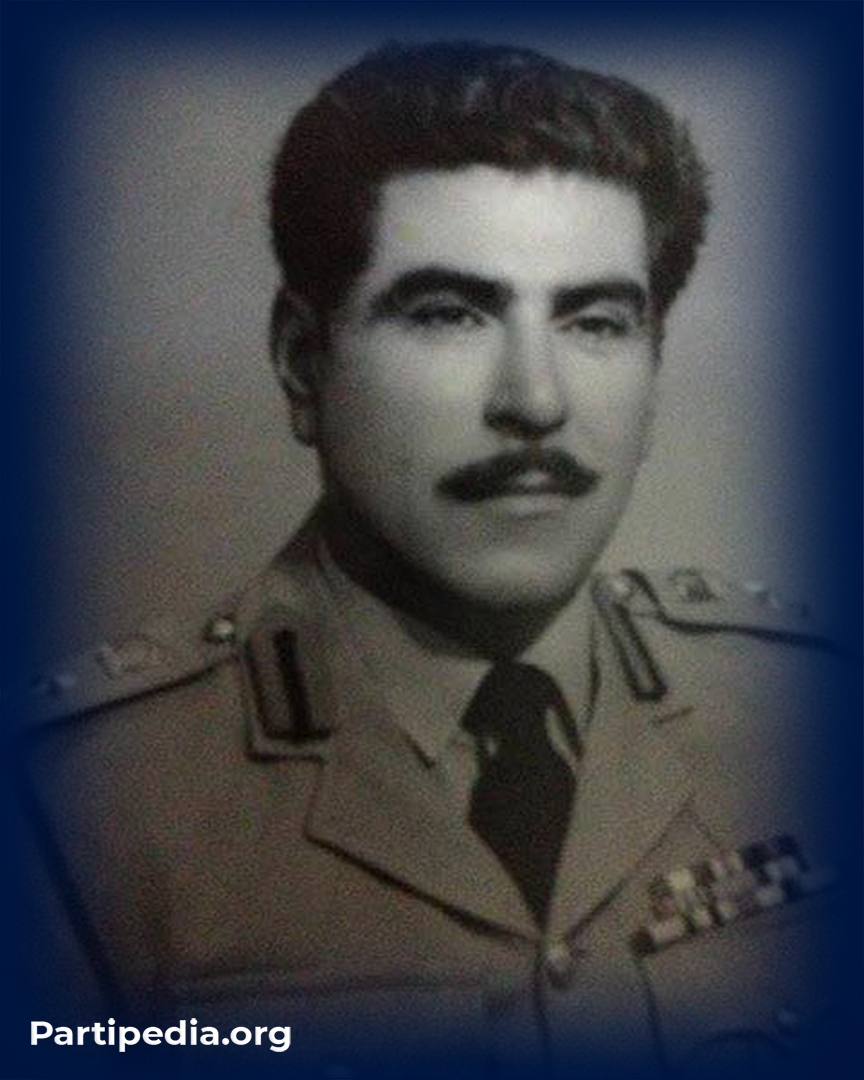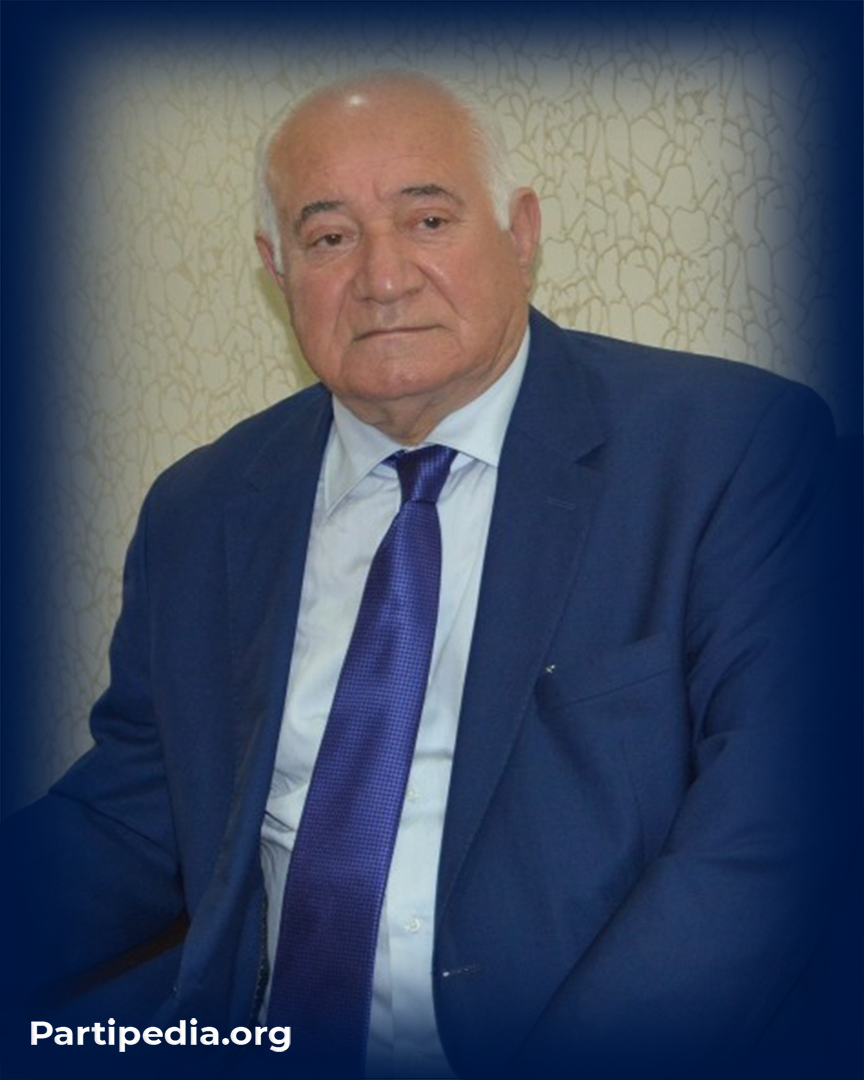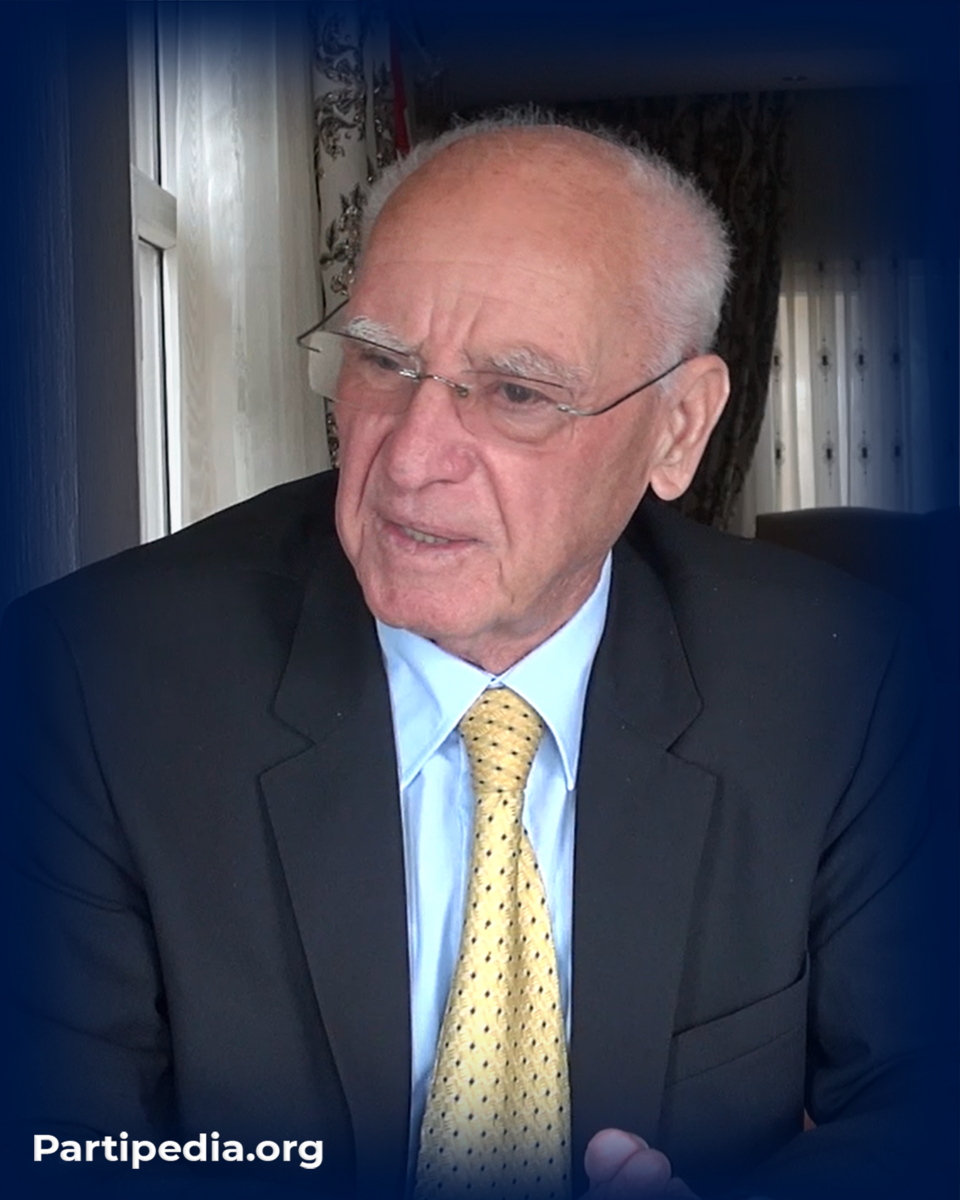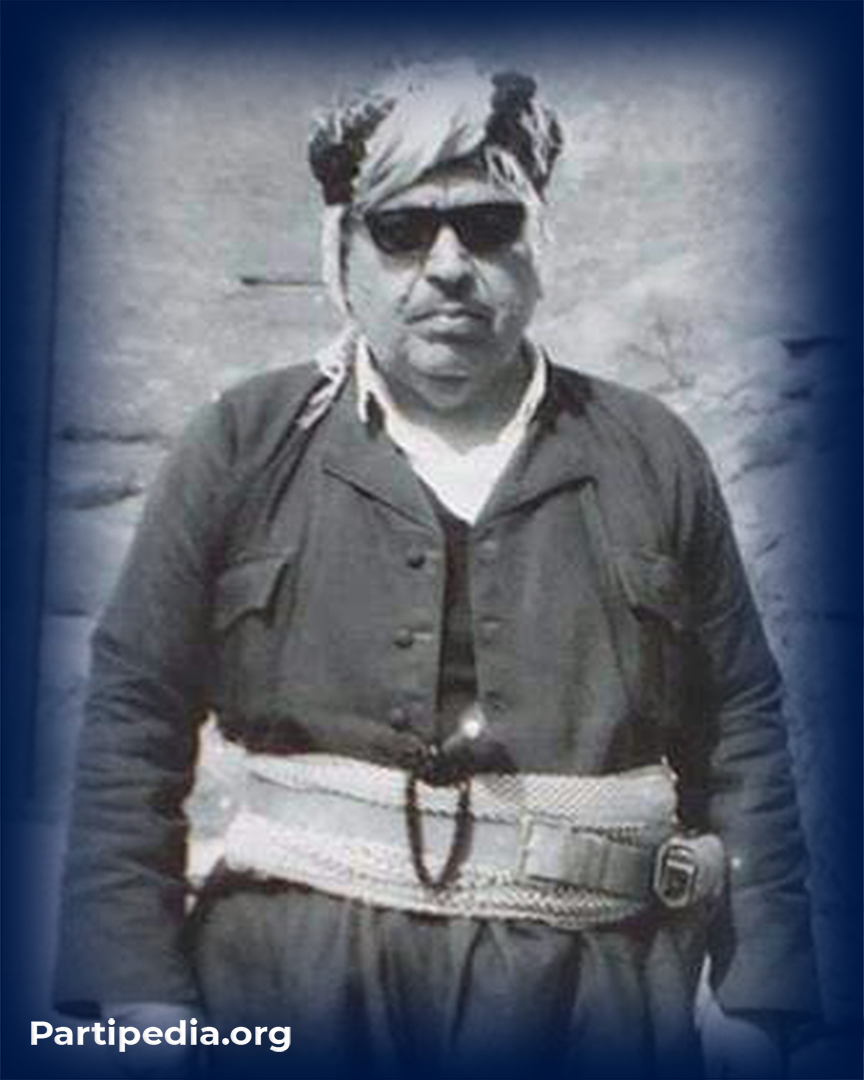


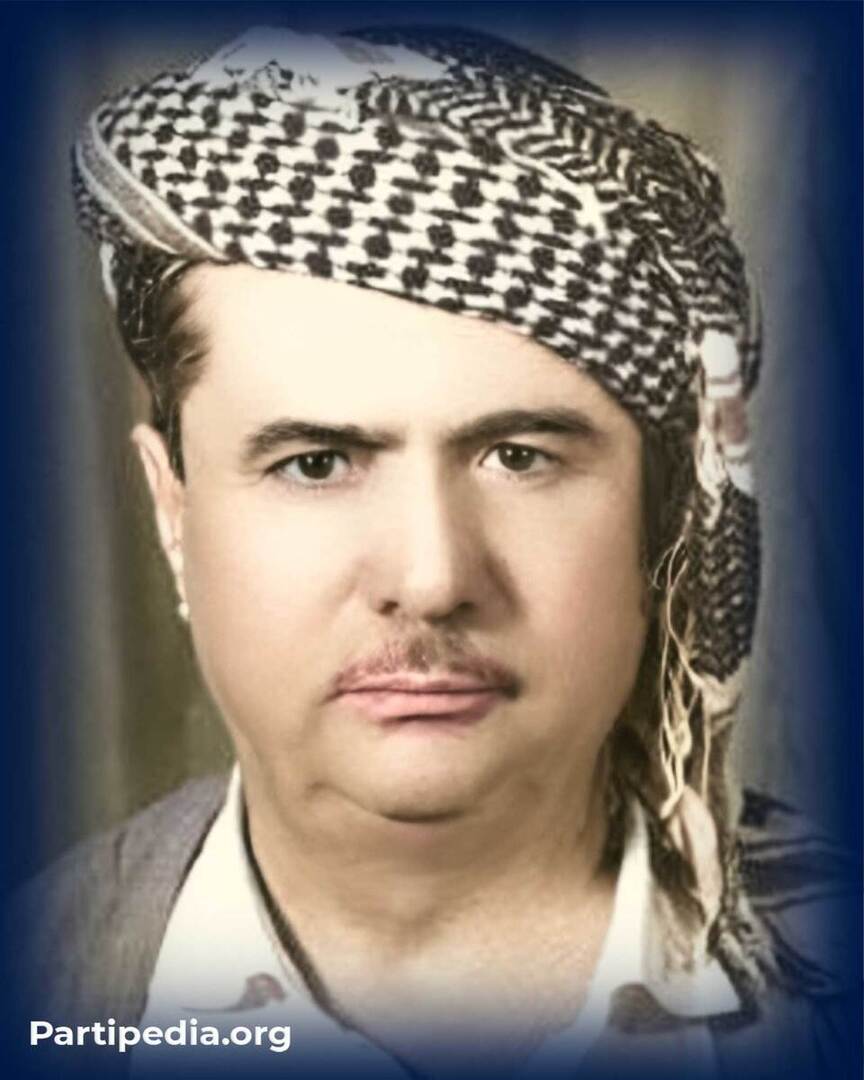
Hamza Abdullah Omar Ashur, a jurist and politician, was known by the names Lezgin, Mullah Rahim and Mullah Ibrahim. In 1936, he became a member of the central committee of the Iraqi Communist Party. In 1945, he became a member of the freedom committee during the second Barzan revolution (1943 - 1945). In 1946, he became a member of the founding board of the Kurdish Democratic Party in the city of Mahabad and in the same year, at the first party congress, he was elected a member of the central working committee (central committee) and later as secretary and member of the party's political school. Due to his failure to adhere to the party's decisions and failure to support party organizations, he was removed from membership by the central committee. In the summer of 1951, he was arrested by the Iraqi central government and deported to Turkey. During the Turkish invasion, he managed to free himself in Zakho and return to the city of Sulaymaniyah. After returning, he contacted members of the party's discontent, especially members of the Sulaymaniyah faction, who had been expelled after a dispute with the party's central committee. Hamza Abdullah and the Sulaymaniyah faction did not get along and founded a new party called the progressive wing of the Kurdish-Iraqi Democratic Party in 1952. In 1956, after the dissolution of his party, Hamza Abdullah returned to the party ranks and, upon the decision of the central committee, Hamza Abdullah became a member of the party's central committee. In 1959, at the fourth congress, he was expelled from the Kurdistan Democratic Party.
Biography
Hamza Abdullah, whose family is from the city of Van in Northern Kurdistan, was born in Eastern Kurdistan in 1915 after emigration and later migrated to Southern Kurdistan. In 1931, he completed the preparatory stage of the science department in the city of Mosul. In 1932, he was admitted to the law college in Baghdad and obtained a bachelor's degree. In 1947, he married teacher Naima Fatah Ahmed, the sister of lawyer Ibrahim Ahmed, in 2003. He passed away on January 13, 1998 in the city of Sulaymaniyah and was buried in the cemetery of the village of Sitek according to his will. He was fluent in Kurdish, Arabic, English and Russian.
Worksheet
Hamza Abdullah worked in several political parties and associations in his youth, such as the Yadgarî Lawan Association in 1933, the Iraqi Communist Party in 1934, the newspaper group (Al Ahali), which was the only newspaper to rival the Iraqi Empire in 1934, and the National Reform Association (Al Aslah Al Sha'bi) in 1935.
During the second Barzan Revolution (1943-1945), he was a member of the Azadi board and in 1946, he became a member of the founding board of the Kurdish Democratic Party. In the same year, at the first congress, he was elected as a member and later as the secretary of the central working committee (central committee) of the Kurdish Democratic Party and later became a member of the party's political school and in the same year he published the first issue of the Rizgari newspaper, the organ of the Kurdish Democratic Party.
In 1951, he attended the opening day of the second congress of the Democratic Party, later leaving the place where the congress was held and was also elected as a member of the central committee, but was expelled by the central committee for not adhering to the decisions of the second party congress and not providing support to the organizations.
In the summer of 1951, he was arrested by the central government of Iraq and deported to Turkey. During the deportation to Turkey, he managed to escape in Zakho and return to the city of Sulaymaniyah. After his return, he contacted members of the party's dissidents, especially members of the Sulaymaniyah faction who had been expelled from the party after his dispute with the central committee. They did not get along and in 1952, he founded a new party called the progressive wing of the Kurdish-Iraqi Democratic Party.
In 1953, at the third congress of the Democratic Party of Kurdistan - Iraq, he was expelled from the party ranks for the first time, but in 1956, after receiving a letter from General Serok, Mustafa Barzani In order to unite the two sides of the party in one place and capacity, he returned and became a member of the central committee and later the political school of the United Democratic Party of Kurdistan - Iraq.
The rise of the communists after the coup d'état in 1958 had an impact on the party, and the party was gradually moving towards fragmentation, especially among those Communist Party cadres who had previously had contact with the party ranks. At this time, the communists' contact with party organizations and their influence on Hamza Abdullah, did this in a short time to take control of the party and first of all, he dismissed Ibrahim Ahmed, the party secretary, on charges of corruption, and replaced him with Hamza Abdullah.
In 1959 or Hamza Abdullah The Kurdistan Democratic Party was trying to exclude the Kurdistan United Democratic Party from the Iraqi Communist Party organizations, and for this reason, support and cooperation for the Communist Party was gradually spreading to the party base and members. This situation has led to increased scrutiny by party organizations and members. Mustafa Barzani (1903 - 1979) who demanded an end to this situation and the organization of a party congress. The party's political school did not agree to this request, for this reason Mustafa Barzani He requested a meeting of the party's central committee, and on June 30, 1959, the central committee met and finally decided to expel Hamza Abdullah. In 1959, for the second time at the fourth party congress, he and his friends were expelled from the party due to his leftist views and secret ties with the Communist Party.
In 1964, he stood against the political school and its decisions and supported the President. Mustafa Barzani and after the March 1970 agreement, the President visited the village of Dilman in Erbil province. Mustafa Barzani has done.
His works:
1 - Şoreş Barzan 1959 - translated from Arabic into Kurdish by Muherem Mihemed Emîn.
Source:
1- Encyclopedia of the Kurdistan Democratic Party, history of the Kurdistan Democratic Party, (Hewlêr - Rojhilat Press - 2021).
2- Hoşyar Nuri Lek, Kurdish celebrities in a church, (Hewlêr - Çar Çira Press 2010).
3- Mehdi Muhammad Qadir, Political Developments in Iraqi Kurdistan 1945 - 1958, (Sulaymaniyah - Kurdistan Strategic Research Center 2005).
4- Şiwan Mihemed Emin Teha Khoshnaw, A study of the political situation in Hewlêr between the years (1958 - 1963), (Hewlêr - Rojhilat Press 2012).
5- Şiwan Mihemed Emin Teha Khoshnaw, A historical study of the political situation in Erbil between 1963 and 1970, (Erbil - Salaheddine University Press 2016).
6- Salih Bîçar, Hamza Abdullah is greater than neglect, Kurdistanî Niwê Newspaper, Organ of the Patriotic Union of Kurdistan, commemorative issue (Memorial Supplement), number 8072, year twenty-nine, Sulaymaniyah, Thursday, January 30, 2020.
7- Sediq Salih, Head of the biography of Hamza Abdullah, Kurdistan News, Organ of the Patriotic Union of Kurdistan, Memorial Bulletin, number 8072, year twenty-nine, Sulaymaniyah, Thursday, January 30, 2020.
8- Ahmed Bawer, Contemporary History of Iraq 1914 - 1968 (Sulaymaniyah - Karo Press 2018).
9- Xelîl Ebdulla, Hamze Ebdulla, a symbol of Kurdistan, Kurdistanî Niwê Newspaper, Organ of the Patriotic Union of Kurdistan, number 8045, year twenty-eight, Sulaymaniyah, Tuesday, January 24, 2019.
10- Lawyer Hamze Abdullah, "A handwritten national political document", 21 K magazine, issue 2 - 3 - 2008.
11- Habib Muhammad Karim, History of the Democratic Party of Kurdistan in Iraq (In the context of leadership) 1946 - 1993, ( Dihok - Xebat Press 1998 ).
12- The Personalities of the Kurdish Nation and the Kurdish People, by Professor Hamze Abdalle, Xebat Newspaper, Language of the Democratic Party of Kurdistan - Al Muhed, No. 905, Friday, 18th of January 1998.
13- Karim Shareza, Al Minazil Al wetani Hamze Abdalle, Xebat Newspaper, Lisan hal Al Hizb Al Demoqratî Al Kurdistanî, Al Adad 946, Al Juma, Erbil, 15 Tishrîn Al Awal 1999.