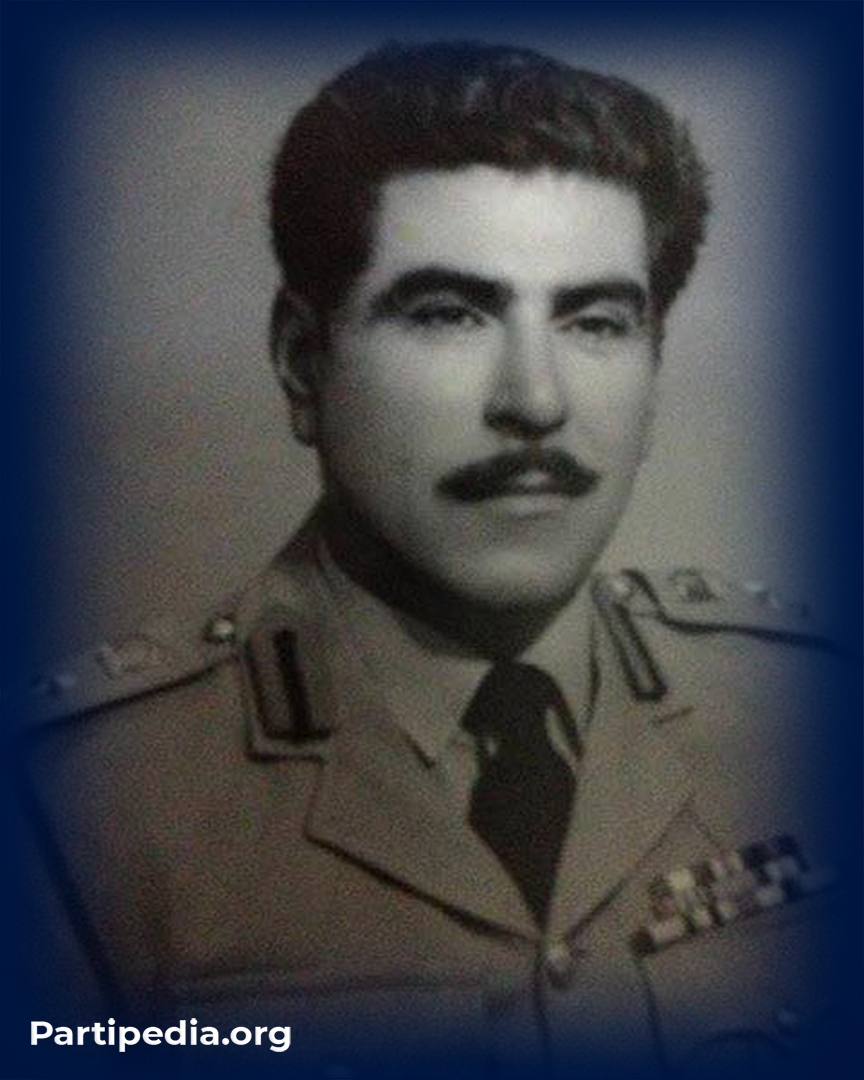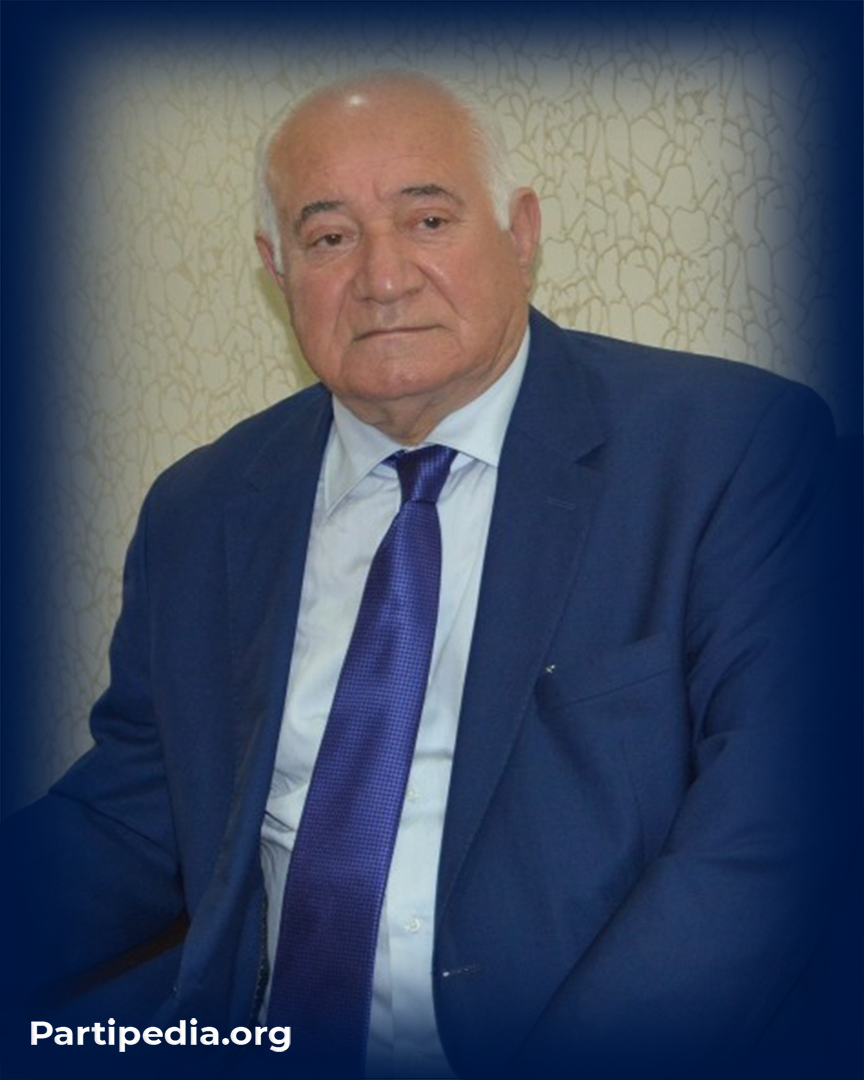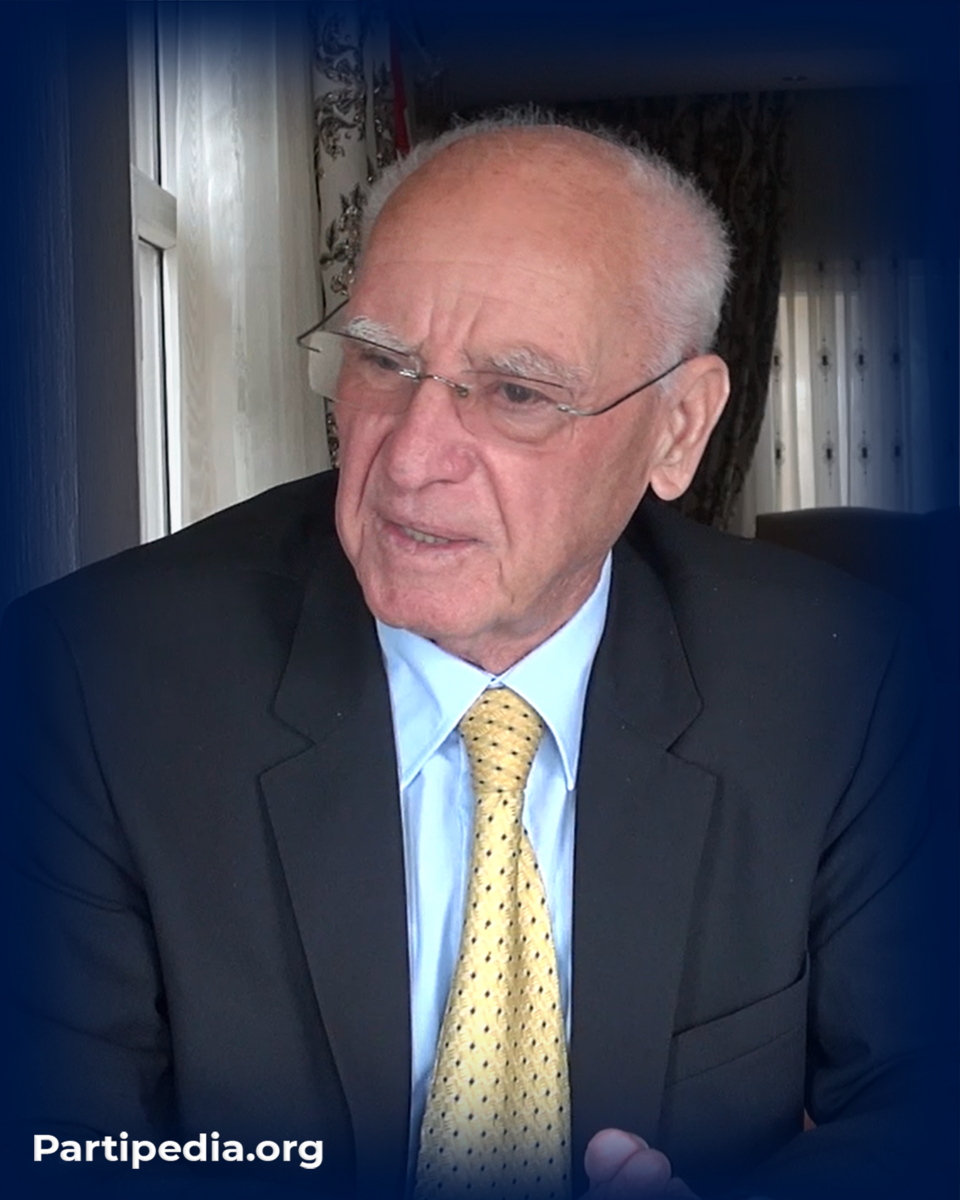


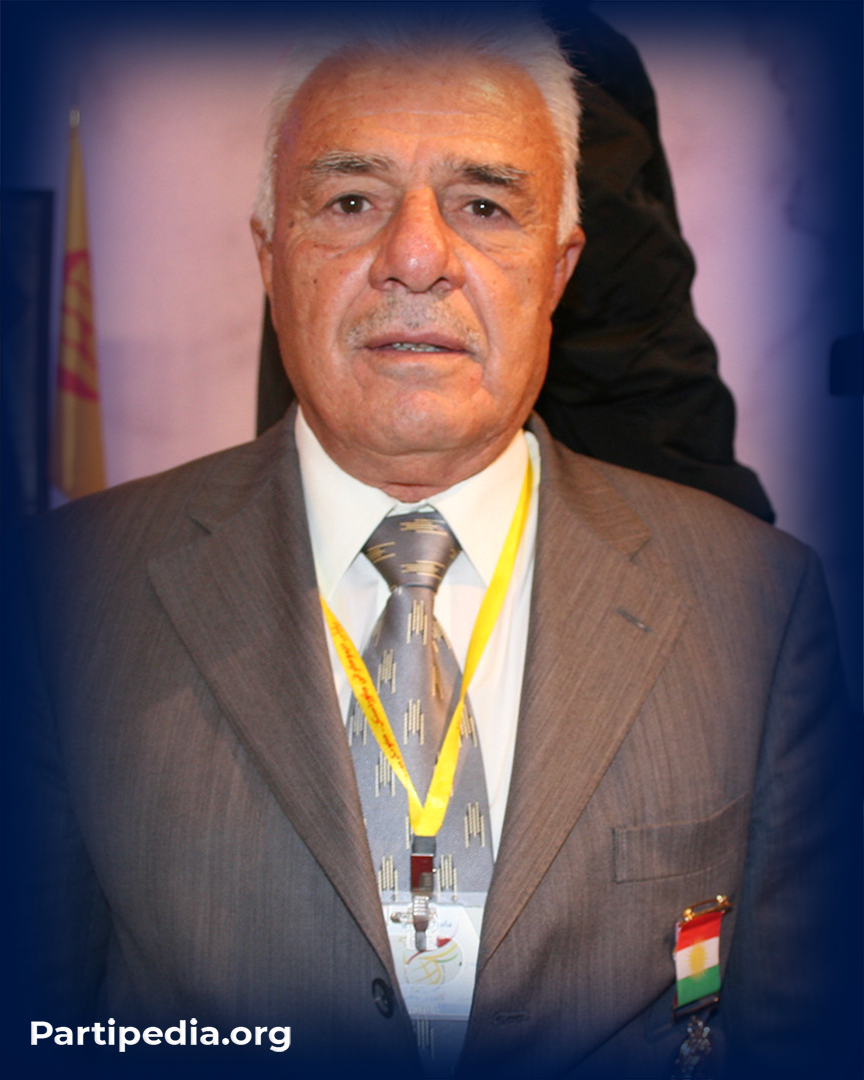
Abdulmuhaimen Sheikh Suleiman Sheikh Abdulsalam Sheikh Muhammad, known as (Abdulmuhaimen Barzani). He joined the ranks of the Kurdistan Democratic Party in 1962. In 1973, he graduated from the third class of the Kurdistan Democratic Party's cadre training school. In 1975, after the defeat of the September Revolution, he emigrated to Iran. In 1979, he became a member of the Central Committee of the Kurdistan Democratic Party at the tenth congress, and from September 2, 1992 to August 3, 1994, he was the governor of Erbil in the first cabinet of the Kurdistan Regional Government. In 1994, he became a member of the Command and Operational Officer of the Kurdistan Army (Falek). In 1999, he became a substitute member of the Central Committee of the Kurdistan Democratic Party at the twelfth congress. In 2001, he became the Minister of Regional Affairs in the fourth cabinet. In 2003, he became the Minister of Municipality by proxy. In 2010, he was elected as a Member of the Leadership Council of the Kurdistan Democratic Party at the thirteenth congress. In 2010, due to his participation in the September Revolution, May Revolution, the uprising in Southern Kurdistan and the stage of sovereignty by the President Masoud Barzani He is the first member of the Barzani family to receive the Barzani Immortal Medal.
Biography
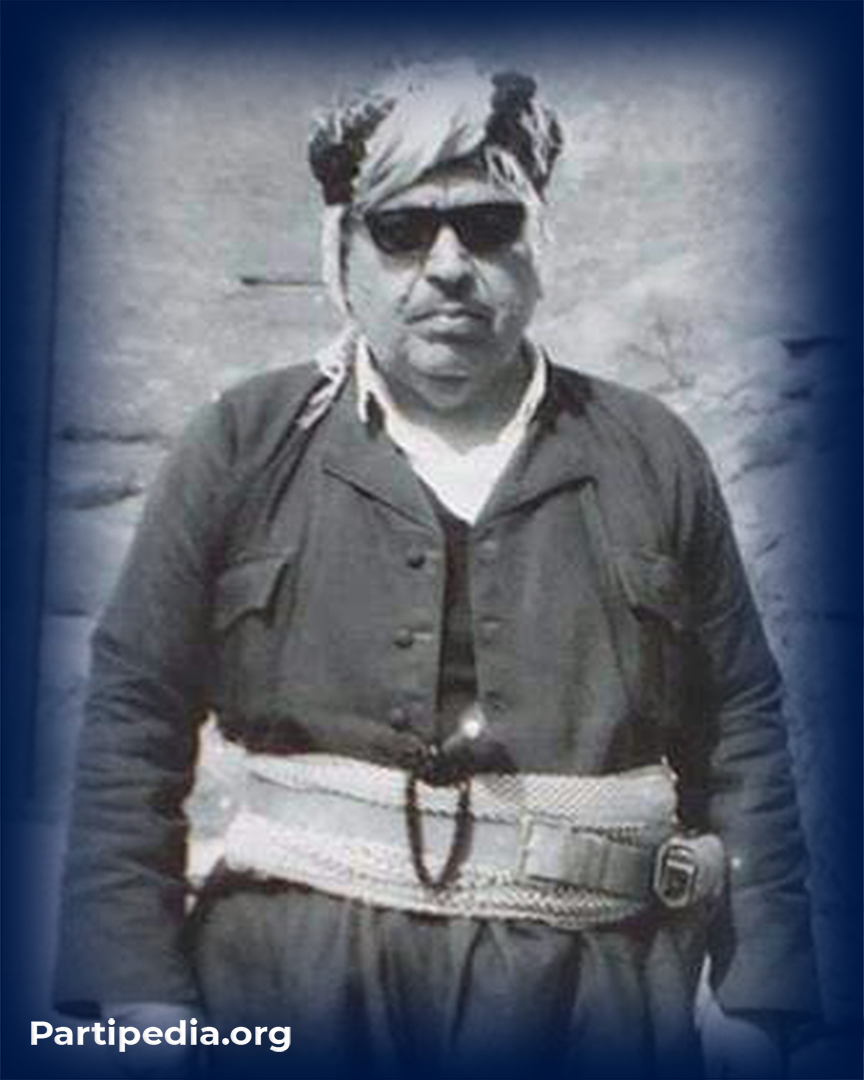
Abdulmuhaimen Barzani was born on July 15, 1945 in the city of Erbil. He is from the Barzanesi Tekiye sheikh family, followers of Mevlana Khalid Naqshbandi (1779 - 1827) and the son of Sheikh Suleiman Sheikh Abdulsalam II Barzani, who was one of Barzani's companions on his journey to the Soviet Union in 1947. He is a member of the Southern-Eastern Kurdistan Leadership (Baku Conference). In 1945, after the defeat of the Second Barzan Revolution (1943 - 1945), Abdulmuhaimen Barzani emigrated with his family to Eastern Kurdistan when he was young and weak, and in 1947, after the defeat of the Democratic Republic of Kurdistan, he returned with his family to Southern Kurdistan in the city of Karbala in Iraq and then to the city of Basra in southern Iraq and then to the city of Baghdad. He is a graduate of the third central stage. In 1958, in Baghdad, among the guests of the President Mustafa Barzani It happened that he returned home from the Soviet Union.
Worksheet
Abdulmoheyman Barzani, in 1962, he communicated with the ranks of the Kurdistan Democratic Party. In 1968, he communicated with the ranks of the Peshmerga forces of the September Revolution and served as a writer at the Barzani Headquarters. In 1973, he graduated from the third class of the Kurdistan Democratic Party cadre communication school in the Balekayeti area on the border of Erbil province. In 1973, he commanded the Battle of Piris Mountain on the border of Erbil province against the attack of the Iraqi army's ground forces. In 1974, he commanded the Battle of Spilk on the border of Erbil province. In 1974, he became the Head of Communications of the Kurdistan Democratic Party with the aim of obtaining a deadline for crossing the border with Iranian officials. In 1975, after the defeat of the September Revolution, he emigrated to Iran. In the years (1975 - 1976) he was a member of the Committee for Registration of Statistics and Cooperation of Refugees of Southern Kurdistan in Iran in the city of Karaj. In 1976, he supervised the postal service, sending armed groups, personnel and money for the interim leadership of the Kurdistan Democratic Party. In 1979, he was a delegate to the ninth congress of the Kurdistan Democratic Party. In 1983, his brothers Abdulbari Abdulsalam and Misbah Abdulsalam were abducted and disappeared during the Barzani Anfal campaign.
On July 16, 1985, he was appointed as a member of the communications department of the Kurdistan Democratic Party. On November 14, 1985, he was appointed as a member of the military department of the Kurdistan Democratic Party. In 1987, he was one of the commanders of the Marghera battle on the border of Erbil province against the Iraqi army. In early February 1988, he became the head of the Peshmerga salary distribution committee of the Kurdistan Democratic Party. In 1988, he participated in the planning of the liberation of Shar-e-Zour from the Iraqi army on behalf of the Kurdistan Democratic Party. On September 24, 1988, he was appointed as the head of the establishment and supervision committee of the refugees by the political school. In 1989, he became a member of the central committee of the Kurdistan Democratic Party at the tenth congress. On January 13, 1990, he was appointed as the head of the Iranian relations committee with the Kurdistan Democratic Party. In 1991, he was the commander of the liberation of Haji Omaran to Soran during the uprising in Southern Kurdistan. In 1991, he was the head of the coordination of the Kurdistan Democratic Party in Erbil.
From September 2, 1992 to August 3, 1994, he served as the governor of Erbil in the first cabinet of the Kurdistan Regional Government. In 1993, he was a representative at the eleventh congress of the United Kurdistan Democratic Party. On Tuesday, November 5, 1993, he was in charge of the committee to bring the President's funeral. Mustafa Barzani (1903 - 1979) and Idris Barzani (1944 - 1987) from the Islamic Republic of Iran to their homeland in the village of Barzan. At the end of March 1994, due to unrest in the city of Erbil and the obstruction of some political parties, he submitted his resignation from the post of governor of Erbil to the Minister of Interior of the Kurdistan Regional Government. In 1994, he became the head of the Kurdistan Military Command (Felek) and a member of the (Felek) command. In October 1994, with the delegation of the President Masoud Barzani He visited Tehran at the invitation of Ali Akbar Hashemi Rafsanjani, President of the Islamic Republic of Iran. In 1999, he became a member of the Central Committee of the Kurdistan Democratic Party at the twelfth congress. On August 15, 2001, he became the Minister of Regional Affairs in the fourth cabinet. In 2002, he became the Minister of Municipality with the Acting Minister. On Wednesday, January 15, 2004, he visited Beijing at the invitation of the Communist Party of China with the aim of strengthening relations between the two sides. On Sunday, January 9, 2005, he Masoud Barzani He participated in the funeral of Bishop Ya'qub Sher, the President of the Chaldean Patriarchate in the city of Erbil. On November 17, 2005, he participated in the official ceremony to welcome the bodies of 500 Barzani Anfal fighters in the city of Erbil. On Thursday, January 16, 2010, he was elected by the representatives of the congress with 592 votes at the 42nd position as a member of the leadership council of the Kurdistan Democratic Party at the thirteenth congress. In 2022, he was elected as a member of the central committee at the fourteenth congress and as a member of the political school of the Kurdistan Democratic Party at the first meeting of the leadership committee. In 2010, due to his participation in the September Revolution, the May Revolution, the uprising in Southern Kurdistan and the period of sovereignty, by the President Masoud Barzani He is the first member of the Barzani family to receive the Barzani Medal of Immortality. He is fluent in Kurdish, Arabic, Turkish, and Persian.
Source:
1- Archives of the Encyclopedia Committee of the Kurdistan Democratic Party.