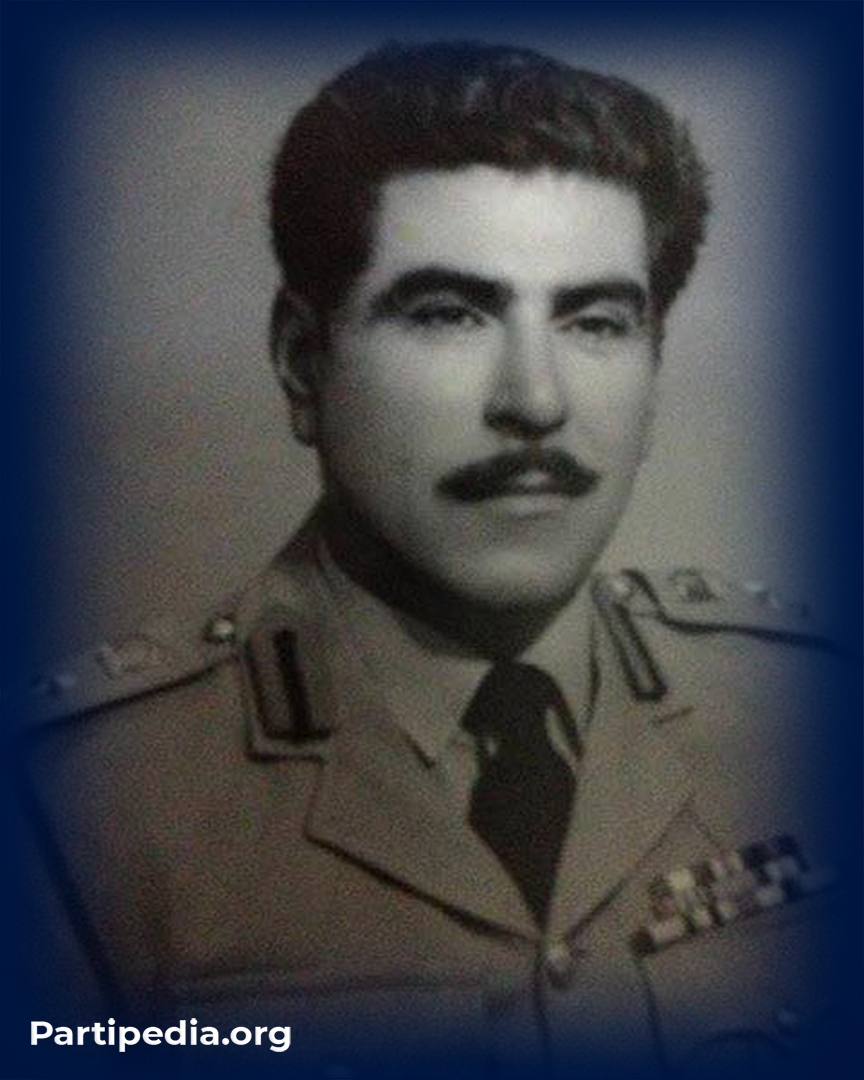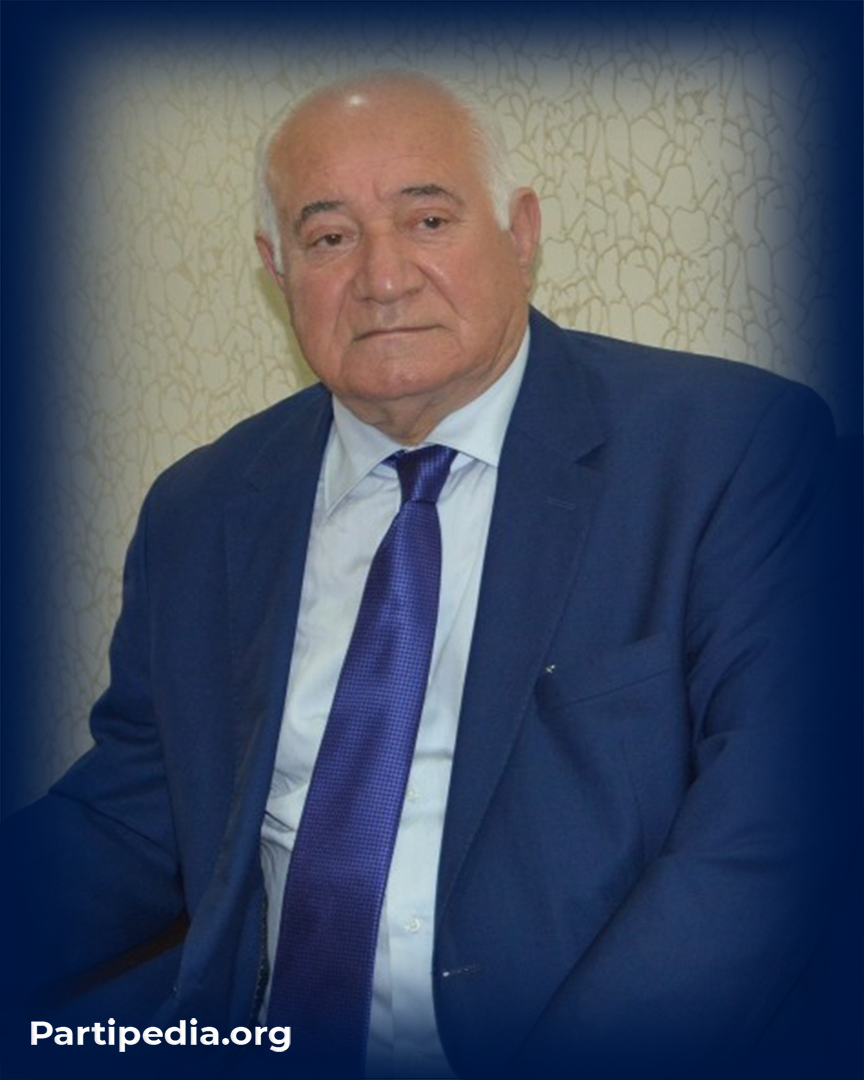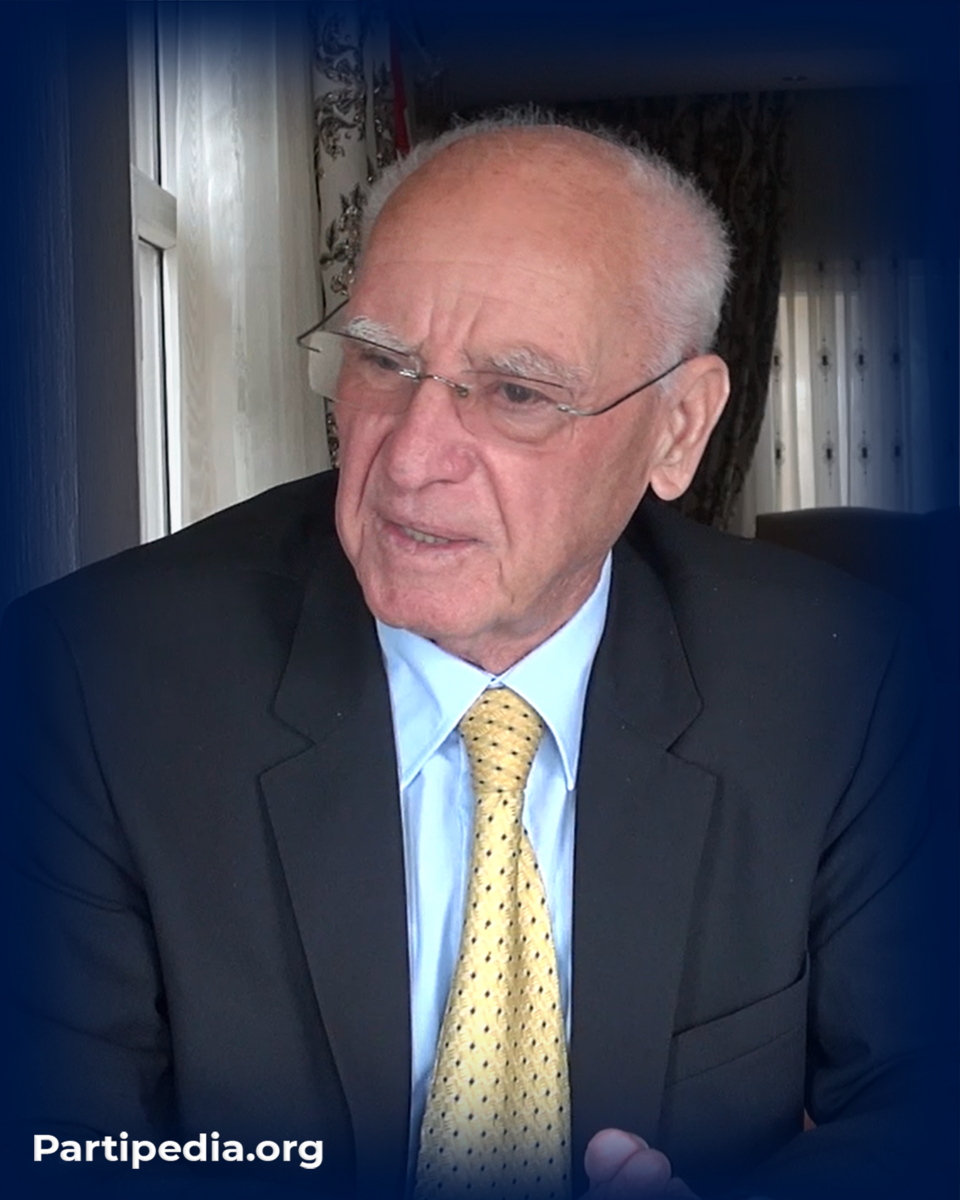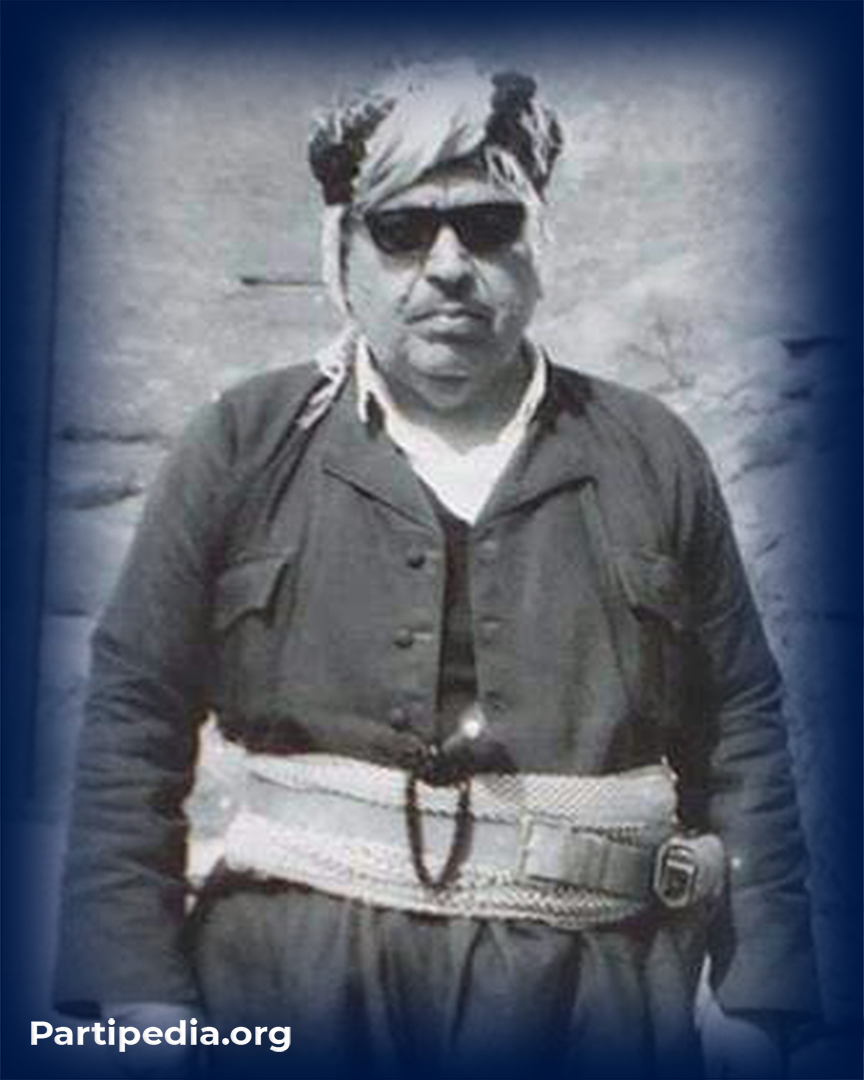


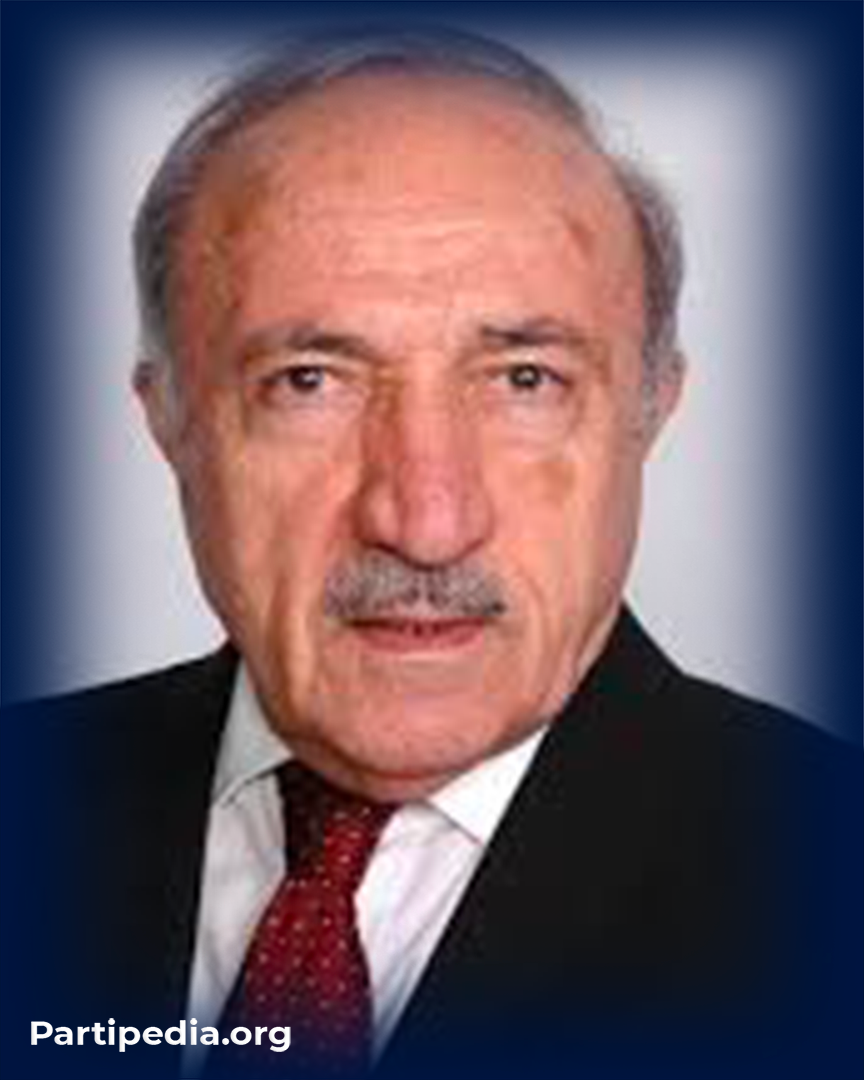
Mahmud Ali Osman, known by the names (Dr. Mahmud, Dr. Mahmud Sorani and Dr. Mahmud Osman). He became a member of the central committee at the 6th, 7th and 8th congresses. At the 8th congress, he was elected a member of the central committee and the political school of the Kurdistan Democratic Party. In 1964, he became a member of the leadership council of the revolution in Kurdistan and later became a member of the working office (Al mekteb al tanfizi) of that council. On April 15, 1967, as a member of the political school of the Kurdistan Democratic Party, he was a representative of the military-political conference of Kani Simaq (Hewler). On January 10, 1970, he was a member of the Kurdistan Democratic Party delegation to the negotiations on the autonomy of Southern Kurdistan with officials of the Arab Socialist Ba'ath Party in Baghdad. On March 11, 1970, he was a member of the Kurdish delegation preparing for the Kurdistan autonomy declaration ceremony and delivered the President's speech. Mustafa Barzani He studied in Baghdad in this order. On June 12, 1988, he represented the Kurdistan Socialist Party (PSK) at the headquarters of the Iraqi Communist Party in the liberated areas of Erbil province and signed the agreement on the continuation and program of the Kurdish front. On December 30, 2005, he was elected as a member of the National Council of Iraq on the list of the Kurdistan Alliance, number 130.
Biography
Mahmud Ali Osman, known as Dr. Mahmud Osman, was born in 1938 in the city of Sulaymaniyah. He completed his primary education in Biyare and Sulaymaniyah, and his secondary and preparatory education in the city of Sulaymaniyah. In 1961, he graduated from the College of General Medicine at Baghdad University and received his Bachelor of Medicine degree. In 1961, he opened his first clinic in the city of Sulaymaniyah. In early 1974, he became the Secretary General of the Health and Social Affairs Department of the September Revolution. In 1975, after the defeat of the September Revolution, he went to Iran as a refugee. He is fluent in Kurdish, Arabic, English, French and Persian.
Worksheet
In 1953, he joined the ranks of the Kurdistan Students' Union. In 1954, he joined the ranks of the Kurdistan Democratic Party. He was one of the leaders of the Baghdad student demonstrations. In 1955, he became a member of the Secretariat of the Kurdistan Students' Union at its second congress. In 1956, he became the Secretary of the Kurdistan Students' Union. In 1956, he became a member of the fifth branch of the Kurdistan United Democratic Party. On March 21, 1957, he participated in the Newroz celebration in Baghdad. In 1959, he was expelled from the Kurdistan Democratic Party for non-compliance at the fourth congress of the Kurdistan Democratic Party - Iraq. Mahmud Ali Osman joined the ranks of the Peshmerga in 1962. In March 1963, he joined the ranks of the Peshmerga forces of the September Revolution and served in the Barzan region. In 1964, he became a teacher at the central school of the September Revolution in Gelala, and in 1964, he was elected by the congress delegates as a member of the central committee of the Kurdistan Democratic Party at the sixth congress, and at the first meeting of the central committee, he was elected as a member of the political school of the Kurdistan Democratic Party. In the same year, he became a member of the leadership council of the revolution in Iraqi Kurdistan, and in the same year, he became a member of the working office (al mekteb al tanfizi) of the leadership council of the revolution in Iraqi Kurdistan.
In the years (1965 - 1967) he was in charge of a secret security network in the areas under the control of the Iraqi government. In 1965, he became the financial manager of the temporary office of the Revolutionary Leadership Council in Iraqi Kurdistan, and in 1966, he was elected by the congress delegates as a member of the central committee of the Kurdistan Democratic Party at the seventh congress. Then, at the first meeting of the central committee, he was elected as a member of the political school. In 1966, he was again the secretary of the temporary office (al mekteb al tanfizi) of the Revolutionary Leadership Council in Iraqi Kurdistan. In 1966, he became a member of the relations committee of the temporary office of the Revolutionary Leadership Council in Iraqi Kurdistan. In the same year, he visited Paris with the aim of strengthening the foreign relations of the Kurdistan Democratic Party. On April 15, 1967, under the patronage of the President Mustafa Barzani As a member of the political school of the Kurdistan Democratic Party, he was a representative of the military-political conference Kani Simaq (Hewlêr). In 1967, with the aim of strengthening the foreign relations of the Kurdistan Democratic Party and with the representation of the President Mustafa Barzani visited the city of Washington.
In the years (1968 - 1969) he was a teacher of the modern Kurdish revolution and the history of the Kurdistan Democratic Party at the revolutionary teachers' training center. In 1968, he was in charge of the scientific and health department at the temporary office (al mekteb al tanfizi) of the Revolutionary Leadership Council in Iraqi Kurdistan. In 1968, he was a teacher of the modern Kurdish revolution and the history of the Kurdistan Democratic Party at the first branch of the revolutionary teachers' training center. In 1968, he was appointed second secretary of the temporary office of the Revolutionary Leadership Council in Iraqi Kurdistan. In the years (1968 - 1969) he was a teacher of the modern Kurdish revolution at the first branch of the Kurdistan Democratic Party cadres' training center in the village of Çoman in the Erbil province. On May 31, 1968, he participated in the final assembly of the first public health unit in the village of Makosan (Hewlêr) as a teacher. In 1969, he became the head of the health and science department (al sihiye wal maarif) in the local office of the Revolutionary Leadership Council in Iraqi Kurdistan. In 1969, he became a teacher of mathematics and physics at the central school of Gelale.
In 1969, on the instructions of the President Mustafa Barzani He began preparations for the re-organization of the Kurdistan Teachers' Union and the organization of the third congress of that union. In 1969, he became a teacher of the concept of contemporary revolutions in the second year of the Kurdistan Democratic Party's cadre training school in the village of Çoman in the Erbil province. In the years (1969-1970), he was the head of the negotiating delegation of the Kurdistan Democratic Party with the ruling Arab Socialist Ba'ath Party in the Republic of Iraq, with the aim of achieving autonomy for Southern Kurdistan. On December 10, 1970, he was a member of the nine-member delegation of the Kurdistan Democratic Party to negotiate on the autonomy of Southern Kurdistan with officials of the Arab Socialist Ba'ath Party in the city of Baghdad. On March 11, 1970, he was a member of the Kurdish delegation to attend the ceremony of re-establishing Kurdistan's autonomy and delivered the speech of the President Mustafa Barzani He attended this ceremony in Baghdad. He participated in the Newroz celebration of Sadr Qenati in Baghdad on March 29, 1970. In 1970, he was elected as a member of the central committee of the Kurdistan Democratic Party at the eighth congress by the congress delegates. In the same year, he was elected as a member of the political school at the first meeting of the central committee.
At the end of May 1970, with the help of friends Masoud Barzani visited the city of Sulaymaniyah and visited the headquarters of the Kurdistan Democratic Party and visited the grave of martyr Abdulaziz Atrushi (1934 - 1969) in the town of Halabja in the province of Sulaymaniyah. Then, on June 2, 1970, he visited the city of Kirkuk and was received by the head of the third division of the Kirkuk governorate and the commander of the second army of the Iraqi army. In 1970, he became a teacher of Kurdish and Kurdistan history at the third division of the Kurdistan Democratic Party cadre training school in Baghdad. On July 15, 1970, he participated in the opening ceremony of the sixth congress of the Kurdistan Qutb Union in the village of Nawpirdan (Hewlêr). On August 5, 1970, with the President Mustafa Barzani He participated in the opening ceremony of the third congress of the Kurdistan Teachers' Union in the village of Nawpirdan. In 1970, he participated in the reception ceremony for the third batch of teachers of the Kurdistan Democratic Party's cadre training school in the liberated areas.
On Wednesday, June 2, 1971, with the President Mustafa Barzani received a delegation from the Central Committee of the Communist Party of Bulgaria in the village of Haji Omaran, Erbil province. On September 29, 1971, during the terrorist attack on Haji Omaran, which was intended to assassinate President Mustafa Barzani He was with the President and was saved from death, but he himself was wounded. Mustafa Barzani On Monday, November 25, 1971, at the Barzani Base in the village of Haji Omaran, President Mustafa Barzani welcomed the delegation of the Asian, African and Soviet Peoples' Support Committee. On Wednesday, June 21, 1972, at the Peace Palace near the town of Choman in Erbil province, with President Mustafa Barzani received a delegation from the Socialist Unity Party of Germany headed by Paul Ferner and discussed peace in Iraq and bilateral relations. On June 27, 1972, Idris Barzani met with Mohammad Reza Shah Pahlavi at the palace of the Iranian monarchy.
On July 7, 1972, he met with Richard Helms, Director of the American Central Intelligence Agency (CIA), in Washington, D.C., to seek cooperation. In 1972, he visited the town of Zakho in the province of Dohuk with Idris Barzani and discussed resistance and defense against the Arabization process with members of the Kurdistan Democratic Party. In October 1972, he met with President Barzani in Haji Omaran, Erbil province. Mustafa Barzani He welcomed the delegation of the elected leadership of the Dawidiye congress of the Kurdish Democratic Party in Syria (Leadership in stages). In February 1973, he visited Tehran to meet with Aqid Clark. On Friday, March 30, 1973, he read the speech of the political school of the Kurdistan Democratic Party at the Nowruz festival in Choman, Erbil province. On April 18, 1973, he attended the opening of the Sili Choman (Ewlêr) hospital, which was the only private hospital in the liberated areas of the September Revolution victims. On May 15, 1973, he attended the opening of the first social service section for the election of the Village Council in the liberated areas of the September Revolution victims at the Galale mosque. In July 1973, he presented a seminar to the participants of the Herewi camp in Handirên, which was organized by the Kurdistan Qutbist Union in the village of Nawpirdan. From August 8, 1973 to January 8, 1973, he was the instructor of the program and internal affairs of the Kurdistan Democratic Party in the fourth session of the Kurdistan Democratic Party cadre training school in the village of Nawpirdan, in the province of Erbil.
On August 16, 1973, he participated in the 27th anniversary of the founding of the Kurdistan Democratic Party in the village of Nawpirdan (Hewlêr). On November 27-29, 1973, he participated in the political-military conference in Choman. In 1974, before the start of the war between the Peshmerga forces of the September Revolution affiliated with the Kurdistan Democratic Party and the Arab Socialist Ba'ath Party, he led the last delegation to negotiate with the Baghdad authorities, which resulted in the end of the war. In 1974, he presented a seminar on the relationship between the revolution and Baghdad to the students of the sixth year of the Kurdistan Democratic Party's cadre training school in the village of Zinuya Sheikhi in the Hewlêr province. In 1974, after the issuance of the law of the Legislative Council and the Executive Council of the Kurdistan Region, he was appointed Minister of Health. On March 11, 1975, in Tehran, by the President Mustafa Barzani met with Mohammad Reza Shah Pahlavi in order to obtain information about the Algiers Agreement and to warn Shah Mohammad Reza Shah Pahlavi (1919 - 1980) about the Vice President of the Republic of Iraq, Saddam Hussein (1937 - 2006), known as Saddam Tikrit, with the aim of making him repent. In May 1975, Idris Barzani and Masoud Barzani has been contacted to prepare for the start of the May Revolution He worked at the Sher and Khurshid Hospital in Iran from 1975 to 1976. On 28 January 1977, he requested political asylum in Britain. On 11 March 1977, he visited London to meet with Kurdish leaders.
In 1977, he became the Chairman of the Preparatory Committee of the Kurdistan Democratic Party and returned to Southern Kurdistan in 1978. In 1978, he participated in the Bagheliski meeting on the border of Sulaymaniyah province, which was held with the aim of evaluating the Hakkari war and preventing further intervention of the Patriotic Union of Kurdistan forces by the forces of the interim leadership of the Kurdistan Democratic Party. In 1978, despite the absence of tensions between the Kurdish factions of Southern Kurdistan. In 1978, he participated in the Deravi Gurgan meeting in the Qandil Mountains with the Iraqi government. On November 1, 1979, he visited Baghdad for the purpose of negotiations and met with the President of the Republic of Iraq, Saddam Hussein (1937 - 2006), known as Saddam Tikrit, who had come with the aim of autonomy for Southern Kurdistan, but he knew that their only goal was to kill each other. In 1979, at the Goreşer Unity conference, he was elected as a member of the executive board of the Kurdistan Socialist Party by the congress representatives.
On November 24, 1987, he was poisoned with Salim poison by the Iraqi Intelligence Agency and survived. On June 12, 1988, he signed a memorandum of understanding with the Kurdistan Front on behalf of the Kurdistan Socialist Party (PSK) at the Xwakurk headquarters of the Iraqi Communist Party in the liberated areas of Erbil province. In early August 1990, he headed a Kurdistan Front delegation that went to visit Yasser Arafat in the Republic of Tunisia. From March 15 to 17, 1991, he participated as a representative of the Kurdistan Front in the international congress on the Kurdish cause in Stockholm (Sweden). On April 7, 1992, he participated in the extensive meeting of the Kurdistan Front on behalf of the Kurdistan Socialist Party, which was held with the aim of preparing for the election process of the Kurdistan National Council. In 1992, he was a candidate for the post of leader of the Kurdish Liberation Movement, receiving 23,309 votes out of the total votes cast, which is 2.37% of the votes, ranking third, but not receiving the necessary votes to become leader. On Thursday, August 20, 1992, he attended the first congress of the Kurdistan Unity Party in the city of Erbil. On Thursday, August 27, 1992, he was elected as a member of the central committee by the delegates of the first congress of the Kurdistan Unity Party. On July 13, 2003, he was appointed as a member of the Transitional Governing Council of Iraq (Majlis al hukim al antiqalī al Iraqi). In 2004, he became a representative of the Iraqi National Congress. In 2004, he was a candidate of the Kurdistan Democratic Party for the Kurdistan Alliance list for the Iraqi National Council election process. On Saturday, May 15, 2004, he was a delegate to the Sovereignty and Democracy Congress held in Erbil with the presence of 600 delegates. On January 30, 2005, he was elected as a Member of the Iraqi National Transitional Council on the Kurdistan Alliance list with number 130.
His works:
The Kurdistan Revolution of 1970.
Taqi'im Mesîre al Sewre al Kurdiye wa nihyariha wal dirus wal abir al mustexlisiye min ha (1961 - 1975) - (First edition 1977) - (Second edition 2016).
Source:
1 - Archives of the Encyclopedia Committee of the Kurdistan Democratic Party.