

Biography
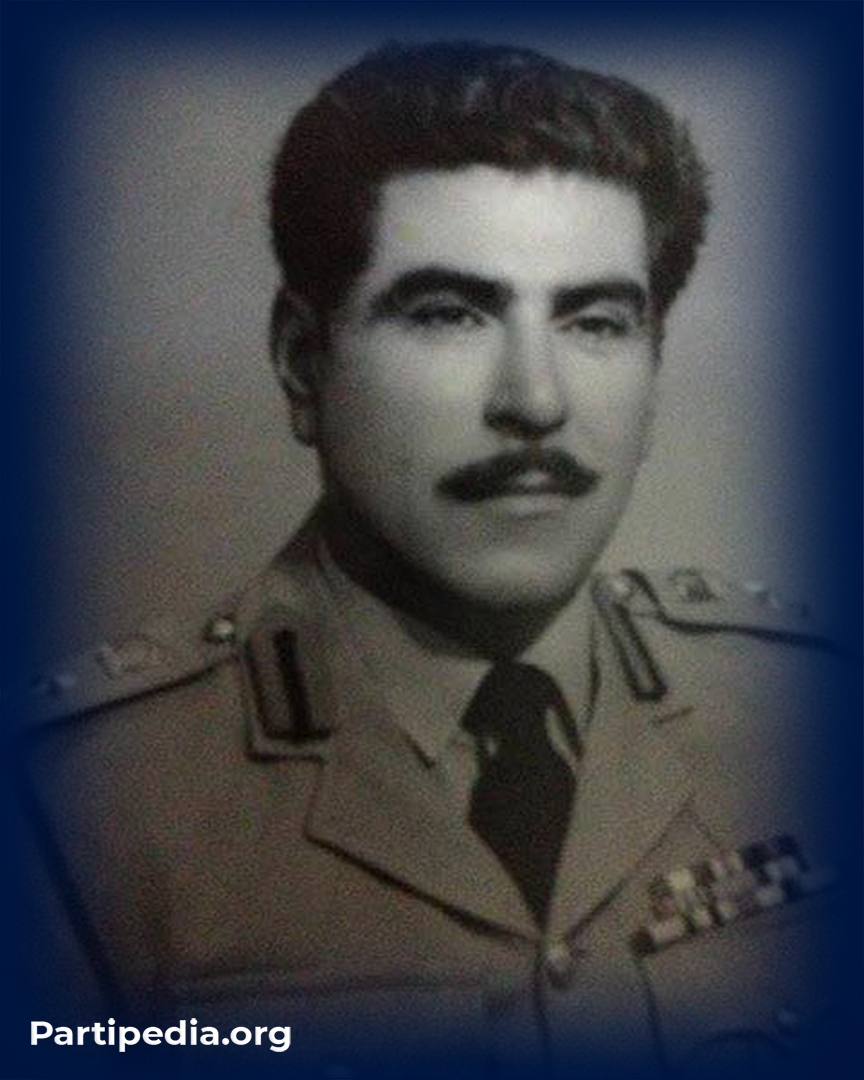
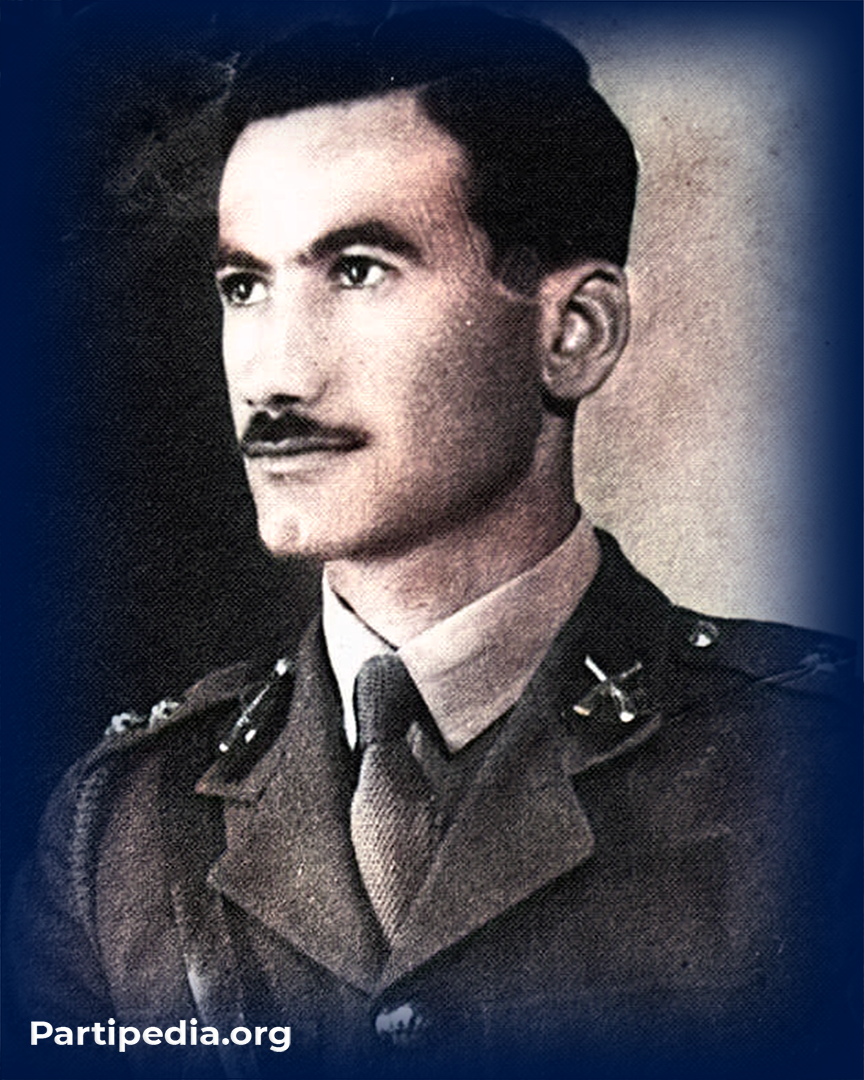
Xeyrula Abdulkarim Abdulla was born in 1912 in the Erbil fortress. In 1930, he entered the Baghdad Teachers' College and after completing his studies, he was appointed as a teacher at the Koya Primary School. In 1937, he graduated from the Military College in Baghdad.
In 1946, he married Salihe Ebdulmanaf Said Shikak (1932 - 2001) and in 1947, his only daughter, Herbiye, died of frostbite on the Gader Bridge and was buried there. After the defeat of the Democratic Republic of Kurdistan, he returned to Iraq in 1947 and was imprisoned in Baghdad's central prison, where he was executed. He was fluent in Kurdish, Arabic, Turkmen, English and Persian.
Worksheet
Xeyrula Ebdulkerîm Ebdula Selim. In 1939, he became a member of the Darker Association and in the same year he contacted the ranks of the Kurdish Hîwa Party. In 1945, in order to continue his work, he contacted the second Barzan revolution and became a member of the Azadî Committee and after the defeat of the second Barzan revolution, he went to Eastern Kurdistan. On August 19, 1945, the Military Court issued an order to seize all transferred and untransferred funds for his participation in the second Barzan revolution (1943 - 1945).
In 1946, the Founding Committee of the Kurdish Democratic Party was formed in the city of Mahabad, and in the same year, he was promoted to the military rank of Naqib (Leader) by order of the leadership of the Kurdistan Democratic Republic, and served as a commander in the Republican Army on the Qasimlo People's Front.
In 1946, after the defeat of the Democratic Republic of Kurdistan under the command of General Mustafa Barzani (1903 - 1979), he faced the Iranian army. On April 10, 1947, he was one of the officers who surrendered to the Iraqi police on the Ghadir Bridge due to hardship and illness. He was initially taken to the city of Erbil and then transferred to the central prison in Baghdad and imprisoned with his comrades. Earlier, in 1945, a military court had issued a death sentence for him. For this reason, after surrendering, several prominent figures and people went to Baghdad and demanded that his death sentence not be carried out. Initially, the decision was not to execute him, but in 1947, a second trial was held in which he was sentenced to death. He was hanged in the courtyard of the Baghdad Central Prison in front of a large crowd of Kurdish prisoners on Thursday, June 19, 1947, and his body was sent to the city of Erbil. Thousands of Kurds gathered at the prison gate to take his body from the Baghdad Central Prison to the city of Erbil. He was buried in the Beş Barmax cemetery in the Tayrawe neighborhood of Erbil in the presence of lawyer Ewni Yusif Ehmed (1908 - 1988), a member of the Central Committee of the Kurdish Democratic Party. Before his death, he and three of his friends wrote a will for the people in which they reiterated their stance for national freedom.
The execution of Martyr Xeyrula and his friends caused a great deal of commotion, and the Iraqi Communist Party issued a statement in support of their execution. The People's Party (Al Sha'ab Party) expressed its disapproval of their execution in its organ. The great Kurdish poet Piremard wrote the poem "Kosti Niwê" for them, and Fayiq Bekes also wrote a poem entitled "Qawmi Kurd" on this occasion, which later became a hymn and was recited in the city of Sulaymaniyah. In addition, most Kurdish officers in the ranks of the Iraqi army are disappointed by their martyrdom.
In 1959, during his first visit to the city of Erbil, President Mustafa Barzani laid a wreath at the grave of Martyr Khairula, and on June 20, 1998, in the presence of lawyer Muhsin Dizayi, the representative of President Massoud Barzani, the veil was lifted on the monument in Erbil.
Source:
1- Osman Ali, Dirasat fî Al Hereke Al Kurdiye Al Masire 1833 - 1946 Dirasat tarixiye wa saeqiye (Erbil - Mekteb Al Tafsîr - Matbaa Al Seqaf 2003).
2- History of the Kurdistan Democratic Party, congresses and conferences (programs and internal proceedings), Encyclopedia Committee of the Kurdistan Democratic Party, first volume, (Hewlêr - Roksana Press - 2021).
3- Walid Hamdi, Al Kurd we Kurdistan fî Al Wesaeq Al Britaniye Dirase tarixiye we saeqiye, (London - Metabaa Secil Al Arab 1992).
4- Aziz Shamzini, The Patriotic Liberation Movement of Kurdistan, translated by Farid Esesard, (Unpublished - Patriotic Union of Kurdistan - Communication Department - Martyr Ibrahim Ezo Press - 1984).
5- Eqîle Rewandizî, Salihe Khan, the wife of the martyr Xêrulla Ebdulkerîm, Şawushka Magazine, Şawushka Center for Intellectual Activities, issue 2, Hewlêr, November 2002.
6- Mehdi Muhammad Qadir, Political Developments in Iraqi Kurdistan 1945-1958, (Sulaymaniyah - Kurdistan Strategy Research Center 2005).
7- Bekir Barzanceyî, Famous Kurdish Personalities, ninth volume, (Beirut - Lebanese Cultural Foundation for Printing, Editing, Translation and Distribution 2012).
8- Sherzad Abdulrahman, I still live with the memory of the man who was killed with a knife!, Brotherhood Newspaper, Organ of the Kurdistan Democratic Party - United, issue 2805, Hewlêr, Sunday, April 4, 1999.
9- Abdalhadi Rehman Qesab, Martyr Xeyrulla Abdulkarim, some notes and facts, Barzan News Newspaper, issue 74, Hewlêr, Sunday, July 6, 2008.
10- Habib Mihemed Karim, History of the Democratic Party of Kurdistan in Iraq (with reference to the President) 1946 - 1993, (Dihok - Xebat Press 1998).
11- Husen Mustafa, Al Barzaniyun and the Barzan Movement 1932 - 1947, al tabia al saniye, (Baghdad - dar afaq arabiye lil sahafa wal nişshr 1983).
12- Adnan Al Naqshbandi, Al Wafa Lil Shahada min shim Al Barzani al Khalid, Xebat newspaper, language of the Democratic Party of Kurdistan - Al Muwahed, number 981, Erbil, Friday, June 23, 2000.
13- Ali Abdalle, History of the Kurdistan Democratic Party - Iraq until the establishment of the third congress, (Bê Şiwên - September 1968).
14- Faysel Rasul Khoshnaw, Biography of Kurdish Officers, first part, (Hewlêr - Rojhilat Press - 2018).
15- Karim Shareza, Al Minazil Al Watani Al Shahid Xeyralle Abdalkerim, Xebat newspaper, language of Al hizb al demoqratî Al Kurdistanî ـ Al Mahd, Al adad 980, Erbil, Al cem 16, June 2000.
16- Kerîm Shareza, Educator and Kurdish Officer Martyr Xeyrulla Abdalkerîm 1912 - 1947, Municipality Magazine, Erbil Municipality Presidency, issue 21 Erbil, January 1, 2013.
17- Masoud Al Barzani, Al Barzani and the Kurdish Tahrir Movement, Al Mujaled Al Awel, Al Tabiya Al Saniye, (Beirut - Kawa Lil Seqafiye Al Kurdish 1997).