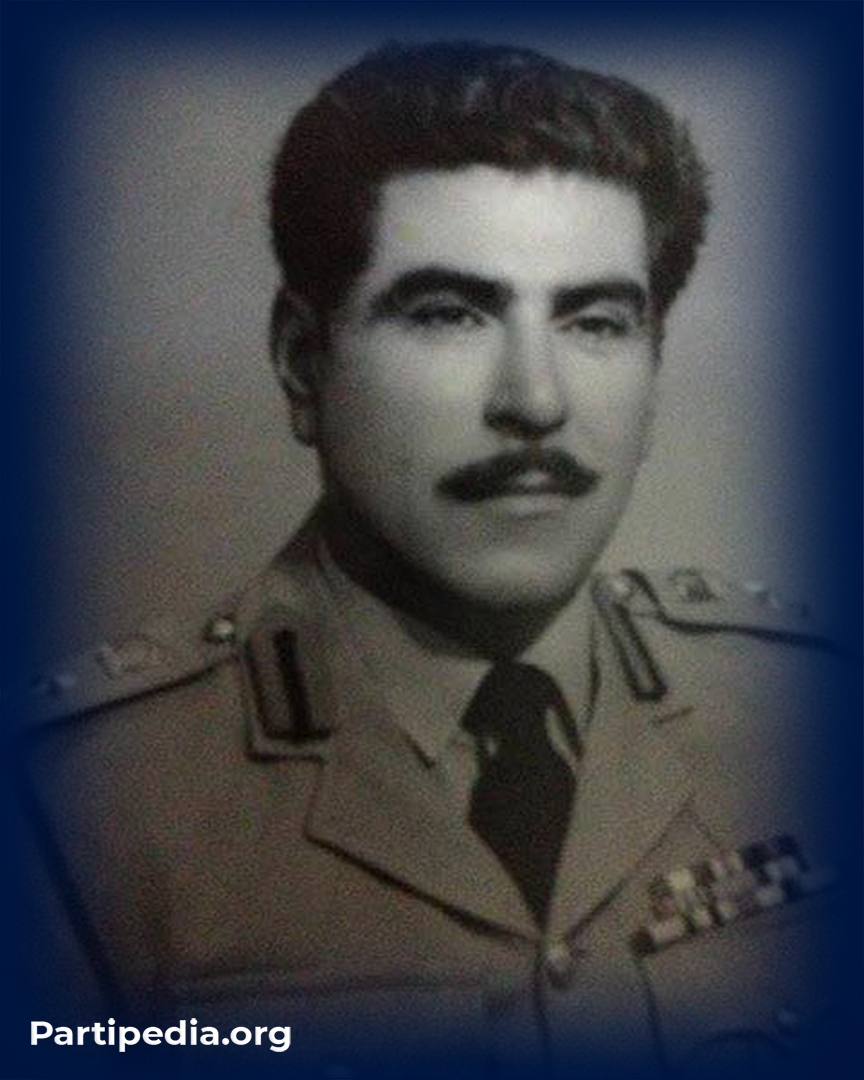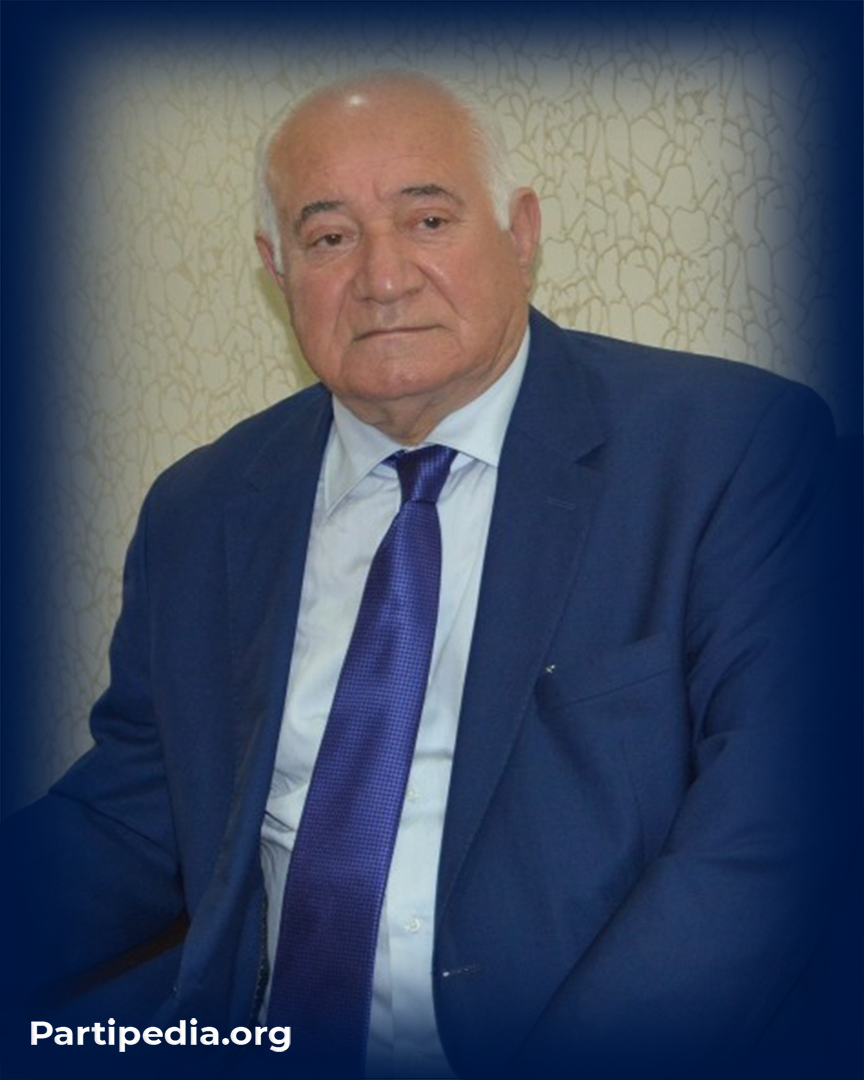


Aziz Abdul Qadir Ubeydullah, known as (Seyid Aziz Shamzini), was an officer and politician. He was elected as a member of the central committee and political school of the Kurdistan Democratic Party of Iraq at the fourth congress in 1959, and as a member of the central committee of the Kurdistan Democratic Party of Iraq at the fifth congress in 1960. In 1964, he participated in the general meeting of Mawet...
Biography
Aziz Abdulla Abdulqadir Ubaydullah is the grandson of Sheikh Ubaydullah Şemzini Nehri, the leader of the 1880 Revolution in Eastern and Northern Kurdistan. His family was forcibly displaced from the capital of the Ottoman Empire, Istanbul. In 1924, Sheikh Abdulqadir, his grandfather, Sheikh Muhammad, his uncle, Sheikh Said and Dr. Fuad Diyarbakir, along with 150 important figures of Kurdistan, were arrested in Istanbul and sent to the Ataturk Independence Court and later executed. Later, his father fought against the Turkish government. In (1924 - 1925), they came to Southern Kurdistan and were forcibly resettled in the village of Batas between Rawandiz and Erbil at the request of the Turkish, British and Arab states in Iraq. The Minister of the Interior of the Iraqi Empire did not give them consent to the issuance of Iraqi citizenship, on the grounds that they were from Northern Kurdistan. Although he owned property in Southern Kurdistan during the Ottoman Empire, he was born in Northern Kurdistan and received his early religious education from his father.
In 1923, he was liberated by a force led by his uncle, Sayyid Taha Nehri, in the village of Nehri and was transferred to Rawandiz. In 1926, he went to Batas Primary School on the outskirts of Erbil and in 1932, he completed his primary education in Shaqlawa, in the province of Erbil. In 1933, he began his secondary education in Erbil and in 1934, he completed the third grade of secondary education in Mosul. In 1935, he went to preparatory school in Baghdad and completed it in 1936. In 1937, he was admitted to the Baghdad Military College. In 1938, he completed his military education with the rank of second lieutenant. In 1939, he completed the Military Cavalry School and served in Kirkuk and Mosul. He became the first minister in 1940, and after 1991 he went to Urmia again. He was assassinated in his home by an unknown source. On March 7, 1999, an explosion was detonated in his home and he died in Urmia Hospital on the night of March 14, 1999 due to the severity of his injuries. In addition to Kurdish, he spoke English, Arabic, Turkish, Russian, Persian and some French.
Worksheet
In 1940, he joined the ranks of the Kurdish Hîwa Party. In 1942, he was transferred to the Zirêpoş battalion and the mechanical section. In 1943, he became a Naqîb in the ranks of the Iraqi army. In March 1944, he was a member of the Kurdish Hîwa Party delegation that welcomed the representative of the Kurdish Life Association (J.K) in the city of Kirkuk. In 1944, together with Mirhac Akreyî and Mustafa Khoşnaw, they met with Mullah Mustafa Barzani at the Kurdish Hîwa Party Representation and talked about their coordination and cooperation. In 1944, he was expelled from the ranks of the Kurdish Hîwa Party due to his dissatisfaction with its policies. On December 25, 1944, he became a liaison officer for the Iraqi authorities on the Marghera front in Erbil province with the revolutionaries of the second Barzan revolution (1943 - 1945). In 1945, he went to Eastern Kurdistan under the command of the Soviet Red Army and stayed in his father's house.
On November 11, 1945, he joined the Democratic Party of Kurdistan of Iran, and on December 22, 1946, he participated in the founding ceremony of the Democratic Republic of Kurdistan in the city of Mahabad. On April 15, 1946, together with 280 Azerbaijani and Kurdish students of Eastern Kurdistan, under the command of Major Pilot Seyid Taqi Musavi, he left the Tabriz train and ferry station for Baku. On April 18, 1946, he arrived in Baku and was stationed at the Salyankoç military camp for training purposes. In 1948, he became a member of the leadership of South-Eastern Kurdistan (Baku Conference) in the Eastern Kurdistan section. In 1951, his father provided assistance to Hama Mevlud Çirç, a Peshmerga of the Democratic Republic of Kurdistan, to travel to the Soviet Union to meet his friend. In March 1954, at the request of General Mustafa Barzani (1903 - 1979), he was transferred to Moscow by Soviet officials for higher education. In 1957, he participated in the congress of the World Union of Students and Youth in Moscow. In 1957, he met Jalal Talabani (1933 - 2017), a member of the Political School of the Democratic Party of Kurdistan, for the first time in Moscow, with the aim of introducing him to General Mustafa Barzani. In 1959, he returned to his homeland on the ship Georgia, en route to the port of Basra in southern Iraq, with Barzani's friends.
On March 24, 1959, he was allowed to return to the ranks of the Iraqi Republic Army and received the rank of Major, and later his rank was raised to the rank of Major and he was appointed as a Russian language teacher at the Baghdad Military College. In 1959, he became a member of the preparatory committee of the fourth congress of the Kurdistan Democratic Party of Iraq. In 1959, he was elected a member of the central committee of the Kurdistan Democratic Party of Iraq by the representatives of the fourth congress. In 1959, he was elected a member of the political school at the first meeting of the central committee of the Kurdistan Democratic Party of Iraq. In 1960, he was elected a member of the central committee of the Kurdistan Democratic Party of Iraq by the representatives of the fifth congress. In the years (1962 - 1963) he was imprisoned by Iraqi government officials. In 1963, he established contact with the ranks of the Peshmerga forces. After 1975, he settled in the city of Urmia. In 1979, he returned to the Republic of Iraq from the city of Urmia and settled in the city of Baghdad.
His works:
1 - Kurdistan National Liberation Movement (Kurdistan National Liberation Movement) 1982 - 1984
2 - My Life (My Biography) 2010.
Source:
1 - Archives of the Encyclopedia Committee of the Kurdistan Democratic Party.