

After discussions between the leadership September Revolution and the Iraqi government ended, the Iraqi government withdrew from the terms of the agreement, once again declared war on Kurdistan, tensions increased and the occupation phase began, in April 1974 the Iraqi army began its attacks on Kurdistan. The army thus began its attacks on the revolutionary areas, using all its military capabilities, including countless soldiers, hundreds of modern tanks, all types of air weapons and air forces, to completely destroy the Kurdish revolution.
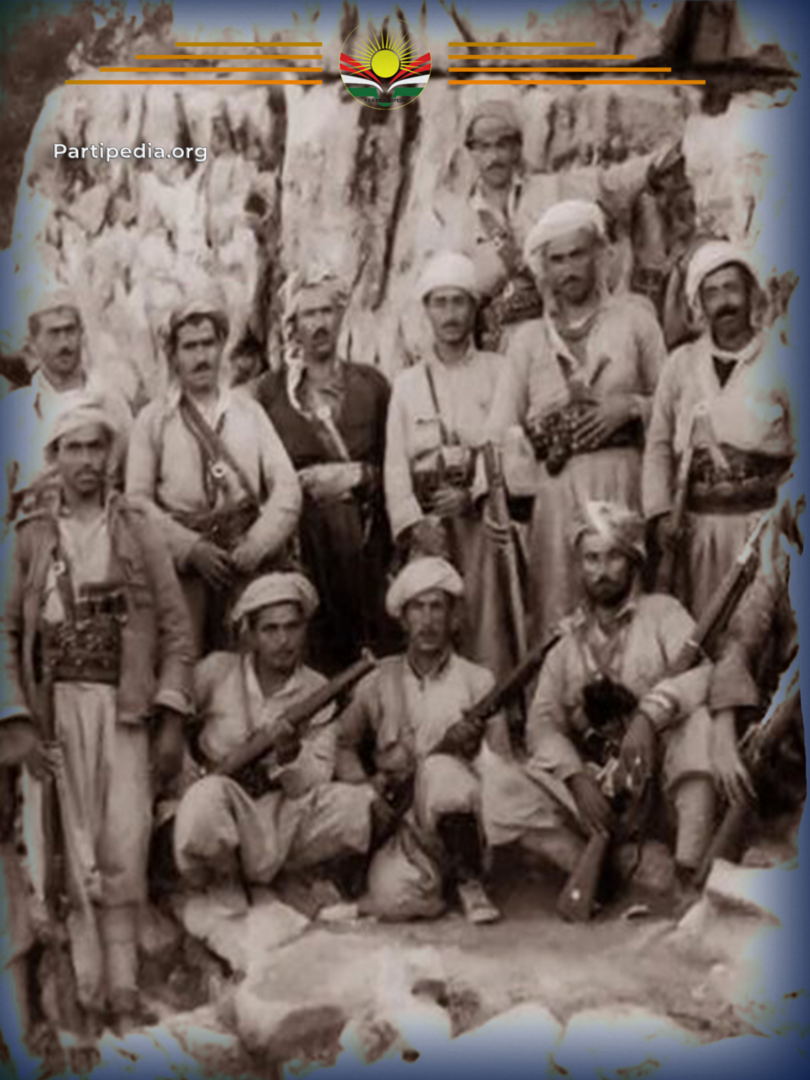
The Kurdistan Peshmerga forces, in response to and in preparation for the attacks of the Iraqi army, took several military steps from the beginning of the war, including the 3rd Surdesh Battalion of the Liberation Forces, which besieged the Sousse military center, which was the headquarters of an Iraqi army unit. In May 1974, the Iraqi government tried to lift the Peshmerga siege on the base, and troops began moving from Sulaymaniyah and Dukan to the region. The Peshmerga Forces, which are the 3rd Battalion of the Liberation Forces, under the command of Anwar Azwar, had a plan to confront the Iraqi army in those areas where the Iraqi army was expected to attack on the Sulaymaniyah and Dukan road.
The Kêwxa Smaile Telan brigade took up positions in the village of Kanîxanê, the Ebdullah Hacî Reşîd brigade was positioned in Tasloce, the Omer Heme Ali brigade was on standby in the village of Kelewanan, the battalion commander and headquarters were in the village of Xirê Zêwê, and the Hemetalî Hacî Qadir Beg brigade was positioned in the village of Xirê Zêwê.
The Iraqi army began its offensive from Sulaymaniyah. The brigade of Abdullah Haji Rashid, which was stationed in Tasloc, clashed with the Iraqi army and inflicted heavy losses on the army. However, due to the large number of army soldiers supported by the tank battalion and the small number of Peshmerga forces, they were unable to defend for a long time. Especially after the martyrdom of Sergeant Abdullah Haji Rashid and Sergeant Sheikh Jafar Kolijay, the Peshmerga of that defensive line retreated and left that place. The Iraqi army continued its advance to reach the military base in Sousse.
After the Iraqi army, with the support of tanks and gangs (cash), crossed the Peshmerga defense line in Tasloja and crossed towards the Sousse military base. They thought that there were no obstacles left for the Peshmerga defense in front of them, but the Peshmerga forces attacked the Iraqi army 6 km from the Sousse base, specifically on the bridge in the village of Xirê Zewê, and were able to destroy 2 tanks with RPGs and kill many soldiers and gangs. That day, the Peshmerga did not allow the soldiers to reach the besieged bases until the afternoon, but when 2 Peshmerga fighters named Ibrahim Kani Şeytan and Rahim Qamish were martyred and the battalion commander was injured while rescuing the bodies of the martyrs to prevent them from falling into the hands of the army, the Peshmerga forces were only able to rescue the bodies of the martyrs and their wounded commander, and retreated with their forces, leaving the Iraqi army with no way to break the siege of the Sousse military base.
Source:
- Senger Ibrahim Khosnaw, Military Events of September Revolution 1970-1975, 1st Edition, Danishfer Printing House, Hewler, 2022.
- Shawkat Mullah Ismail Hassan, A day in history September Revolution, 1961-1975, Ministry of Education Printing House, Erbil – 2007.
- Karwan Jewher Mihemed, Idris Barzani 1944-1987 Life and Political and Military Role in the Kurdish Liberation Movement, Hêvi Press, Hewlêr, 2019.