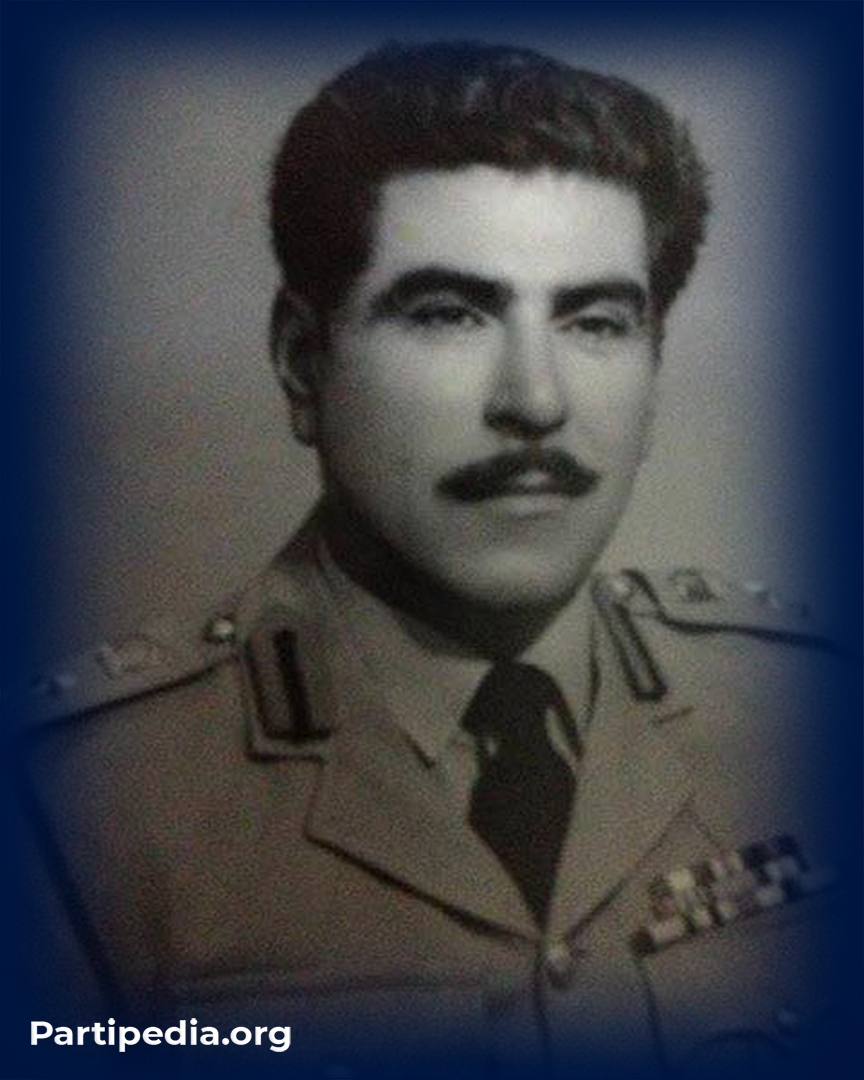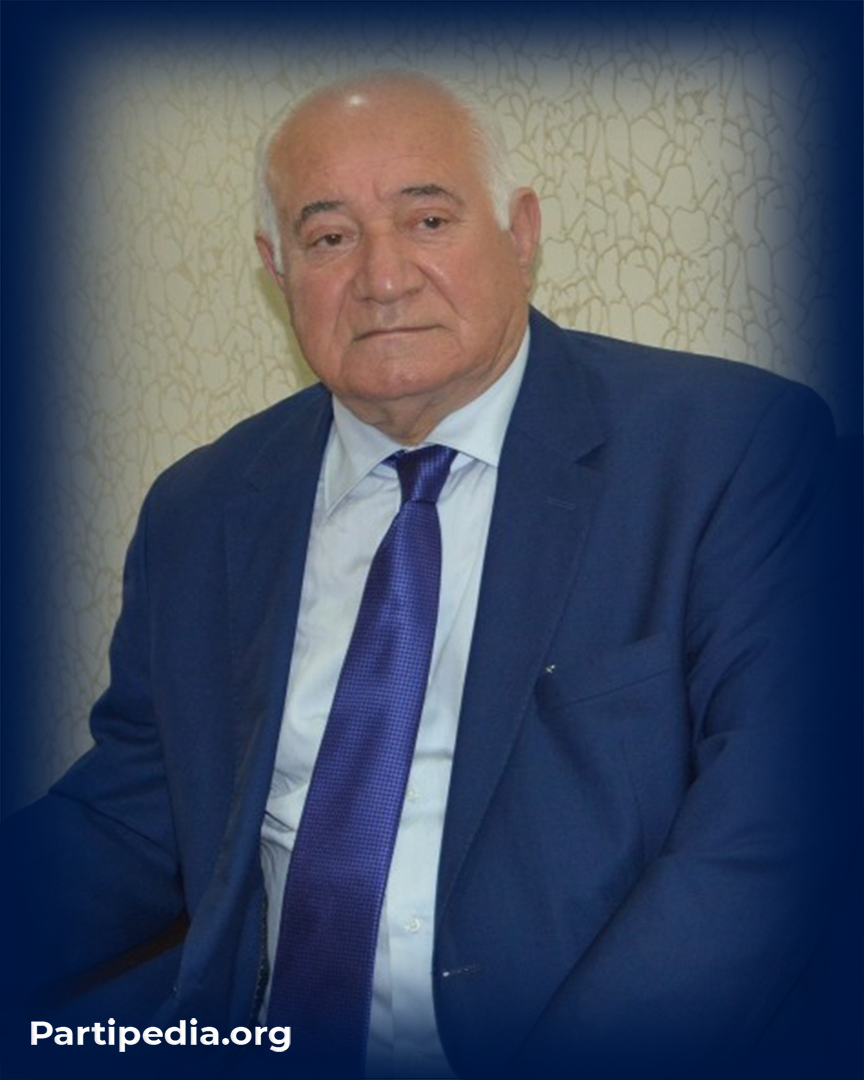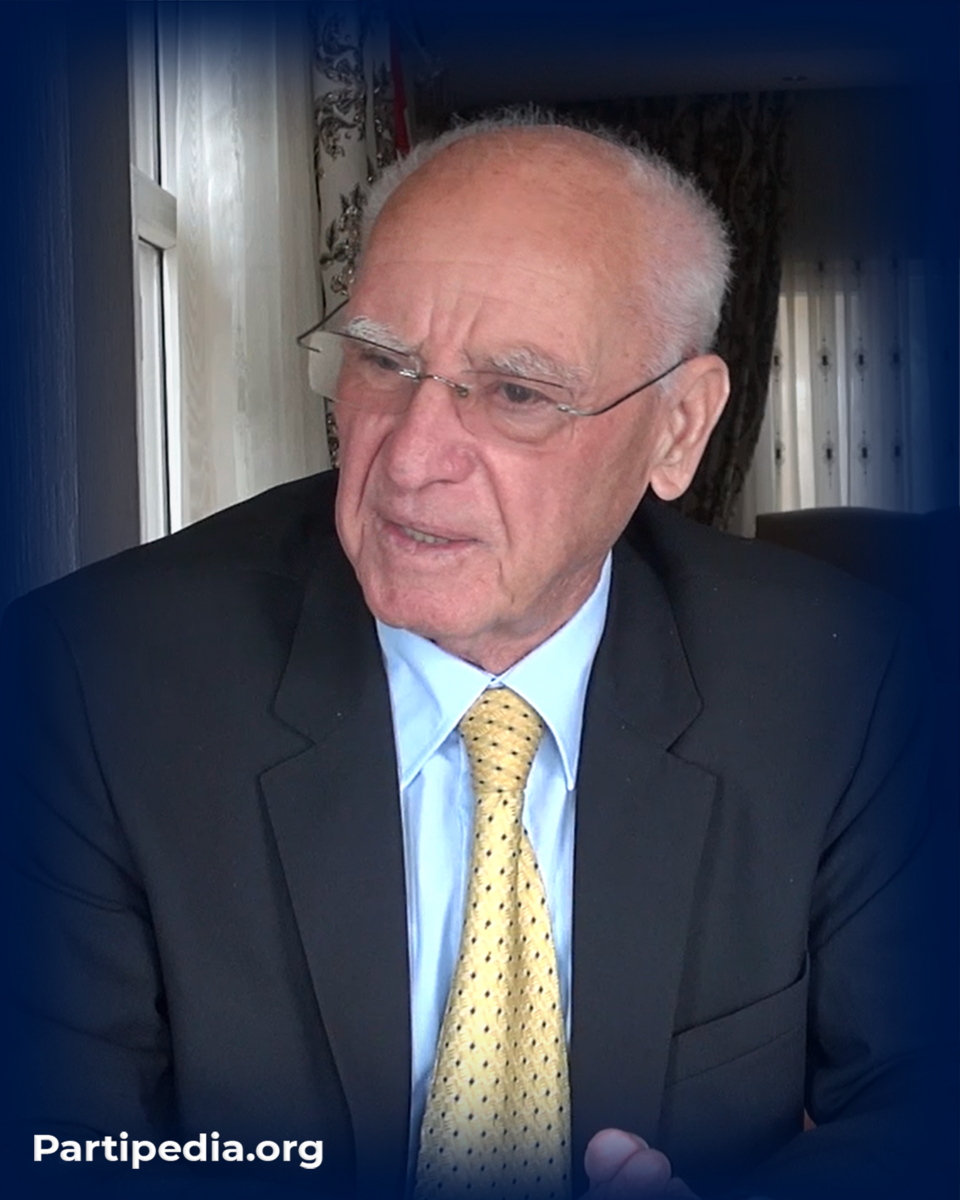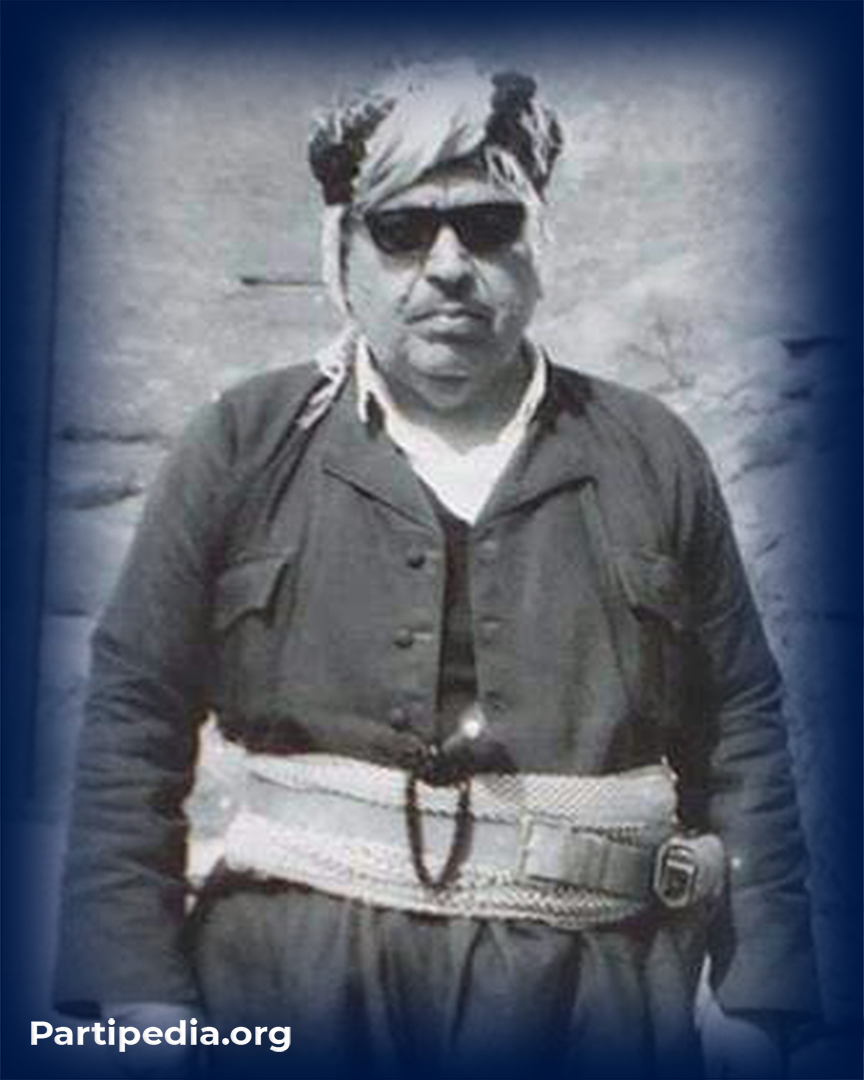


Shakib Said Sharif Rashid, known as (Shakib Akrey). A jurist and politician, he was the assistant to the head of the intelligence and security affairs committee of the working office (al mekteb al tanfizi) of the Revolutionary Leadership Council in Iraqi Kurdistan in 1966. In 1967, he became one of the founders of the Defense Department and its Vice President. In 1967, he participated in the military-political conference in Kani Simaq and in 1973 in the military-political conference in Choman in Erbil province. In 1970, he was elected a member of the central committee of the Kurdistan Democratic Party at the eighth congress.
Biography
Shakib Said Sharif Rashid was born in the city of Acre. In 1914, his family member Ahmed was imprisoned in the city of Mosul for supporting Sheikh Abdulsalam II Barzani and died in the Mosul prison. In 1958, he joined the ranks of the Kurdistan Democratic Party. In 1960, he received a bachelor's degree in law from the University of Baghdad. In 1961, he became the governor of Diwaye district in Nasiriyah province in southern Iraq. In 1962, he joined the ranks of the Peshmerga forces. On January 23, 1962, his movable and immovable assets and property were seized by the general military court in Dhi Qar province. He died in 2017. He was fluent in Kurdish, Arabic and English.
Worksheet
In 1964, Shakib Saeed Sharif Rashid was a delegate to the sixth congress of the Kurdistan Democratic Party in the town of Qaladiz, in the province of Sulaymaniyah. In 1966, he became the financial officer of the Kurdistan Democratic Party. In early March 1966, he participated in a three-month defense mission abroad. In 1966, he was a delegate to the seventh congress of the Kurdistan Democratic Party in the town of Galale, in the province of Erbil. In 1966, he became the assistant to the head of the intelligence and security affairs committee of the working office (al mekteb al tanfizi) of the leadership council of the revolution in Iraqi Kurdistan. In 1967, he became one of the founders of the Defense Department and Vice President of this institution. On April 15, 1967, under the supervision of the President Mustafa Barzani He was a representative of the Eylül Revolution Defense Department and a representative of the Kani Simaq (Hewlêr) Military-Political Conference. In the years (1968-1969), he was a revolutionary security instructor at the first class of the Kurdistan Democratic Party cadres' training school in the village of Çoman in the Hewlêr province. In 1969, he was a defense instructor at the second class of the Kurdistan Democratic Party cadres' training school in the village of Nawpirdan in the Hewlêr province. In 1970, he was elected a member of the central committee of the Kurdistan Democratic Party by 210 votes by the representatives of the eighth congress. At the end of May 1970, he visited the grave of martyr Abdulaziz Etrushi (1937-1969) in the town of Halabja in the Sulaymaniyah province. On July 15, 1970, he participated in the opening ceremony of the sixth congress of the Kurdistan Qutabi (Student) Union in the village of Nawpirdan, in the Erbil province.
In 1970, he participated in the reception of the teachers of the third class of the Kurdistan Democratic Party cadres' training school in the liberated areas of Erbil province. On Friday, March 30, 1973, he participated in the Newroz festival in Choman. On April 18, 1973, he participated in the opening of the Sili Choman hospital. In 1973, he became a defense teacher in the fourth class of the Kurdistan Democratic Party cadres' training school in the village of Nawpirdan. From November 27 to 29, 1973, he participated in the political-military conference in Choman. In 1974, he became a defense teacher in the fifth class of the fifth cadres' training school of the Kurdistan Democratic Party in the village of Zinuyê Sheikhi in Erbil province. In 1974, he became a teacher of the defense and internal warfare course of the sixth grade of the Kurdistan Democratic Party cadre training school in the village of Zinuyê Sheikh Ya Ser. In 1975, after the defeat of the September Revolution, he settled in the Iranian Empire as a refugee. In 1975, he went to the United Kingdom as a refugee and in 1976, he went to the United States of America and settled there. On January 5, 1979, the decision to seize his movable and immovable assets and wealth was repeated. In 1980, he received a Doctorate of Laws in the United States of America. He passed away on November 23, 2017 due to illness in one of the hospitals in the United States of America. He was fluent in Kurdish, Arabic and English.
His works:
1- The history of Kurdistan, including political and military events in Kurdistan and Iraq from 1958 to 1980 - 2007.
2- My Kurdistan 2011.
3- Saddam Al Hussein Nihuza and Nikusa 2017.
Source:
1- Archives of the Encyclopedia Committee of the Kurdistan Democratic Party.
2- Shaqeeb Aqrawî, Risael min Kurdistan, (Erbil, Matbaa Shahab 2011) page 343, 10.
3- Shaqib Aqrawi, Saddam Hussein Nihuza and Nikusa, (Erbil, Haji Hashim Press, 2009), pages 1-440.
4- Şiwan Mihemed Emin Teha Xoşnaw, Erbil between the years 1963 - 1970: a historical study of the political situation, (Erbil - Salaheddin University Press 2016), pages 1-304.
5- The decision of the Supreme Court to dismiss the case, number 4478, Al-Waqaa' Al-Iraqi newspaper, Ministry of Justice, number 2761, second reading, Baghdad, May 10, 1980, page 28.
6- Masoud Al Barzani, al Barzani wal hereke al tehririye al Kurdiye, al muceled al sales, al tabaa al saniye, (Erbil - Ministry of Education Press 2002) pages 188, 253.