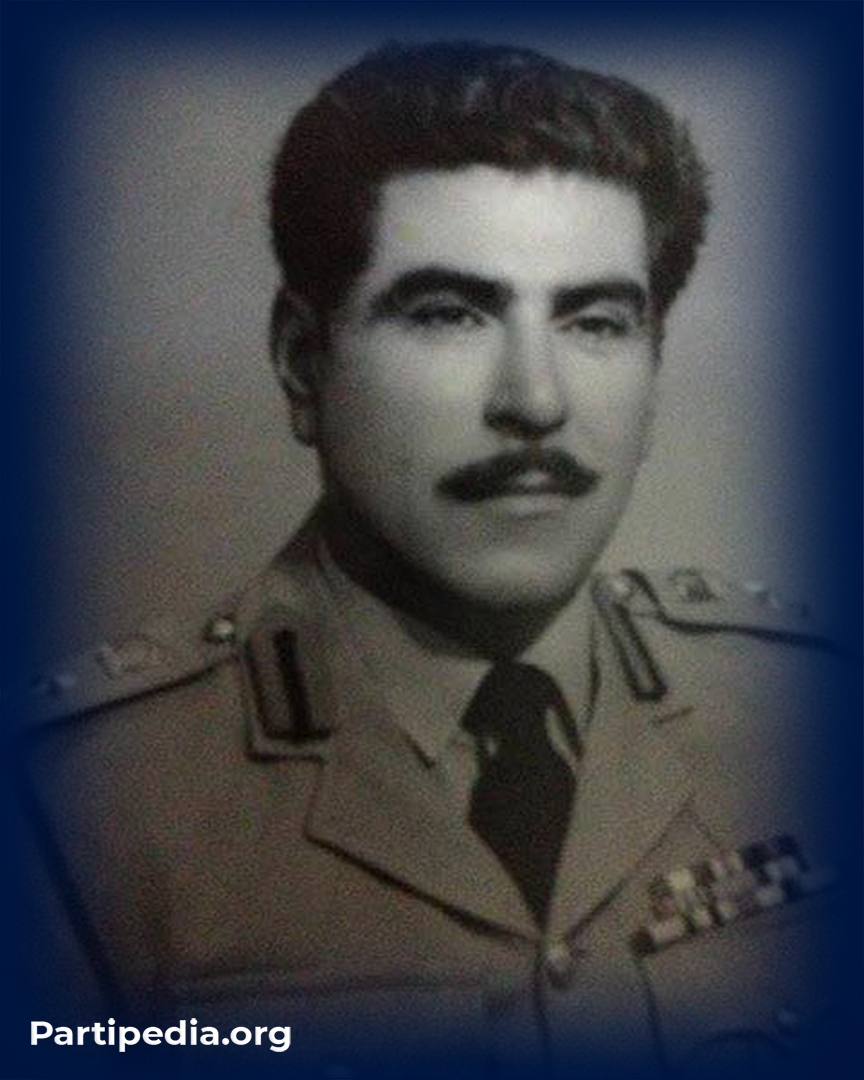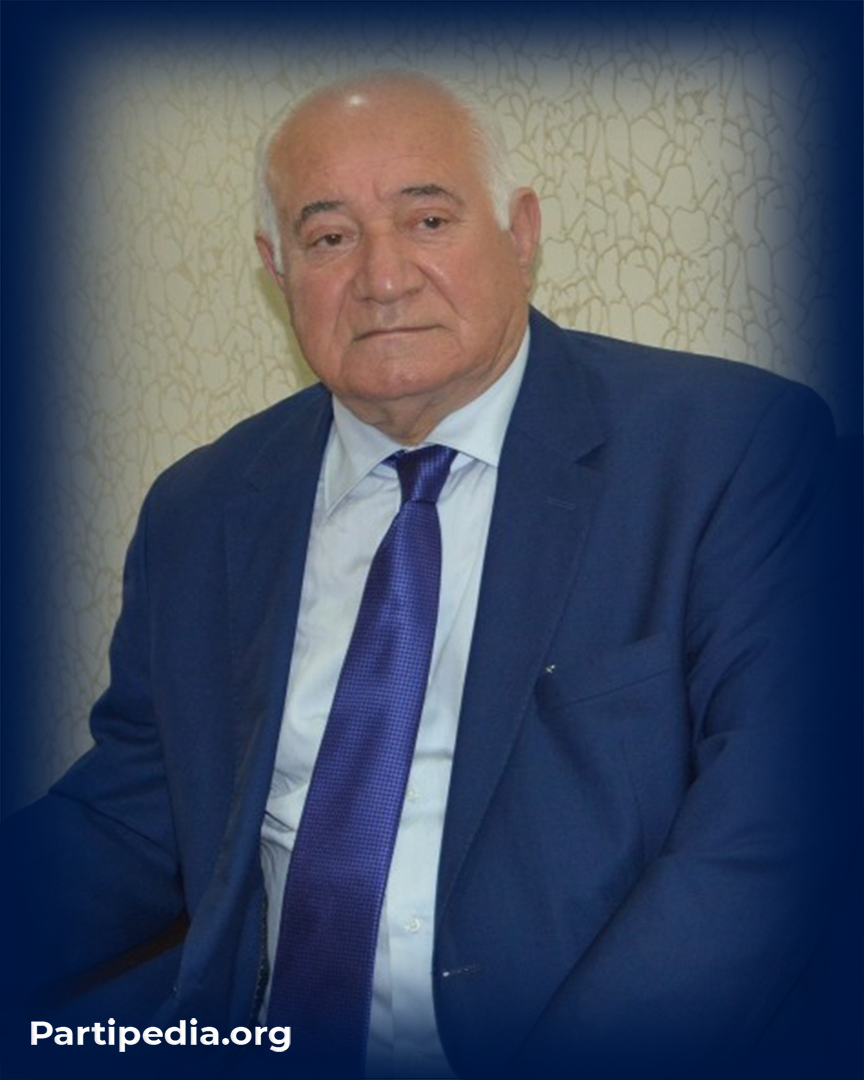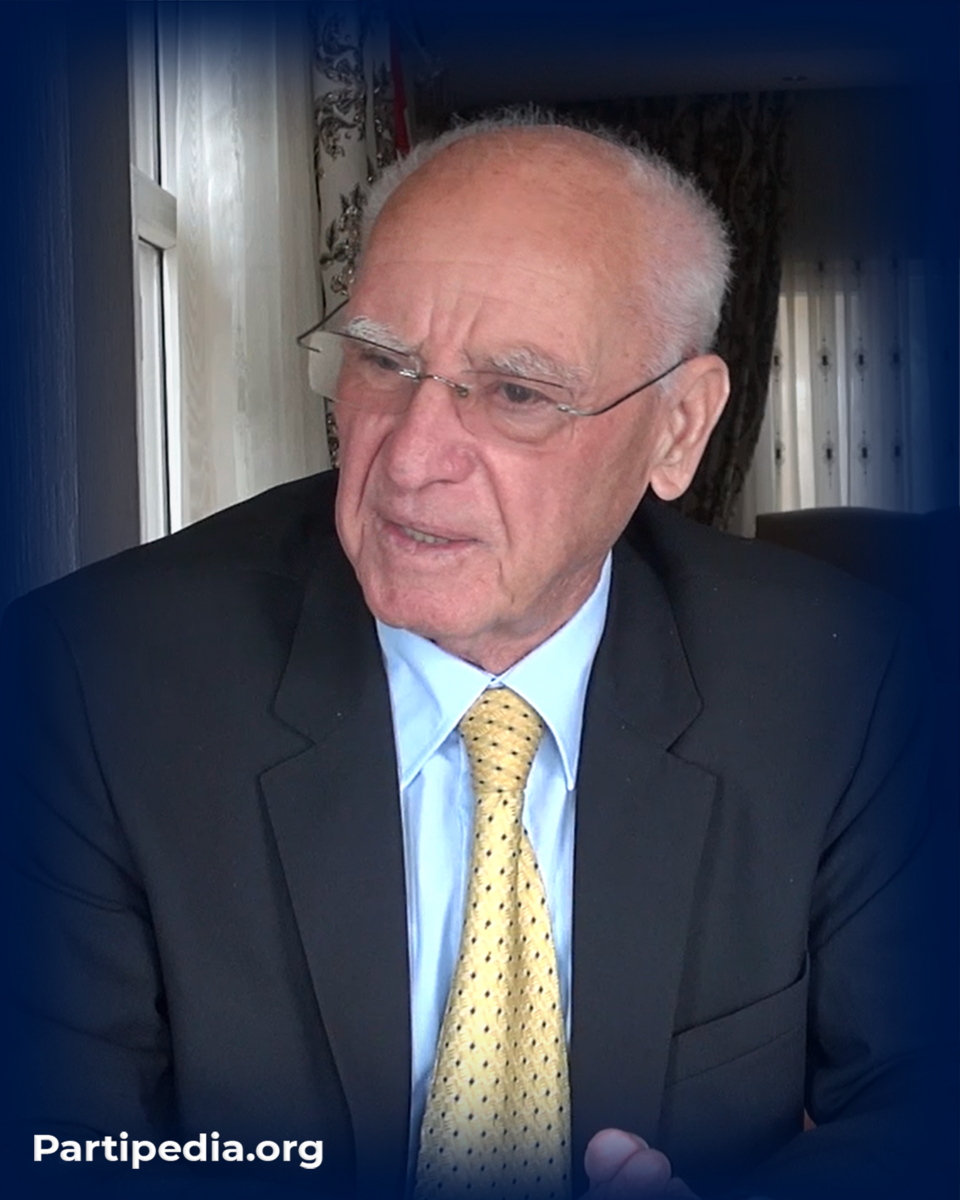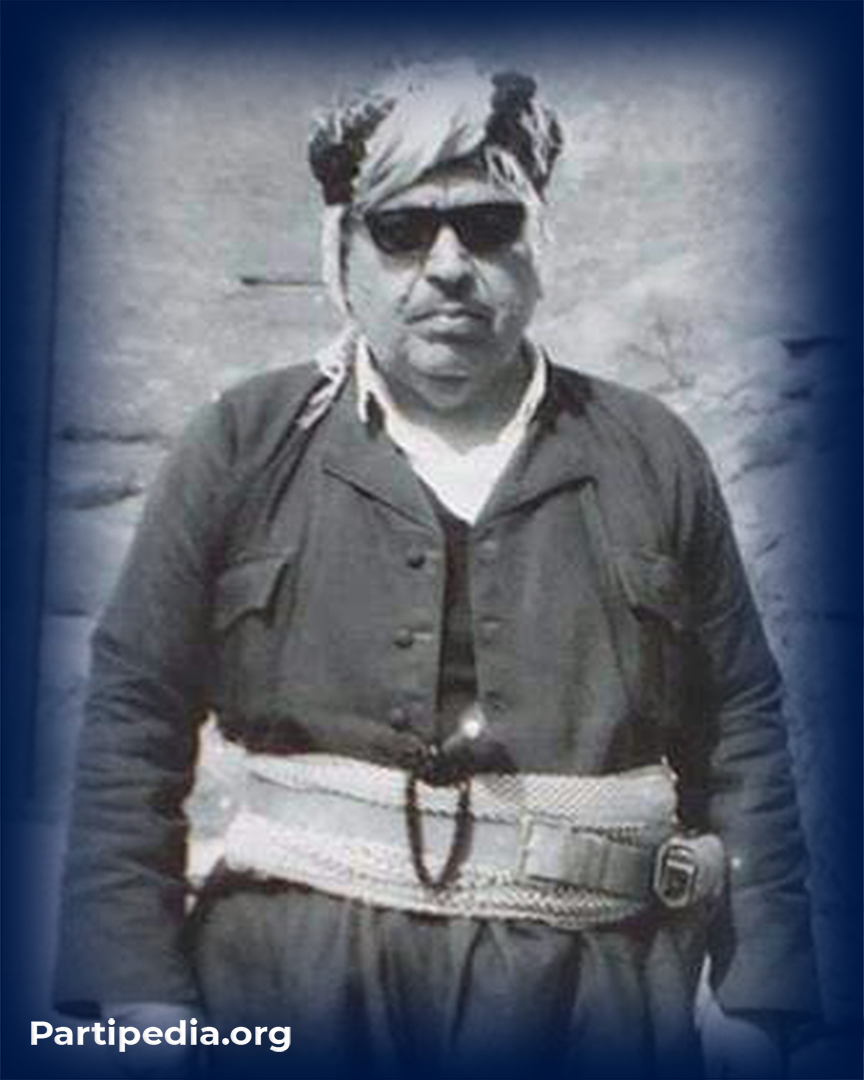


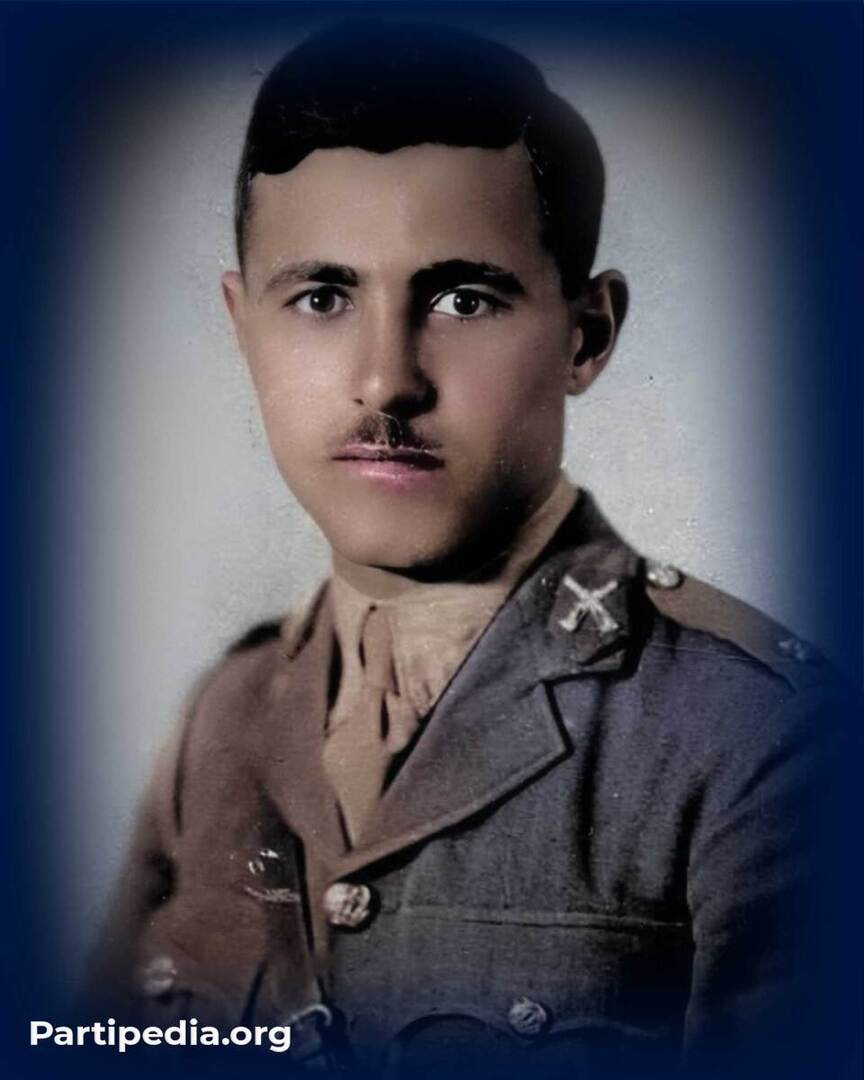
Officer and politician Mustafa Mustafa Mustafa, known as (Mustafa Xoşnaw), was a member of the Hîwa Party, one of the Kurdish officers in the ranks of the Iraqi Army in 1936. He was a member of the Azadi Committee and a member of the Founding Committee of the Kurdish Democratic Party. He was executed in Baghdad by the Iraqi Government in 1947.
Biography
Mustafa Khosnaw was born in 1912 in the Betwat region. He completed his primary education in the city of Koy and his secondary education in the city of Erbil. In 1931, he was accepted into the Baghdad Teachers' College and after completing his studies, he became a teacher in the city of Halabja. In 1934, he joined the Baghdad Military College and graduated from the military college with the rank of second lieutenant on June 3, 1936. In 1939, he married Zakiye Faraj and they had three daughters and a son.
After the collapse of the Kurdistan Republic, he returned to Iraq in 1947 and was imprisoned in Baghdad's central prison. When his pregnant wife visited him in prison, Mustafa Khosnaw asked her to name their child Azad if it was a boy. Azad was born a month and a half after his execution, on August 2, 1947.
Worksheet
Mustafa Khosnaw was one of the Kurdish officers who, on January 25, 1944, was appointed by the Iraqi government as the liaison officer between the government and the Second Barzani Revolution (1943 - 1945). At the same time, he was secretly entrusted by the Hiwa Party with the responsibility of liaison and coordination between the party and the revolution. He later joined the ranks of the revolution. After the failure of the negotiations and the change in the Nuri Said cabinet and the appointment of Hamdi Pachechi in his place, the government decided to return the officers to the army ranks. In this context, with the consent of the leadership of the revolution, he returned to the Iraqi army from Barzani. After two months, he received permission and returned to Kurdistan. The government suspected that he might go to the Democratic Republic of Kurdistan in Mahabad. The interlocutor knew that the government was watching him, so he decided to stay in Barzani.
At this time, the government, through Mirhaj Ahmed, asked Mustafa Khoshnaw to return to the army. After his return, he was dismissed from the ranks of the Iraqi army two months later and an arrest warrant was issued by the Iraqi Ministry of Defense. The Hiwa Party informed him of this order and in this way he was able to leave Baghdad and save himself, and later rejoined the ranks of the revolution in Barzan.
On January 15, 1945, the Azadi Committee was established upon the proposal of Mustafa Barzani, and Mustafa Khosnaw was one of the founding members. After the cessation of peace negotiations with the government and the possibility of enemy attacks, on February 10, 1945, at the Azadi Committee meeting and by the decision of Mustafa Barzani, the commander-in-chief of the armed forces of the revolution, he was appointed commander of the defense front of Mergesor - Rawandiz. In order to prevent military clashes and on the orders of Mustafa Barzani, on March 4, 1945, Mustafa Khosnaw wrote a warning letter to the Iraqi army chief of staff, Rafiq Arif, with the following content: "After presenting the salute, we were informed by our people that you want to attack us tomorrow, March 5, 1945, under the name of operations. We inform you! They say in advance: If anything happens in this regard, the blame is not on us and we are not guilty. Signature, Mustafa Khosnaw."
In this way, the war was prevented until June 10, 1945. By then, Wali Beg was martyred in the courtyard of the Margesor military station and the war was once again fierce. On October 11, 1945, after the end of the Second Barzani Revolution, the mediator went to the Republic of Kurdistan with Mustafa Barzani. In the Republic, Naqib Mustafa Khosnaw was appointed commander of the Second Battalion of the Barzani Force, which consisted of three battalions. Later, by presidential order, he was promoted to the rank of major.
In 1946, he participated in most of the defensive battles of the Democratic Republic of Kurdistan. After the collapse of the Republic and his return to the Iran-Iraq border on April 10, 1947, he was one of the officers who surrendered to the government. He was initially taken to Erbil and then transferred to the central prison in Baghdad and was arrested with his other comrades. It was decided not to be executed, but in a fake court, the death sentence was secretly carried out on them. Before his execution and that of his three comrades, they wrote a will to the people in which they reiterated their stance for the freedom of the country. The next day, despite the restrictions on public attendance, he was buried in the Seywan Hill Cemetery in the city of Sulaymaniyah.
Source:
1 - Archives of the Encyclopedia Committee of the Democratic Party of Kurdistan.
2 - History of the Kurdistan Democratic Party, Congress and Conference (Program and Internal Regulations), Encyclopedia Committee of the Kurdistan Democratic Party, Volume One, (Hewlêr - Roksana Press - 2021).
3 - Habib Muhammad Karim, History of the Democratic Party of Kurdistan - Iraq (in main stages) 1946 - 1993, (Duhok - Xebat Press - 1998).
4 - Masoud Barzani, Barzani and the Kurdish Liberation Movement, Volume One 1931 - 1958, (Hewlêr - 2012).
5 - Ma'ruf Qaradaxi, Barzan and its Secrets and Secrets, (Baghdad - Ma'arif Press - 1959).