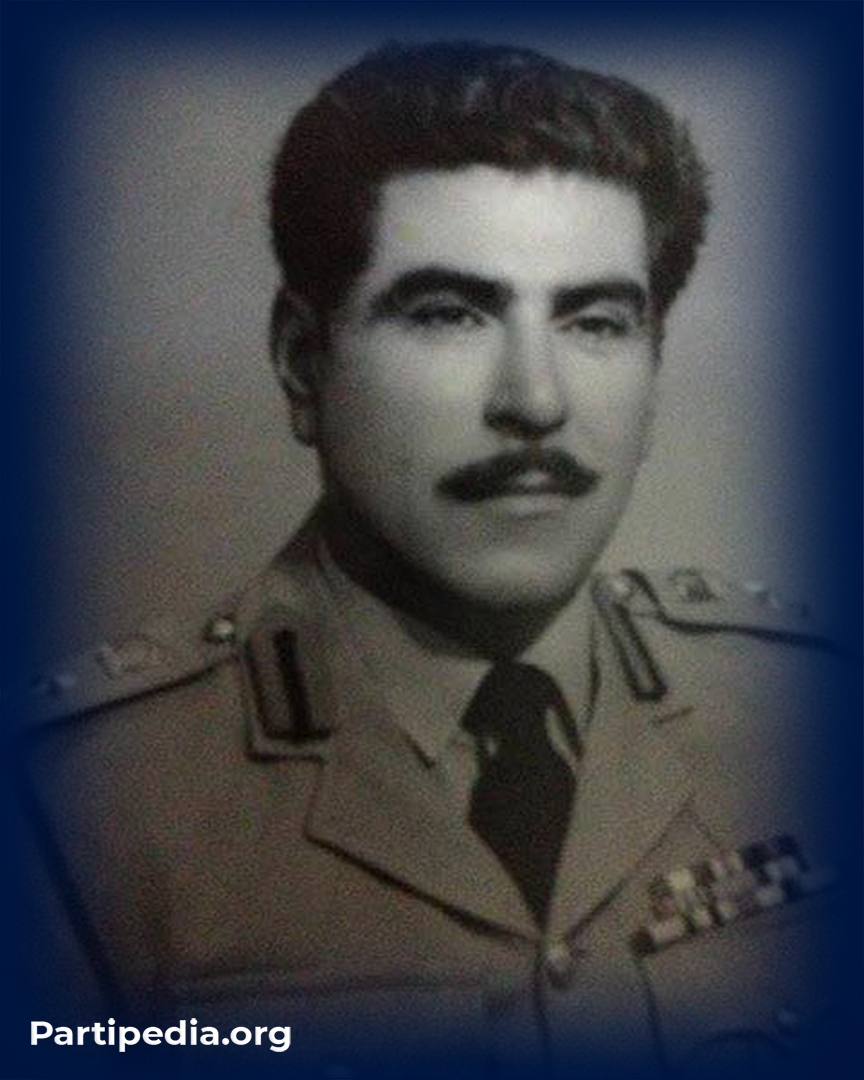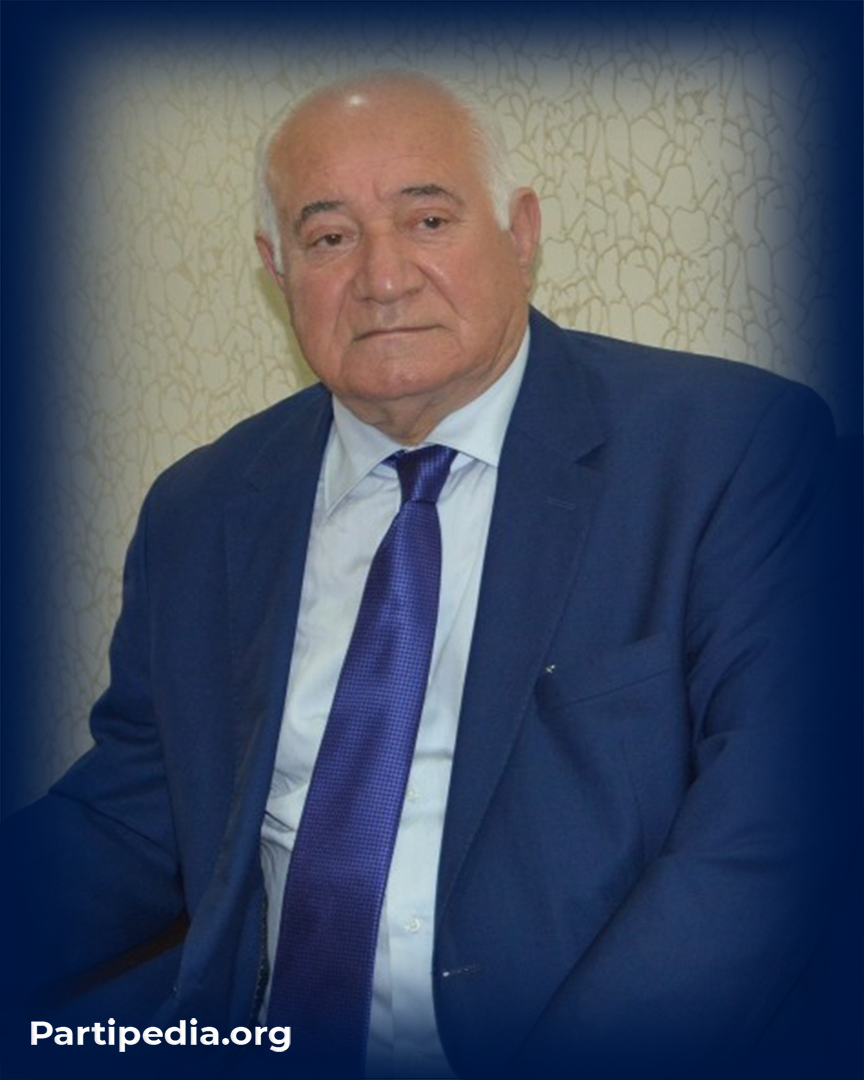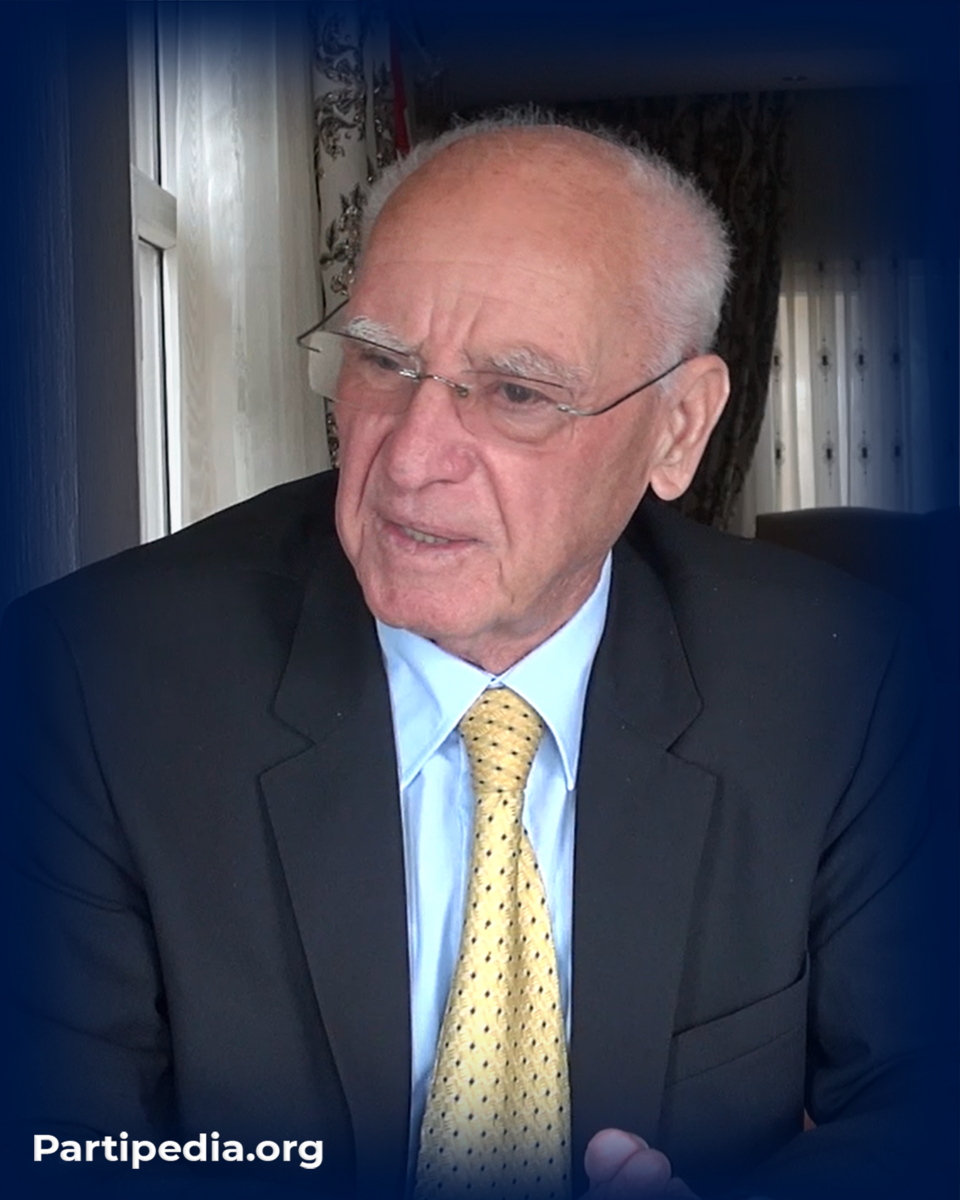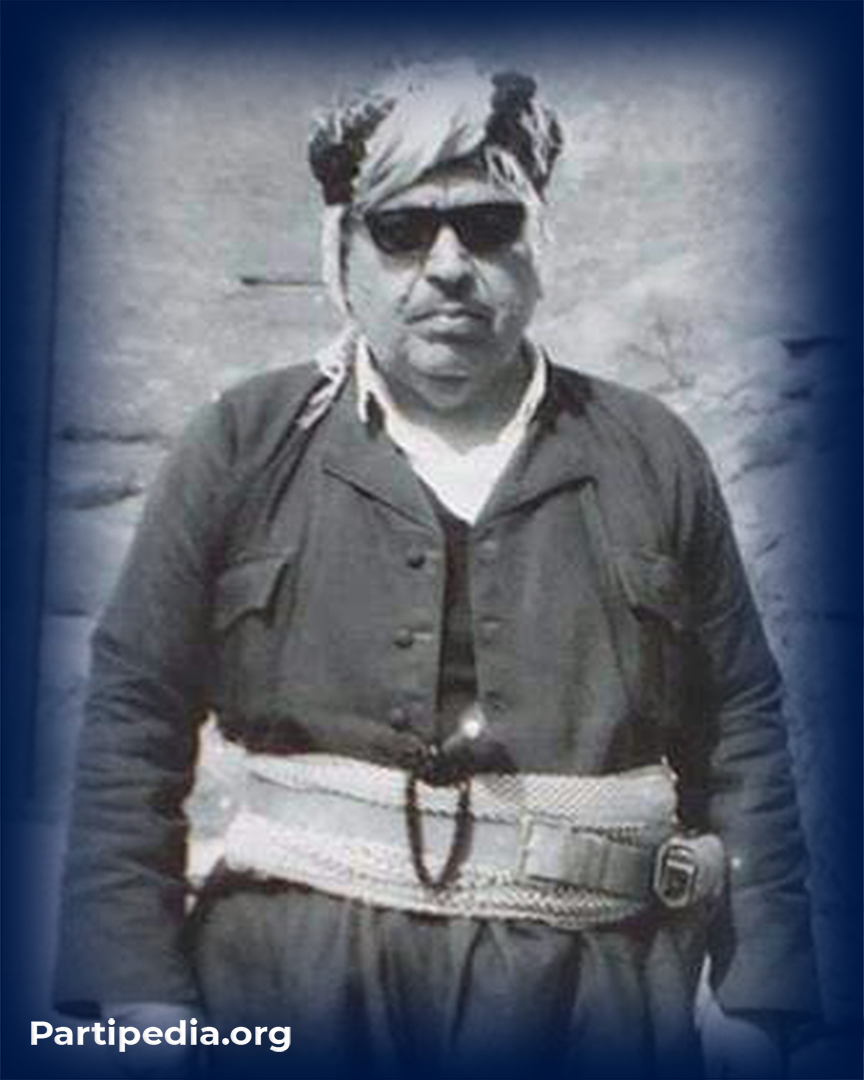


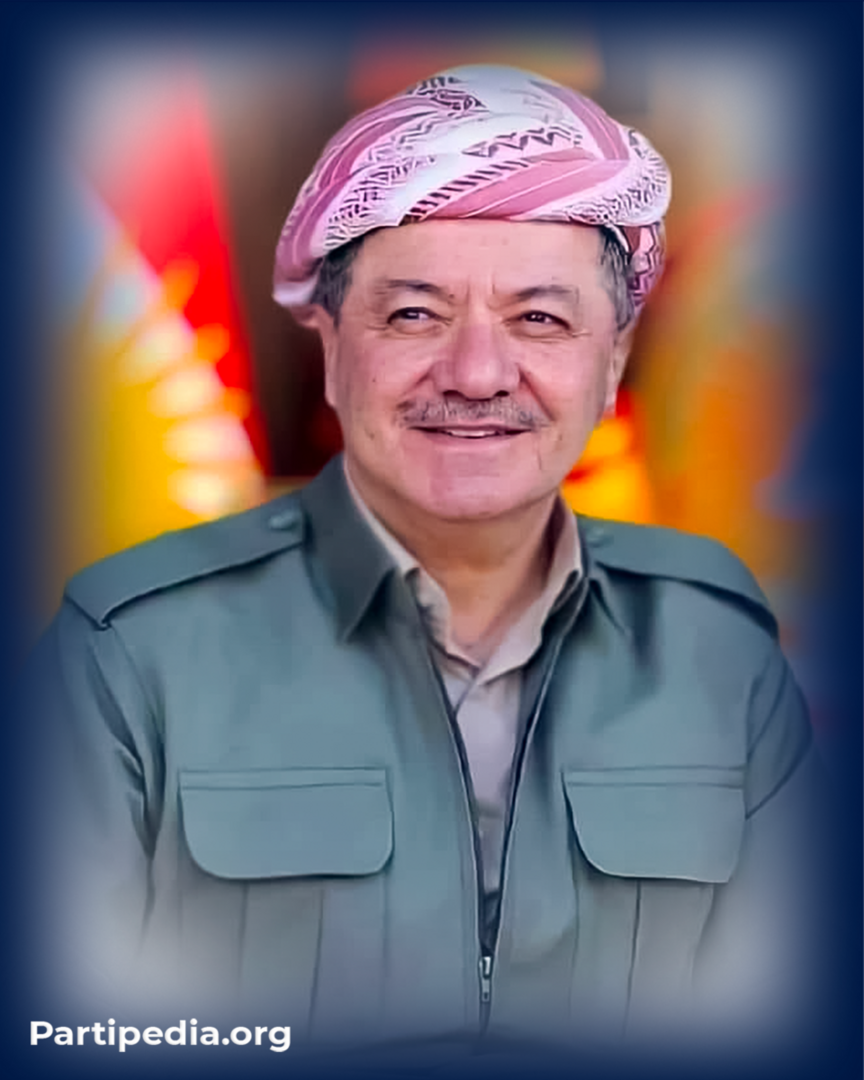
Masoud Mustafa Sheikh Muhammad Sheikh Abdulsalam Barzani, also known as President Masoud Barzani, Kak Masoud, Kake, and Masrour Barzani's father, joined the ranks of the Kurdistan Peshmerga Forces in 1962, was one of the founders of the Defense Agency in 1966 and later its chairman, was elected as a member of the Central Committee of the Kurdistan Democratic Party (KDP) at its eighth congress in 1970, was tasked by Mustafa Barzani to reorganize the KDP in 1975, was one of the founders of the Provisional Leadership and one of the initiators of the May 26, 1976 revolution of the Kurdistan Democratic Party, was elected as the party's chairman at its ninth congress in 1979, was appointed as the chairman of the Kurdistan Front in 1988, and as the chairman of the Kurdistan Front led the 1991 Spring Uprising. He was elected as the President of the Kurdistan Region in 2005. He was re-elected as the President of the Kurdistan Region by direct vote of the Kurdistan Region voters in the presidential elections of the Kurdistan Region on July 25, 2009. In 2014, he was the field commander in the defeat of the terrorist organization ISIS. In 2017, he was the decision-maker and observer of the Kurdistan Region referendum process, in which 93% of the citizens voted "yes" for the independence of Kurdistan. In order to convey the legitimate voice of the Kurdish people, he visited the palaces of Arab and international leaders and participated in international conferences. At the end of October 2017, he refused to extend his presidency and resigned, saying that he would remain a Peshmerga. He is currently the head of the Kurdistan Democratic Party (KDP) and Barzani's headquarters.
Leadership of the Kurdistan Democratic Party
Masoud Mustafa Barzani was elected as a member of the Central Committee of the Kurdistan Democratic Party (KDP) by the representatives of the Eighth Congress with 429 votes out of 488 members in 1970. In 1979, he was appointed as the interim chairman of the Kurdistan Democratic Party (KDP) at the expanded meeting in Shawane, Eastern Kurdistan. He was elected as the chairman of the Kurdistan Democratic Party (KDP) at the ninth congress in 1979, the tenth congress in 1989, the eleventh congress in 1993, the twelfth congress in 1999, the thirteenth congress in 2010, and the fourteenth congress in 2022.
Duties and responsibilities
On May 20, 1962, Masoud Mustafa Barzani joined the ranks of the Kurdistan Peshmerga Forces to achieve the national rights of the Kurdish people and continues his struggle as a defense Peshmerga in Kurdistan. On April 15, 1975, he took on the task of reorganizing the KDP organizations after the failure of the September Revolution, which was known as the provisional leadership of the KDP. On May 26, 1976, he led the Progressive May Revolution and continued his armed and political struggle. He directly and indirectly commanded and participated in most of the wars and defense epics, and with his hard work and abilities, he has overcome many victories and defeats in life and struggle.
On July 13, 2003, he was appointed as a member of the Presidency of the Iraqi Interim Government Council (Transitional Administration Council) and became its chairman in April 2004.
On June 12, 2005, he was elected as the first president of the Kurdistan Region by the decision of the Kurdistan National Council, and on June 14, 2005, he took the legal oath as the first president of the Kurdistan Region in the Kurdistan Parliament.
Life and stages of study
Massoud Mustafa Barzani was born on August 16, 1946, in the city of Mahabad in Eastern Kurdistan during the time of the Democratic Republic of Kurdistan. He is from the family of Sheikh Takya Barzan, a follower of Maulana Khalid Naqshbandi (1779-1827) and the son of General Mustafa Barzani. As a result of the collapse of the Democratic Republic of Kurdistan in Mahabad and his father Barzani's exile in the Soviet Union, he was separated from his father for 12 years. In 1953, he went to primary school in the village of Napax. In 1958, he successfully completed his primary education and continued his education at the Rojava High School in Baghdad. In 1958, he met his father, President Mustafa Barzani, for the first time at the Musana Airport in Baghdad. In April 1959, he attended the ceremony for the return of Barzani's friends from the Soviet Union in the Baghdad public hall with Iraqi Prime Minister Ze'im Rukin Abdulkarim Qasim and President Mustafa Barzani. was.
He left school on May 20 and joined the ranks of the Kurdistan Peshmerga Forces. He speaks Kurdish, Arabic, Persian, and English.
September Revolution
Massoud Barzani has been involved in armed and political struggle for his people since his youth, and his family's liberationist ideology has influenced the shaping of his worldview.
In 1962, at the beginning of his youth, he joined the ranks of the Kurdistan Peshmerga Forces and a year later participated in the great meeting of Koy, in 1964 and 1966 he attended the 6th and 7th congresses of the Kurdistan Democratic Party (KDP) as a guest, in 1966 he became the assistant in charge of Barzani's headquarters and in the same year he became a member of the Foreign Relations Committee of the Executive Committee of the Kurdistan Revolutionary Leadership Council and in the same year he became the chairman of the Intelligence and Security Affairs Committee of the Executive Committee of the September Revolution Leadership Council, in 1967 he established the Revolutionary Security and Intelligence Agency, known as the Defense Agency, and in 1969 he was also in charge of the September Revolution Defense Agency.
On September 29, 1971, he participated in the response to the terrorist attack by the Iraqi General Security Service and a delegation of Iraqi Arab clerics on the meeting place of President Mustafa Barzani. On July 15, 1972, he played a role in thwarting an attempt to assassinate President Barzani that was organized by the Iraqi Minister of Interior and the General Director of Iraqi Security. On December 4, 1975, he became a member of the Military Planning Committee of the September Revolution.
May Revolution
Massoud Barzani emigrated to Iran on March 26, 1975, after the defeat of the September Revolution. On April 15, 1975, he established the Provisional Leadership of the Kurdistan Democratic Party (KDP) at a meeting outside the city of Nakhda in Eastern Kurdistan and reorganized the Peshmerga forces of Kurdistan. In 1988, he became the leader of the Xwakurk District in Erbil province.
The Kurdistan Uprising
Masoud Mustafa Barzani led the Kurdistan Uprising in 1991 as the head of the Kurdistan Front and, in a speech to the people of the Kurdistan uprising in Koy, was the first Kurdish leader to talk about elections and an institutional state, and later in 1992 the Kurdistan National Council and the Kurdistan Regional Government were established. He played a high-level role in the Korr Affair and the blocking of the Iraqi army's advance in April 1991. He became the Chairman of the Kurdistan Presidency Council on December 22, 2007. On August 20, 2009, he was elected President of the Kurdistan Region for the second time in direct elections.
peaceful efforts and activities
On December 12, 1970, near the town of Rwandiz in Erbil province, Massoud Mustafa Barzani welcomed Saddam Hussein, the Vice President of Iraq, who had come to discuss autonomy for Southern Kurdistan. On March 11, 1970, he was a member of the Kurdistan Democratic Party (KDP) delegation to sign and announce the March 11 Agreement for the right to autonomy for Kurdistan. On June 2, 1970, he visited the city of Kirkuk and declared that Kirkuk was a Kurdish city, which worried the Iraqi government at the time.
On October 15, 1970, he welcomed the leaders of the Ibrahim Ahmed-Jalal Talabani group in the village of Dilman. On October 16, 1976, he signed an agreement with Jalal Talabani (1933-2017) in London with the aim of harmonizing and cooperating between the interim leadership of the Kurdistan Democratic Party (KDP) and the Patriotic Union of Kurdistan (PUK). On December 19, 1976, he visited Damascus to protect the high interests and unity of the Kurdish people and met with Syrian authorities and then Jalal Talabani. On May 1, 1977, he met with Talabani in Damascus and signed an agreement on field cooperation in various fields and ending the conflicts between the PUK and the KDP.
On November 28, 1980, the Kurdistan Democratic Party (KDP) signed an agreement with the Iraqi National Democratic Front (CUD), known as the Communist Party of Iraq and the United Socialist Party of Kurdistan, for the purpose of cooperation and joint activities.
In mid-August 1986, he met with the head of the Supreme Council of the Islamic Revolution in Iraq, Muhammad Baqir Hakim, in Tehran and discussed the establishment of the Iraqi Front. On March 7, 1990, he headed a delegation of the leadership of the Kurdistan Democratic Party (KDP) and visited the headquarters of the leadership of the Patriotic Union of Kurdistan (PUK) and was received by the member of the PUK Leadership, Nawshirwan Mustafa Amini. From March 8 to 10, 1990, he chaired a broad meeting of the Kurdistan Front.
On April 20, 1991, he was the head of the Kurdistan Front delegation for the second round of negotiations with the Iraqi government. On April 7, 1992, he chaired a large meeting of the Kurdistan Front in Pirmam in preparation for the Kurdistan National Assembly elections. On May 19, 1992, in the election of the leader of the Kurdish liberation movement, he won first place with 446,819 votes, or 47.51% of the votes. However, due to post-election problems, this position was not filled. He hosted the Iraqi Opposition Congress in Pirmam from October 27 to 31, 1992.
On November 9, 1994, he attended a joint meeting of the Political School of the Kurdistan Democratic Party - United and the Patriotic Union of Kurdistan at the headquarters of Jalal Talabani's secretariat in Erbil to end the tensions between them. On February 17, 1994, he supervised the signing of the peace agreement between the Patriotic Union of Kurdistan and the Islamic Movement in Iraqi Kurdistan. On May 4, 1994, he signed a ceasefire and normalization of the situation in Southern Kurdistan at a joint meeting of the Kurdistan Democratic Party (KDP) and the Patriotic Union of Kurdistan (PUK). In 1996, he met with Abdullah Öcalan in Damascus. On September 17, 1998, in the presence of US Secretary of State Madeleine Albright, he signed the Washington Peace Agreement with the Secretary General of the Patriotic Union of Kurdistan (PUK), Jalal Talabani (1933-2017).
From 14 to 16 December 2002, he was elected as a member of the Monitoring and Coordination Committee by the representatives of the Iraqi Opposition Congress at the London Congress. In 2003, he led the Salaheddin Congress of the Iraqi opposition to overthrow the Saddam Hussein regime. On 28 April 2003, he headed a delegation to the Baghdad Congress to follow up on the decisions of the London Congress and recognize the rights of the Kurds and form a government.
On November 18, 2004, he participated in the Dukan Congress of the Iraqi Opposition, to discuss the electoral process, security enforcement, and the trial of Saddam Hussein. On December 1, 2004, in Pirmam, Erbil province, he signed a strategic agreement with Jalal Talabani on national issues between the Kurdistan Democratic Party (KDP) and the Patriotic Union of Kurdistan (PUK).
On December 21, 2006, at the Kurdistan National Council, with the aim of establishing a unified Kurdistan Regional Government, the two administrations of Erbil and Sulaymaniyah signed a joint declaration with Jalal Talabani. On July 27, 2007, he signed a strategic agreement with Jalal Talabani, the Secretary General of the Patriotic Union of Kurdistan (PUK).
On December 10, 2019, he received a delegation from the leadership of the Kurdish National Council in Syria (ENKS) and chaired two meetings in Erbil and Duhok between (ENKS) and (TEVDEM).
Discussions on writing a permanent Iraqi constitution
On September 11, 2003, Masoud Mustafa Barzani received the US Civilian Administrator in Iraq, Paul Bremer, and his accompanying delegation in the town of Pirmam, and discussed rewriting the constitution and ensuring Kurdish national rights in this constitution.
On May 14, 2005, he received Dr. Adil Abdul-Mahdi, the Iraqi Vice President, and the issue of the constitution was the subject of the meeting. On May 24, 2005, he received Sadoun Dulaimi, the Iraqi Minister of Defense, and discussed the restructuring of the Iraqi army for all communities. On Friday, June 3, 2005, he received Dr. Hajim Al-Hasani, the Speaker of the Iraqi Federal Parliament. On June 17, 2005, he was received in Baghdad by Jalal Talabani, the President of the Federal Republic of Iraq, and Dr. Ibrahim Al-Jaafari, the Prime Minister of Iraq, and discussed the rewriting of the Federal Iraqi Constitution and respect for the rights of all communities.
Field leadership against the terrorist organization ISIS
Massoud Mustafa Barzani, who was in charge of the war fronts as the commander-in-chief of the Kurdistan Armed Forces after the attacks by the ISIS terrorist organization on the Kurdistan Region in August 2014, oversaw the liberation of the Rabia plain and Mount Sinjar from ISIS gangs on December 20, 2014.
On May 2, 2015, he received Canadian Prime Minister Stephen Harper. On Monday, August 24, 2015, he received Norwegian Foreign Minister Borg Brende and Norwegian Defense Minister Ina Eriksen Surid. During the meeting, they discussed the fight against ISIS and the training of the Peshmerga. On November 13, 2015, he led the Peshmerga Forces in the operation to liberate the city of Shingal from ISIS. On October 27, 2015, he received Ms. Orsola Vonderline, Defense Minister of the Federal Republic of Germany.
Assassination attempts
On December 8, 1979, Massoud Barzani survived an unsuccessful assassination attempt by the Ba'th regime's intelligence agency in Vienna, the capital of Austria, and was later able to return to Eastern Kurdistan with the help of the Austrian government and the leader of the Palestine Liberation Movement, Yasser Arafat.
Opposing attitudes and measures
In 2003, Massoud Mustafa Barzani opposed the Turkish army's intervention in the territory of Southern Kurdistan on the pretext of overthrowing the Saddam Hussein regime. After Prime Minister Nouri al-Maliki's military operation to invade Kurdistan, he ordered a defensive operation as commander of the Kurdistan Armed Forces and deployed his forces in Kirkuk. In 2014, after Baghdad cut the Kurdistan Region's budget, he decided to export crude oil to Kurdistan to pay the salaries of the Peshmerga forces and Kurdistan workers.
In 2014, he presented the Kurdistan Independence Project to the Kurdistan Parliament, and on June 7, 2017, he met with all the Kurdish parties in the Kurdistan Region to prepare for the referendum on the independence of Southern Kurdistan. On September 25, 2017, 93% of the citizens of Kurdistan voted in favor of the independence of Kurdistan. However, on October 16, 2017, the leadership of the Patriotic Union of Kurdistan (PUK) was blocked by a faction and part of Kurdistan was sold. On October 20, 2017, he stood as the Commander-in-Chief of the Kurdistan Armed Forces on the fronts of Pirdê, Telsqof, Mahmudiyê, and Sahela against the Hashd al-Shaabi militias, the Lebanese Hezbollah, the Iraqi army, and the Iraqi federal police, who were commanded by Iranian advisors and armed with heavy American weapons previously provided to the Iraqi army. to fight ISIS, and with the aim of capturing the capital of the Kurdistan Region and ending the existence of Kurdistan.
Due to the state of emergency in the Kurdistan Region and the expiration of the legal term of the Kurdistan Region presidency on October 29, 2017, the Kurdistan Parliament voted by a majority vote to extend his term as president of the Kurdistan Region, but he refused and submitted his powers to the council to be legally transferred to the Kurdistan Council of Ministers, and publicly declared that they consider themselves Peshmerga and showed their readiness to be on the front lines of any attack.
Diplomatic relations
At the beginning of his participation in the ranks of the Kurdistan revolution, Masoud Mustafa Barzani quickly proved his ability and loyalty to everyone and with every task assigned to him, he proved his trust in his surroundings more than ever, and this led to greater responsibility being placed on his shoulders, regardless of his age. One of the main duties he took on at a young age was conducting diplomatic relations. Working on relations has been a large part of his life and struggle. Relations are very important on the agenda of any political party, and in addition to working as a peshmerga, he has taken this criterion into account. For this reason, and to convey the legitimate voice of the Kurdish people, he has visited several Arab and international leaders, conferences and world parliaments and has also welcomed them at his headquarters.
in his works:
-
Barzani and the Kurdish Liberation Movement has been translated into six volumes and many languages around the world.
-
Massoud Barzani.. Peshmerga in the post of President of the Kurdistan Region, speeches, interviews and a press conference, prepared by the Presidency of the Kurdistan Region - 2014 in six volumes.
-
For History This work has been translated into many languages and published three times in the same year.
-
Barzani and the Kurdish Liberation Movement May Revolution
-
Barzani and the Kurdish Liberation Movement: Uprising, Opportunities and Challenges.
Source:
1. Archives of the Encyclopedia Committee of the Kurdistan Democratic Party.