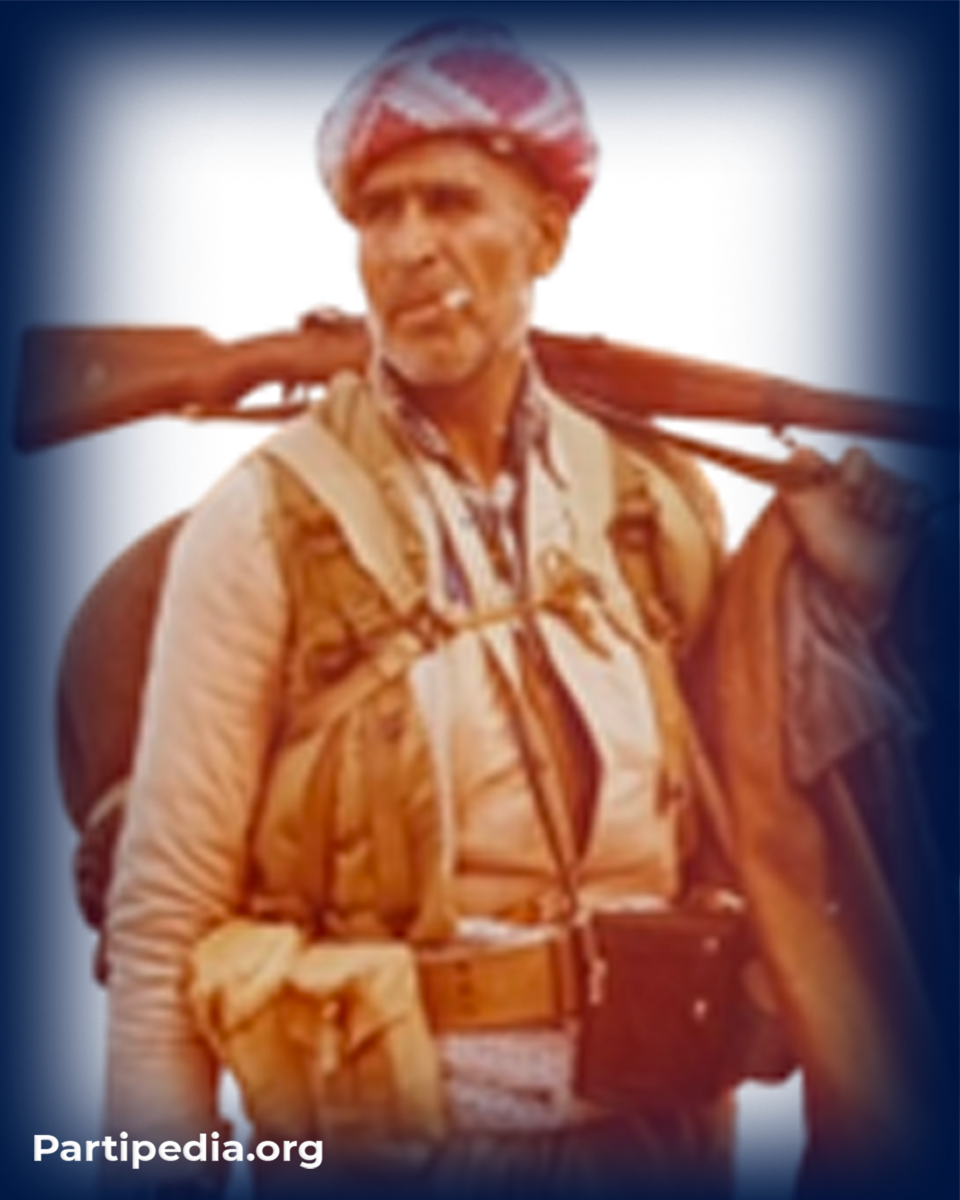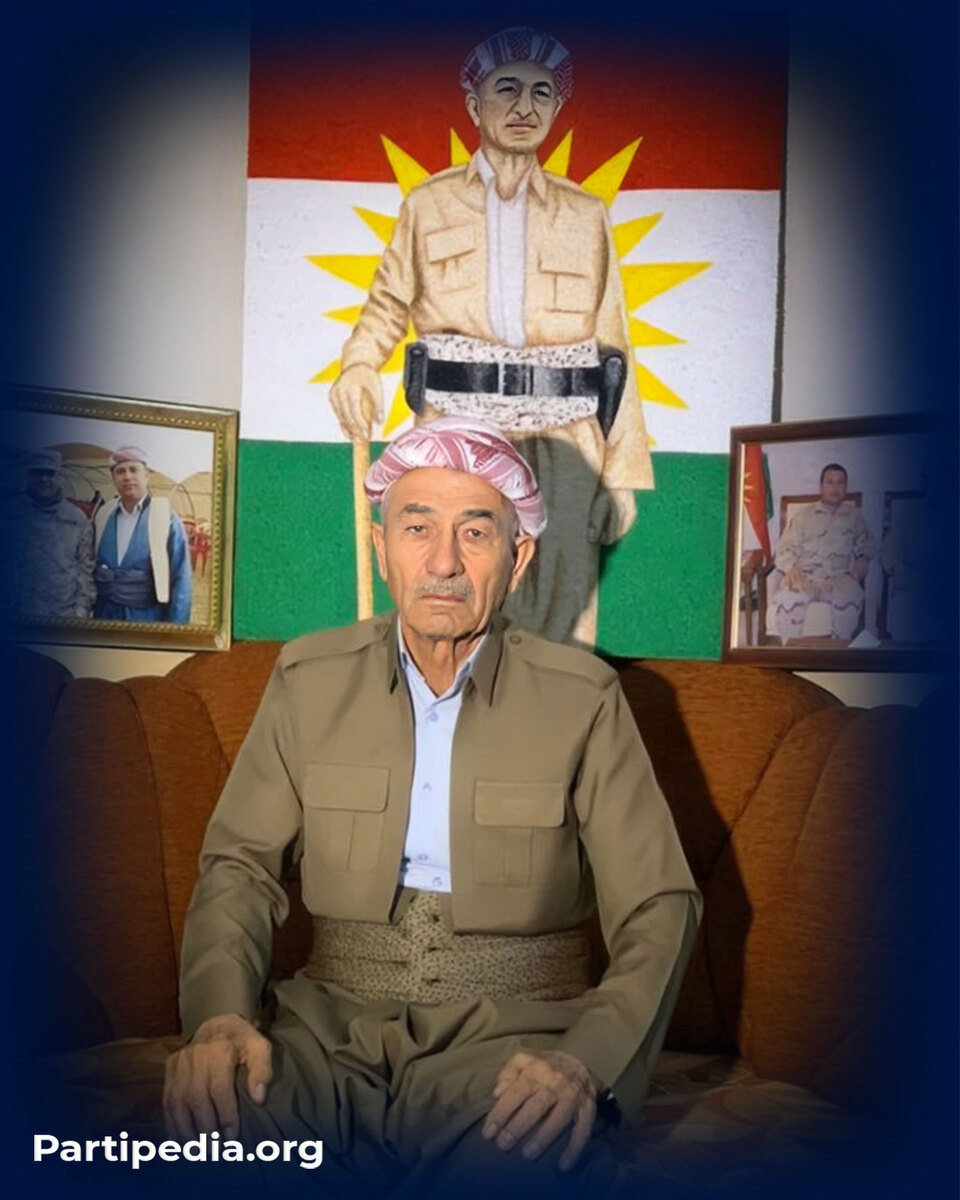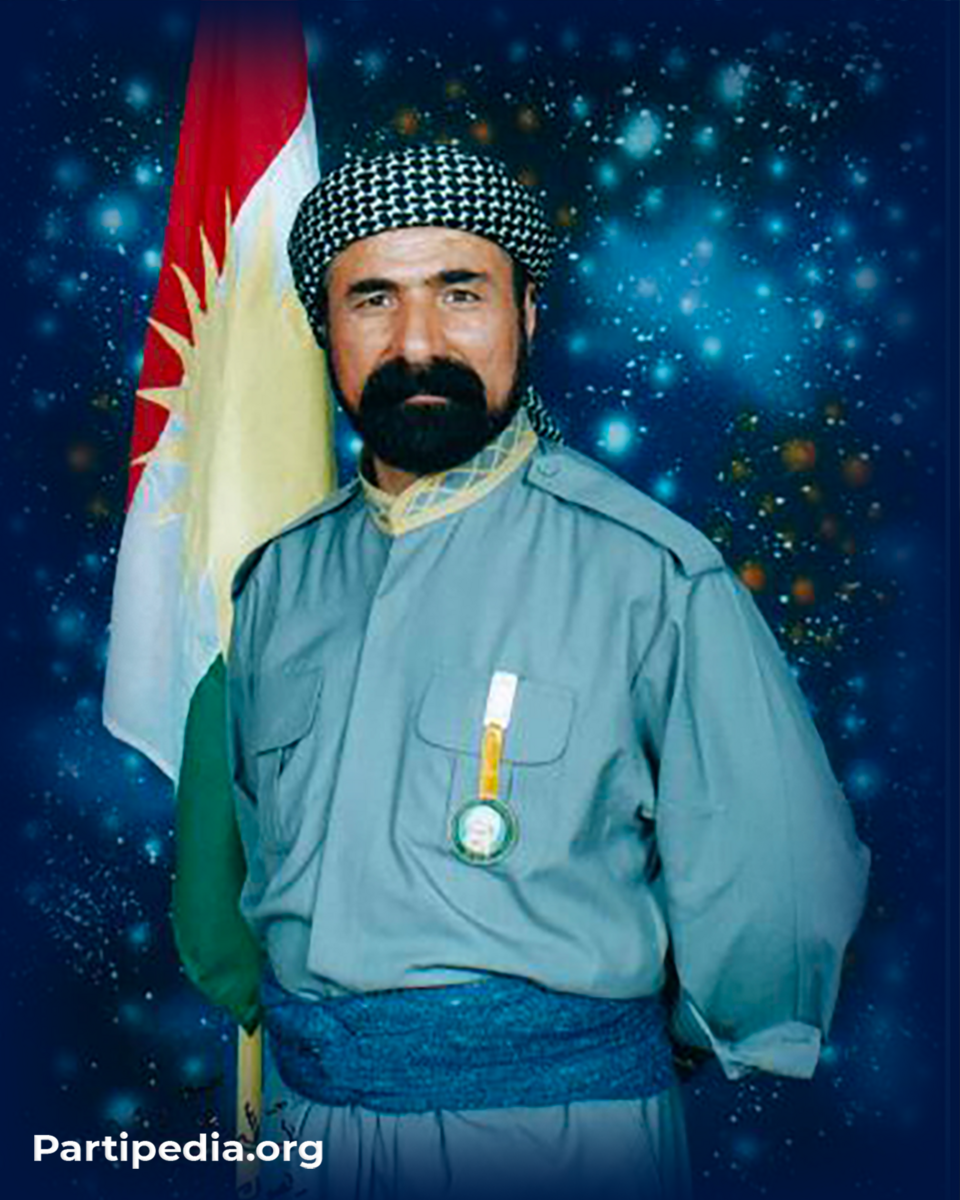


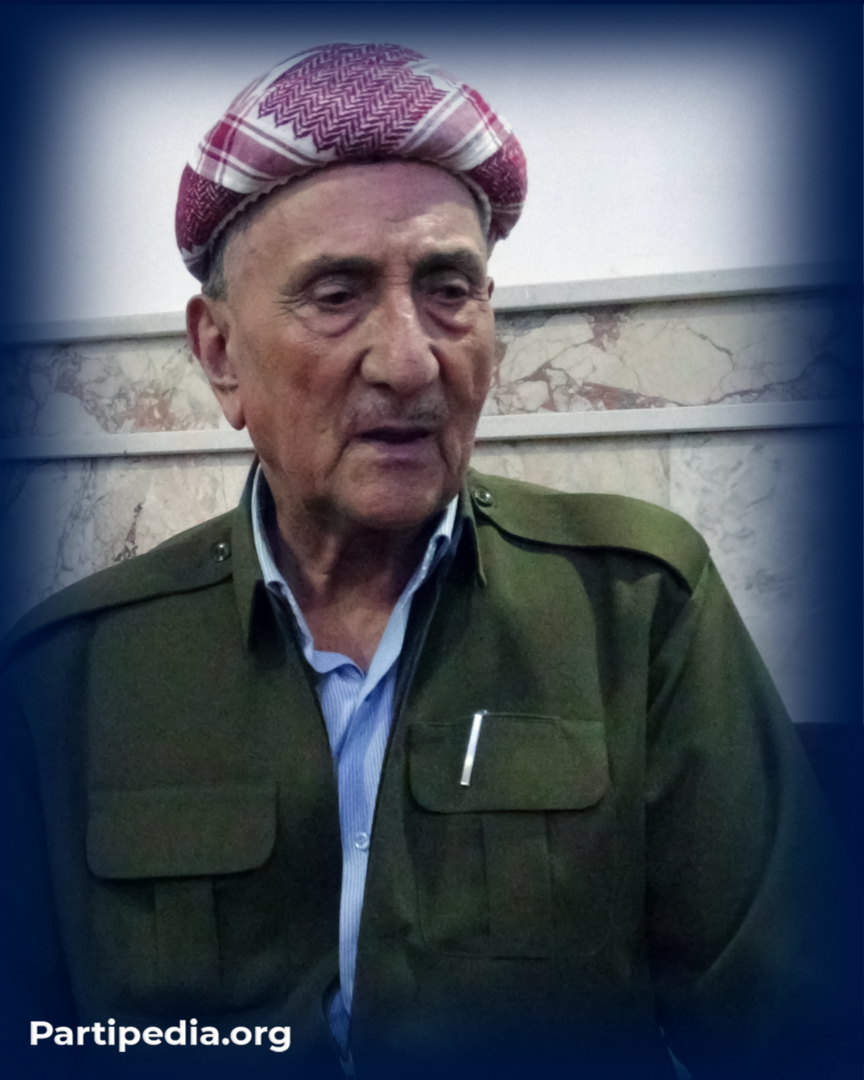
Hamid Khovasti Ismail was born in 1939 in the village of Bazingir in the Sindian area of Zakho district of Dohuk province. He was a farmer and in 1975, after the defeat of the September Revolution, he emigrated to Iran and settled in the city of Shino in Eastern Kurdistan. From there, he was transferred to the Saraw and Nilufar communities in Kermanshah. He then returned to the town of Nakheda. Then his family went to the Zewa camp, from Zewa to the Rabat community, and from there to the Jahromi camp in the Farsi (Shiraz) province of southern Iran, from where they moved to the Yazd province in Iran.
In 1961, he joined the Peshmerga Forces of the September Revolution and became a Peshmerga under his cousin Salman Sindi. He remained in that force until 1965. After the formation of the Ali Halo Battalion, he became a Sergeant. In 1967, he went to the Berwari Bala area and became the Deputy of Hamid Hafzula Omar, who was the Commander of the Emergency Forces in the Dohuk, Sheikhan and Acre areas, in the Asad Khoshvi Force.
After the March 11, 1970 agreement, he served for four years in the Third Battalion of the Bamarn Airport Guard. In 1974, he became Deputy Commander of the Defense Force and participated in the battles of Balek, Gorez and Hawdian. In 1976, he became involved with the Peshmerga Forces. May Revolution They went to the village of Hadîş in the Uludere district, on the border of Northern Kurdistan. There, together with their relatives, who numbered about 25 people, they formed the Gerok detachment and began working, staying in the village of Komate, which became the headquarters of the Provisional Leadership of the Kurdistan Democratic Party.
In 1979, he participated in the ninth congress of the Kurdistan Democratic Party. After the congress, he returned to his place and received the rank of Military Officer of the Zakho District Committee. In 1984, he was transferred to the Amed District Committee and became a member of the District Committee and Military Officer. In 1986, he became a member of the First Division and Military Officer of the Division. In 1988, after the Anfal operation and the chemical attack on the Behdinan district, Hamid Khwasti moved to Northern Kurdistan and remained there until 1991.
After the uprising and rebellion in Southern Kurdistan in 1991, he became a member of the First Division in Duhok and at the same time became the Deputy of the Commander of the Kurdistan Army in Zawita, Babakir Xebar. In 2000, he founded the Eylul Department in Duhok with Mustafa Nêrweyî. In 2003, the Eylul Department was opened in Zakho and he was appointed as the head of the department.
Hamid Khwasti participated in dozens of battles in the September and May revolutions in the life of the Peshmerga. He participated in the 1961 capture of the Zakho Police Station, the 1972 battle of the Acre Plain and was wounded in that battle. He participated in the 1974 battle of the Duhok Valley, the 1977 battle of the Sindi Plain, the 1983 battle of the Serê Dêr Mountain, the 1985 battle of Amêdî, the 1987 capture of the Bamêr Airport Police Station on May 26, 1987, the 1987 Battle of Kani Masê and several other battles.
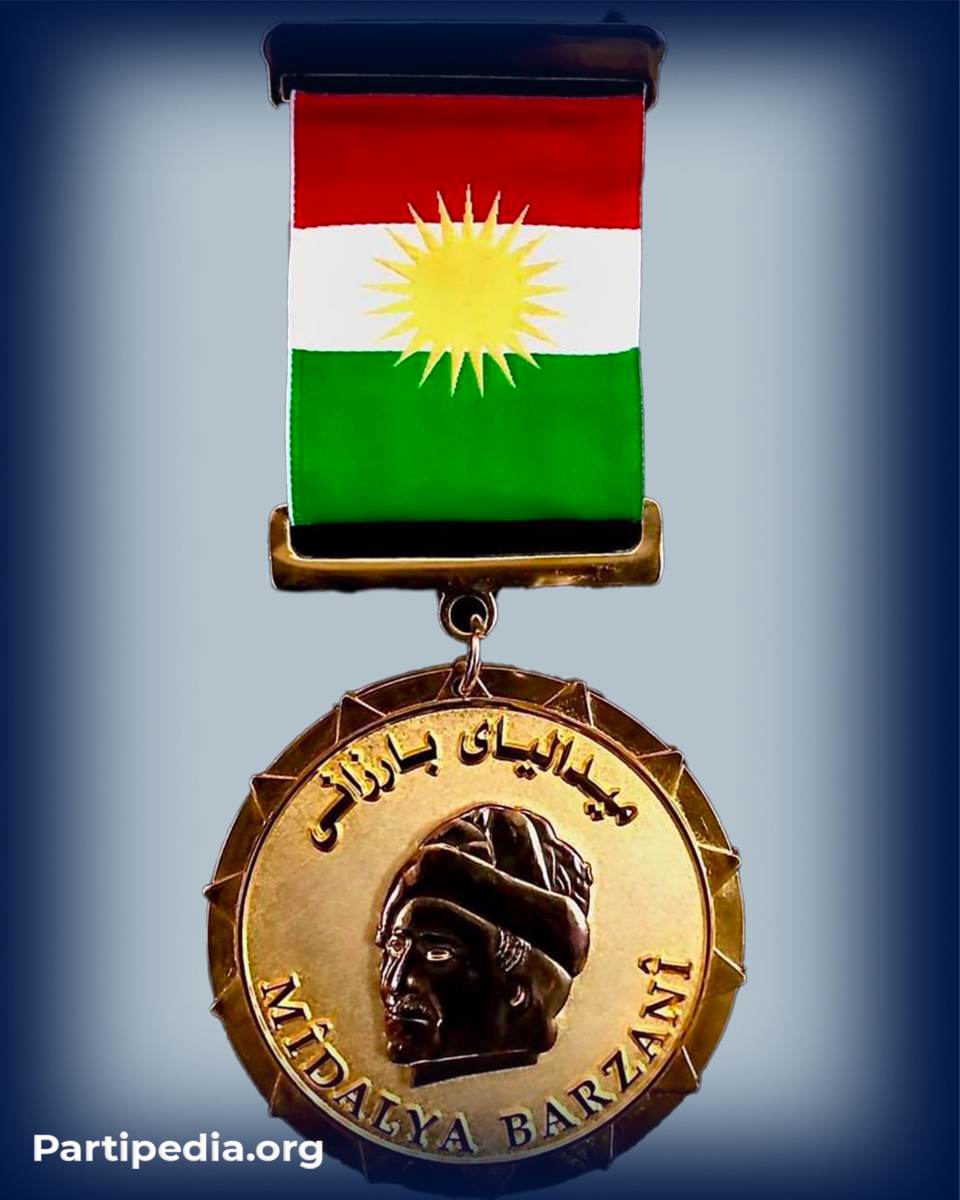
On August 16, 1996, on the 50th anniversary of the founding of the Kurdistan Democratic Party, for the services it has provided to the Kurds, Kurdistan, and the Barzani method, it was awarded by the President Masoud Barzani He was awarded the Barzani Medal in 2013. He retired with the rank of Fariq in 2013.
Source:
1. Archives of the Encyclopedia of the Democratic Party