

Biography
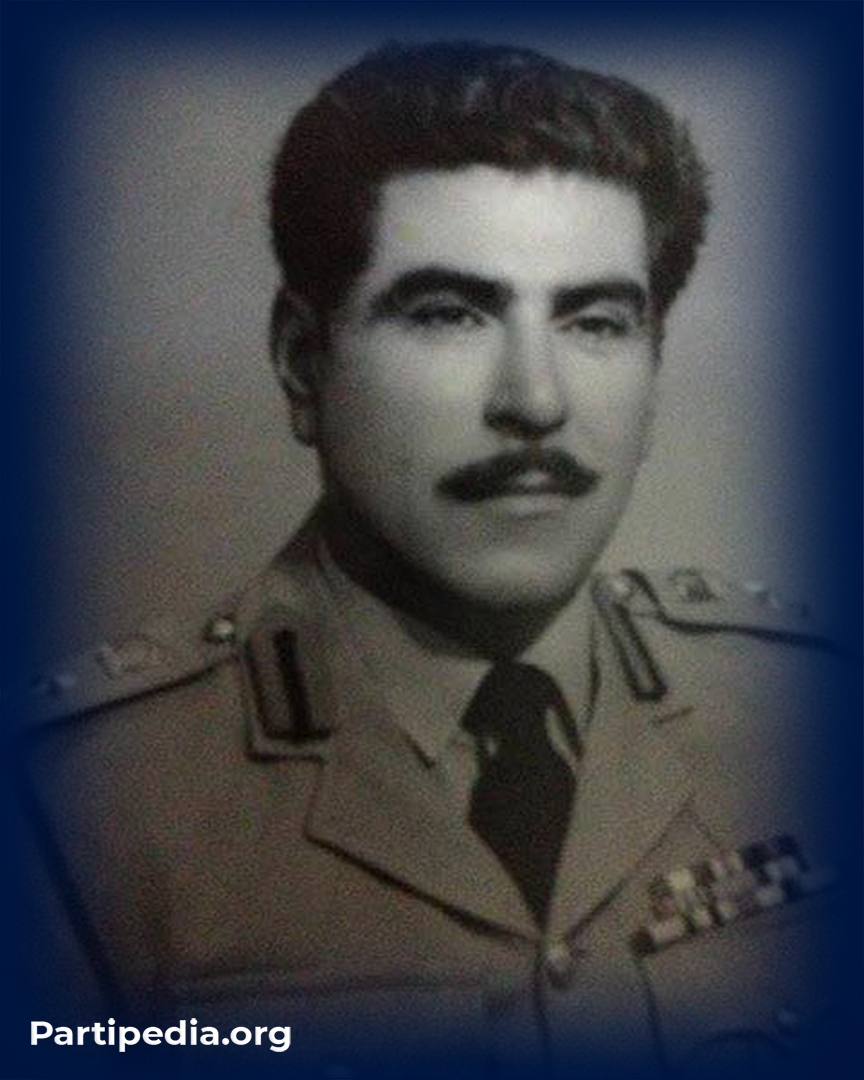
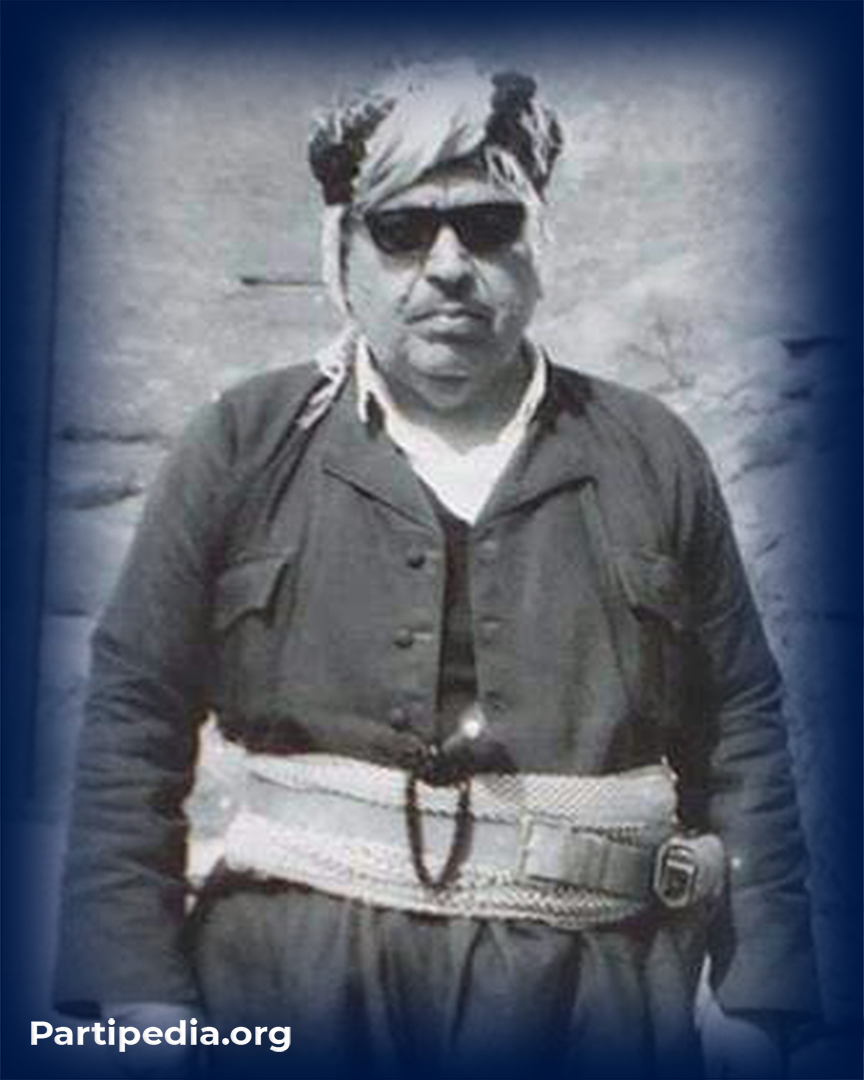
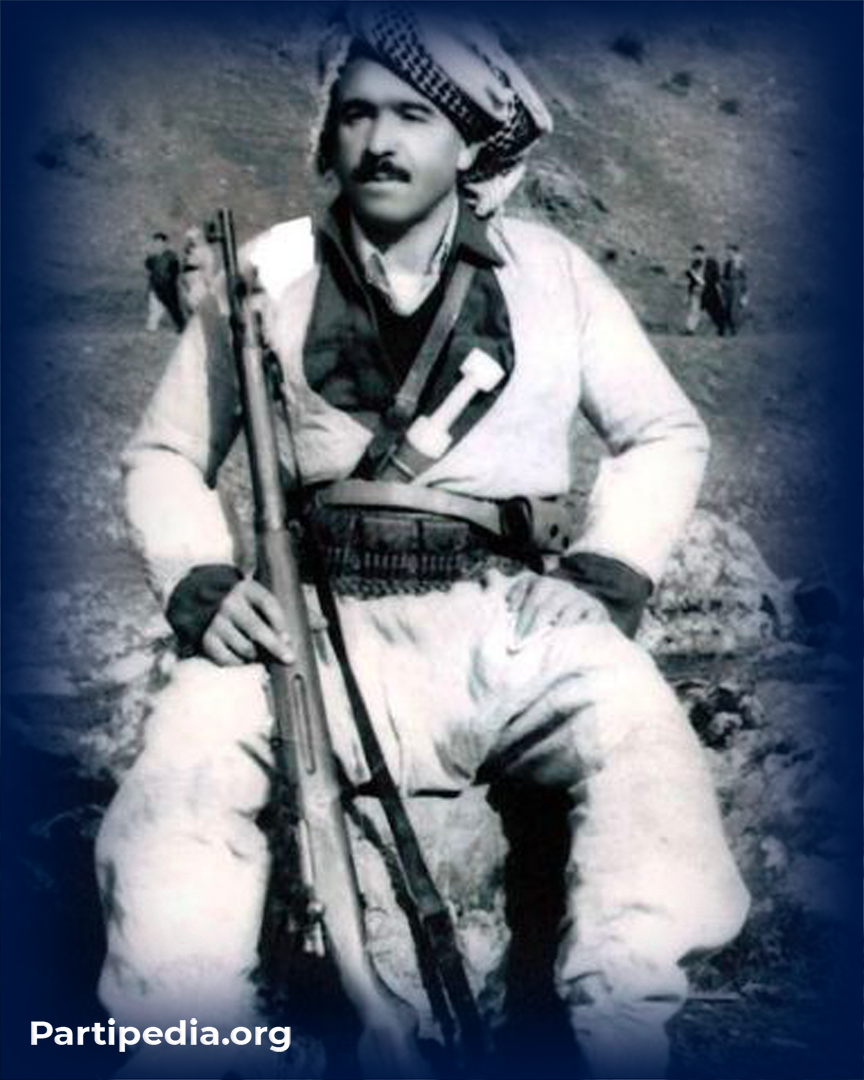
Faris Hamed Bawe was born in 1933 in the city of Erbil, was arrested in 1956 and taught to read in Kirkuk prison by the great Kurdish poet Abdullah Goran and an advanced cadre of the Kurdistan Democratic Party, Abdullah Ismail Ahmed, known as Mullah Mator. He passed away on March 21, 1995 in Pirmam and was first buried in the Pirmam cemetery in Erbil province and then on Monday, March 10, 1997, he was taken with a respectful ceremony to the village of Pirdawid in the Erbil province and was buried for the second time in the Girê Pirdawid cemetery - Erbil. He knew Kurdish, Arabic and Persian well.
Worksheet
Faris Hamed Bawe was imprisoned in Kirkuk prison in 1956 and released after the July 14, 1958 coup. In 1958, he joined the ranks of the Kurdistan Democratic Party (KDP). In 1963, he joined the ranks of the Peshmerga Forces and in the same year became a Peshmerga commander and participated in the Battle of Darkhurma in Erbil province and the Battle of Qashqa village in Erbil province against the National Guard forces. On March 18, 1963, as a Peshmerga commander, he was the representative of the Koyeh Congress (People's First) in the town of Koyeh, which is part of Erbil province.
In June 1963, he participated in the Battle of Spilke in Erbil Province under the command of Colonel Kafi Nabawi against the operation of the Second Iraqi Army. In 1964, he was assigned to the position of second lieutenant in the Second Battalion of the Safin Force of the Second Army. In 1965, he was assigned to the Safin Force as the commander of the First Battalion of the Erbil Plain. In May 1965, he participated in the Safin Mountain Saga as the commander of the First Battalion of the Erbil Plain. On December 5, 1965, he participated in the response to the Iraqi army attack and commanded the Battle of Shesh Ali (Battle of Sharqa) and won. In 1966, he participated in the Battle of Safin as the commander of the Second Battalion of the Erbil Plain. In 1968, he became the commander of the Erbil Plain Force.
In 1968, in retaliation for the martyrdom of two peshmerga in the Battle of Shaxul, he bombed the Iraqi army base in Erbil and destroyed the bases of the Ibrahim Ahmed-Jalal Talabani group in the city of Erbil. On March 1, 1969, he was one of the commanders of Operation Babagurgur, which attacked the Kirkuk Oil Company. In August 1969, he confronted the Iraqi forces and the fighters of the Ibrahim Ahmed Jalal Talabani group who attacked the headquarters of the Hezda Dashta Erbil, and he managed to repel them and force them to withdraw from the war. In 1970, he was elected as a member of the Central Committee of the Kurdistan Democratic Party (KDP) by the representatives of the eighth congress. In 1970, he was appointed from the twelfth staff to be responsible for the second division committee of the Kurdistan Democratic Party (KDP). After the March 11, 1970 agreement, he began to form The neighborhood of the martyrs of the Setaqan plains is dedicated to the martyrs of the Erbil plain forces. On December 13, 1971, he was awarded the rank of temporary police captain by the Iraqi Revolutionary Council. In 1971, he was the commander of the 11th battalion of the Gomespan Border Guard.
On Wednesday, June 21, 1972, at the Peace Palace in the town of Choman, in the province of Erbil, he received a delegation of the United Socialist Party of Germany led by Paul Ferner, together with President Mustafa Barzani (1903-1979), and discussed the issue of peace in Iraq and bilateral relations. In 1974, he was the commander of the Safin force. In 1974, he was the commander of the Giray Resh battle. On September 6, 1974, he was one of the commanders of the Makok battle in Erbil province, where the Peshmerga defeated the Iraqi army. In 1975, after the collapse of the September Revolution, he emigrated to Iran. In 1978, he returned to Southern Kurdistan and was pardoned by the Iraqi Revolutionary Leadership Council on December 19, 1978. In 1991, he participated in the Southern Kurdistan Uprising.
Source:
-
Kurdistan Democratic Party Encyclopedia Committee Archives.
-
Funeral Faris Bawe returns today, Birayetî newspaper, organ of the Kurdistan Democratic Party (PDK) - Yekgirtû, issue 2289, Hewlêr, Monday 10.03.1997, p. 4.
-
As'ed Edo, The Six-Sided War or the War of the West, Biryati Newspaper, Organ of the Kurdistan Democratic Party-United, No. 1765, Erbil, Saturday, October 9, 1993, pp. 6-7.
-
Habib Muhammad Karim, Kirkuk and the Glorious September Revolution, Golan Al-Arabi Magazine, Golan Cultural Center, Issue 70, Year 6, Hewlêr, Ministry of Education Press, 31.03.2002, p.39.
-
Abdurrahman Sharafkendi, The Problem of the Unseen, (Paris, 1997), pp. 409-410.
-
Iraqi MiGs fought against the Kurds, Itilaat newspaper, issue 14370, Tehran, Thursday, April 15, 1353 AH, pp. 1, 4.
-
Mr. Barzani expresses his hopes for the visiting German delegation, Al-Taxi newspaper, issue 1067, Baghdad, Times Press, Thursday, 22.06.1972, p.1.
-
Kurds shoot down two Iraqi warplanes, Itilaat newspaper, issue 14356, Tehran, Saturday, March 25, 1352 AH, p. 17.
-
Shakib Aqrawî, The Years of Trouble in Kurdistan, The Most Important Political and Military Events in Kurdistan and Iraq from 1958 to 1980, second edition, (Hewlêr - Minare Press - 2007), p. 191.
-
Revolutionary Leadership Council Decision No. 74, Iraqi Al-Waqai Newspaper, Iraqi Ministry of Information, Issue 1960 A, Baghdad, Monday, February 1, 1971, page 1.
-
Revolutionary Leadership Council Decision No. 99, Iraqi Al-Waqai Newspaper, Ministry of Justice, No. 2636, Baghdad, Monday, 06.02.1978, p.10.
-
If I die, don't take me back to occupied Hewler!, Biryatî Newspaper, organ of the Kurdistan Democratic Party, issues 2123 and 2124, Saturday 22.04.1995, p 8.
-
Masoud Barzani, Barzani and the Kurdish Liberation Movement, Third Volume, (Hewlêr - Ministry of Education Press - 2002), pp. 209, 253.