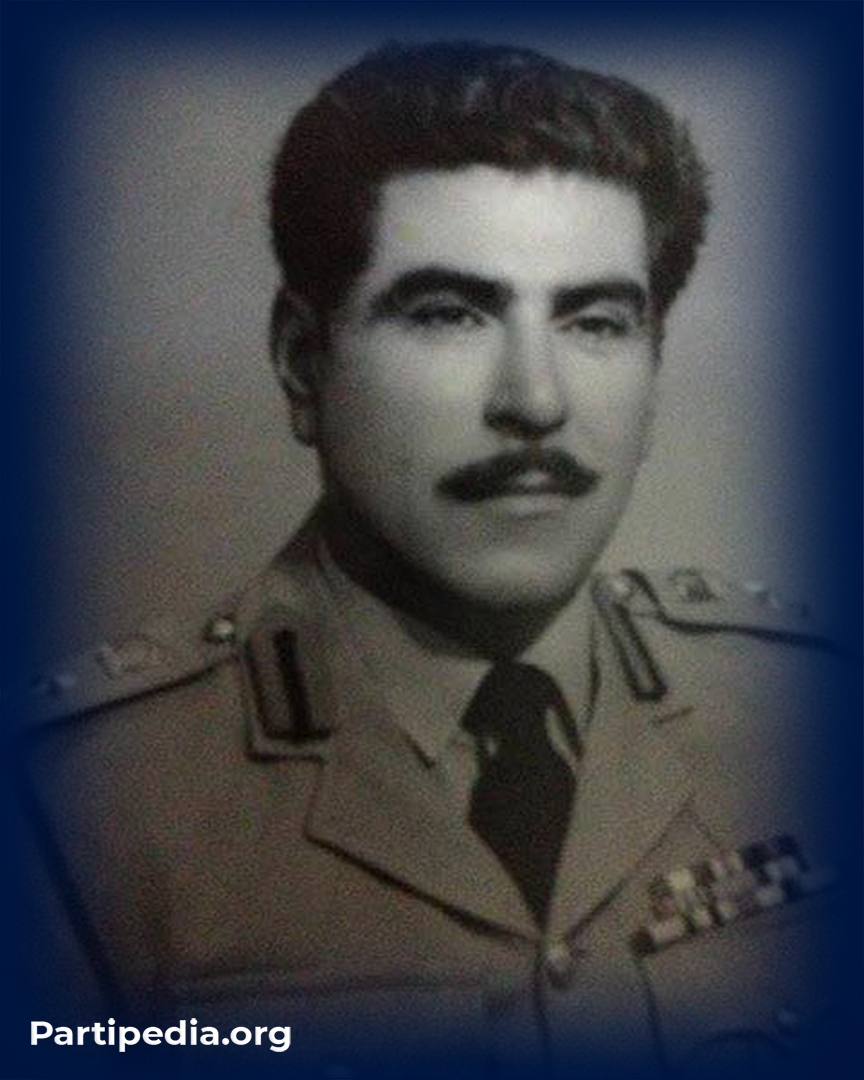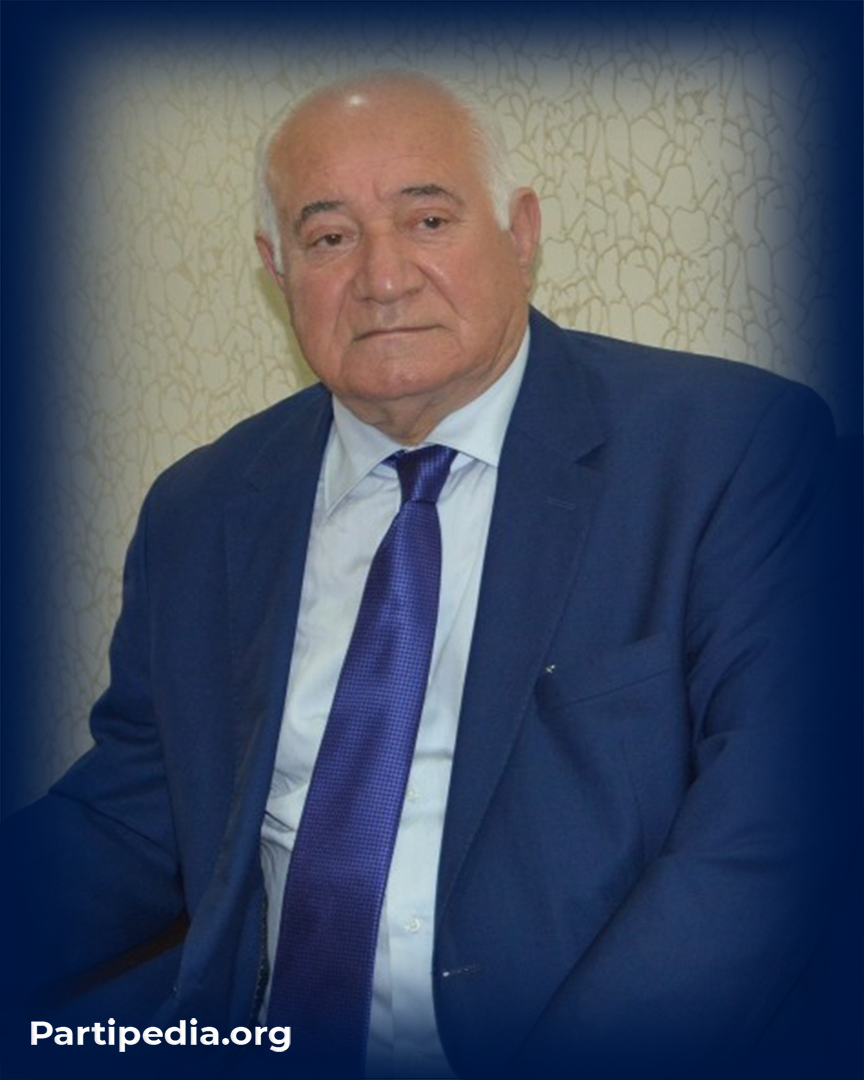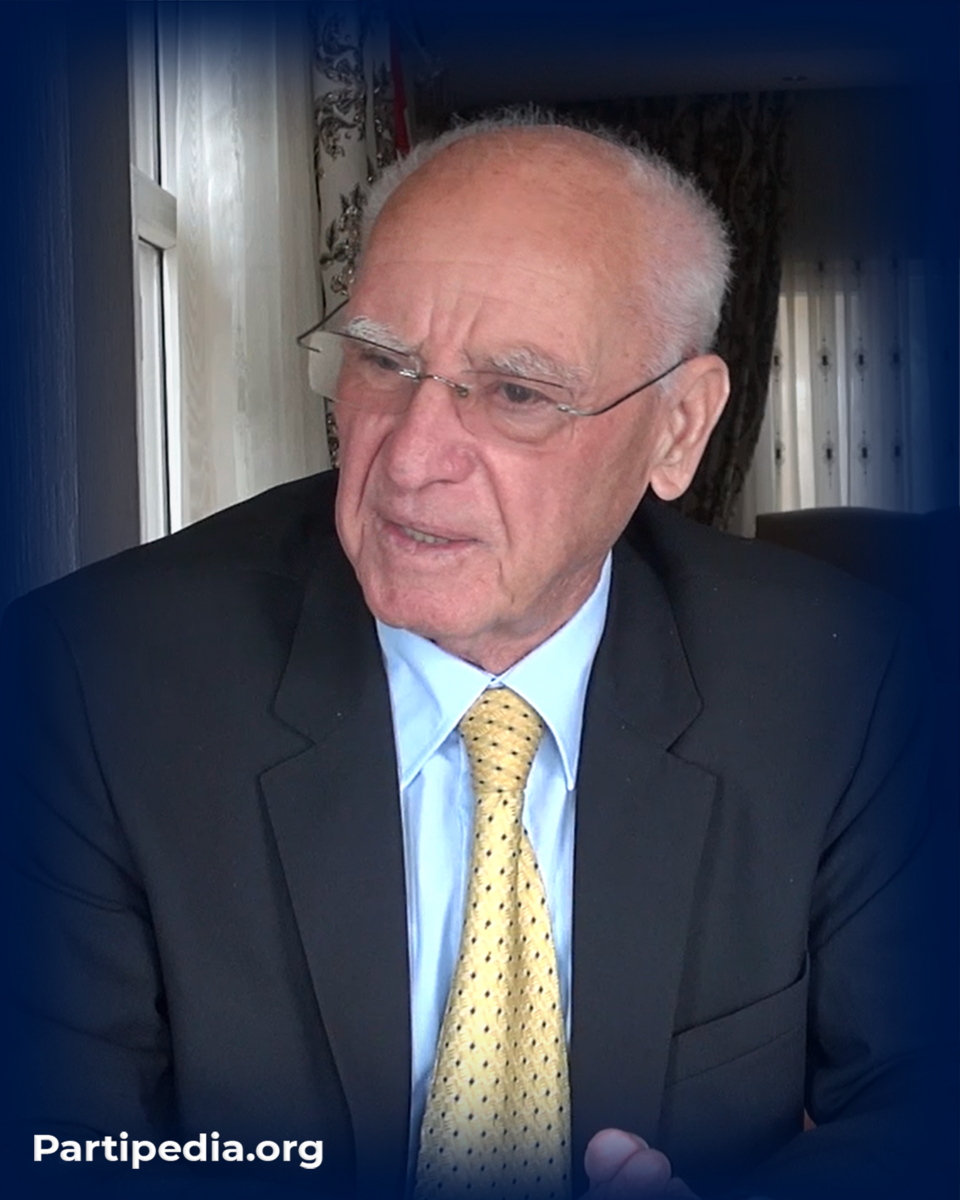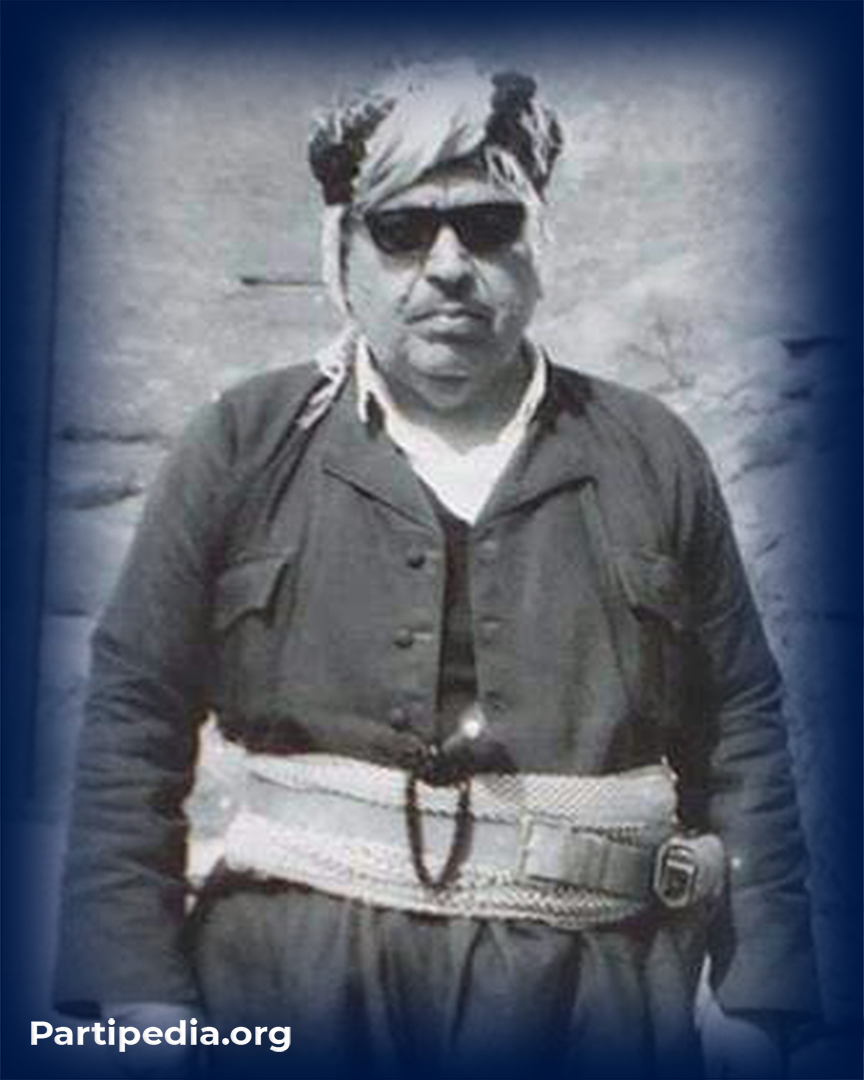


Abdulwahab Mirza Omar, known as (Mulazim Abdulwahab Atrushi), was an officer and politician. In 1964, he was a member of the Revolutionary Leadership Council and a member of the executive committee of the working office (Al Mekteb Al Tanfizi) of the Revolutionary Leadership Council in Iraqi Kurdistan. He was also the commander of the Labor Force in the Third Army of the Kurdistan Peshmerga. On April 15, 1967, he was a representative of the military-political conference in Kani Simaq (Hewlêr). On April 9, 1970, after the March 11 agreement, he was appointed governor of Anbar in Western Iraq. In 1970, he was elected a member of the central committee of the Kurdistan Democratic Party at the eighth congress. In 1971, he was appointed governor of Hewlêr.
Biography
Abdulwahab Mirza Omar was born in the village of Atrush in the province of Duhok. He completed his primary education in the village of Atrush. He completed his secondary and post-secondary education in the city of Mosul. He was admitted to the Police College in Baghdad in 1957. In 1960, he received his bachelor's degree in police science from Baghdad College on July 14. In the years (1975 - 1979) he emigrated to Iran as a refugee after the defeat of the September Revolution. In 1979, after the victory of the Iranian people's revolution, he returned to the Republic of Iraq, and on November 25, 1979, he was established by a decree of the Revolutionary Leadership Council with the advice of the Northern Business Council.
He was the governor of Duhok in the years (1991 - 1992) and was appointed Minister of State by the Iraqi Government on September 5, 1993, by a republican decree, in the cabinet of Ahmed Hussein Khuzayr Al-Samarai during the reign of Saddam Hussein. He was appointed Minister of State on May 29, 1993, by a republican decree. He passed away on Thursday, November 14, 2004, in Damascus and was buried in Duhok. He was fluent in Kurdish, Arabic and Persian.
Worksheet
Abdulwahab Mirza Omar was established in 1960 with the assistance of the Charta police station. In 1962, he established contact with the Peshmerga forces and handed over the Penjwen police station with all weapons and ammunition to the Peshmerga forces of the September Revolution. In 1962, he was appointed the head of Charta. In 1964, after a large meeting of the Mawet with most of the officers of the Kurdistan Revolutionary Army, he decided to support the President. Mustafa Barzani (1903 - 1979) and opposed the political school. In early June 1964, he was elected as a member of the preparatory committee of the sixth congress of the Kurdistan Democratic Party. In 1964, he became a delegate to the sixth congress of the Kurdistan Democratic Party.
In 1964, he participated in the purge of the political school forces in Mawet (Sulaymaniyah). In 1964, he was a representative of the Qaladizeh Congress (the second people's congress). In 1964, he was a member of the Revolutionary Leadership Council in Iraqi Kurdistan. In 1964, he was a member of the executive committee of the local office (Al Mekteb Al Tanfizi) of the Revolutionary Leadership Council in Iraqi Kurdistan. In 1964, he became the commander of the Labor Force in the Third Army. In 1964, he commanded the Battle of Azmar on the border of Sulaymaniyah province against the Iraqi army forces. In 1965, he participated in the Battle of Penjwen on the border of Sulaymaniyah province against the Iraqi army forces. In 1965, he commanded the Battle of Kani Manga on the border of Sulaymaniyah province. In 1965, he commanded the Battle of Sitak on the border of Sulaymaniyah province against Iraqi army forces.
In 1966, he was a delegate to the seventh congress of the Kurdistan Democratic Party. In 1966, he became the commander of the Labor Force attached to the Third Army. In 1967, he commanded the battle of Mount Shinru on the border of Sulaymaniyah province (now Halabja) against the forces of Ibrahim Ahmed's groups - Jalal Talabani On the occasion of April 15, 1967, under the supervision of President Mustafa Barzani As the commander of the Xebat force, he was a representative of the military-political conference of Kani Simaq (Hewlêr). In 1969, the commander of the battle for the city of Halabja, on the border of the former Sulaymaniyah province and the current Halabja province, fought with the Iraqi army forces and the armed forces of the group (Ibrahim Ahmed - Jalal Talabani) On April 9, 1970, after the March 11 agreement between the September Revolution and the Iraqi government, he was appointed governor of Anbar in Western Iraq by a republican decree. In 1970, at the eighth congress, he was elected a member of the central committee of the Kurdistan Democratic Party by the congress delegates. On August 25, 1970, he became the governor of Erbil until March 11, 1974, at the request of the Kurdistan Democratic Party. On May 1, 1971, as the governor of Erbil, he read a speech in the city of Erbil on the occasion of World Workers' Day. On Tuesday, June 1, 1971, as the governor of Erbil and a member of the central committee of the Kurdistan Democratic Party, he received a delegation from the central committee of the Communist Party of Bulgaria and on Thursday, June 3, 1971, he accompanied them to the border of Mosul province.
On July 14, 1971, as the governor of Erbil, he delivered a speech at the second congress of the Kurdish Writers' Union. On July 14, 1971, as the governor of Erbil, he attended the opening of the second congress of the Kurdish Writers' Union in Erbil. On August 16, 1971, on the occasion of the 25th anniversary of the founding of the Kurdistan Democratic Party, he delivered a speech as the governor of Erbil in Erbil. In 1972, he was assassinated by the Iraqi government, but survived. In 1974, due to the tension between the Great September Revolution and the Iraqi government, he joined the Peshmerga for the second time. He returned to Iraq in 1979. He passed away on Thursday, November 14, 2004, in Damascus and was buried in the city of Duhok. He was proficient in Kurdish, Arabic, and Persian.
Source:
Archives of the Encyclopedia Committee of the Kurdistan Democratic Party.