

Biography
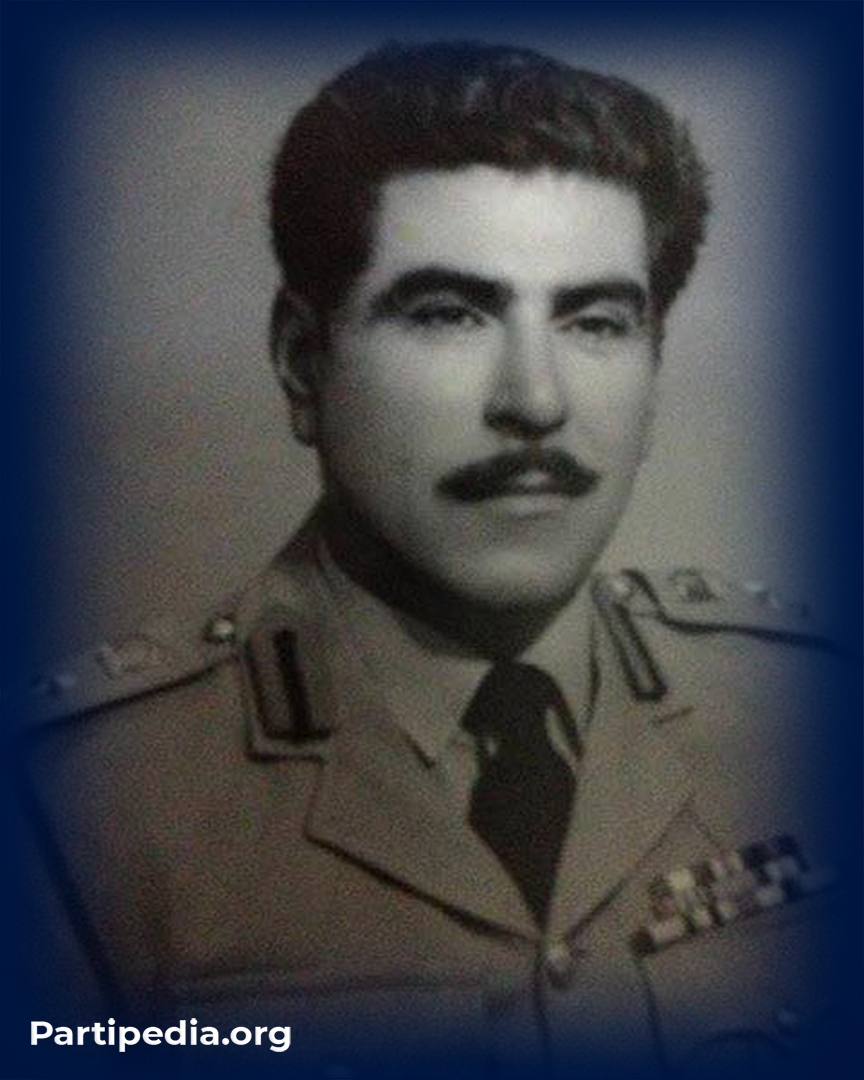
Abdulhuseyn Ali Eloush, known as Abdulhuseyn Fayli, was born in 1932 in Baghdad. He grew up in a Kurdish Fayli merchant family in Baghdad and was also involved in business. He became one of the Kurdish philanthropists in Baghdad to help the poor and vulnerable Kurds in all parts of Kurdistan. He completed his secondary education. In 1955, he began to financially support the Fayli primary school in Baghdad to accept students from poor and vulnerable Kurdish families. In 1964, due to the support of the school's political group, he fled to the Kingdom of Iran and spent his life as a refugee there. In 1979, with the victory of the Iranian people's revolution, he returned to the Republic of Iraq. He passed away in 2015 in the Republic of Germany. He was fluent in Kurdish, Arabic, Persian, English and German.
Worksheet
He joined the ranks of the Kurdish Democratic Party in 1951. In 1953, he fought in the ranks of the Democratic Youth Union of Kurdistan. In 1953, he was one of those who managed the relations between the Democratic Party of Kurdistan – Iraq and Dr. Ja’far Muhammad Karim (1910 - 2000), known as Dr. Ja’far Fayli, a member of the political school of the Democratic Party of Kurdistan – Iraq, in Tehran. On October 6, 1958, he was a member of the welcoming delegation to President Mustafa Barzani (1903 - 1979) at the Musanna Airport in Baghdad on behalf of the Fayli merchants of Baghdad. In 1958, he was a member of the five-member committee supervising the Kurdistan Victory Club in Baghdad. In 1959, he was a delegate to the Second Baghdad Conference of the United Democratic Party of Kurdistan. In 1959, he was a delegate to the Fourth Congress of the Kurdistan Democratic Party – Iraq in Baghdad. On Saturday, February 8, 1960, he was a member of the fifty-person committee supporting the establishment of the Kurdistan Democratic Party for the public work phase. In 1960, he was elected by the congress delegates as a member of the Central Committee of the Kurdistan Democratic Party (Fifth Congress). On July 30, 1961, he was briefly arrested by Iraqi security forces for distributing a statement by the Kurdistan Democratic Party in Baghdad against Fariq Rukin Abdulkarim Qasim (1914 - 1963), which spoke of the violation of the constitutional and political rights of the Kurdish nation within the borders of the Republic of Iraq.
In 1961, he was in charge of the secret military and police line of Iraq, in connection with the Kurdistan Democratic Party, in central and southern Iraq. In 1961, at the beginning of the September Revolution, he was the supervisor and administrator of the secret printing house of the Kurdistan Democratic Party in Baghdad. In 1963, he was a member of the Fifth Branch Committee of the Kurdistan Democratic Party. In 1963, he was a representative of the Koyê Congress (First People's Congress). On March 30, 1963, he was a member of the Kurdistan Democratic Party's negotiating delegation that negotiated with the Baghdad authorities on the rights of the Kurds.
In 1963, he was a member of the Kurdistan Democratic Party delegation to deliver a letter from President Mustafa Barzani (1903 - 1979) to Grand Ayatollah Abdul Muhsin Hakim (1889 - 1970) in the city of Kufa. In 1963, during negotiations, when he returned to Southern Kurdistan, he was arrested by the army in the city of Kirkuk and was imprisoned and tortured by Iraqi security forces. In 1963, he was imprisoned in Hilla prison. On February 14, 1964, after negotiations between the leadership of the Kurdistan Democratic Party and the government of Abdulsalam Muhammad Arif (1921 - 1966), he was released from the central prison in Baghdad. In 1964, he was denounced by the political school wing at the Mawet general assembly. This was in retaliation for his ideas in the First People's Congress, which were against the views of the political school against President Mustafa Barzani (1903 - 1979), and for this reason he was ignored. In 1964, he was expelled from the ranks of the Kurdistan Democratic Party by the Sixth Congress, by a majority vote of the Sixth Congress of the Party.
He was established in 1965 as an employee at the Kermanshah radio station in Eastern Kurdistan.
Source:
1 - One of the old printers of Xebat remembers, Xebat Newspaper, Organ of the Democratic Party of Kurdistan, Issue 971, Hewlêr, Friday, April 14, 2000, page 13.
2 - Ibrahim Ferhemandnya, The Genocide of the Kurds under International Law, (Meriwan – Evin Publications – 1396 AH), pages 24 – 27.
3 - Zeki Ja'far Al-Fayli Al-Alawi, History of the Fayli Kurds and their Future, (Beirut – Al-Balak Institution for Printing, Publishing and Distribution – 2010), page 522.
4 - Şiwan Mihemed Emin Teha Xoşnaw, Hewlêr between 1963 – 1970: A Historical Study of the Political Situation, (Hewlêr – Salaheddin University Press – 2016), pages 87, 114, 158.
5 - Muhammad Saeed Al-Tarihi, Kurdish Shiites: Past and Present, (Damascus – Dar Ninawa for Research, Publication and Distribution – 2013), page 612.
6 - Xelef Xefur, Defri Zerin, Volume One, (Kirkuk – Kirkuk Intellectual and Social Association – Karo Press – 2011), pages 21 – 22.
7 - Ibrahim Ferhemandniya, The Genocide of the Kurds under International Law, (Meriwan – Evin Publications – 1396 AH), pages 24 – 27.
8 - Derexshan Sheikh Celal Hafidzadeh, A Summary of the Kurdistan Women's Liberation Movement and Some of My Memories, (Sulaymaniyah – Şivan Press – 2010), page 157.
9 - Zeki Ja'far Al-Fayli Al-Alawi, History of the Fayli Kurds and their Future, (Beirut – Al-Balak Institution for Printing, Publishing and Distribution – 2010), page 522.
10 - Shekib Aqrawî, Years of Persecution in Kurdistan: The Most Important Political and Military Events in Kurdistan and Iraq from 1958 to 1980, Second Edition, (Hewlêr – Minare Press – 2007), page 153.
11 - Subhi Abdulhamid, Iraq in the Years 1960 – 1969, (Damascus – Dar Babel for Research and Communication – 2009), page 61.
12 - Rojin Celebi Munir, Zakho July 14, 1958 – March 6, 1975, (Unpublished – Zakho Center for Kurdish Studies – 2018), pages 205 – 206.
13 - Ali Hussein Ja'far, The Kurdish Agreement... Pages from Memories, Al-Ittihad Newspaper, the Central Newspaper of the Patriotic Union of Kurdistan, Issue 499, Eleventh Year, Sulaymaniyah, Friday, November 15, 2002, page 16.
14 - Ali Sincari, The Kurdish Case and the Arab Socialist Baath Party in Iraq, Part Three, (Duhok – Xanî Press – 2012), pages 318, 335.
15 - Fayez Al-Khafaji, Political Bullets in Iraq, Part Two, (Baghdad – Dar Qanadil for Publishing and Distribution – 2018), page 68.
16 - Fifth Congress of the Democratic Party of Kurdistan, Roji Nu Magazine, Number Three, Year One, Baghdad, June 1960, page 56.
17 - Mahmud El-Durre, The Kurdish Case and Arab Nationalism in the Iraq War, (Beirut – Dar El-Telî’e Publications – 1963), page 181.
18 - Mullah Mustafa Barzani and his friends present the news of the establishment of the Party to the Minister of the Interior, Xebat Newspaper (Al-Nidal), No. 141, Baghdad, Al-Reey Al-Am Printing House, Sunday, January 9, 1960, pages 1, 8.
19 - Archives of the Encyclopedia Committee of the Democratic Party of Kurdistan.
20 - The Success News in Baghdad, Hope Magazine, The Success News, Issue 4, Second Year, Baghdad, Necah Press, October 1958, page 91.
21 - Yedullah Karim, The September 1961 Revolution: A True Beginning Towards Liberation, Teexhi Newspaper, Dar Al-Teawî for Printing and Publishing, Number 4581, Third Issue, Monday, September 19, 2005, page 3.
22 - Yedullah Karim, The September Liberation Revolution... Truth and Meaning, Teexî Newspaper, Issue 4309, Baghdad, Sunday, 12 September 2004, page 3.