

Historical background
On September 16, 1943, the Kurdish Revival Association (Jiyanewey Kurd - JK) was founded in Eastern Kurdistan, later on August 16, 1945, its name was changed to the Democratic Party of Iranian Kurdistan. This party, with the support of the Soviet Union, established the Republic of Kurdistan (Mehabad) in part of Eastern Kurdistan on December 22, 1946, under the leadership of Qazi Muhammad. At the same time, on December 15, 1945, the Freedom Committee was established in Southern Kurdistan under the leadership of General Mustafa Barzani.
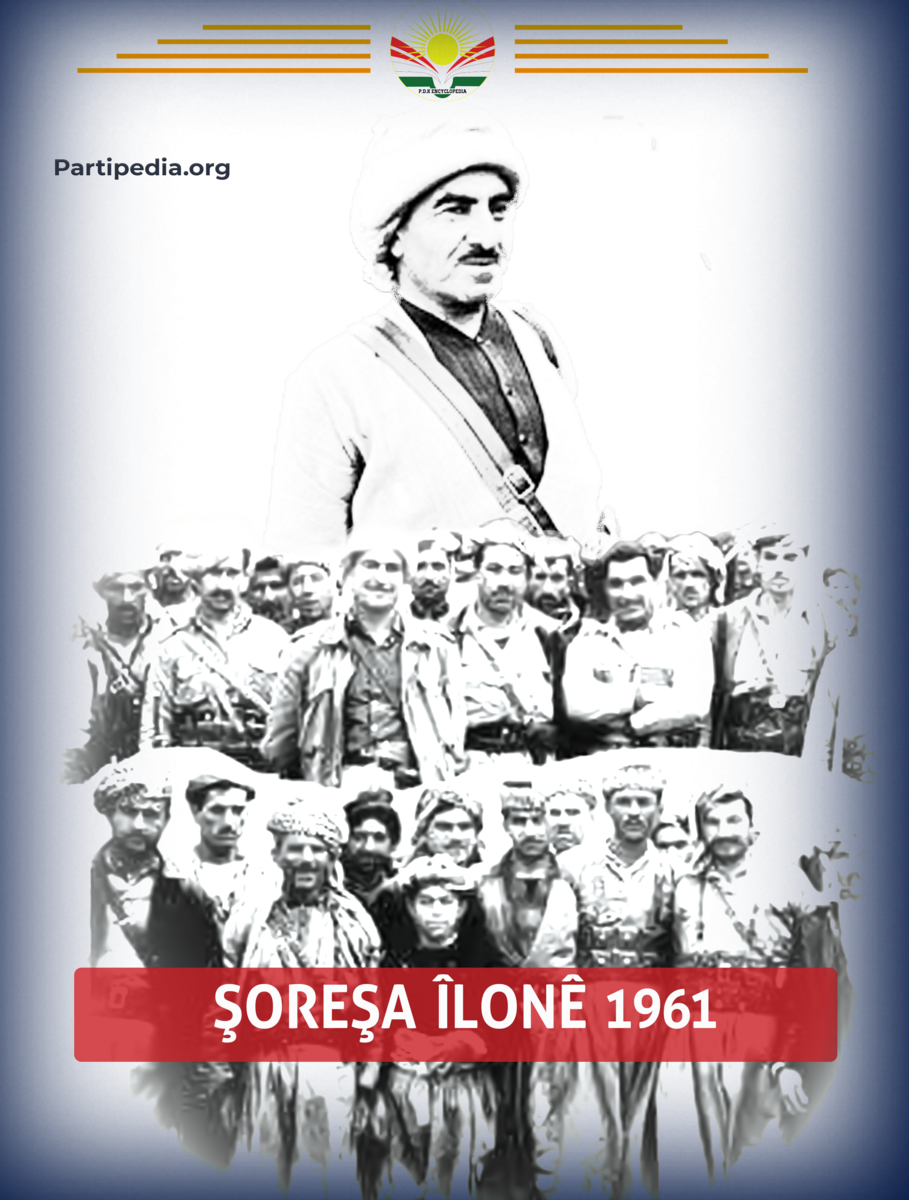
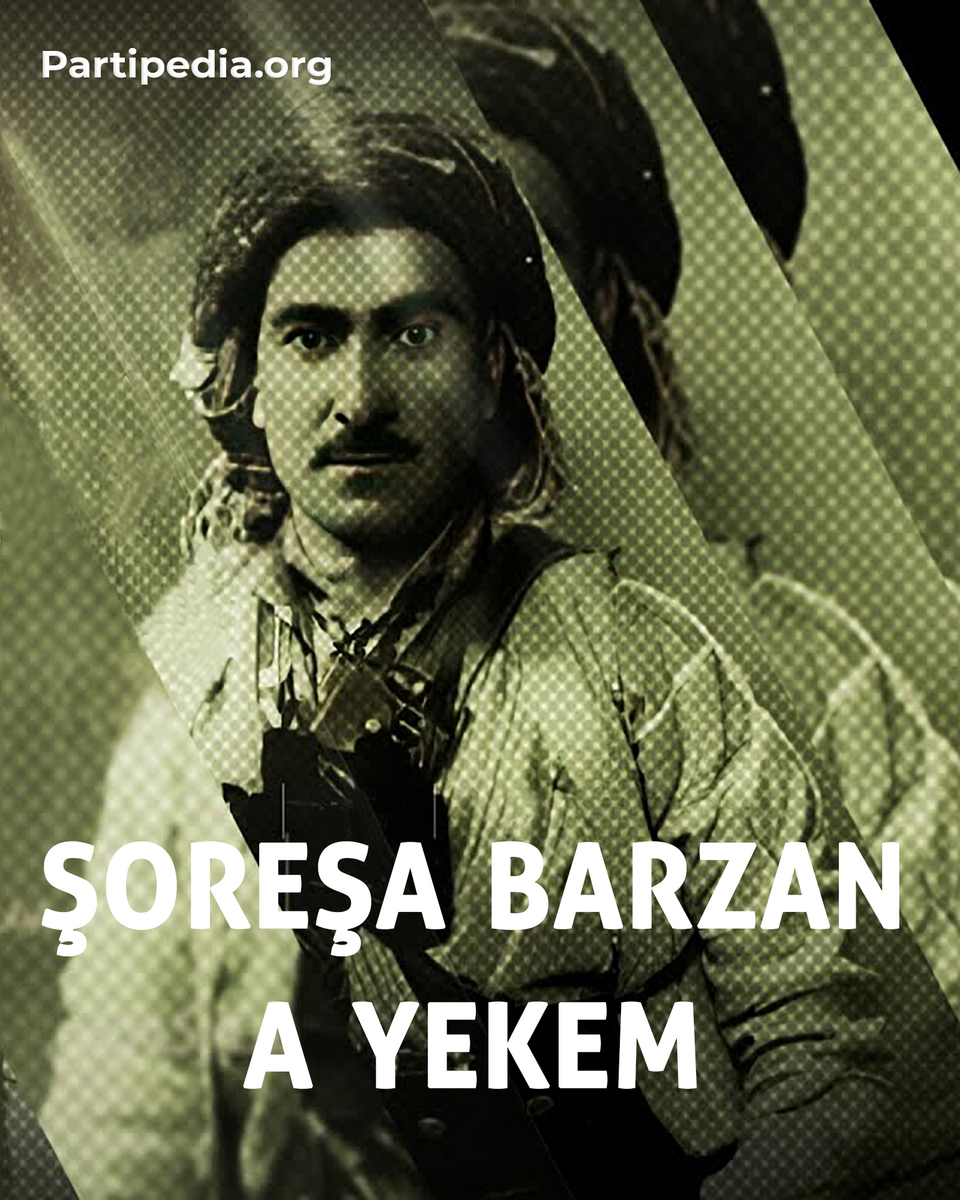
After the defeat of the Second Barzan Revolution in 1945, General Mustafa Barzani, the Commander-in-Chief of the Revolution, with the advice of the Azadi Committee and the commander of the battle positions, after contacting the Kurdish leaders of Iranian Kurdistan and Soviet officials, he decided to withdraw all his forces to Iranian Kurdistan and after several battles, on October 11, 1945, they crossed into Iranian Kurdistan via the Keleshin-Mergewer route. After the proclamation of the Republic of Kurdistan in Mahabad, despite their difficult situation, General Mustafa Barzani's forces joined the republic with all their strength.
Establishment decision
The changing situation in Iranian Kurdistan did not change the Azadi Committee's view on the fate of the Kurdish movement in Southern Kurdistan. In particular, the experience of establishing the Democratic Party of Kurdistan of Iran and the experiences gained in the second Barzan revolution showed that this stage required the establishment of a party like the Democratic Party of Kurdistan of Iran in Iraqi Kurdistan. Therefore, after extensive research and analysis of the situation in the region, Mustafa Barzani and his friends, officers and members of the Azadi Committee decided to establish a party in Iraqi Kurdistan in a manner that would be in line with the wishes and goals of the people of Kurdistan.
The foundation for the establishment of the Kurdish Democratic Party (KDP) was laid in the first meeting of Mustafa Barzani with lawyer Hamza Abdullah, Captain Mirhaj Ahmed Tahir, Colonel Rukin Ezzat Abdulaziz, Captain Mustafa Khosnaw, Captain Xeyrullah Abdulkarim, Captain Muhammad Mahmud Qudsi and Mullazim Nouri Ahmed Taha, who were later named the Founding Committee, and at the same meeting, an attempt was made to implement the party's first program and internal regulations.
Due to the sensitive period that the Republic of Kurdistan was going through, in order to avoid being threatened by regional countries, Mustafa Barzani and his friends decided to establish the party and move its direct activities to Southern Kurdistan. For this reason, it was decided that Hamza Abdullah would return to Southern Kurdistan with full authority and several proposals to meet with the officials of the Revolutionary Party, the Azadi Party, and the Sulaymaniyah Democratic Branch.
The recommendations were:
-
There will be no changes to the party's program and internal regulations.
-
Sheikh Latif Hafid, son of Sheikh Mahmoud Hafid, should become the first vice president.
-
Muhammad Kake Ziydê Koye will be appointed as the second deputy.
-
In order not to be given the excuse of imperialism, until the Party itself is crushed, do not place too much emphasis on British interests, this is in addition to the fact that British imperialism is old and its void should be filled with a national force.
from falling into the hands of a new imperialism like the United States of America (USA).
In the late spring of 1946, Hamza Abdullah returned to Southern Kurdistan and contacted prominent parties and figures. The leadership of both the Revolutionary and Liberation Parties decided to dissolve their parties and join the party, on the condition that both parties hold their own congresses and announce the changes to their members.
The congress of the two parties was held in early August 1946 and most of their members joined the Kurdish Democratic Party and a small number of leaders and members of the Revolutionary Party joined the Iraqi Communist Party. Previously, the Liberation Party had held a meeting with the Kurdish Revival Association (JK) of the Southern Kurdistan Branch on the issue of joining a new party. As a result of these discussions, some administrators of the Kurdish Revival Association (JK) joined the Liberation Party and Ibrahim Ahmed requested permission to respond.
Establishment
In early August 1946, the Revolutionary Party and the Kurdish Liberation Party held their dissolution congress and decided to join the KDP. After the preparations were completed, the New Party held its first secret congress on August 16, 1946, at the house of Sa'id Fahim in Baghdad with the presence of 70 delegates. The congress was attended by most of the members of the Revolutionary Party leadership, the entire leadership of the Liberation Party except for Salih Heydari and Nafe Yunis, the trusted representative of Mustafa Barzani, Hamza Abdullah, Mahmud Ahmed, the representative of Sheikh Latif Hafid, Mr. Ziyad Koya, and Ibrahim Ahmed, representatives of the Democratic Party of Iranian Kurdistan, Sulaymaniyah Branch.
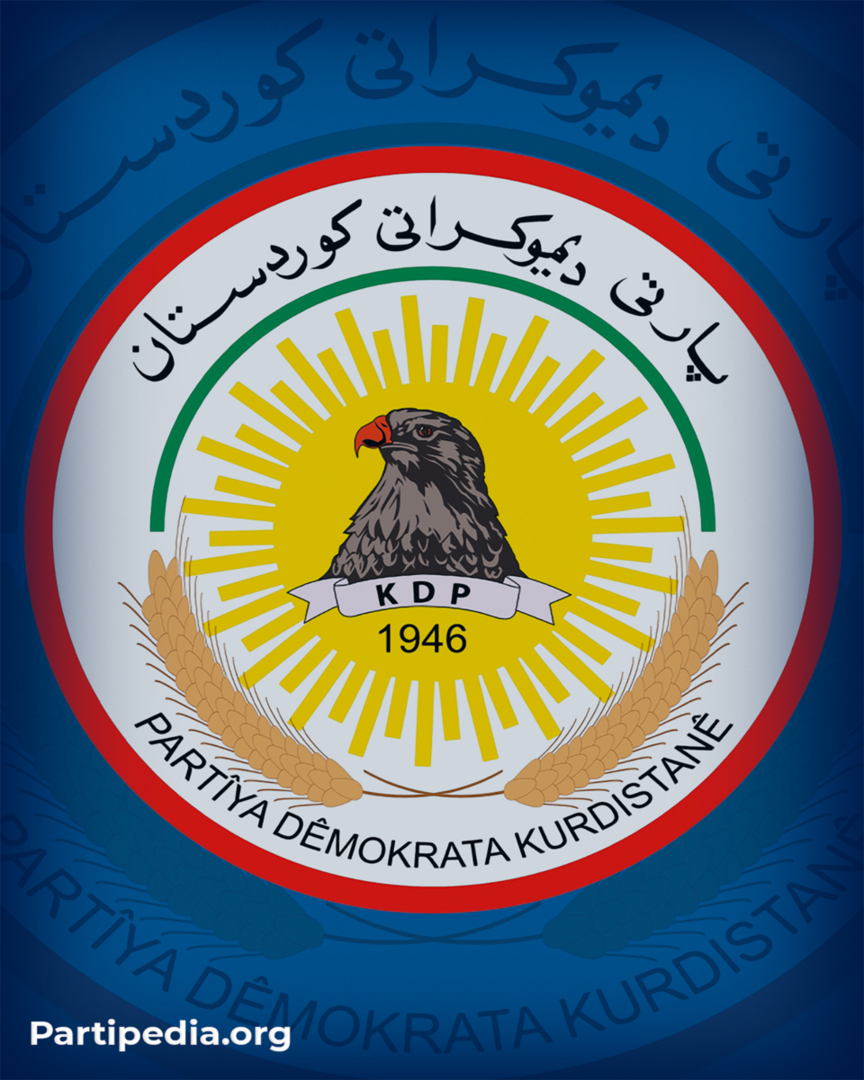
The congress successfully carried out its work and duties, and after evaluating and reviewing the text of the program and regulations prepared by the founding committee in Mahabad, the members of the congress approved, with some changes, the text of the program and regulations prepared by the founding committee in Mahabad. The new party was named the Kurdish Democratic Party (Kurdish Democratic Party-Iraq). Mustafa Barzani was elected as the president of the Kurdish Democratic Party at the congress, and upon Mustafa Barzani's proposal, Sheikh Latif Hafidi, son of Sheikh Mahmud Hafidi, was appointed as the first vice president, and Mr. Ziyad Koye was appointed as the second vice president. In addition, the Rizgari newspaper, which was the language of the Kurdish Liberation Party, became the language of the Kurdish Democratic Party due to its role among the people, and all the assets of both the Revolutionary and Liberation Parties were handed over to the newly elected leadership, and it was decided that the center of leadership of that party would be in Baghdad.
After choosing the party name and appointing the president and vice presidents, the congress members began electing members of the central committee, and the following names were elected as members of the central committee:
1. Mustafa Barzani, President
2. Sheikh Latif Sheikh Mahmoud Hafid, First Deputy
3. Mr. Ziyad Koye Second Vice President
4. Hamza Abdullah, secretary
5. Mirhac Ehmed Akreyî, Member
6. Dr. Jafar Mihemed Karim, Member
7. Ali Abdullah Amin, Member
8. Seyda Salih Yusfi, Member
9. Abdulkarim Tofiq, Member
10. Rashid Abdulqadir Hamawi, Member
11. Rashid Bajelan, Member
12. Mullah Seyid Hakim Khaneqi, Member
13. Awni Yousef Ahmed, Member
14. Taha Mohiddin Ma'ruf, Member
15. Abdul Samad Banna, reserve.
Then, the members of the central committee elected members of the new political school, which consisted of Hamza Abdullah, Dr. Ceafer Muhammad Karim, Ali Abdullah, Abdulkarim Tofiq, and Rashid Abdulqadir.
The elected political school of the KDP began to divide its duties and decided that most of the members of the political school would be based in Baghdad and their headquarters in that city, creating a strong connection between the Political School and President Mustafa Barzani in Mahabad.
Source:
-
Masoud Barzani, Barzani and the Kurdish Liberation Movement 1931-1958, Volume 1, (Hewlêr, Ministry of Education Press, 2004).
-
History of the Democratic Party of Kurdistan, Congress and Conference (Program and Internal Regulations), Encyclopedia of the Democratic Party of Kurdistan, volume 1, (Hewlêr - Roxana Press - 2021
-
Habib Muhammad Karim, History of the Democratic Party of Kurdistan-Iraq (in the period of its leadership 1946-1993), (Dohuk- Xebat Press- 1998).
-
Ali Abdullah, History of the Kurdistan Democratic Party - Iraq to the Third Congress, (unknown location - 1968).
-
Nori Shawes, I Will Negotiate, Give Me a Place, (Manuscript of the Democratic Party of Kurdistan, 1985).
-
Muhammed Mela Qadir, Workbook, (Hewlêr, Aras Publishing House, 2007).
-
Massoud Barzani, Barzani and the Kurdish Liberation Movement - The Barzan Revolution 1945-1958, (Kurdistan – December 2, 1987).