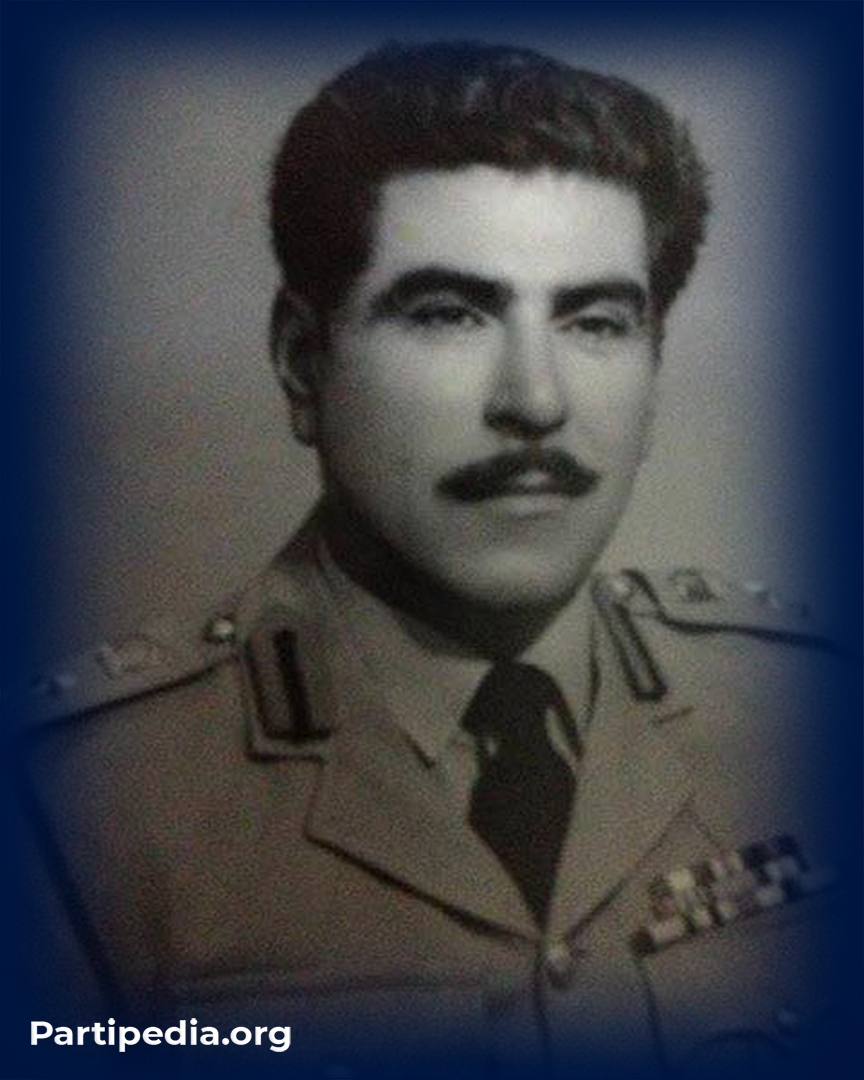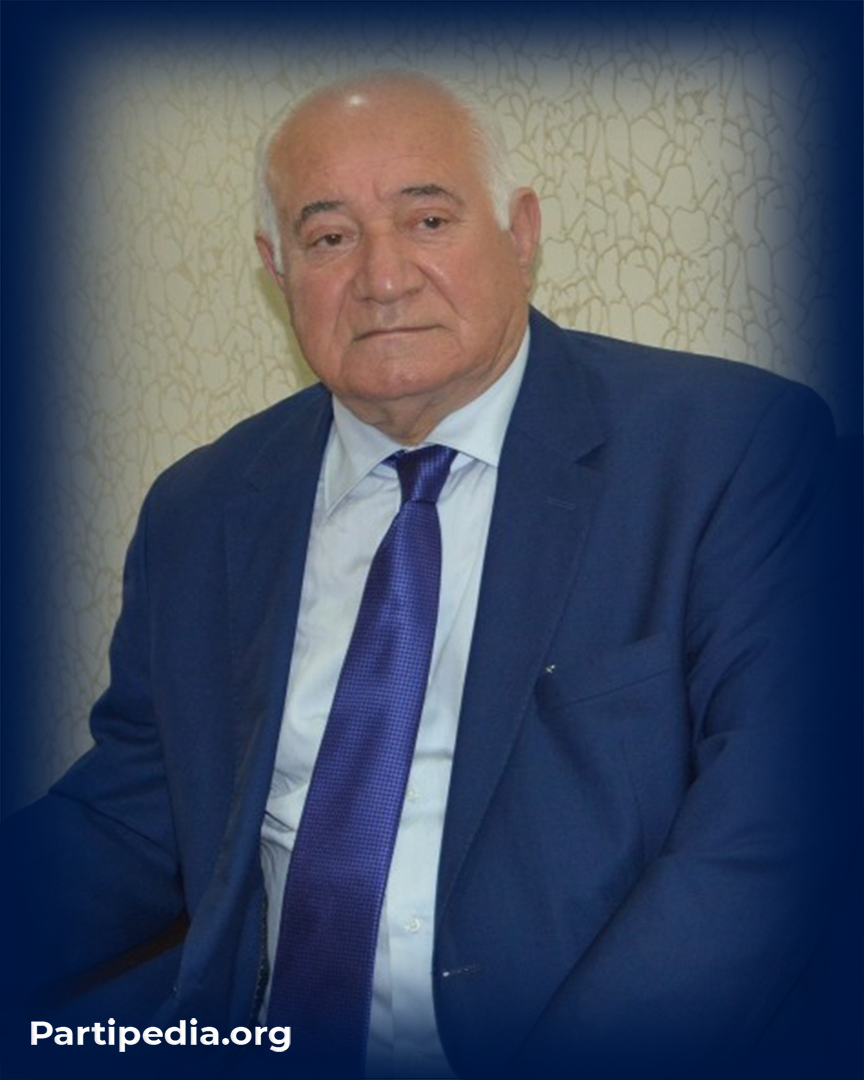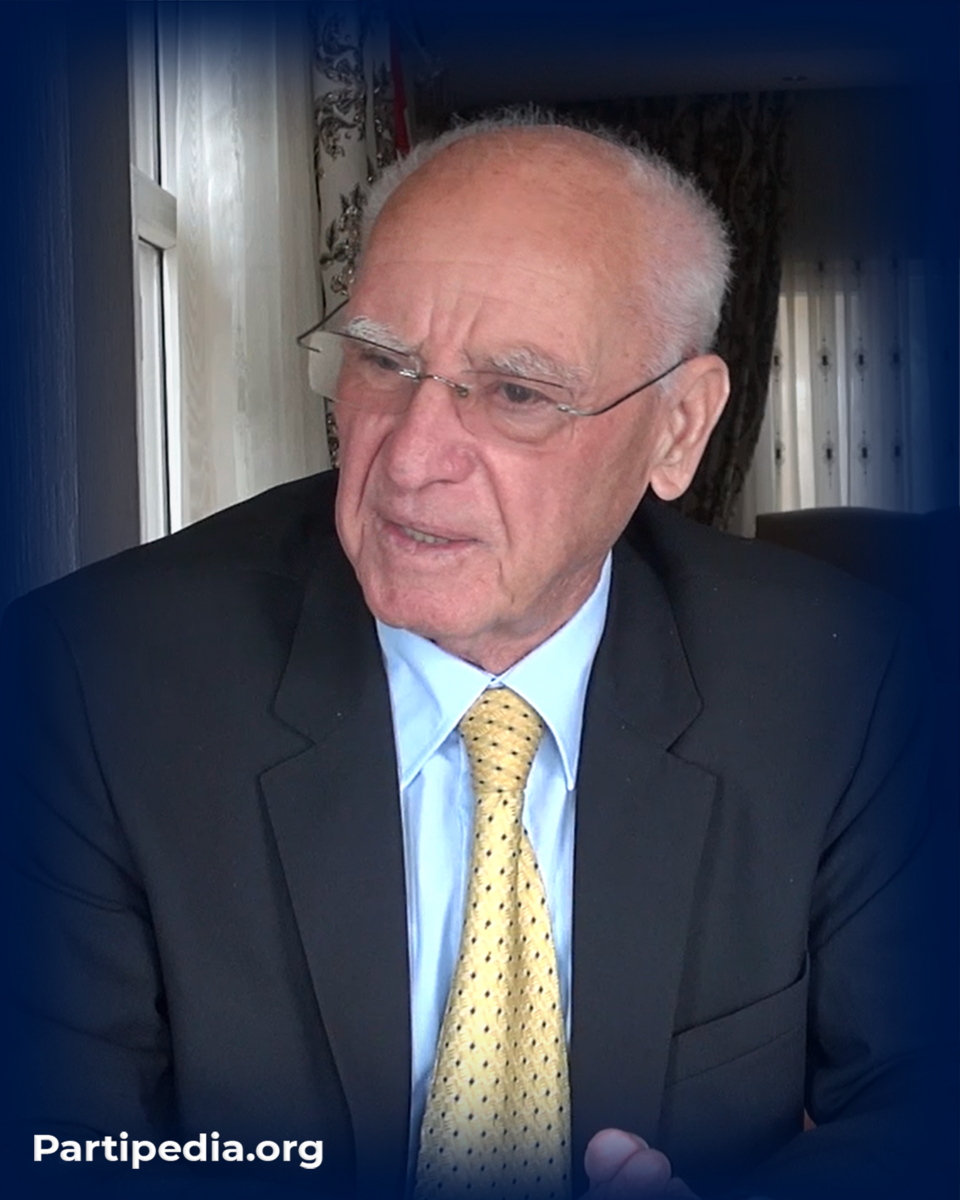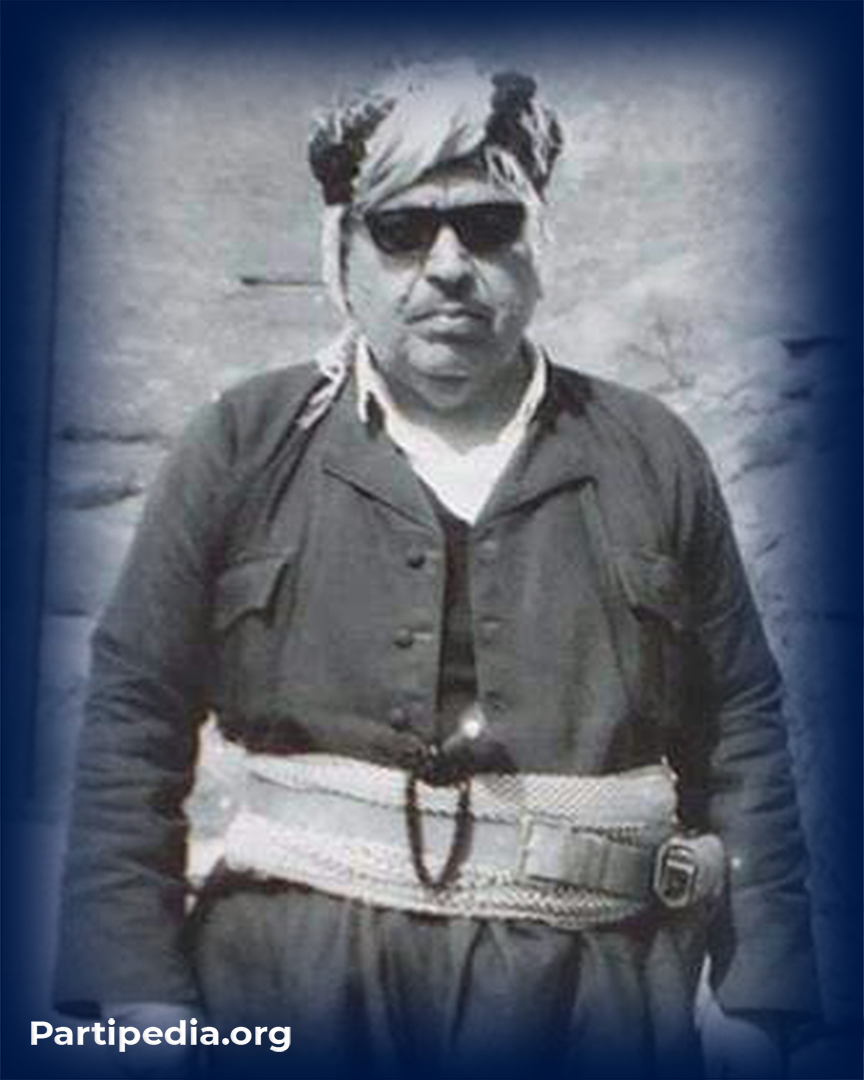


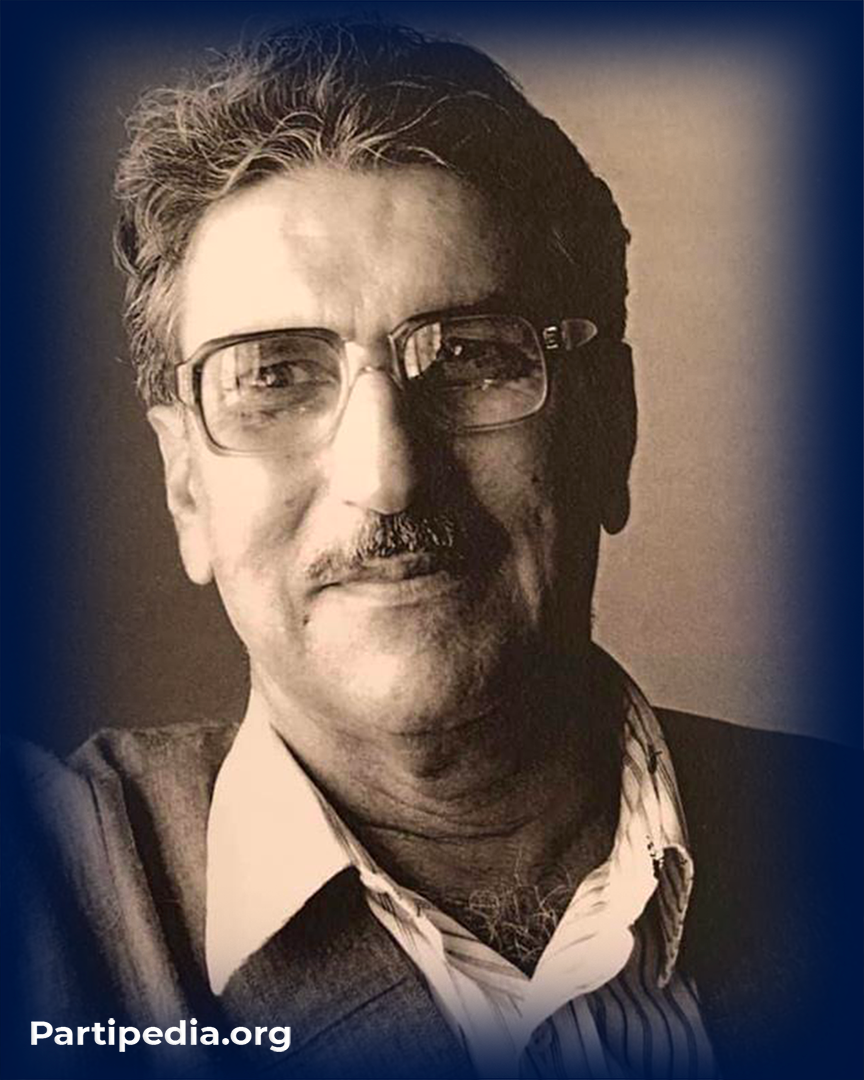
Engineer and politician Mihemed Mahmud Abdulrahman Xidir, known by the names (Sami, Sami Abdulrahman, Salih and Dara), became a member of the Association of Kurdish Students in Europe in 1957. In 1966, he became a member of the Leadership Council of the Iraqi Kurdistan Revolution. In both the seventh (1966) and eighth (1970) congresses of the Party, he was elected as a member of the Central Committee and later as a member of the Political School of the Kurdistan Democratic Party (KDP). In 1975, he became a member of the Provisional Leadership of the Kurdistan Democratic Party. In 1979, he left the ranks of the Party at the ninth congress of the Kurdistan Democratic Party. In 1981, he founded the Kurdistan Democratic People's Party. He returned to the Party in 1993 and was elected as a member of the Central Committee and later as a member of the Political School of the United Kurdistan Democratic Party at the eleventh (1993) and twelfth (1999) congresses. He was martyred in a terrorist attack on the Party's Leqe Du headquarters in Erbil on February 1, 2004.
Biography
Muhammad Mahmud Abdulrahman was born in 1933 in Shingal - Mosul. In 1952, he was sent to Britain by the Ba'ath government and was accepted at the University of Manchester in 1953. In 1957, he received his master's degree in electrical engineering and returned to Iraq. In 1958, he was assigned as an engineer to the Ministry of Oil. In the same year, he was one of the founders of the Iraqi Engineers Union and in 1959, he was elected as the secretary of the Iraqi Engineers Union. In 1959, he was the second reserve officer in Mosul and supported Zaim Rukin Abdulkarim Qasim ( - 1963) during the rebellion of Abdulwahab Shawaf (1916 - 1959) and stood against Abdulwahab Shawaf's rebellion. He married his maternal grandmother, Fawziye Amin Abdulrahman, in 1961. He was martyred in a terrorist attack in the city of Erbil by the terrorist organization Al-Qaeda on February 1, 2004. He spoke Kurdish, Arabic, and English.
Worksheet
While studying in Britain in 1954, Muhammad Mahmud Abdulrahman fought in the Iraqi Students Association affiliated with the Iraqi Communist Party and was elected to the Executive Board of the Iraqi Communist Party Students at the University of Manchester in Britain. In 1957, he was accepted as a member of the Kurdish Students Association in Europe. In the 1950s, he was responsible for the Iraqi Communist Party in Britain.
After the coup of February 8, 1963 and the expulsion of the communists, he joined the ranks of the Peshmerga Forces and first began his struggle as a broadcaster. He was a member of the editorial board of Radio Dengê Kurdistan of Iraq, which broadcast from the Girderresh cave on the border of Sulaymaniyah province. In 1965, he became a member of the editorial board of the newspaper Xebat, an organ of the Democratic Party of Kurdistan, and in the same year was appointed as the head of Radio Dengê Kurdistan.
On August 1, 1966, he was appointed as a member of the Revolutionary Leadership Council in Iraqi Kurdistan and later became a member of the Executive School of the Revolutionary Leadership Council in Iraqi Kurdistan. In both the seventh (1966) and eighth (1970) congresses of the Party, he was elected as a member of the Central Committee and later of the Political School of the Party. In the same year, he became the assistant head of the Military School in the Executive School of the Revolutionary Leadership Council in Iraqi Kurdistan and at the same time became a member of the Foreign Relations Committee of the Executive School of the Revolutionary Leadership Council in Iraqi Kurdistan. On April 15, 1967, under the supervision of President Mustafa Barzani, he was a representative of the Military-Political Conference of Kani Simaq as a member of the Political School of the Kurdistan Democratic Party. Since the late 1960s, he has always had a role in training personnel and has served as a teacher of educational courses.
The aforementioned played an important role as a military leader and on November 18, 1969, he supervised the Battle of Surdaş and at the end of the same year, he supervised the Battle of Kurdistan. On March 1, 1969, he was appointed as the commander-in-chief of the operation to strike the Kirkuk Oil Company in Baba Gurgur. Due to his familiarity with political and diplomatic struggles, his abilities and skills were always needed in necessary places. In 1970, he was a member of the seven-member Peace Committee between the Kurdistan Democratic Party and the Arab Socialist Ba'ath Party. On January 10, 1970, he was a member of the nine-member delegation of the Kurdistan Democratic Party for negotiations on the autonomy of Southern Kurdistan with Ba'ath Party officials in Baghdad. On March 11, 1970, he was a member of the Kurdistan Democratic Party delegation to the announcement of the March 11 Agreement for the right to autonomy for Kurdistan by President Ahmed Hassan Bekir (1914-1982).
On March 29, 1970, he was appointed Minister of Northern Affairs in the cabinet of Ahmed Hassan Bakr. On August 7, 1970, together with Ismail Aziz Mustafa (1938 - 2017), who was the deputy head of the Fifth Committee of the Kurdistan Democratic Party with Sheikh Ismail Mullah Aziz, he visited President Mustafa Barzani at the summer center in Haji Omaran with the aim of reconnecting with the ranks of the Party.
On March 12, 1974, he submitted his resignation to Ahmed Hassan Bakr, President of the Republic of Iraq, due to the Iraqi government's failure to implement the March 11 Agreement. On April 7, 1974, he was dismissed from the Ministry of Northern Affairs in Ahmed Hassan Bakr's cabinet by a republican decree. On April 28, 1974, after his house was seized by the Iraqi government, his family was deported to the liberated areas. In early March 1974, he was appointed for a short time as the head of the General Secretariat for Education and Higher Education of the September Revolution. In 1974, with the outbreak of the war between the Iraqi army and the Kurdistan Revolutionary Army, he was appointed as the head of communications.
In 1975, after the defeat of the September Revolution, he fled to Iran as a refugee and later emigrated to Britain shortly after that year. In early April 1975, he was tasked by comrade Masoud Barzani with preparing for the May Revolution, and in 1976, he became a member of the Provisional Leadership of the Kurdistan Democratic Party (Berlin Conference).
In 1977, he rejoined the ranks of the Peshmerga Force through Northern Kurdistan and with the help of the Kurdistan Democratic Party of Turkey, and fought under the pseudonym Salih and later Dara. In 1977, he read the opening speech on Iraqi Kurdistan Radio in the liberated areas of the May Revolution. On November 15, 1977, he participated in the final comprehensive meeting of the Provisional Leadership of the Kurdistan Democratic Party to organize the Peshmerga Force and restart the organization's organizations.
He was appointed as the interim secretary of the Interim Leadership of the Kurdistan Democratic Party until the ninth congress. In 1979, he was arrested by the authorities of the Islamic Republic of Iran and did not attend the ninth congress of the Kurdistan Democratic Party. In 1979, efforts were made by President Masoud Barzani, Idris Barzani, (Wesley Gryk), head of the refugee protection department at the High Commission for Refugees, and the Libyan People's Republic to free him from the Islamic Republic of Iran. At the end of September 1980, he was released from prison in the Islamic Republic of Iran and returned to the British Empire.
In 1981, he founded the People's Democratic Party of Kurdistan. On July 26-30, 1981, he was elected as the party's general secretary by the representatives of the congress at the first congress of the People's Democratic Party of Kurdistan. In 1992, he was elected as a member of the Central Committee by the representatives of the first congress of the Kurdistan Unity Party and became a member of the Presidency of the Kurdistan Unity Party (PASOK, HSK, Gel). In 1993, he became a member of the Political School of the Kurdistan Democratic Party - United at the eleventh congress. On May 4, 1994, at the joint meeting of the Kurdistan Democratic Party and the Patriotic Union of Kurdistan, he signed a ceasefire and normalization of the situation in Southern Kurdistan.
On January 20, 1999, he took the legal oath before the Kurdistan National Council and became Deputy Prime Minister of the Kurdistan Region in the fourth cabinet. In 1999, he was re-elected as a member of the Political School of the Kurdistan Democratic Party at the twelfth congress. On August 12, 2003, he was appointed by the Iraqi Governing Council as a member of the Committee for the Selection of Members of the Constituent Assembly. In 2003, he became a member of the Committee for the Writing of the Iraqi Constitution.
On February 1, 2004, he was martyred in a terrorist attack in the city of Erbil by the terrorist organization Al-Qaeda, and President Massoud Barzani sent his condolences to the people of Kurdistan on this occasion. On Tuesday, February 3, 2004, Nechirvan Idris Mustafa, who was known as Nechirvan Barzani and was the Prime Minister of the Kurdistan Region, sent his condolences to the people of Kurdistan on this occasion. At the time of his martyrdom, he was the Secretary of the Political School of the Kurdistan Democratic Party and Deputy Prime Minister of the Kurdistan Region.
His works:
1 - The Land of the Dead - 1988.
2 - Al-Bidayat wa Al-Afak – 1988.
3 - Min Ewraqi – 1991.
4 - El - Alem Yetetelle' ila El - Selam El - Kurdî – 1998, translated into Kurdish with the title "The World is the Sphere of Kurdish Peace".
5 - Fi Usul El-Diplomasiyeti wa El-Hiwar wa El-Tefawuz – 1998, translated into Kurdish under the title "Di Riwresmën Diplomat, Dialog ve Nûstuqdinde de".
6 - About the Diplomacy of the Kurdistan Democratic Party – 1999.
7 - Cadre Recruitment – No Year.
8 - About the Diplomacy of the Kurdistan Democratic Party – 1999.
Source:
1 - Archives of the Encyclopedia Committee of the Democratic Party of Kurdistan.
2 - Ali Sincari, The Kurdish Case and the Socialist Arab Ba'ath Party in Iraq, Part Three, (Duhok – Xanî Press – 2012)
3 - History of the Kurdistan Democratic Party, Congress and Conference (Program and Internal Regulations), Encyclopedia Committee of the Kurdistan Democratic Party, Volume One, (Hewlêr – Roxana Publishing House – 2021).
4 - Habib Muhammad Karim, Kirkuk and the Holy September Revolution, Arab May Magazine, May Cultural Center, Issue 70, Sixth Year, Erbil, Ministry of Education Press, March 31, 2002.
5 - Newzad Ali Ahmed, Journalism of the Kurdistan Democratic Party Abroad, (Sulaymaniyah – Living Institution for the Revival of Kurdish Documentary and Journalistic Heritage – 2010).
6 - Pale Baweni, Biography of Martyr Sami and Some Memories, Xazir Magazine, Berdereş Cultural Center, Issue 9, Hewlêr, Minare Publishing House, Spring 2005.
7 - Prepared and Corrected by: Sherif Hejari, The National Movement of Southern Kurdistan 1961 – 1977 in the Secret Documents of the British Foreign Office, Translated by Pasar Sherko, (Sulaymaniyah – Pencere Press – 2016).
8 - Muhammad Sahl Taqush, History of the Kurds 637 – 2015, (Beirut – Dara Nefais for Printing and Distribution – 2015).
9 - Hamid Gewheri, Mustafa Barzani, Peshmerga and Leader, (Hewler – Rojhilat Press – 2017).
10 - Habib Mihemed Karim, History of the Kurdistan Democratic Party – Iraq (In Main Stages) 1946 – 1993, (Duhok – Xebat Press – 1998).
11 - Samî Şoreş, Kurdistan and the Kurds, Second Edition, (Hewlêr – Rojhilat Press – 2019).
12 - Sami Abdulrahman, From My Documents, (Kurdistan – Publications of the Kurdistan Democratic People's Party – People's Press – 1991).
13 - Eli Sincari, The Kurdish Case and the Socialist Arab Ba'ath Party in Iraq, Part Three, (Dihok – Xanî Press – 2012).
14 - Eli Sincari, The Truth of the Journey of the September 11, 1961 Revolution, (Duhok – Xanî Press – 2013).
15 - Abdulrahman Gundiki, A Letter from Şırnak, (Istanbul – Doz Publishing House – 2016).
16 - Kerîm Shareza, Kurdish Politician Martyr Samî Abdulrehman, Dictionary of Immortal Names, Volume One, Prepared and Reviewed by: Mumtaz Heyderî, Hîrîş Sincarî and Karwan Qasim, (Hewlêr – Mumtaz Heyderî Library and Archives – Rojhilat Press – 2014).
17 - Mihemed Mela Qadir, Brief Workbook: The History of the Party and the Culture of the Immortal Barzani, Second Edition, (Hewlêr – Aras Printing and Distribution Agency – 2007).
18 - Masoud Barzani, Barzani and the Kurdish Liberation Movement, Volume Three, Second Edition, (Hewlêr – Ministry of Education Press – 2002).