

Biography
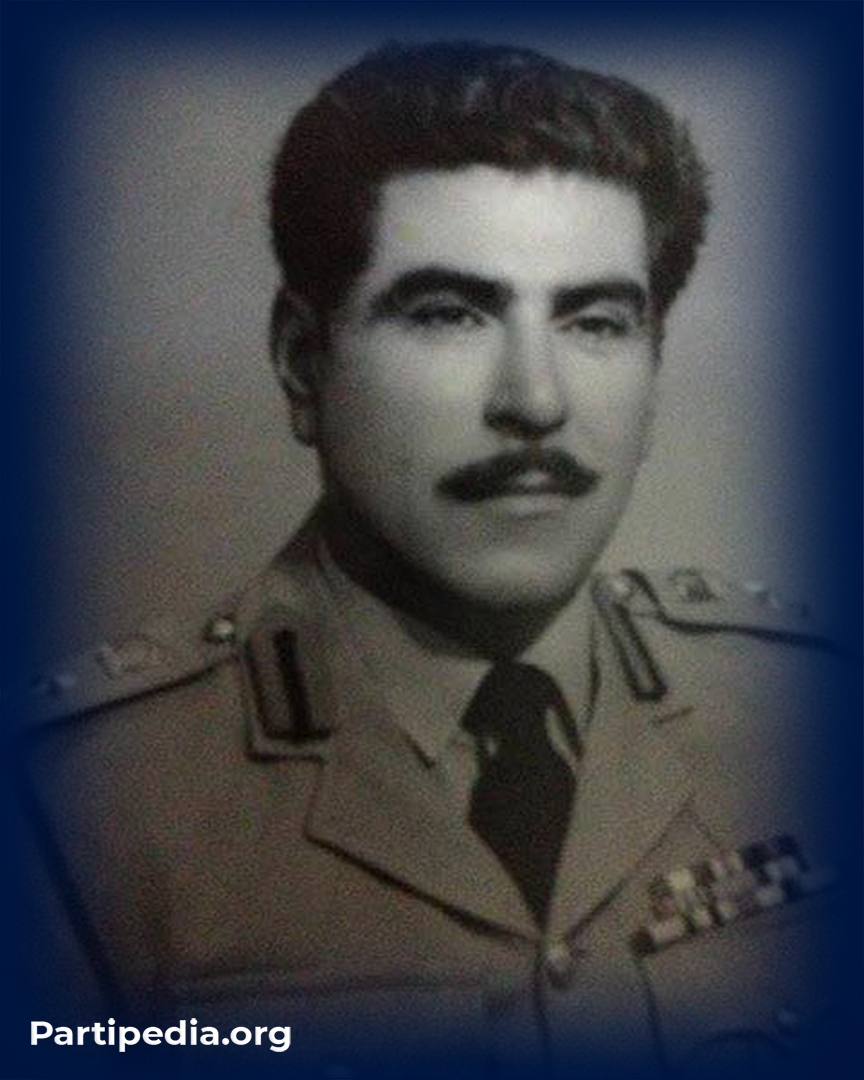
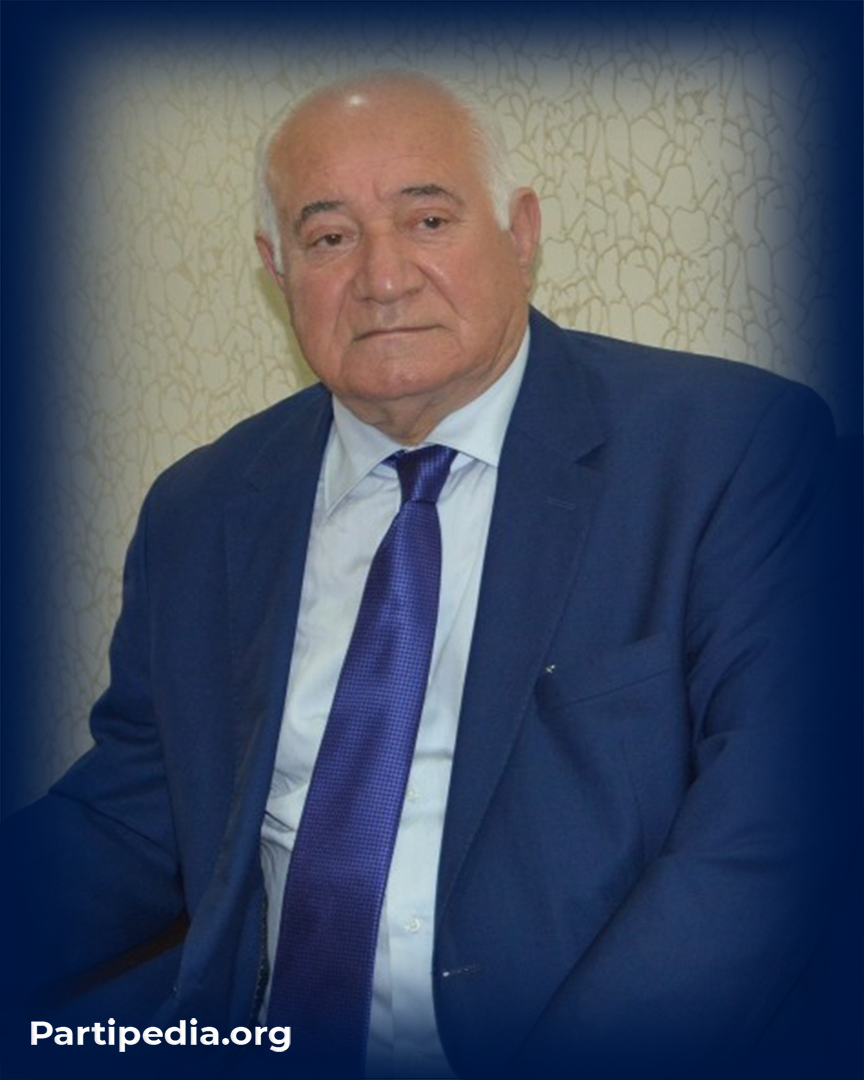
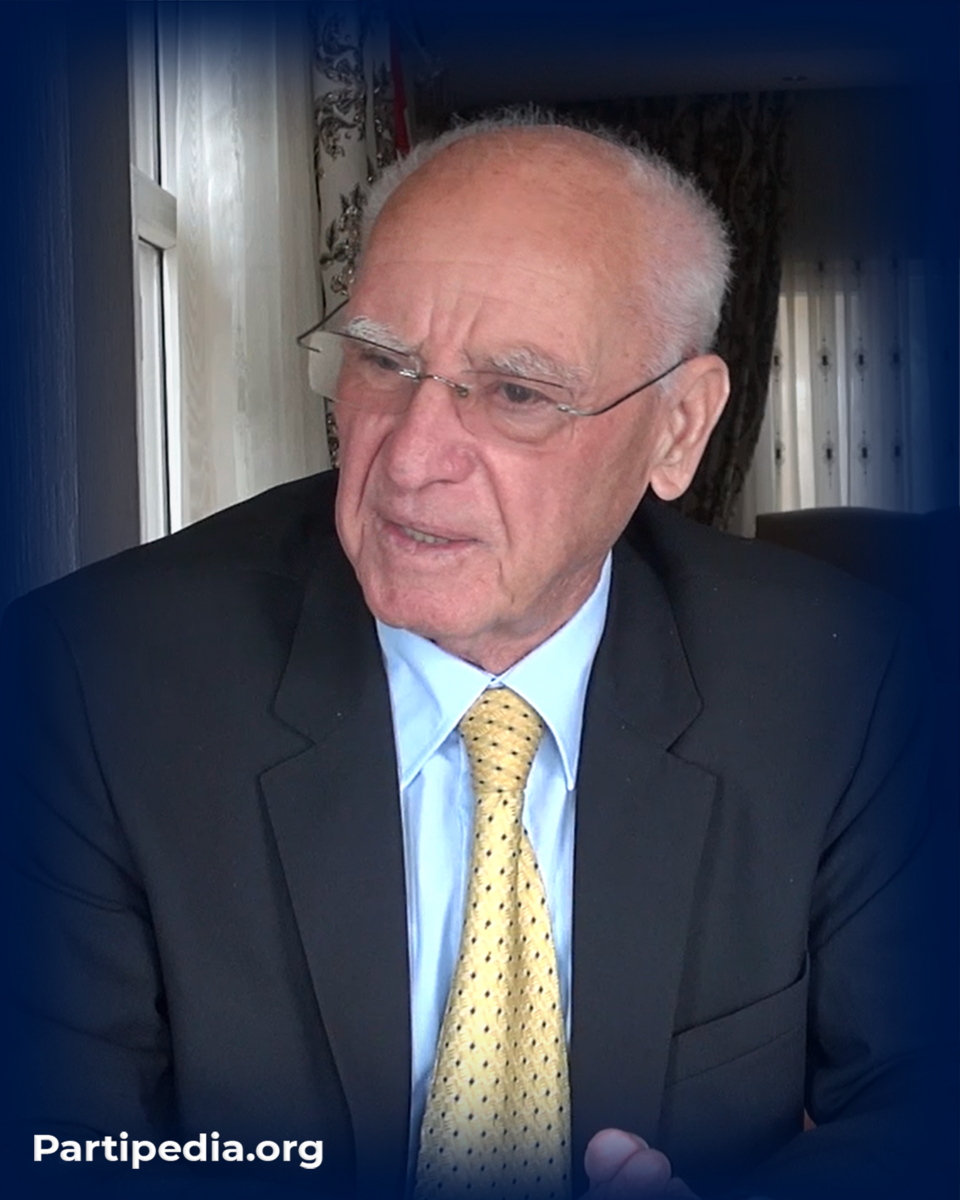
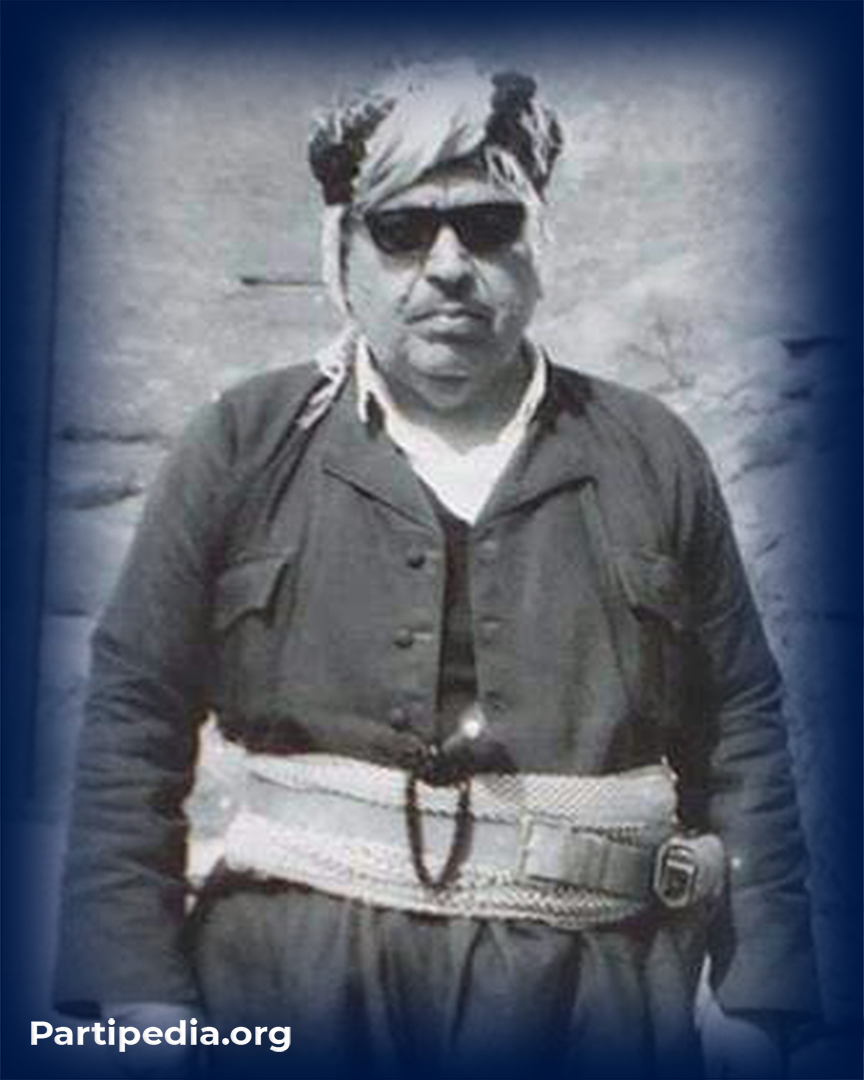
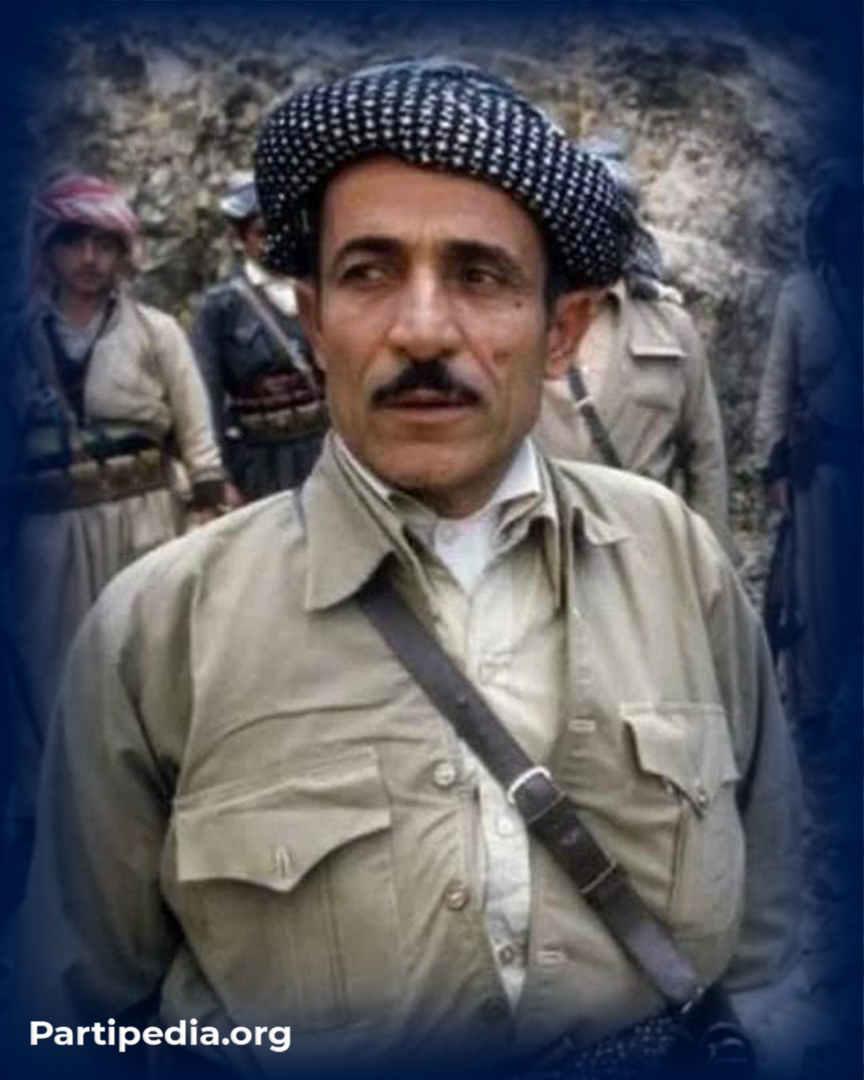
Rashid Haji Badri Abdullah Mihe was born in 1931 in the city of Duhok. His father is one of the leaders of the Sindhi tribe and the brother of Suleiman Haji Badri, a member of the Revolutionary Leadership Council in Iraqi Kurdistan. He began his religious education and then attended primary school in the town of Zakho, completed his secondary and high school education in Mosul, and graduated from the Military College in Baghdad in 1957. He was fluent in Kurdish, Arabic, Persian, and English.
Worksheet
Rashid Haji Badri Abdullah Mahi joined the ranks of the Kurdistan Democratic Party - Iraq in 1955 through officer Yusuf Jamil Miran. In 1958, after the return of President Mustafa Barzani (1903 - 1979) from the Soviet Union, he visited President Mustafa Barzani at the Semiramis Hotel in Baghdad, dressed as an officer.
In 1962, he was exiled to the military base in Karbala by Iraqi army authorities for being Kurdish, and in 1963, he was arrested by Iraqi army intelligence in Sulaymaniyah and then sent to Kirkuk and then to Baghdad.
On March 3, 1963, he left the ranks of the Iraqi army with the rank of first lieutenant and joined the ranks of the Peshmerga forces of the September Revolution and was appointed as the head of the Shahid Sidiq division in the Siwan area on the border of Kirkuk province. In the same year, he was appointed as the head of the fourth division in the Khanaqin - Halabja - Penjwen area. On June 20, 1963, he became the commander of the Siwan battle against the ground forces of the Iraqi army and the Arab militia of Hawija. He was able to achieve victory in this battle. As a military commander, he participated and supervised many battles and conflicts.
In 1964, after the extensive meeting of Mawet, with the majority of the officers of the revolutionary army of Kurdistan, he decided to support President Mustafa Barzani (1903 - 1979) and stood against the Political School group. In June 1964, he was elected as a member of the Preparatory Committee of the Sixth Congress of the Kurdistan Democratic Party and was a representative of the congress establishing the Revolutionary Leadership Council in Iraqi Kurdistan.
During the September Revolution, he was in charge of the Military School (military office) attached to the Executive Office (Executive School) of the Prime Minister of the Revolutionary Leadership Council in Iraqi Kurdistan. In 1970, he was elected as a member of the Central Committee of the Kurdistan Democratic Party at the Eighth Congress.
On January 4, 1975, he became a member of the Military Planning Committee of the September Revolution and in 1975, after the defeat of the September Revolution, he became a refugee in Iran. In 1977, under the supervision of Idris Barzani (1944 - 1987), he participated in the Karaj General Assembly, with the aim of cooperating with the interim leadership of the Kurdistan Democratic Party and also supervising 150,000 refugees from Southern Kurdistan in Iran.
He returned to Southern Kurdistan in 1979 and was appointed as an advisor to the Northern Affairs Committee by order of the Iraqi Revolutionary Leadership Council on October 25, 1979. After the Southern Kurdistan Uprising, he was established as a member of the military wing of the Kurdistan Democratic Party and retired in 1992 with the rank of Lieutenant General in the Ministry of Peshmerga of the Kurdistan Regional Government. On August 22, 1993, at the Eleventh Congress, he was elected as a member of the Central Research and Monitoring Committee of the Kurdistan Democratic Party - United. He was a representative of the Twelfth Congress in 1999 and the Thirteenth Congress in 2010 of the Kurdistan Democratic Party.
Source:
1 - Archives of the Encyclopedia Committee of the Democratic Party of Kurdistan.
2 - History of the Kurdistan Democratic Party, Congress and Conference (Program and Internal Procedure), Encyclopedia Committee of the Kurdistan Democratic Party, Volume One, (Hewlêr - Roksana Press - 2021).
3 - Ali Sincari, The Kurdish Case and the Arab Socialist Baath Party in Iraq, Part Three, (Duhok - Xanî Press - 2012).
4 - Faydel Rasul Khoshnav, Biography of Kurdish Officers, Part Two, (Tehran - Rojhilat Press - 2020).
5 - Habib Muhammad Karim, Kirkuk and the Holy September Revolution, Golan Al-Arabi Magazine, Gulan Cultural Center, Issue 70, Sixth Year, Hewlêr, Ministry of Education Press, March 31, 2002.
6 - Asad Edo, In Commemoration of the Anniversary of the Safin Epic, Brotherhood Newspaper, Organ of the Kurdistan Democratic Party, Issue 1.705, Hewlêr, Friday, July 30, 1993.
7 - Hamid Gewheri, Mustafa Barzani, Peshmerga and Leader, (Hewler - Rojhilat Press - 2017).
8 - Habib Muhammad Karim, History of the Kurdistan Democratic Party - Iraq (in main stages) 1946 - 1993, (Duhok - Xebat Press - 1998).
9 - Sherzad Zekeriya Mihemed, The Revolutionary Leadership Council in Kurdistan - Iraq 1964 - 1970 A General Historical Political Study, (Duhok - Center for Kurdish Studies and Document Preservation - University of Duhok - University of Duhok Press - 2010).
10 - Ali Sincari, The Kurdish Case and the Arab Socialist Baath Party in Iraq, Part Three, (Duhok - Xanî Press - 2012).
11 - Mihemed Mela Qadir, Brief History of the Party (PDK) and the Culture of the Immortal Barzani, Second Edition, (Hewlêr - Aras Printing and Distribution - 2007).
12 - Masoud Barzani, Barzani and the Kurdish Liberation Movement, Volume Three, (Hewlêr - Ministry of Education Press - 2002).
13 - The Peshmerga Force. How it was founded and flourished under the shadow of the Great September Revolution, Xebat Newspaper, Organ of the Kurdistan Democratic Party, No. 637, Wednesday, September 9, 1992.