

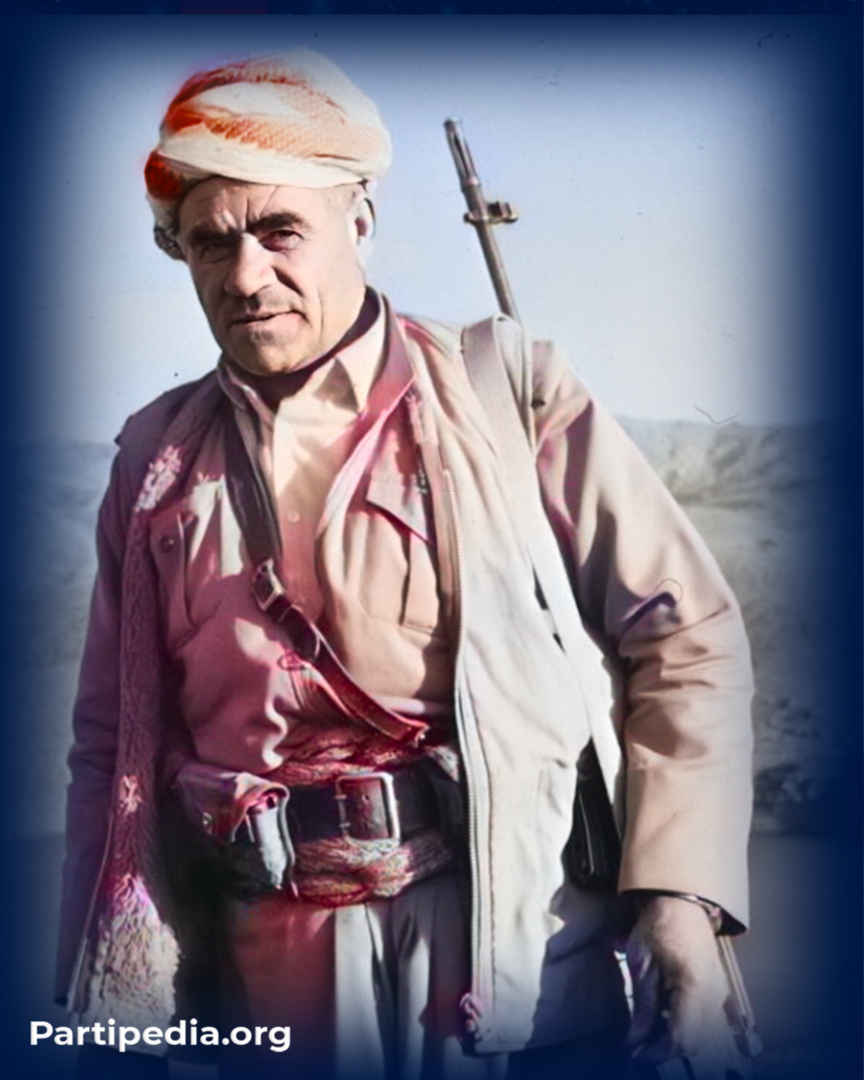
Biography
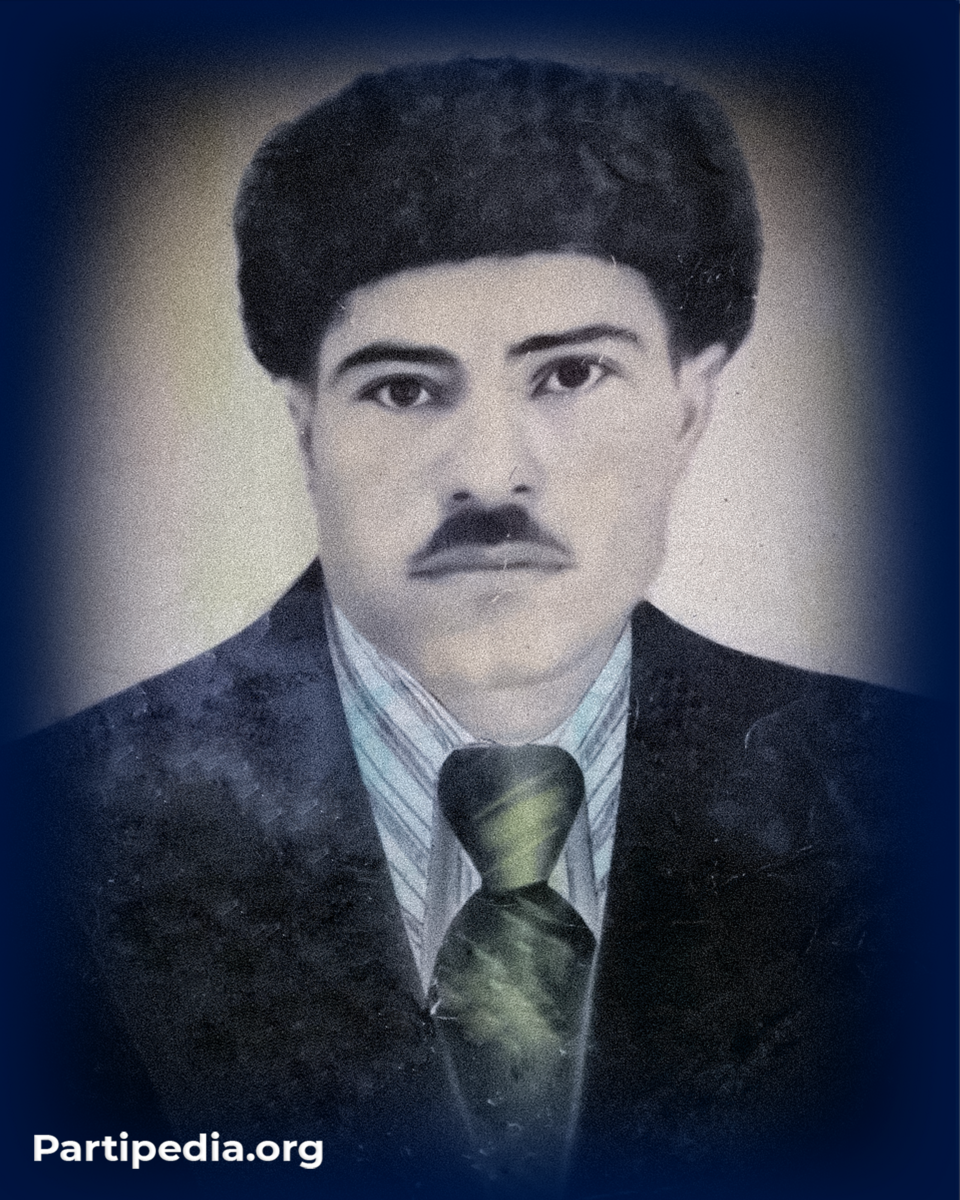
Omer Agha Dolemeri was born in 1927 in the village of Lêlokî in the Mêrgesor district. He was a shepherd and a shepherd during his childhood. After being promoted to the rank of General Mustafa Barzani He went to the Soviet Union, where he received a diploma in the Department of Agriculture at Tashkent University. After returning from the Soviet Union in 1959, the Agricultural Directorate was established in Erbil.
Worksheet
After the start of the second Barzan revolution in 1943 and its continuation until 1945, Omer Axa Dolemeri contacted the ranks of the second Barzan revolution and participated in the battle of Meydan Morik. Due to his participation in the revolution, on August 19, 1945, by order of the military court, all his property and assets were confiscated and he was arrested.
On October 11, 1945, and after the defeat of the second Barzan revolution, Mustafa Barzani and his friends moved to Eastern Kurdistan. After the establishment of the Democratic Republic of Kurdistan in Mahabad, on March 31, 1946, he defended the Kurdistan Republic within the framework of the Barzan force.
After the collapse of the Kurdistan Republic in Mahabad and Barzani's return from Eastern Kurdistan to Southern Kurdistan, he participated in the battles of the Shino and Halaji Plains in Eastern Kurdistan. He was also one of the Peshmerga who returned to the territory of Northern Kurdistan on April 19, 1947, via the Khwakurk and Berazgir Plains, to the Sherwan and Mizuri districts.
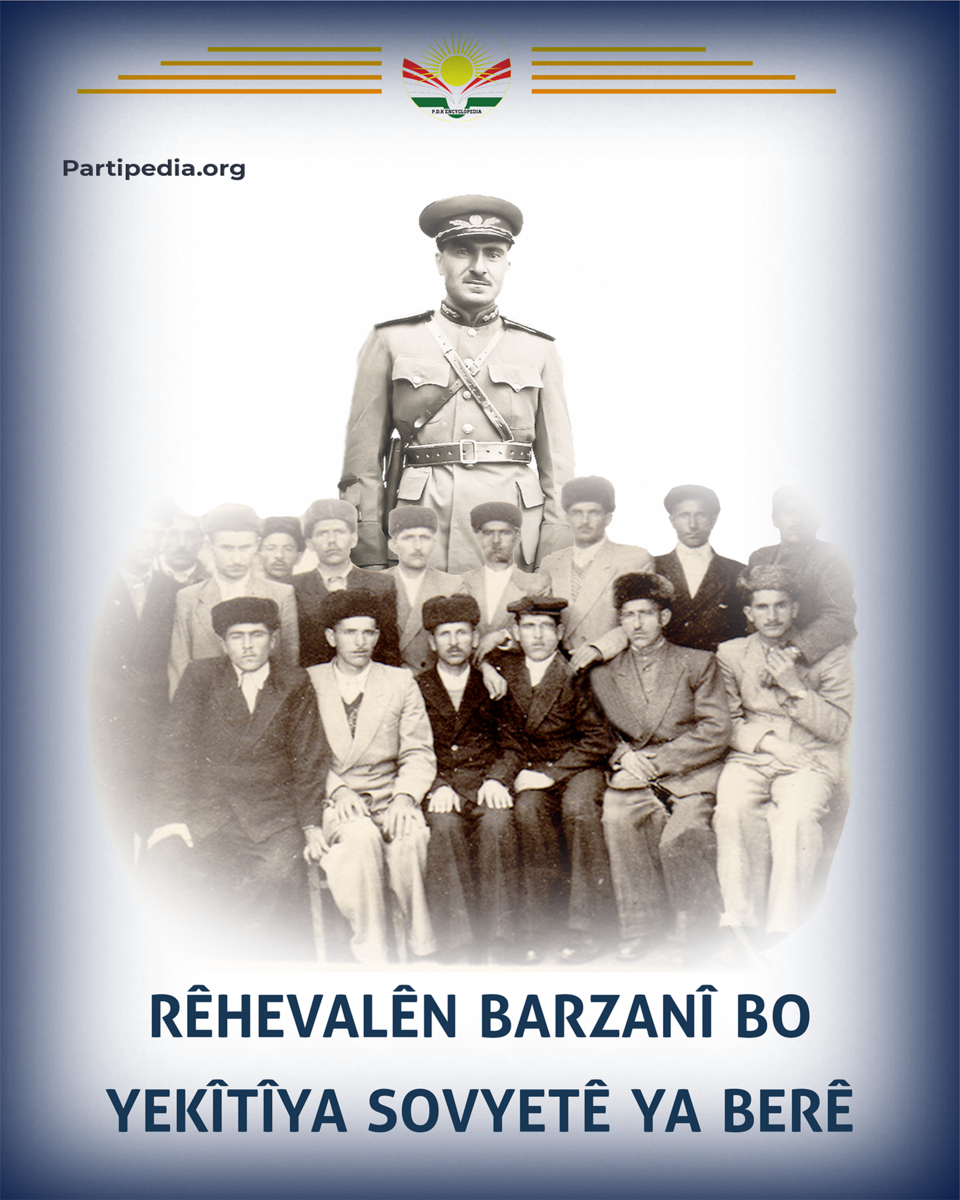
After the General's return Mustafa Barzani On May 15, 1947, he held a meeting with his friends in the village of Ergush and asked them to decide whether to stay or go to the Soviet Union. There, all his friends decided to stay and go to the Soviet Union. On May 23, 1947, General Mustafa Barzani They went to the Soviet Union and participated in the Battle of the Qir Valley and the Battle of Mako Bridge. After much hardship and hard work, on June 18, 1947, they crossed the Aras River, which forms the border between Iran and the Soviet Union, towards the Soviet Union.
After their arrival in the Soviet Union, on June 18, 1947, they stayed with all their comrades in the city of Nakhchivan, Republic of Azerbaijan, for forty days in a Saravel compound surrounded by barbed wire, and were guarded by a group of soldiers, and were treated as prisoners of war in terms of food, clothing, and movement. Then, by decision of the Soviet Government, they were divided into the Aghdam, Lachin, Ayulakh, and Kalbajar regions of the Republic of Azerbaijan. On January 10, 1947, they were transferred to a military base on the Caspian Sea in Baku, the capital of the Republic of Azerbaijan, and on the 23rd of the same month, they were given military uniforms and were given eight hours of daily military training and exercises under the supervision of officers of the Republic of Azerbaijan. At the same time, some of their friends who were literate were given the opportunity to learn Kurdish for up to four hours a day.
After the brutal treatment of Jafar Bakirov and his friends, they decided to be transferred from the military camp (August 29, 1948) in the Republic of Azerbaijan to the Chirchuk community near Tashkent, the capital of the Republic of Uzbekistan, where they continued to practice military art.
In March 1949, they and their friends were distributed in groups and teams by train and boat to villages throughout the Soviet Union and worked on the farms and fields of the Kolkhozes (the lands that people rented from the government and then gave to the government).
After much effort and several letters sent by General Barzani to Stalin, Stalin finally received a letter in which Barzani described the situation of his friends, and he immediately decided to form a committee to investigate the situation of Barzani's friends, and the final decision of the committee was to gather them all in the city of Virivsky. For this purpose, the latter went to the city of Virivsky in the Soviet Union in October 1951.
After the July 14, 1958 revolution in Iraq and the return of General Mustafa Barzani, on February 25, 1959, and in accordance with the third and seventh articles and paragraph (A) of the tenth article and the operation of article (11) in accordance with the provisions of the Public Procurement Act No. 19 of 1959, he and his companions were granted a general amnesty.
In 1958, the Republic of Iraq was established under the presidency of Abdulkarim Qasim. On April 16, 1959, he and his friends arrived in the southern part of the Republic of Iraq on the ship Georgia via the port of Basra and from there returned to Kurdistan.
Before the September Revolution began, he had left his official duties and returned to the President. Mustafa BarzaniIn 1961, he participated in the battles of Zawita Valley, Serê Acre and Piris, and was one of the leaders who fought with the President. Mustafa Barzani He went to the districts of Sengeser, Ranye and Dilman. In 1963, when the Iraqi government attacked and wanted to occupy the Barzan district, he returned to the district with General Barzani and the General sent a Peshmerga force under the command of Omar Axa to the Shush and Shermin districts, and as a result, those forces and the forces of other branches attacked the enemy and forced the enemy to retreat on June 26, 1963. However, after the enemy artillery shelled the district, Omar Axa was injured. After the war temporarily stopped, with President Mustafa Barzani He went to Dilman. In 1974, he participated in the Panjwani War and after returning, he joined the artillery unit of the Balek force.
After the defeat of the revolution and Barzani's departure to Iran, Omar Axa, the General's bodyguard, Mustafa Barzani was, then went to Iran. After the beginning of May Revolution, participated in the revolution and was elected President in 1979 Masoud Barzani He went to Rajan and continued to work there. He played a prominent role until the March 1991 uprising. On August 16, 1993, at the eleventh congress of the Kurdistan Democratic Party, he was awarded the title of President of the Kurdistan Democratic Republic for his work and resistance in the second Barzan revolution. Masoud Barzani He was awarded the Barzani Medal. He was martyred in the village of Ziyaret on July 10, 1995.
Source:
1- Hamid Gewheri, Barzani Medal, the highest literary award, Volume One, (Hewlêr - Haji Hashim Publishing House - 2015).
2- Hamid Gerdi, Puxtey Mêjûname, first edition, (Hewlêr - Aras Publishing and Distribution Department - Ministry of Education Press - 2004)
3- Heyder Faruq Alsamarayî, Ziya Ja'far and the Political and Economic History of Iraq, (London – Daralhukim 2016).
4- In the Memories of the Martyr Commander Heso Mirxan Jajoki, 62 Days with Barzani, the Barzanis' Departure to the Soviet Union, first edition (Hewlêr - Rewşenbîrî Publishing House - 1997).
5- Masoud Barzani, Barzani and the Kurdish Liberation Movement 1931-1958, (Duhok - Xebat Publishing House - 1998).
6- The decree of the Supreme Leader of the Islamic Revolution, the Liberation Council, issues 2, 3, Baghdad, April 1, 1959.
7- Archive of the Encyclopedia Committee of the Kurdistan Democratic Party. Contents of the interview with Babekir Sheikh Hussein Lachin, dated December 10, 2016 – Pirmam.