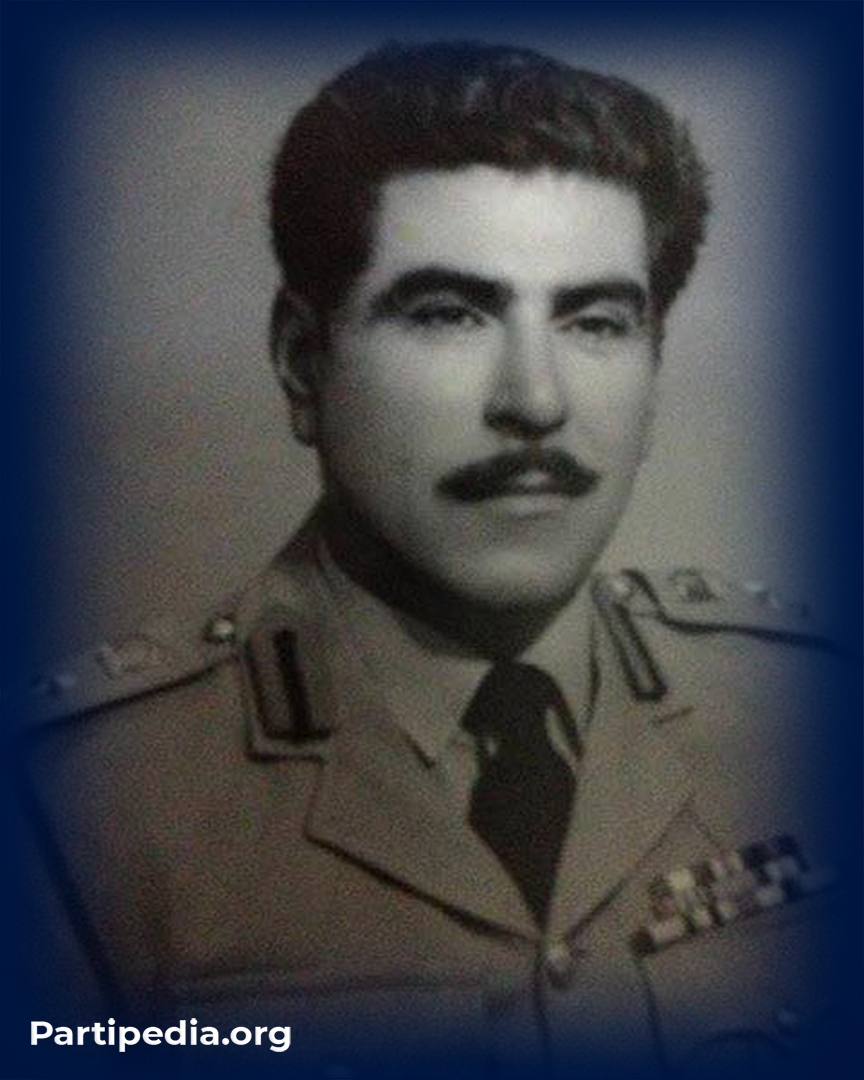


Officer and politician, İzet Abdulaziz Abdulatif Mahmud Kitani, became a member of the Darker Association and a member of the Hîwa Party in 1939. In 1944, he was appointed liaison officer with the second Barzan revolution in the Bile district by the Iraqi government. He participated in the second Barzan revolution (1943 - 1945). In 1945, he was on the founding board of the Azadî committee. In the same year, he was in charge of the defense front of the second Barzan revolution on the Rojava front (Amêdî). In 1946, he participated in the Democratic Republic of Kurdistan in the city of Mahabad and with the rank of Sergeant (Eqîd Rukin). In the same year, he was a member of the founding board of the Kurdish Democratic Party (Partiya Dêmokrata Kurdistan).
Biography
Izzat Abdulaziz was born in 1912 in the city of Amedi, which was part of the then Mosul province and is now Dohuk. He completed his primary and secondary education in the city of Amedi and in 1935 he went to the Baghdad College of Agriculture and graduated with the rank of Sergeant (Mulazim). In 1943 he graduated from the College of Operations in the artillery department with the rank of Forward (Raid Rukin). He served in the artillery department of the Baghdad and Mosul military bases. In 1939, he joined the Darker Association and after its establishment, he joined the ranks of the Hiwa Party and became one of its active members in Dohuk and Mosul.
Worksheet
In 1944, he was appointed as a liaison officer in the Bile district by the Iraqi government during the negotiations with the second Barzan revolution. In the same year, he communicated with the ranks of the revolutionaries of the second Barzan revolution. In 1945, he was on the founding board of the Azadi Committee under the presidency of Mustafa Barzani (1903 - 1979). At the beginning of March 1945, at the meeting of the Azadî committee, İzet Abdulaziz was appointed commander of the Rojava and Amêdî defense front. In April 1945, he became a member of the committee for negotiations with the Iraqi government and the British (British) work in Iraq. On April 30, 1945, the Azadî committee decided to return to the Iraqi army at the request of the Iraqi government to distance itself from the events and the war. On May 7 of the same year and after returning to the Iraqi army, he was taken to the Military Court for his participation in the revolution, but he managed to escape and returned to Barzan once again. On August 19, 1945, the Military Court, due to his participation in the second Barzan revolution, and the Pashemila Court issued a decision to seize all his transferred and untransferred properties and assets, and also issued a decision to execute him.
On November 11, 1945, after the end of the second Barzan revolution, he emigrated to Eastern Kurdistan. By the decision of the leadership and after the establishment of the Democratic Republic of Kurdistan in Eastern Kurdistan, he was promoted to the rank of Sergeant (Aqîd Rukin) in the city of Mahabad. He participated in the defensive war in the Republic of Kurdistan until his return to Iraq and on April 15, 1947, after the collapse of the Democratic Republic of Kurdistan, he surrendered to the Iraqi government at the border of Gader and was initially taken to the city of Erbil with 3 of his friends and then transferred to the central prison in Baghdad and was sentenced to the same punishment as before in a fake court. Although many Kurdish figures in Kurdistan visited Baghdad to change and mitigate this decision, it was to no avail and a day after the Mustafa Barzani and arriving in the Soviet Union, he was hanged in the Baghdad prison in front of Kurdish prisoners and the Kurdish anthem, and was hanged on June 19, 1947. His body was taken to his birthplace and buried in the Sinj Canyon near the city of Amed. Fayeq Bekes (1905 - 1948) is a Kurdish poet who wrote the poem Qewmi Kurd in memory of the four Kurdish officers. The great Kurdish poet Tewfiq (1867 - 1950) wrote the poem Kostey Niwê. The news of his hanging was broadcast on Baghdad radio, and the day was named Martyrs' Day.
Source:
1 - Archives of the Encyclopedia Committee of the Kurdistan Democratic Party.