

Biography
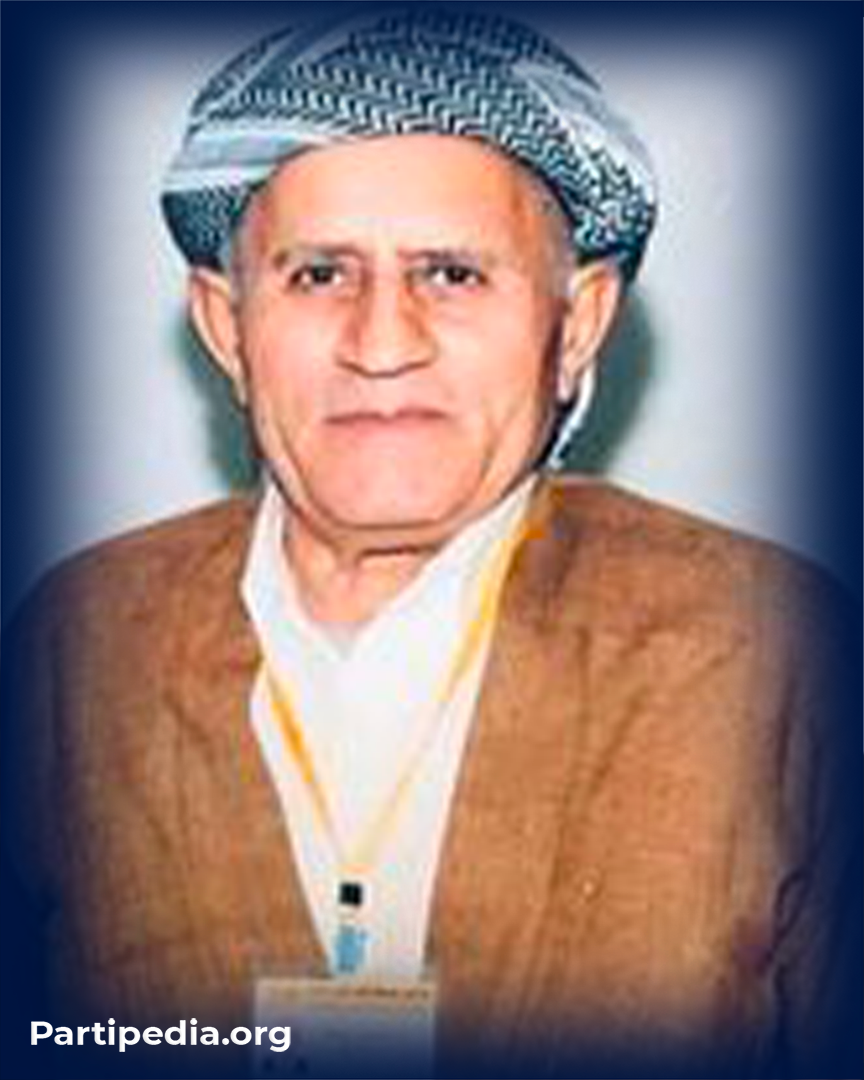
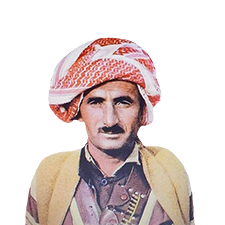
Haji Sheikhomer Beroxhi was born in the winter of 1916 in the village of Berox in the Şemzinan district of Northern Kurdistan. He studied in mosques. In 1945, after the defeat of the Second Barzan Revolution, he was imprisoned by the Iraqi government for 4 years. After his release, he went to his hometown and settled there. In 1959, after the return of Mullah Mustafa Barzani, he returned to Southern Kurdistan once again. In 1975, after the defeat of the September Revolution, he emigrated to Iran. They settled in the village of Chaldiyan in the town of Shino. He was later exiled to the city of Yazd by the Iranian government at the time. In July 1976, his family went to that city and reunited. He passed away in 1989.
Worksheet
In 1943, he joined the Peshmerga of the Second Barzan Revolution and became a commander. On October 20, 1943, when Mullah Mustafa Barzani returned to Barzan from Sulaymaniyah, the revolutionary forces carried out several operations under Barzani's orders, one of which was an attack on the fortress of the village of Zet in the Gerdiyan area. In this operation, Haji Beroqi He was victorious. On October 28, 1943, the Iraqi army attacked the Goreto area from Rwanda to defeat Barzani's revolutionary forces. Haji Beroxi participated in the defense as a commander. He participated in the Great Battle on November 10, 1943, the Battle of Badilyan-Kewnagund on August 28, 1945, the Battle of Meydan Morik on September 5, and was seriously wounded in the Battle of Meydan Morik.
In 1945, after the defeat of the Second Barzan Revolution, Haji Beroqi Due to his serious injuries, he was unable to accompany Mullah Mustafa Barzani to Eastern Kurdistan, so he was arrested by the Iraqi government and, after 4 years in prison, tried to hand him over to the Turkish gendarmerie. In 1959, after Mullah Mustafa Barzani returned from the Soviet Union, Haji Beroqi went to him, this would be the beginning of a new alliance Haji Beroqi.
In 1961 Haji Beroqi and several members of his tribe joined the Peshmerga forces of the September Revolution. On September 16, 1961, he participated in the Battle of Mount Pirsi in Acre against the army's attack on the revolutionary forces' positions. In the same year, he participated in the Dastan Lomana in the Behdinan area. In 1962, he participated in the battles of Ba'adr and Atrush.
On May 28, 1962, he returned to the Rwandz and Balakayeti areas with Mullah Mustafa Barzani. On April 4, 1962, he and several other Peshmerga commanders besieged the Rayat Fortress in the Haji Omaran district. In August 1962, after arriving in the Khoshnaweti area with Mullah Mustafa Barzani, he participated in the operation to liberate the Hiran and Nazanin fortresses, setting up his base in Hiran and Nazanin. On September 25, 1962, he led the Peshmerga Forces to liberate the Xwakurke area in the Sidekan district.
On February 4, 1963, he went to Ranya and Qaladizeh with Mullah Mustafa Barzani to attack the vendors. On June 29, 1963, he participated in the Battle of Derbandi Korê as a commander. On July 13, 1963, he participated in the Battle of Spilki near the village of Kelekin. On August 24, 1963, he participated in the Battle of Kuran and played a major role in that battle as a commander. On August 30, 1963, he thwarted a major attack by the Iraqi army in Kolanader on the Piran Mountain. On September 17, 1963, under the supervision of Luqman Mustafa Barzani, a defense line was established in the village of Shiw, and several battles broke out between the Peshmerga forces and the army.
On December 2, 1964, he traveled with Mullah Mustafa Barzani to the Pishdar and Ranye regions, from 1965 to 1970. Haji Beroqi He played the role of a brave and intelligent commander in organizing the Peshmerga forces and defense in all the attacks of the Iraqi army on Mount Zoziki, the Omar Axa Valley, Sertiz and the Beshe Valley.
On April 6, 1966, he commanded the Peshmerga forces to confront the Iraqi army's attack on the Omar Axa Valley, and in 1967, after the establishment of the Balek force. Haji Beroqi, became the commander of the first battalion of that force, in 1968 it came under the control of the forces from the Museka River to the Omer Axa Valley, Mount Zoziki, Mount Beşe, Mount Sartiz and the Hamilton Road. Haji Beroqi mother.
In 1974, after the start of the fighting between the Peshmerga forces and the Iraqi army, he was responsible for the fronts of Mount Zoziki, the Diyana Plain, the Omar Axa Valley, and Mount Sartizi. He thwarted most of the Iraqi army's attacks. Until 1975, his Peshmerga were there to prevent the Iraqi army from advancing.
In 1980, he once again joined the Peshmerga of the May Revolution, forming a force of 90 Peshmerga, who carried out operations in the Khan area towards the Kewper area and from there moved towards the Tuie Valley, carrying out numerous attacks on the Iraqi army in Haji Omaran, and continued his struggle until he fell ill.
Source:
-
1. Archives of the Encyclopedia Committee of the Kurdistan Democratic Party.