


Biography
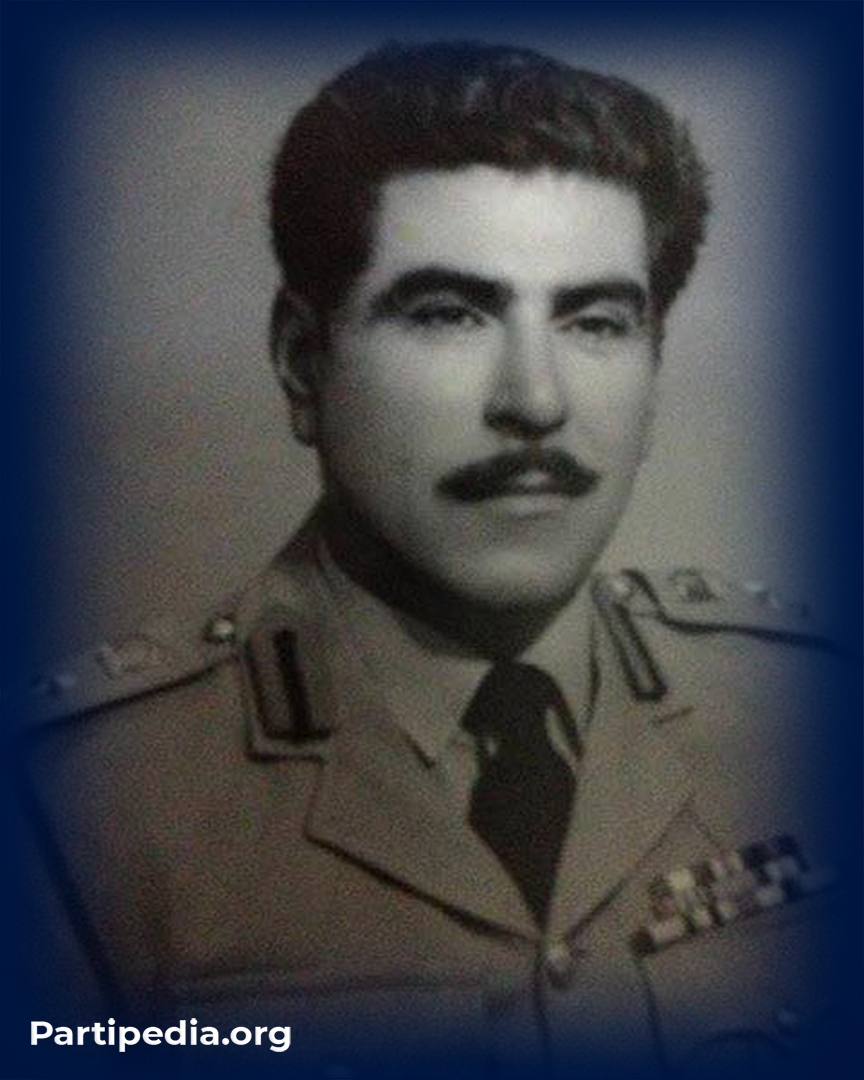
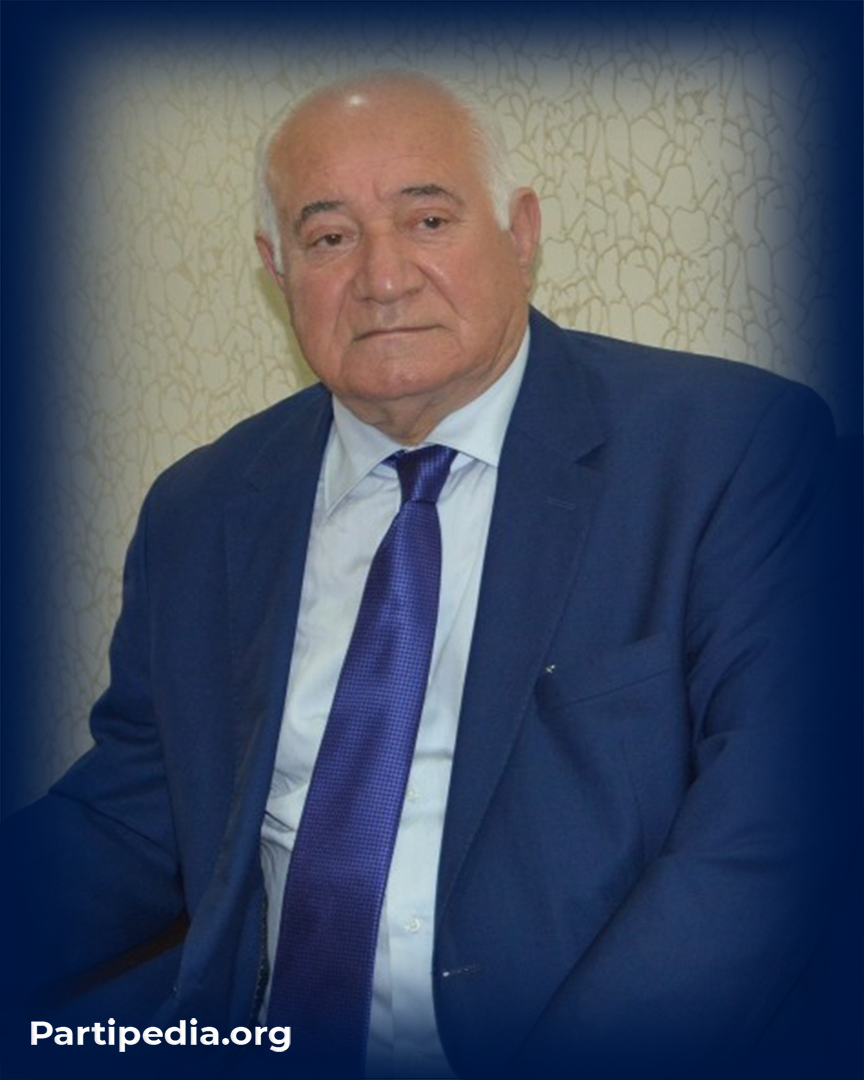
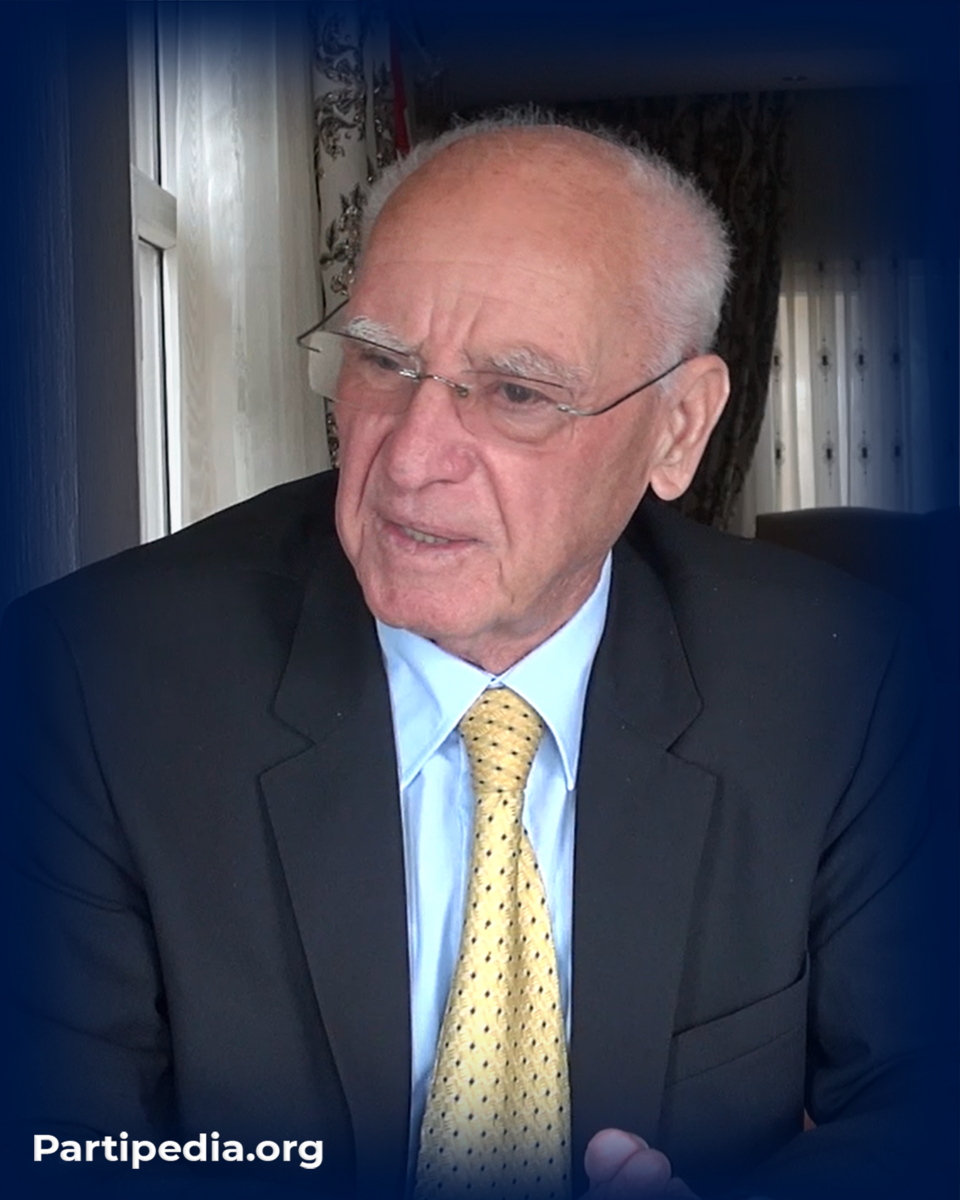
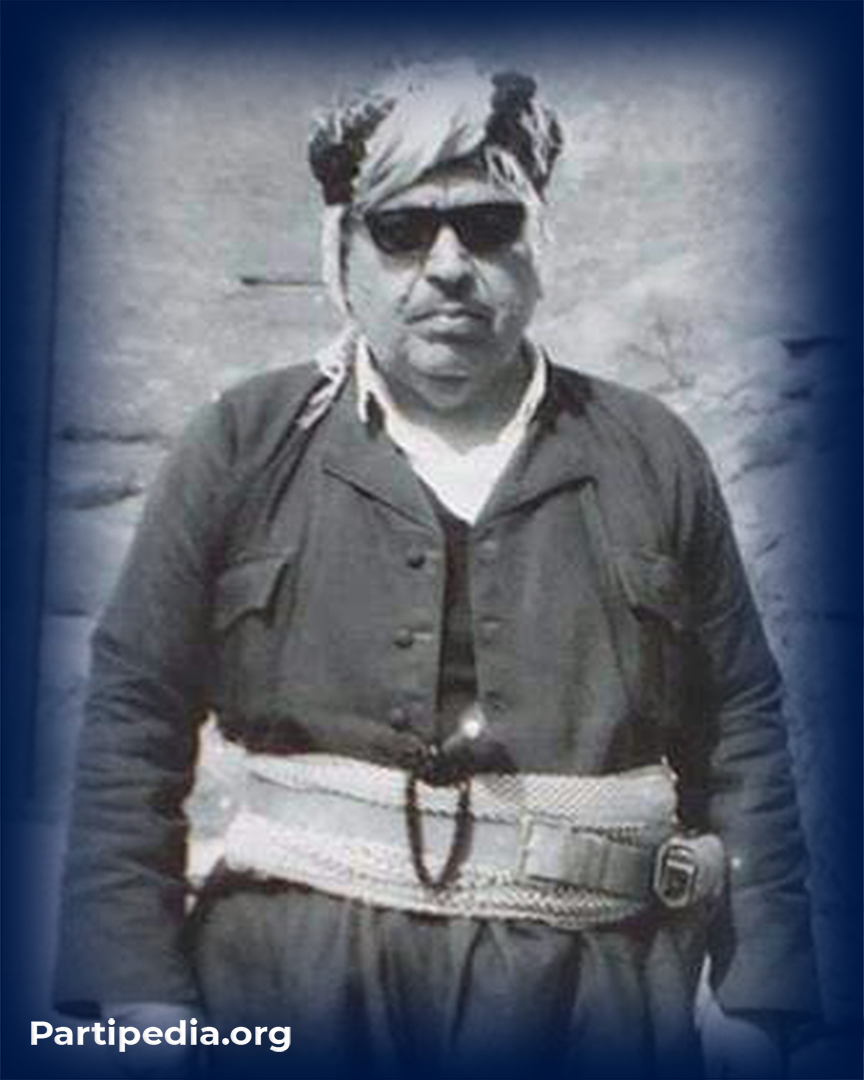
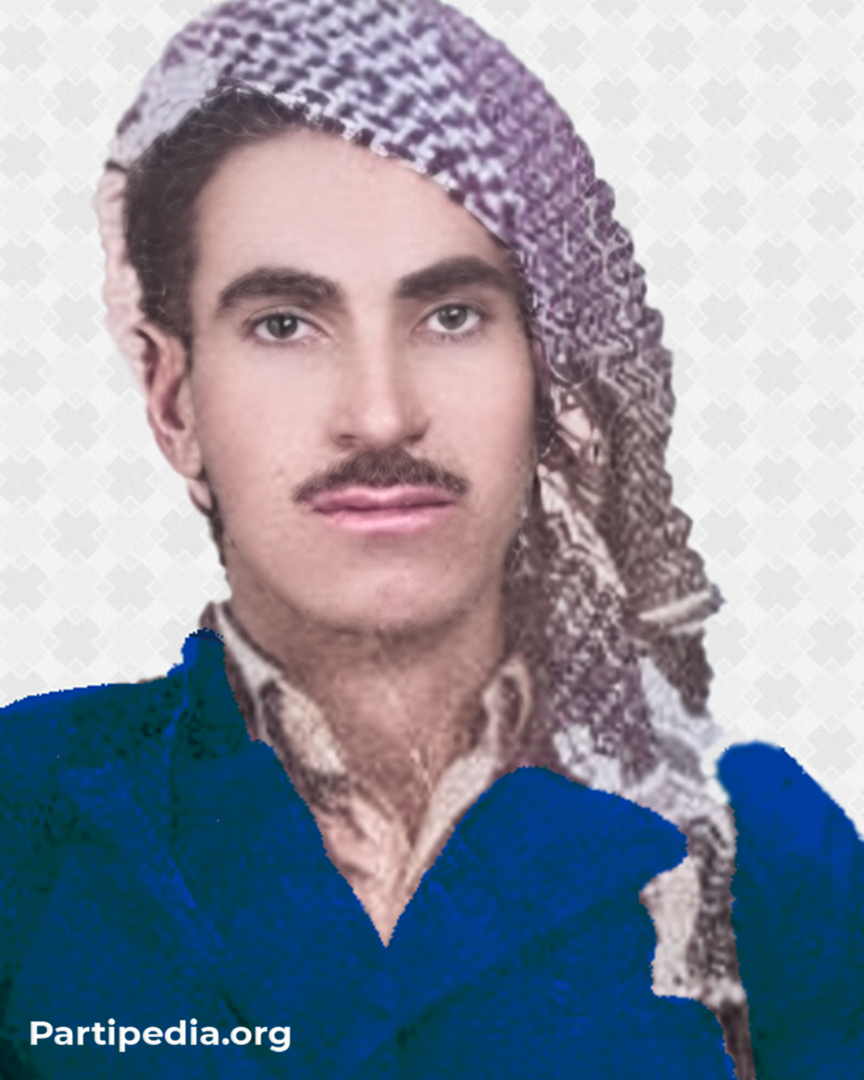
Ali Abdullah Reza, known as (Ali Askari and Shalaw), was born in the city of Sulaymaniyah in 1937. He is one of the sheikhs of the Naqshbandi order of Haqq, who are affiliated with the order of Mevlana Khalid Naqshbandi Sharazuri and whose roots reach back to Sheikh Isa Barzinji and is the nephew of Sheikh Abdulkarim Shadel (1893 - 1943) and uncle of Reza Shadel (1905 - 1961), who was a supporter and admirer of the First Barzan Revolution.
He graduated from the preparatory school. He married Sabiha Sheikh Jalal Sargelowi in 1959. In 1975, after the defeat of the September Revolution, he briefly fled to the Kingdom of Iran. On August 31, 1975, by order of the Iraqi Revolutionary Leadership Council, he was appointed as the administrator of the municipality of Refa'i district in southern Iraq. He knew Kurdish, Persian and Arabic.
Worksheet
Ali Askari became a member of the leadership of the Kurdistan Students' Union and the Kurdistan Democratic Youth Union in 1958. In 1958, he became the head of the Kirkuk organizations of the Kurdistan Students' Union. In 1959, he was elected by the congress delegates as a member of the Supervisory and High-Level Committee of the Kurdistan Democratic Party - Iraq (Fourth Congress). On Saturday, December 8, 1960, he became one of the members of the founding committee of the open phase of the Kurdistan Democratic Party - Iraq. In 1960, he was elected by the congress delegates as a member of the Central Committee of the Kurdistan Democratic Party (Fifth Congress). In November 1960, he became a member of the Revolutionary Organization Committee and responsible for Kirkuk.
In 1961, he became the head of the First Branch Committee of the Kurdistan Democratic Party and joined the revolution after the September Revolution began in the same year. In the early stages of the September Revolution, he worked in Badinan under the name Nehni Shalaw and as the second in command of the rebel forces of the September Revolution in the Badinan region. Later, he was transferred to Kirkuk Province by the Political School of the Kurdistan Democratic Party. In 1961, he participated in the broad meeting of the Security Council and voted for defense and revolution. In 1962, he was appointed commander of the Work Force by the leadership of the September Revolution. In 1964, he participated in the Mawet Conference and was therefore excluded from the Sixth Congress of the Kurdistan Democratic Party. Then, on July 6, 1965, after the issuance of a general amnesty order by Mustafa Barzani (1903 - 1979), the leader of the Kurdistan Democratic Party and the Revolutionary Leadership Council of Iraqi Kurdistan for supporters of the Political School wing, he returned from Hamedan in the Kingdom of Iran to the village of Haji Omaran in Erbil Province and met with President Mustafa Barzani. In 1965, he participated in the Battle of Mount Korek on the border of the Rewandiz district in Erbil Province against Iraqi army forces.
On August 28, 1966, he participated in the first meeting of the Ibrahim Ahmed – Jalal Talabani group in Timar (Germiyan). On December 28, 1966, he left the Raqqa Valley in the Sulaymaniyah Governorate with Jalal Talabani (1933 - 2017) and Omar Mustafa Mihemed Amin (1923 - 1992), known as Omar Debabe, and Hilmi Ali Sharif (1930 - 1998), and headed towards the Iraqi government's border and turned his back on the September Revolution. On October 15, 1970, together with Ibrahim Ahmed Fatah (1914 - 2000) and Omar Mustafa Muhammadeen (1923 - 1992), known as Omar Debabe, he met with President Mustafa Barzani at Barzani's headquarters in the village of Dilman and together they agreed to an apology. He settled in the town of Gelala in the Balekê region of Erbil Governorate until the defeat of the September Revolution.
On February 10, 1971, he joined the ranks of the Kurdistan Democratic Party for the second time. In 1973, he was appointed commander of the Hewler Plain Force by the leadership of the Kurdistan Democratic Party. In the years (1974 - 1975), he was a member of the Military School of the September Revolution. In mid-April 1975, he participated in the Urmia general meeting with the aim of continuing work and resistance. On April 24, 1975, he returned to Southern Kurdistan on the instructions of President Mustafa Barzani with the aim of preparing the situation for the revolution and was given material assistance and a contact code. On April 28, 1975, he returned to the city of Sulaymaniyah and on April 30, 1975, he was expelled to Baghdad by the director of Sulaymaniyah security. On August 23, 1976, he began negotiations and negotiations with the representative of the interim leadership of the Kurdistan Democratic Party in the Hanjirlu cave. On October 10, 1976, he participated in the extensive meeting of the Kurdistan Socialist Movement in Sura Giley. On August 31, 1977, he participated in the first leadership meeting of the Patriotic Union of Kurdistan in Dola Koste, in the triangle of the international border (Iraq - Turkey - Iran) belonging to the Erbil Governorate, with the aim of distributing administrative posts and was elected as the commander of the Peshmerga force. In 1976, he was among the founders of the Kurdistan Socialist Movement. In 1976, he joined the ranks of the Peshmerga force. In 1976, there were armed activities against the Iraqi army in the Pishder region on the border of Sulaymaniyah Governorate. In the summer of 1976, he met with Dr. Kemal Kirkuki in the village of Xurkhure, located in the Sulaymaniyah Governorate, with the aim of coordinating with the forces of the interim leadership of the Kurdistan Democratic Party. In the fall of 1976, he met with Kemal Kirkuki in the mosque of the village of Gelala, located on the border of Sulaymaniyah Governorate, with the aim of coordinating forces. In 1977, he became a member of the Political School of the Patriotic Union of Kurdistan. In 1977, he was appointed as the commander of the Peshmerga force of the Patriotic Union of Kurdistan.
Source:
1 - Archives of the Encyclopedia Committee of the Democratic Party of Kurdistan.
2 - Fatih Resul, In a Long and Far Caravan, (Stockholm – 1997), pp. 160 - 161.
3 - Ali Sincari, The Kurdish Question and the Arab Socialist Baath Party in Iraq, Part Three, (Duhok – Xanî Press – 2012), pp. 204, 359, 388 - 390, 394 - 395.
4 - Text of Mam Celal's article at the 10th Anniversary Commemoration Ceremony of Martyr Leader Omar Debabe, Kurdistanî Nû Newspaper, Organ of the Patriotic Union of Kurdistan, No. 2671, Year 11, Sulaymaniyah, Wednesday, December 30, 2002, p. 3.
5 - Muhammad Ismail Muhammad, A Follow-up to Mr. Farhad Awnī's Article Published in the Gulan Al-Arabi Magazine, Gulan Al-Arabi Magazine, Issue 29, Hewlêr, Al-Saqafî Press, October 29, 1998, p. 112.
6 - Aram Karim, I Know Mam Celal, Part One, (Bê Cih – 2000), pp. 13, 20 - 21.
7 - Eqîla Rawandizî, Biranîn ü Afrîn, (Hewlêr – Şawushka Center for Intellectual Activities – Education Press – 2005), p. 134.
8 - Şiwan Hüsên Şinîk Balekî, Gewher Namîq Salm 1946 – 2011: Life, Works and Political Role, Soran University, Faculty of Arts, 2016, (Unpublished Master's Thesis), pp. 80-81.
9 - Chris Kutschera, The Kurdish National Movement, Translated by Ibrahim Yunisi, Second Edition, (Tehran – Nigah Publishing House – 1377H), pp. 280, 312, 322.
10 - Şiwan Mihemed Emin Taha Xoşnaw, Hewlêr between 1963 and 1970: A Historical Study of the Political Situation, (Hewlêr – Salaheddin University Press – 2016), pp. 45, 170.
11 - David McDowall, History of the Modern Kurds, (Beirut – Al-Farabi Publishing House – 2004), pp. 518 - 519.
12 - Abdulrahman Sharafkendi, The Mistake of the Wise, (Paris – 1997), pp. 452 - 453.
13 - Shawkat Khaznedar, Journey and Stages of the Iraqi Communist Party... A View from the Inside, (Beirut – Dar Al-Kunuz Al-Edebiyya – 2005), p. 137.
14 - Abdul Fattah Al-Botanî, Studies and Articles in Contemporary Kurdish and Iraqi History, (Hewlêr – Spirêz Publishing House for Printing and Publishing – Hacî Hashim Publishing House – 2007), pp. 382, 387.
15 - Mihemed Hesen Sergêynêlî, The Ako Tribe Between Ancient and Modern History, Volume One, Second Edition, (Hewlêr – Rojhilat Press – 2019), pp. 447, 449.
16 - Mam Celal, Ibrahim Ahmed: A Wise and Knowledgeable Leader of a New Era of Kurdishness, Xak Magazine, Issue 58, Year 5, Sulaymaniyah, Diler Offset Printing House, April 10, 2002, p. 8.
17 - Mustafa Abdulrahman Yunis Erdani, Sersink: A Magnificent Resort and Camp 1922 – 2016, (Baghdad – Al-Jawahiri Press for Printing and Publishing – 2017), p. 146.
18 - Tawfiq Mullah Siddiq, Memories of the Days of Hizb and Peshmerga and My Expulsion, Second Edition, (Hewler – Shahab Press – 1996), pp. 72 - 73, 95 - 96.
19 - Rasul Rashid Said, Memories of a Peshmerga, (Unknown – 2017), pp. 37, 46, 90 - 91.
20 - Salih Rashid (editor), Mam Celal: A Vision of Ages, From Youth to the Republic Palace, Volume One, (Sulaymaniyah – Karo Press – 2017), pp. 183, 309, 366.
21 - Salih Rashid (editor), Mam Celal: A Vision of Age, From Youth to the Republic Palace, Volume Two, (Sulaymaniyah – Karo Press – 2017), p. 78.
22 - Ibrahim Ahmed, A Thesis from the Work of Kaka Omar Debabe, Kurdistan New Newspaper, Organ of the Patriotic Union of Kurdistan, Issue 303, Year 2, Hewlêr, Friday, December 29, 1993, p. 5.
23 - Talib Moriyasi, The Search for Truth, Volume One, (Hewlêr – 2004), p. 132.
24 - Cemal Baban, Kurdish Scholars of Iraq, (Sulaymaniyah – General Administration of Printing and Publishing – Şivan Press – 2006), p. 526.
25 - Habib Mihemed Karim, History of the Democratic Party of Kurdistan – Iraq (In Main Stages) 1946 – 1993, (Duhok – Xebat Press – 1998), pp. 61, 67 - 68.
26 - Hesen Erfe', Kurds and a Historical and Political Study, (No Place – No Year), p. 140.
27 - Rojin Celebi Munir, Zakho: July 14, 1958 – March 6, 1975, (Unpublished – Zakho Center for Kurdish Studies – 2018), pp. 121, 223, 226.
28 - Heso Hurmi, Some Scenes from the Life of Emir Tahsin Said Ali Beg, (Hewlêr – Rojhilat Press – 2017), p. 155.
29 - Ehmed Şerîf Lek, Commentary on Historical Events, Volume Two, (Hewlêr – Rojhilat Press – 2019), p. 67.
30 - Heme Farhad Halabje, From Şinraw to Stockholm, Third Edition, (Sulaymaniyah – Karo Press – 2015), pp. 168, 203, 278 - 279.
31 - Xelef Xafur, Defri Zerin, Volume One, (Kirkuk – Kirkuk Intellectual and Social Association – Karo Press – 2011), p. 44.
32 - Dana Adams Schmidt, Journey to the Brave Men of Kurdistan, Translation and Commentary by Cêrcîs Fethullah, (Hewlêr – Aras Publishing House for Printing and Publishing – Ministry of Education Press – 1999), p. 357.
33 - Ardaşır Peşeng, Kurds in the Middle of the Iran-Iraq War, (Tehran – Merz and Bum Publishing House – 1394 AH), p. 153.
34 - David Mc Dowall, Contemporary Kurdish History, Translated by Ibrahim Yunis, Fourth Edition, (Tehran – Paniz Publishing House – Dalaho Printing House – 1393 AH), pp. 536 - 538.
35 - Serhed Yunis Mihemed, From Sharazur to Nasiriyah, (Hewler – Hope Press – 2018z), p. 127.
36 - Salam Abdulkarim, Political Life in Southern Kurdistan 1975 – 1991, (Sulaymaniyah – Çarçıra Press and Publications – 2011), p. 43.
37 - Seyid Ali Mujani, Solmaz Sidqi, Ilaha Ne'meti..., Dictionary of Contemporary Intellectuals and Families in Iraq, (Tehran – Azam Publishing House – 1392 AH), p. 905.
38 - Abdulsattar Tahir Sharif, Kurdish Associations, Organizations and Parties 1908 – 1958, (Baghdad – El-Shuun El-Saqafiye Publishing House – 1989), pp. 182, 202, 205.
39 - Abdulsattar Tahir Sharif, History of the Revolutionary Party of Kurdistan, Second Edition, (Baghdad – Al-Shoreshî Publications – 1979), pp. 170, 172, 182.
40 - Ali Sincari, The Kurdish Question and the Arab Socialist Baath Party in Iraq, Part Three, (Duhok – Xanî Press – 2012), pp. 206 - 207, 330.
41 - Mihemed Sehl Taqoş, History of the Kurds 637 – 2015, (Beirut – Al-Nefais Publishing House for Printing and Publishing – 2015), pp. 261 - 262.
42 - Omar Abdulaziz, Encyclopedia of Kurds and Kurdistan, Volume One, (Sulaymaniyah – 2018z), pp. 504 - 507.
43 - Salar Hafid, Ali Askari and Hukim for History, (No Place – No Year), pp. 29, 39, 44 - 45.
44 - Fazil Karim Ehmed, Embarking on the Path with Great Dreams, Volume One, (Sulaymaniyah – Tehran Press – 2019), pp. 134 - 136, 144, 294, 321, 335, 402.
45 - Farid Esasard, Encyclopedia of the Patriotic Union of Kurdistan, Second Edition, (Sulaymaniyah – Academy of Awareness and Cadre Development – 2015), pp. 516 - 517.
46 - Fuad Sidiq, The Political Circle, (Hewler – Ministry of Culture – General Directorate of Printing and Publishing – Roşenbırı Press – 2006), pp. 150, 156 - 157.
47 - Revolutionary Leadership Council Decision No. 926, Iraqi News Agency, Baghdad Ministry of Justice, No. 2488, Year 18, Baghdad, Monday, September 8, 1975, p. 8.
48 - Kazim Habib, Some Views of Twentieth-Century Iraq: Iraq in the Republican Era, Part Two, Book Nine, (Hewlêr – Dar Aras for Printing and Publishing – 2013), pp. 352, 358.
49 - Fifth Congress of the Democratic Party of Kurdistan, Roji Nu Magazine, Issue 3, Year 1, Sulaymaniyah, June 1960, p. 56.
50 - What is the secret behind the flight of the expelled group to the government areas?, Xebat Newspaper, Organ of the Democratic Party of Kurdistan, No. 486, Xebat Press, March 1966, p. 2.
51 - Muhammad Ismail Muhammad, A Follow-up to the Article by Mr. Farhad Awnî published in the Magazine (Gulan Al-Arabi), No. 28, Hewlêr, Al-Saqafî Press, October 25, 1998, p. 112.
52 - Muhammad Ali Ismail, My Memories: Seventy Years of Age and More than Half a Century of Work, (Unpublished – 2019), pp. 127 - 128, 132 - 134.
53 - Mihemed Fatih, The Development of Hizbiyah Life in Southern Kurdistan, (Hewlêr – Salaheddin University Press, Hewlêr – 2014), p. 399.
54 - Masoud Barzani, Barzani and the Kurdish Liberation Movement, Volume Three, (Hewlêr – Ministry of Education Press – 2002), pp. 144, 166, 198, 255 - 256.
55 - Mustafa Neriman, Memories of My Life, (Baghdad – Kurdish Intellectual and Publishing Institution – (Dar Al-Hurriya Publishing House) – 1994), p. 226.
56 - Mullah Mustafa Barzani and his Companions Present News to the Minister of the Interior Regarding the Establishment of the Party, Xebat (Struggle) Newspaper, No. 141, Al-Ra'i Al-Am Printing House, Baghdad, Sunday, December 9, 1960, pp. 1, 8.
57 - Mahmud Mela İzzet, The Endless Caravan, (Sulaymaniyah – Serdem Printing and Publishing House – 2000), p. 88.
58 - Mullah Shem Hamdi Hacî Omerani, How Did the New Revolution of 1976 Begin?!, Second Edition, (Hewlêr – Hacî Hashim Press – 2013), pp. 40 - 42.
59 - Mullah Faruq Şiwanî, All Kurds, Volume One, (Hewlêr – Rewşenbîrî Press – 1997), p. 117.
60 - Newşirwan Mustafa Emin, From the Danube to the Black Sea, (Nowhere – 1997), p. 173.
61 - Hawrê Baxewan, Hawrêname for the History of Kurdistan and the Kurds, (Sulaymaniyah – Serdem Printing and Publishing House – Rûn Press – 1999), p. 191.
62 - Hawkar Kerîm Heme Şerîf, The September Revolution, (Hewlêr – Salaheddin University Press – 2012), pp. 45 - 48.