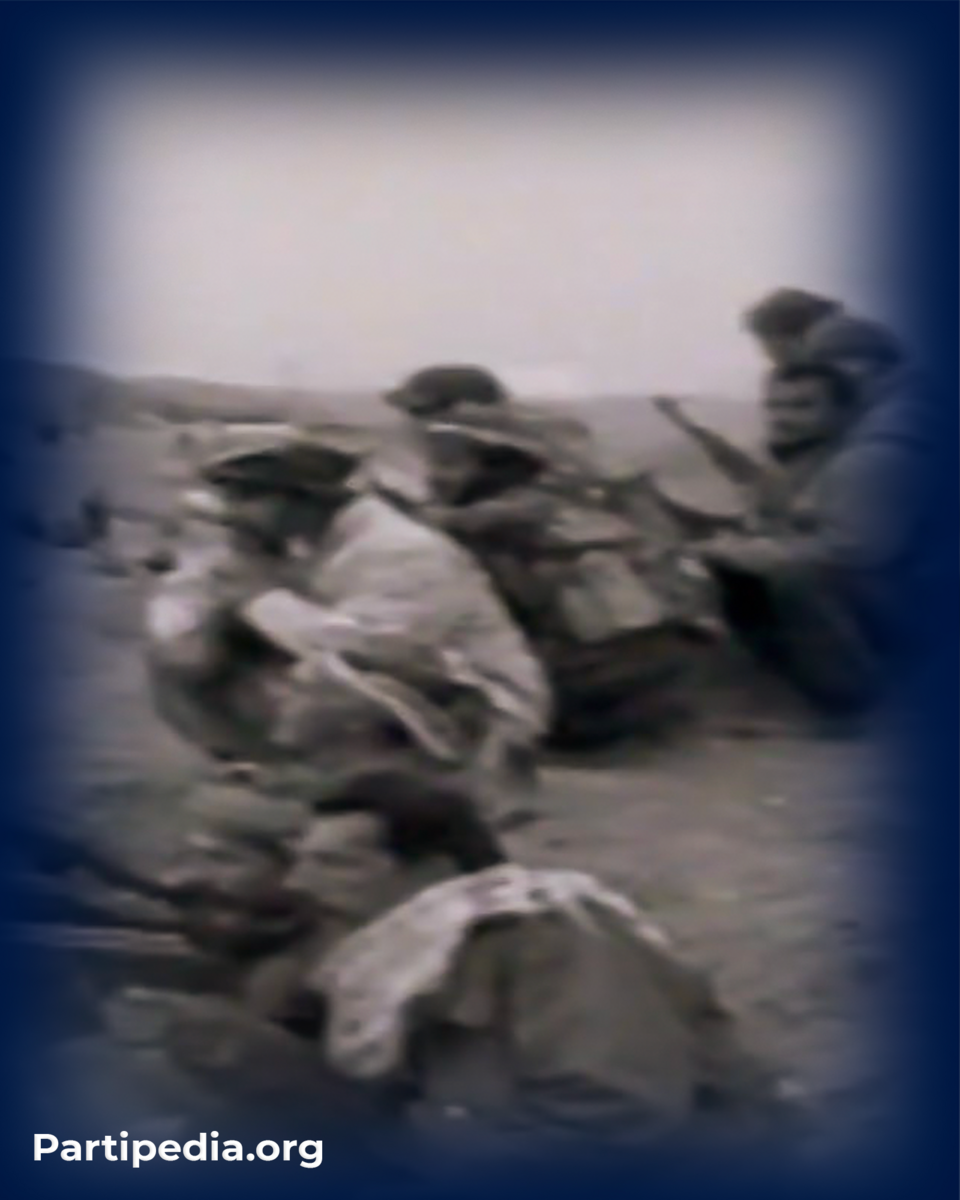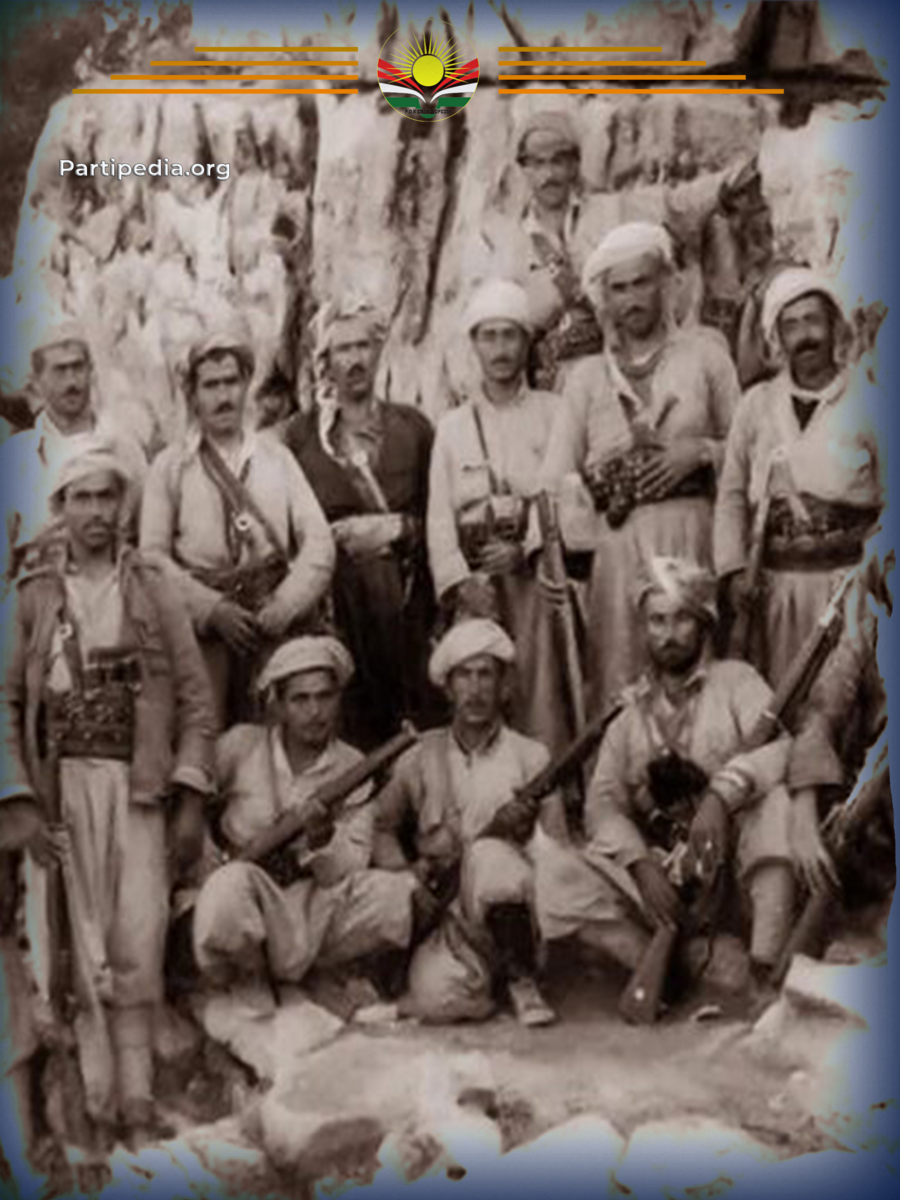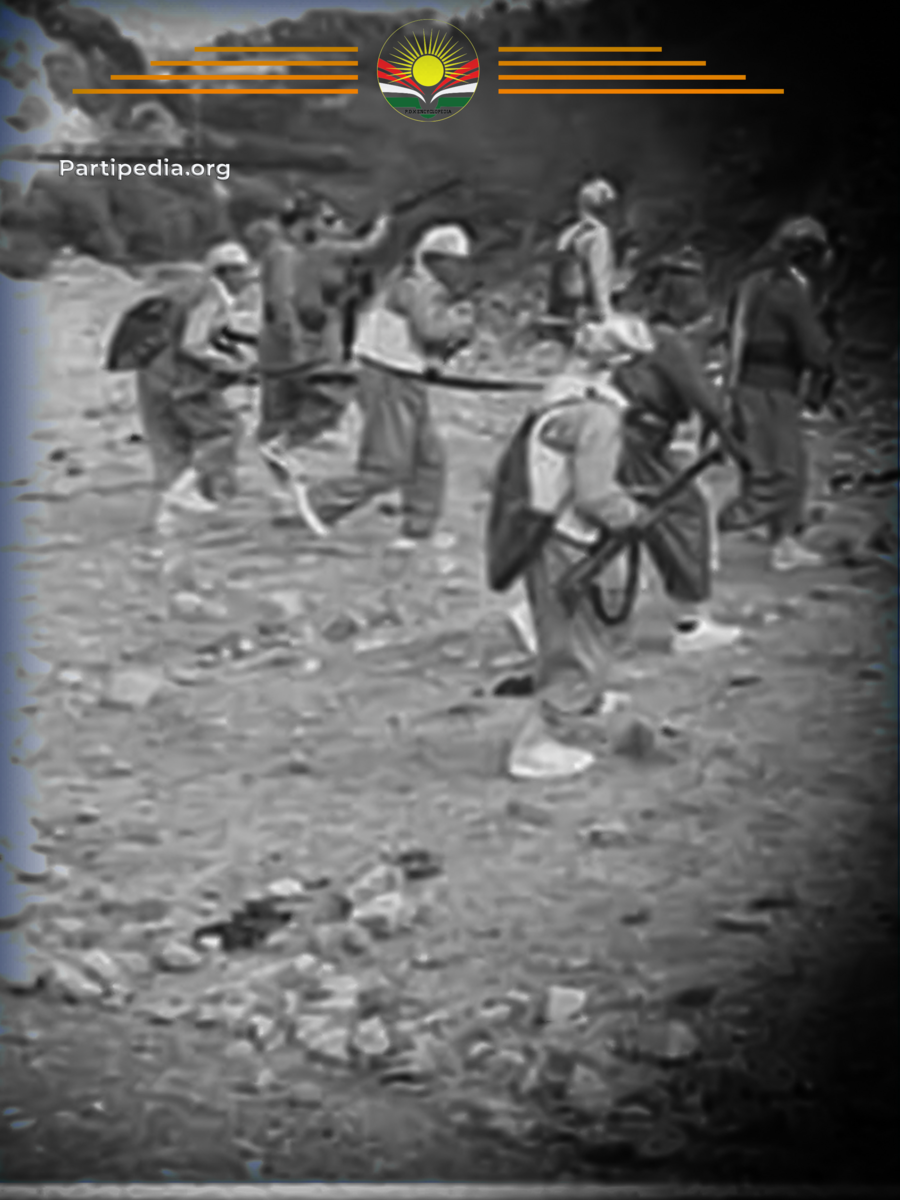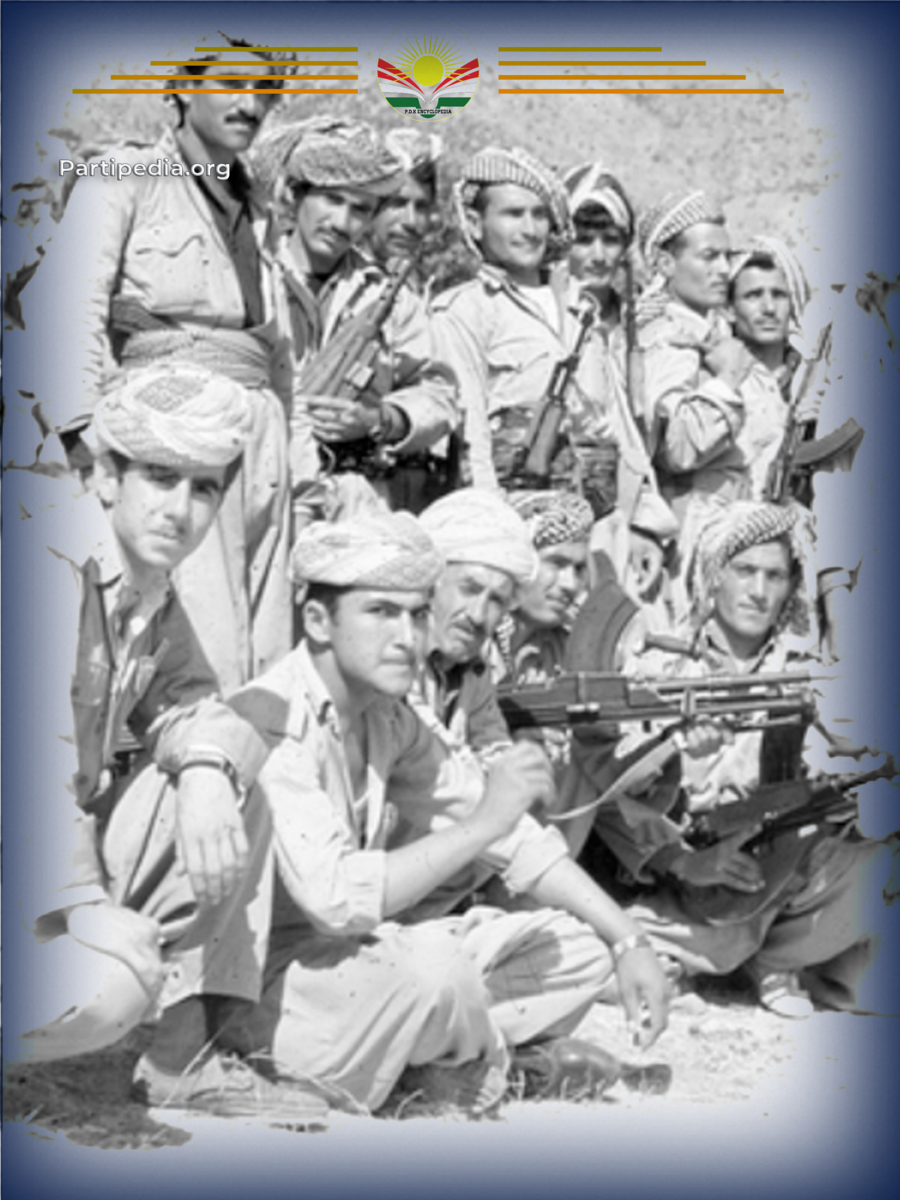



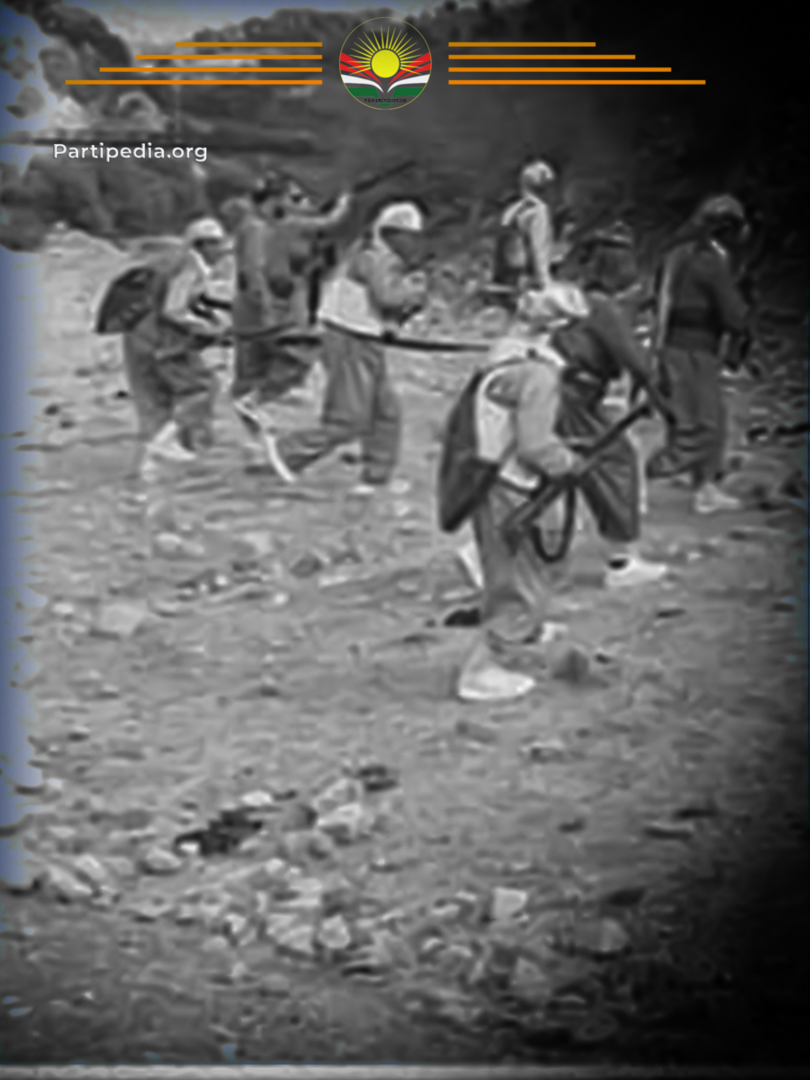
When the Iraqi government declared war on the September Revolution in 1974, it launched a broad offensive against Kurdistan. Although the Iraqi army focused its attacks on Balakayeti due to the presence of the revolution's leadership center in that area, it did not ignore any areas under the control of the revolution. Instead, the Iraqi army's military operation encompassed all areas of the revolution. Peshmerga forces in Duhok continuously shelled Iraqi army convoys on the Aloka road. In particular, in the west of the city of Duhok, a group of Peshmerga who were on duty in the Simt cave in that area had a 120 mm mortar in their hands. Their mission was to blow up Iraqi army vehicle convoys if there were many military movements in the area.
In early October 1974, about 10 military vehicles and armored vehicles accompanied a member of the Ba'ath Party leadership named Abdulfatah Yasin, who was heading towards the base of the 18th Force of the 1st Army Division. The Peshmerga targeted them with mortars they had and shelled them. In the meantime, a mortar shell hit an armored vehicle, killing all the soldiers inside. After the commander returned to Mosul, he gathered all the military units and gangs (jash) in the area and attacked the Peshmerga forces, in order to capture Mount Resh, Tahta Cave and Simt Cave.
The Iraqi army units in the attack on the areas under the control of the revolution consisted of the 18th, 5th, 2nd divisions, artillery and gangs of the Koçer, Doski, Surchi, Zebari and Herki tribes. As a result, a heavy battle broke out that lasted eleven days. To help the battlefields, the Ali Ali Battalion and the Mirani Battalion each came to the battlefield as support forces. The Iraqi army first attacked Mount Resh, which was defended by the 1st battalion of the Duhok forces under the command of Naaman Samad. At first, the Iraqi army began the attack by shelling the Peshmerga positions and that mountain. Then, infantry forces and gangs attacked Mount Resh. Due to the heavy shelling and the presence of 5 martyrs and nearly 40 wounded, the army took control of Mount Resh on the first day of the attack.
Then, the Duhok force deployed four machine guns, a 120 mm mortar and an 82 mm mortar in Kevre Biske, Tahta Cave and Simt Cave opposite Mount Resh to bombard the army on Mount Resh. In order to prevent the Iraqi army from establishing a strong base and securing its military points, the force commander, Abdulrezaq Germavi, personally monitored the artillery. A week later, they planned a counterattack. For the attack, they formed a force of 40 elite Peshmerga under the supervision of Qadir Alekini, most of whom were from the engineering section of the Duhok force. With a solid military plan, they marched at night and hid on the slopes of Mount Resh in a thick forest, taking all their military equipment and food with them.
The Peshmerga attack plan was to stop the artillery fire at sunset the next day and suddenly attack the military bases. The plan went as planned. Also, in the west of Mount Resh, the 1st Battalion was ordered to attack the mountain from the side that was on standby if 40 Peshmerga began to move from their positions. When the attack began from both sides, fighting and clashes continued for an hour. The Peshmerga managed to control the entire mountain at that hour, inflicting heavy losses on the Iraqi army soldiers and gangs, 21 were killed and many wounded, while the others fled, 6 soldiers were captured and sent to the leadership in Balakayeti.
The Peshmerga captured 14 Kalashnikovs, one RPG, a large number of various cartridges and nearly 10,000 different mines that they were unable to plant, as well as many 60, 82 and 120 mm mortars, military clothing and equipment. In the battle to capture the Black Mountain, the losses of the Peshmerga forces were 6 martyrs and 20 wounded. It is worth noting that after this attack, the Iraqi army did not launch any further attacks on the Peshmerga forces in the province of Duhok until the defeat of the revolution in 1975.
Source:
- Masoud Barzani, Barzani and the Kurdish Liberation Movement, Volume III, Part II, The September Revolution 1961-1975, First Edition – Hewlêr, 2004.
- Senger Ibrahim Khosnaw, Military Events of the September Revolution 1970-1975, 1st Edition, Danişfer Publishing House, Hewlêr, 2022.
- Hojin Masoud Serni, The September Revolution in the Behdinan Region 1961 – 1975, 1st Edition, 2018.
- Ibrahim Celal, Southern Kurdistan and the September Revolution, Construction and Destruction 1961-1975, Fourth Edition, 2021.