

After the Ba'th Party came to power in Iraq with the military coup of July 1968, it intensified its wars and attacks on Kurdistan again. The Behdinan area was one of the areas that was attacked by the Iraqi army in order to gain control and remove all obstacles in front of the military power that they had been struggling and fighting for for several years. For that purpose, they carried out several attacks on many parts of Kurdistan and killed and massacred many innocent civilians. The story of the Christian village of Sorya was one of the series of crimes, massacres and poverty that the brutal Iraqi army carried out in order to maintain and strengthen its position against the leadership of the Kurdish people and the Kurdish revolution.
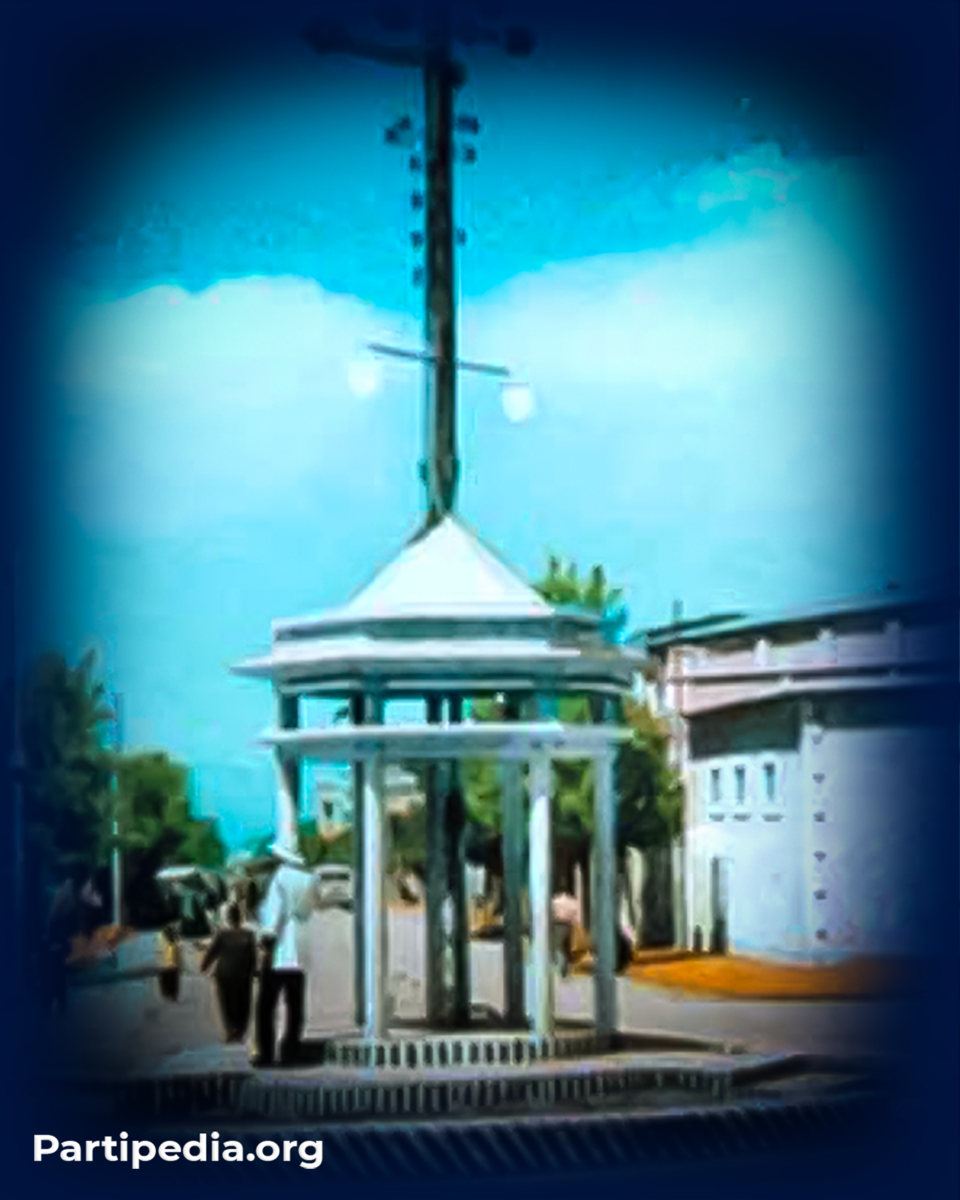
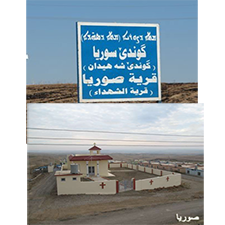
Sorya is a small village in the Silêvaneyan plain of the Zakho district, a few kilometers from Peşabur. It is located on the left bank of the Tigris River in the Syria-Turkey-Iraq border triangle. Its population was about 20 families, most of whom were Christians, who were engaged in agriculture and animal husbandry.
On September 16, 1969, on the main road near the village, a mine exploded in an Iraqi army vehicle, killing and wounding all its passengers. One of the dead was a military officer named Abdulwahab Abdulkarim. Since the village was close to the scene of the incident, a large military force was immediately sent to the village under the pretext of revenge. When the people saw the military convoy heading towards their village, the village headman, the religious priest and his driver, who had visited the village as guests, went to meet the Iraqi army. The Iraqi army forces, under the command of Colonel Abdulkarim from the 4th Battalion of the 23rd Brigade, when they arrived at the village's hosts, arrested the three without questioning, explaining or listening, and ordered them to be shot and left in a pool of blood.
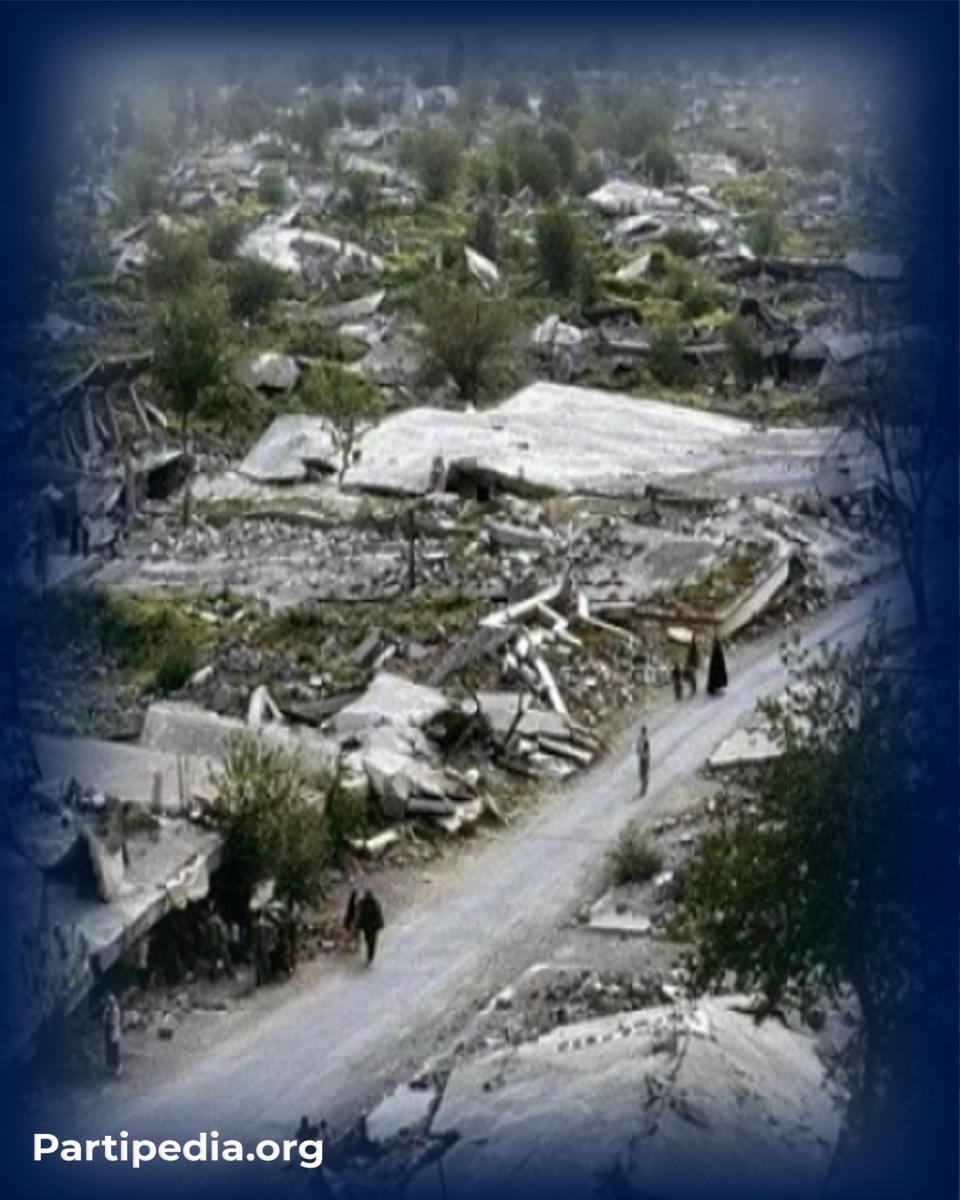
Then they surrounded the village and forcibly removed the villagers, including women, children, adults and infants, from their homes, tied them up in a fence and arrested them, then mercilessly shot them and massacred them. The Ba'ath military officer did not stop there, he searched the corpses, shot the survivors in the brains and massacred them until all those who were trapped in the fence were dead. Then he ordered the burning of houses and the destruction of the village. This was another of the Ba'ath regime's planned policies in rural Kurdistan to destroy the economic infrastructure, known as the policy of burning the land. During the burning of the village, they found 5 children in a grain warehouse and shot all five of them. They did not stop there, they searched the bodies of the martyrs, insulted them and began to loot the women's jewelry, cut off their wrists and rings to remove their rings and bracelets.
The total number of victims was 39, including 9 women and 11 children. They were all buried in two pits, one for women and the other for men, near the village. Of course, what is seen in the Iraqi army's military operation against civilians and innocent people such as women and children is a crime that has crossed all boundaries of human conscience, amounting to the most brutal genocide against humanity in the entire last century.
Source:
-
Masoud Barzani, Barzani and the Kurdish Liberation Movement, Volume 3, Part 1, The September Revolution 1961-1975, Issue 1, 2004.
-
Hojin Masoud Serni, The September Revolution in the Behdinan Region 1961-1975, Edition 1, 2018.
-
Ari Kerim, A Few Living Pages in the September Revolution, Xebat Publishing House, Duhok 1999.
-
Ibrahim Celal, Southern Kurdistan and the September Revolution: Construction and Destruction 1961-1975, Fourth Edition, 2021.
-
Hawkar Karim Hema Sharif, The September Revolution 1961-1970, 1st Edition - Salaheddin University Press, Hewler, 2012.