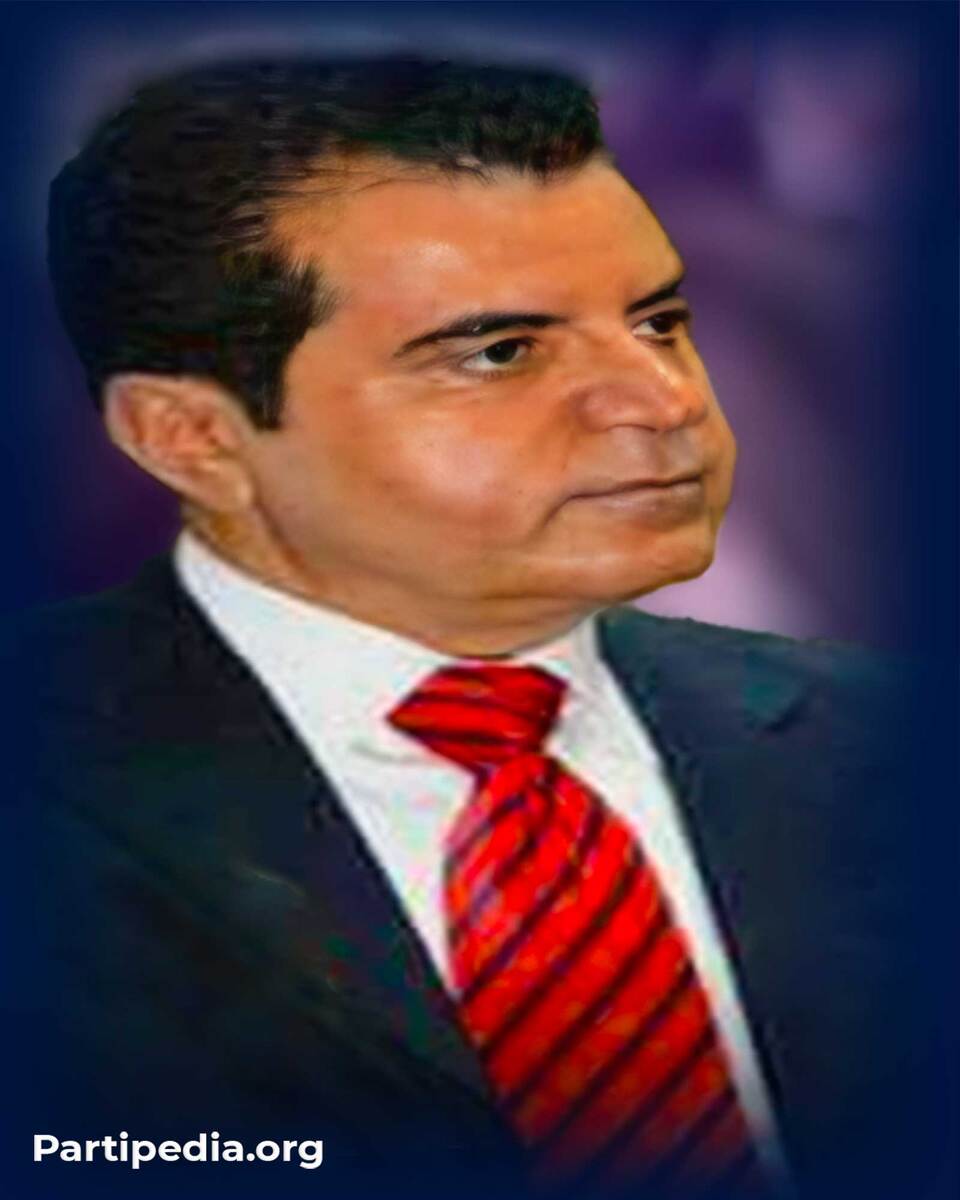


Politician Idris Mustafa Sheikh Mohammed Sheikh Abdulsalam Barzani, also known as Idris Barzani and the engineer of peace, joined the ranks of the Peshmerga forces in 1961 The September RevolutionIn 1962, he became Secretary to the Chief Mullah Mustafa Barzani In 1966, he was appointed head of the military bureau of the executive office and a member of the foreign relations committee of the executive bureau of the Revolutionary Leadership Council in Iraqi Kurdistan. In May of the same year, he was appointed the first head Barzani's headquarters in The September Revolution In 1970, he was in charge of the military office of the Kurdistan Democratic Party (KDP). In the same year, he was elected as a member of the central committee of the KDP in the eighth congress In 1975, he was one of the founders of the interim leadership of the Kurdistan Democratic Party (KDP). The May Revolution and sending the Peshmerga to Kurdistan and providing logistical assistance to the Peshmerga Ninth CongressHe was elected a member of the Central Committee, Political Bureau and Head of Relations of the Kurdistan Democratic Party (KDP).
Biography
Idris Mustafa Sheikh Mohammed Sheikh Abdulsalam Barzani was born on March 14, 1944 in Barzan village, in the family of the sheikhs of Takya Barzan and the son of the president Mustafa Barzani (1903-1979) In 1945, after the collapse of the Second Barzan Revolution, when he was less than two years old, he retreated with his family to Kakla village in Piran and Barazgar plain On October 11, 1947, he returned to South Kurdistan with his uncle Sheikh Ahmad Barzani (1892-1969) after the collapse of the Kurdistan Democratic Republic.
He lived in exile with his family in Basra, Mosul and Baghdad between 1947 and 1958. In 1952, despite the difficulties of his family's life, he was exiled and imprisoned by the Iraqi government in Basra He was sent to school and continued until 1954. In the same year, the government moved his family to Mosul, where he continued his education. In 1956, the government moved them to Baghdad again, this unstable situation That his family saw affected his continuity Idris Barzani He did not attend school, but continued until he completed primary school and then continued his secondary education in Baghdad, while studying religion.
After twelve years of deprivation of his father's affection, he was reunited with his father in 1958. In 1964 he married Nazdar Khani, daughter of Hama Awrahman Agha. He was fluent in Kurdish, Arabic, Persian and English.
Khabatname
Idris Mustafa Barzani In 1961 he joined the ranks of the Peshmerga forces The September RevolutionIn 1962, he became Secretary to the Chief Mullah Mustafa Barzani In 1963, he participated in the Koya General Assembly. In 1964, he participated as a guest Sixth CongressIn 1966, he was the head of the military bureau of the executive office and a member of the foreign relations committee of the executive bureau of the revolutionary leadership council in Iraqi Kurdistan Early May 1966, command supervision The Story of Handreni He fought against the Iraqi army and became its representative in the same year Seventh Congress of the Kurdistan Democratic Party. . . . In May of that year, he was appointed as the first head of Barzani's headquarters during the September Revolution Kurdistan Democratic Party He met with Iraqi President Lieutenant Colonel Abdul Rahman Mohammed Arif (1916-2007) at the Green Palace in Baghdad The Iraqi prime minister had come to resolve the issues between the two sides.
In 1969, he led the battle of Halaj-Dabani against the forces of Ibrahim Ahmad-Jalal Talabani group in Garmian region, the same year under the command of the president Mustafa Barzani The Iraqi army has prevented the advance of the Iraqi army on the Ranya-Sarkabkan front.
Idris Barzani was attempted to be assassinated several times in his life. On December 6, 1970, his car was shot by Ba'ath Party spies in Baghdad, but he escaped. In early June 1972, he and his father were attempted to be assassinated and Massoud BarzaniIn 1978, he was briefly arrested and interrogated by the Iranian Savak for political activities opened
On December 10, 1970, he was a member of the nine-member delegation of the Kurdistan Democratic Party (KDP) to negotiate autonomy for South Kurdistan with Ba'ath Party officials in Baghdad He was nominated by the Baath Party for the post of vice president, but President Mustafa Barzani refused.
In 1970, the Eighth CongressHe was elected as a member of the Central Committee of the Kurdistan Democratic Party (KDP).
On March 8, 1974, he held the last round of negotiations with Saddam Hussein (1937-2006) in Baghdad before the Iraqi army invaded the liberated areas of the September Revolution but the other party has refused.
On December 4, 1975, he was appointed a member of the military planning committee of the September Revolution and participated in the March 8 meeting in Haji Omeran in order to continue the resistance against the Algiers agreement between the two He voted "yes" to continue the September Revolution in Iran and Iraq.
1975 After Nskoy The September Revolution He was a refugee in Iran and took charge of refugee affairs in that country Berlin Conference He was appointed a member of the Political Bureau of the Interim Leadership of the Kurdistan Democratic Party (KDP).
In 1976, he played a significant role in its establishment The May Revolution In mid-1977, he led a large meeting in Karaj to assist the interim leadership of the Kurdistan Democratic Party (KDP) and the 150,000 refugees from South Kurdistan Iran is an organization.
On March 5, 1979, he delivered a speech on behalf of the Barzani family at the grave of Mustafa Barzani in Shino village in the presence of 100,000 people. In the same year, he was a member of the preparatory committee Ninth CongressHe was elected as a member of the Central Committee of the Kurdistan Democratic Party (KDP) and later as a member of the Political Bureau and in charge of relations at the first meeting of the Central Committee.
From September 1981 to spring 1982, he was in charge of the Kurdistan Democratic Party (KDP) forces in South Kurdistan. In 1983, he was elected a member of the Military Leadership Committee of the Jude Front Forces. In 1983, he signed a joint cooperation agreement with Abdullah Ocalan in Damascus.
On November 8, 1986, he led a delegation Kurdistan Democratic Party In Tehran, he signed a peace agreement with Jalal Talabani (1933-2017), Secretary General of the Kurdistan National Union.
He engineered reconciliation between Kurdistan's political forces and played a key role in the establishment of the Kurdistan Front, which was later established in May 1988.
He died of a heart attack on December 31, 1987 in his headquarters in Sulivana village in East Kurdistan. He was buried in Halaj cemetery in East Kurdistan Mustafa Barzani He was buried.
On October 6, 1993, the bodies of Idris Barzani and his father Mustafa Barzani were brought to Bashmakh border crossing in Sulaimani province by two helicopters of the Islamic Republic of Iran Nechirvan Barzani On October 8, after two days of martyrs' marches through Kurdistan's villages, towns and cities, they will be welcomed by other leaders of the Kurdish liberation movement and a large crowd Many people and leaders will be buried.
Sources:
- 27 Generals from the struggle, Kurdistan News Publishing House, Kurdistan Democratic Party, Political Bureau, Publishing and Information Department, No. 17, August
- Archives of the Encyclopedia Board Kurdistan Democratic Party. . . .
- Ali Mojani, Sulmaz Sedeghi..., Culture of Contemporary Iraqi Men, (Tehran - Islamic Consultative Assembly Documentation Center - 2011).
- Aso Haji, Barzani, Peshmerga of Independence, (Erbil - Rudaw Media Network - 2019).
- Idris Barzani Martyr .. Some Bright Pages of Life and Struggle, Brotherhood Newspaper, Organ of Kurdistan Democratic Party - United, No. 1861, Erbil, Monday, December 31, 1994.
- Idris Barzani Shahid in a few lines, Khabat newspaper, organ of the Kurdistan Democratic Party, No. 616, late February 1992.
- Bakr Barzanji, Kurdish Celebrities, Volume 5, (Beirut, Lebanese Cultural Center for Publishing, Broadcasting, Translation and Distribution, 2012).
- Bewar Abdulrahman, Keshkoli Shahidek, (Erbil - Mukriani Publishing House - Ministry of Education Printing House - 2004).
- Biography of Mr. Idris Hamishe Harmaw, Biryati newspaper, organ of the Kurdistan Democratic Party (KDP)-United, No. 2266, Erbil, Thursday, December 30, 1997.
- Habib Mohammed Karim, History of the Kurdistan Democratic Party - Iraq (in the headquarters) 1946 - 1993, (Duhok - Khabat Printing House - 1998m).
- Sami Shorsh, Kurdistan and the Kurds, second edition, (Erbil - Rojhelat Printing House - 2019).
- Greetings to the soul of martyr Idris Barzani, Brayati newspaper, organ of the Kurdistan Democratic Party (KDP)-United, No. 1861, Erbil, Monday, December 31, 1994.
- Shakib Aqrawi, Hard Years in Kurdistan: Important Political and Military Events in Kurdistan and Iraq from 1958 to 1980, Second Edition, (Erbil - Minara Printing House - 2007m).
- Shaban Ali Shaban, Some Political and Historical Information, Third Edition, (Erbil - Rojhelat Printing House - 2013).
- Ezzat Sulaiman Beg, The Story of the Famous Battle of Handren in 1966, Part 1, Brayati Newspaper, Organ of the Kurdistan Democratic Party, No. 1643, Erbil, Thursday, May 13, 1993.
- Ali Sanjari, The Kurdish Case and the Arab Baath Party in Iraq, Part III, (Duhok - Khani Printing House - 2012m).
- Ali Sanjari, Pages from the Source of Memory in the Kurdistan Democratic Party, (Duhok - Khani Printing House - 2015m).
- Ali Kamal Barzi, Kurdish Celebrities in the Twentieth Century, Volume 1, (Erbil - Barzi Project - University Printing House - 1999).
- Idris al-Barzani 1944-1987, Al-Takhi Newspaper, Dar Al-Takhi Printing and Publishing House, No. 4180, Third Round, Baghdad, Sunday, 29 February
- Karwan Johar Mohammed, Idris Barzani 1944-1987 Life and Political and Military Role in the Kurdish Liberation Movement, (Erbil - Hevi Printing House - 2019).
- Mohammed Mullah Qadir, Sarborday Nemran, (Erbil - Haji Hashim Printing House - 2014).
- Massoud al-Barzani, Barzani and the Kurdish Liberation Movement, Volume III, (Erbil, Ministry of Education Printing House, 2002).