

In his book "Barzani and the Kurdish Liberation Movement" he mentioned Masoud BarzaniThe Kurdish revolution's leadership had been considering targeting oil installations for some time for several obvious reasons, including: oil resources were being exploited by various parties, but the Kurds were being denied access to them; and the revenues from this oil were being used to purchase weapons and bombs, which were then tested on the Kurds. The Kurdish revolution also needed new tactics to demonstrate its strength to the newly formed Iraqi regime, dominated by the Ba'athists who had seized power for the second time in the July 17-30, 1968 coup. The aim was to do something meaningful to the government and send a clear message to the Ba'athists that the Kurds could access the government's most important economic resource.
The Peshmerga forces attacked oil pipelines on several occasions, but this did not seem to alarm the government or the oil companies. After the revolutionary leadership despaired of reaching an understanding in Iraq regarding dialogue and a solution to the Kurdish problem, they decided to resort to such actions and began preparing and executing an attack plan. On the evening of March 1, 1969, a special force belonging to the revolutionary leadership attacked the Kirkuk Oil Company, inflicting significant damage. They then broadcast the voice of Kurdish protests to the world.
Sami Abdul Rahman was tasked with leading this operation, assisted by a group of experienced leaders including Fakher Mercasuri, Fares Bawa, Hamsour Hussein, Ezzedine Kara Mohammed, Arif Darwish, and Qader Jabari. After a thorough investigation, a complete map was drawn, focusing on the concentration plant. This plant collects oil from all the oil wells after it passes through continuously operating gas separation stations, then transports it to storage facilities for export.
Sami Abdul Rahman stated in an interview that they utilized Kurdish individuals working for oil companies to gather information. After a thorough investigation, they discovered that all oil and gas separated from the separation plants was being transported to a storage facility called the "Concentration Plant" north of Kirkuk. All the oil was collected from 10-12 gas stations and brought to this plant, then pumped to Kiwan, from where it was transported via pipeline to Syria and the Mediterranean Sea. Sami Abdul Rahman believed this oil storage facility was a key location from which to inflict significant damage on the oil company.
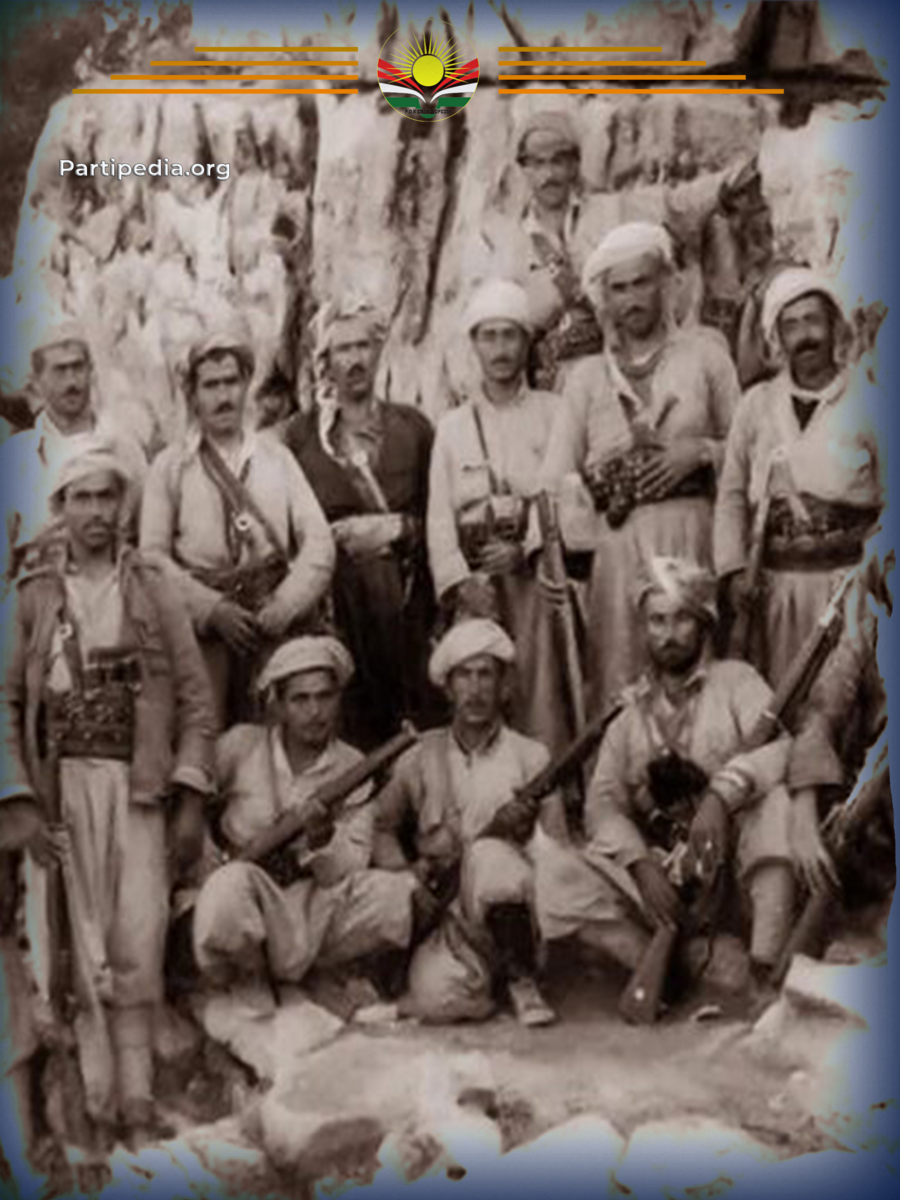
Preparations for the operation took two months, during which experts in this field visited the area several times to find a suitable location for its successful execution. The operation was planned in complete secrecy, and no information leaked to government intelligence agencies. After several meetings, including one with Idris Barzani, the first military commander of the revolution, a group of young men from the Halkurd force were placed in a special training course on the weapons designated for this operation, such as 120mm and 106mm cannons. The 106mm cannon was relied upon heavily due to its flammability and incendiary nature. Before the operation began, a reconnaissance mission was conducted. Sami Abdul Rahman and Fakher Mirksuri left the village of Kalala and were joined in Erbil by Kaman Faris Bawa, commander of the Erbil Plain force, and Hama Sur, commander of the Shwan Battalion, near the oil installations. They identified the locations for the cannons. The intelligence gathering preparations concluded at the end of September 1969, and February 15th marked the final stage of training. Qadir Jabari said in an interview: “We left Juman in a very cold winter with heavy snowfall, and we faced great difficulty transporting the cannons and ammunition from Khanqa to Warti until we reached Zini Astirokan. Fortunately, the people of Warti helped us a lot because more than 100 horse-drawn carts loaded with artillery and ammunition were transported to the Erbil plain via the mountain roads.”
After initial preparations were completed, on February 25, 1969, the Revolutionary Protection Agency published several reports about the Peshmerga's intention to launch a large-scale guerrilla campaign in the Erbil Plain to deceive the government. The aim was to draw the government's attention to the Erbil Plain and transfer a large number of troops there, thereby weakening other fronts. As a result of this deceptive military propaganda campaign, a regiment that posed a significant threat to the Peshmerga forces and a formidable obstacle to the operation's success was transferred from Ridar to the Erbil Plain, thus facilitating the Peshmerga's execution of the operation.
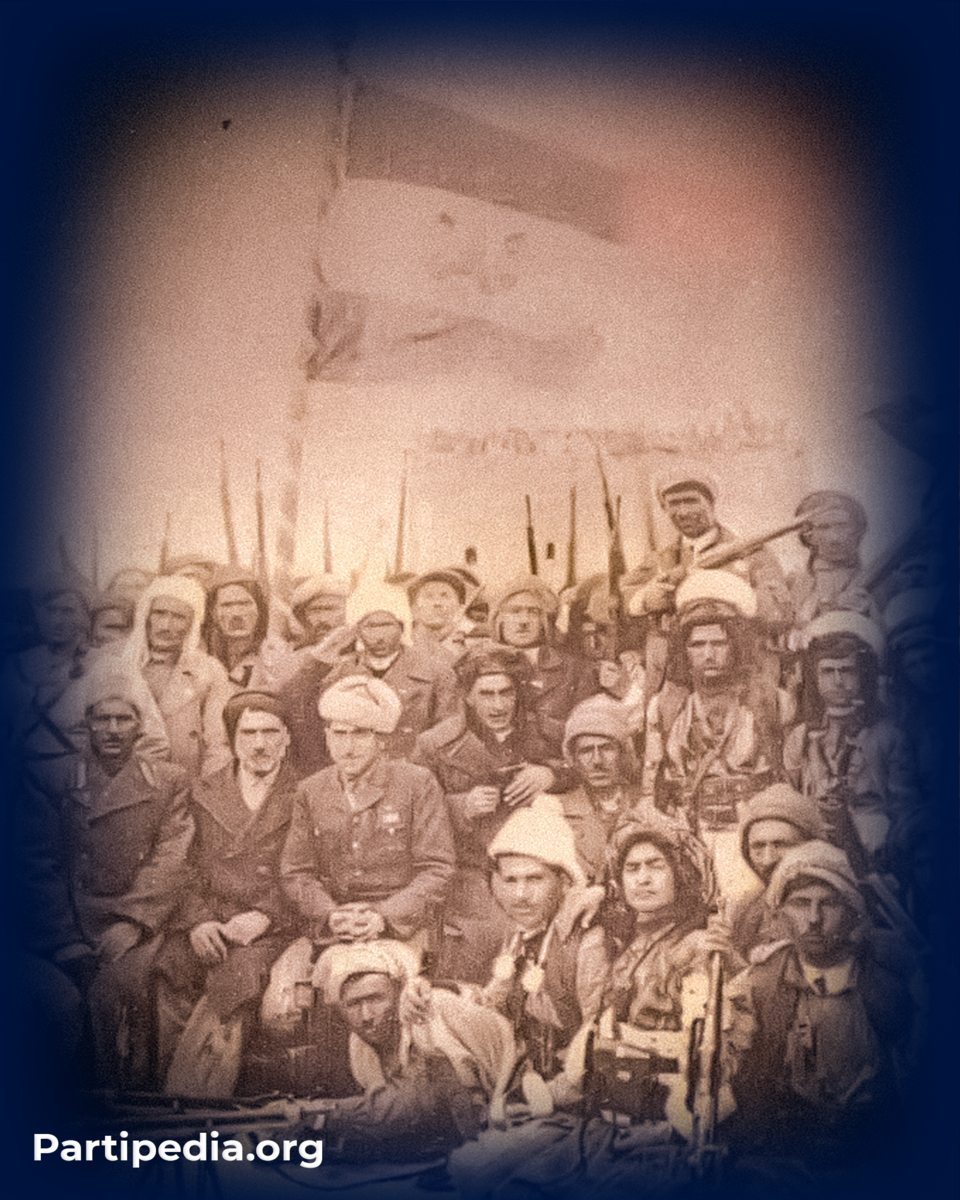
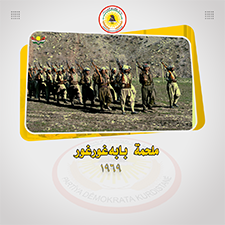
On the night of March 1-2, 1969, the Peshmerga forces reached their designated positions on the map. According to the plan, everything was proceeding smoothly. At 9:00 PM, the artillery began shelling the company's facilities, and the bombardment continued for approximately two hours. They set fire to a concentration depot, and a massive flame engulfed the area. At 11:00 PM that same night, a telegram arrived from Sami Abdul Rahman to the command confirming their successful completion of the operation. The Peshmerga forces were on full alert in case of a government counterattack, with approximately 800 Peshmerga fighters positioned to protect the artillery and repel any army assault. These positions were located on the fronts of Yerwel, Istab Line, Barut Khana, behind Rahim Awa, Darman, Taqtaq Road, and Altun Kupri.
Half an hour after the oil company was set ablaze, the soldiers launched an attack on the Peshmerga on both the Istab Line and Rahim Awa fronts. A force of 300 Peshmerga, armed with heavy weapons such as artillery, machine guns, and RPGs, repelled the attack. They launched two assaults to reach the artillery positions but were defeated. From 10:00 AM to 1:30 PM, the Peshmerga continued to fight the army's advance, inflicting heavy losses. The Peshmerga then withdrew, and the aircraft continued to bombard the Shwan and Jabari areas, continuing into the following day. It is worth noting that after carrying out this major operation in Kirkuk, the Peshmerga returned safely and sent a message of victory to Barzani, the leader of the revolution, who congratulated and thanked them.
A year later, the oil company's magazine, "People of Oil," reported on the repair of the damaged sites, a process that took eleven months due to the extensive damage. It's worth noting that this attack on the oil company in Baba Gurgur was a major victory for the revolution and also served as an open message to the Ba'athist government that the revolutionary forces were capable of penetrating deep into Iraqi territory and striking at its interests. Simultaneously, the attack garnered significant international media attention. The protracted Kurdish war plunged the Iraqi government into a severe financial crisis and increased its debt, as the daily fighting cost millions of dinars and resulted in numerous casualties. All of these factors provided the government with compelling reasons to enter into negotiations with the revolutionary leadership. Its only response was to surround the company's facilities with tanks and infantry for protection.
Sources:
1- Masoud Barzani, Barzani and Bazoutneh, and Ezgari Khwazi Kord, Barghi Seyyim, Bashhiyyekham, SHORSHEY EYLOOL 1961-1975, Chapkhani, Ministry of Foreign Affairs, Sheinbury, ed.: Höller, 2004.
2- Karwan Jawhar Muhammad, Idris Barzani1944-1987
3- Shawkat Mala Ismail Hassan, Book of the Messenger of Allah, Book of Allah, Holler, 2007.
4- My name is Karim, I am talking to you about anything, I am talking about it, I am talking about it, Dehek, 1999.
5- Ibrahim Jalal, Bashouri Kurdistan and the people of Kurdistan and their families 1961-1975, next to them, 2021.
6- Hawkar Karim Hama Sharif, SHORSHEY EYLOOL, Chapkhani Zangi Silahdin, Chapi, Holler, 2012.