

Biography
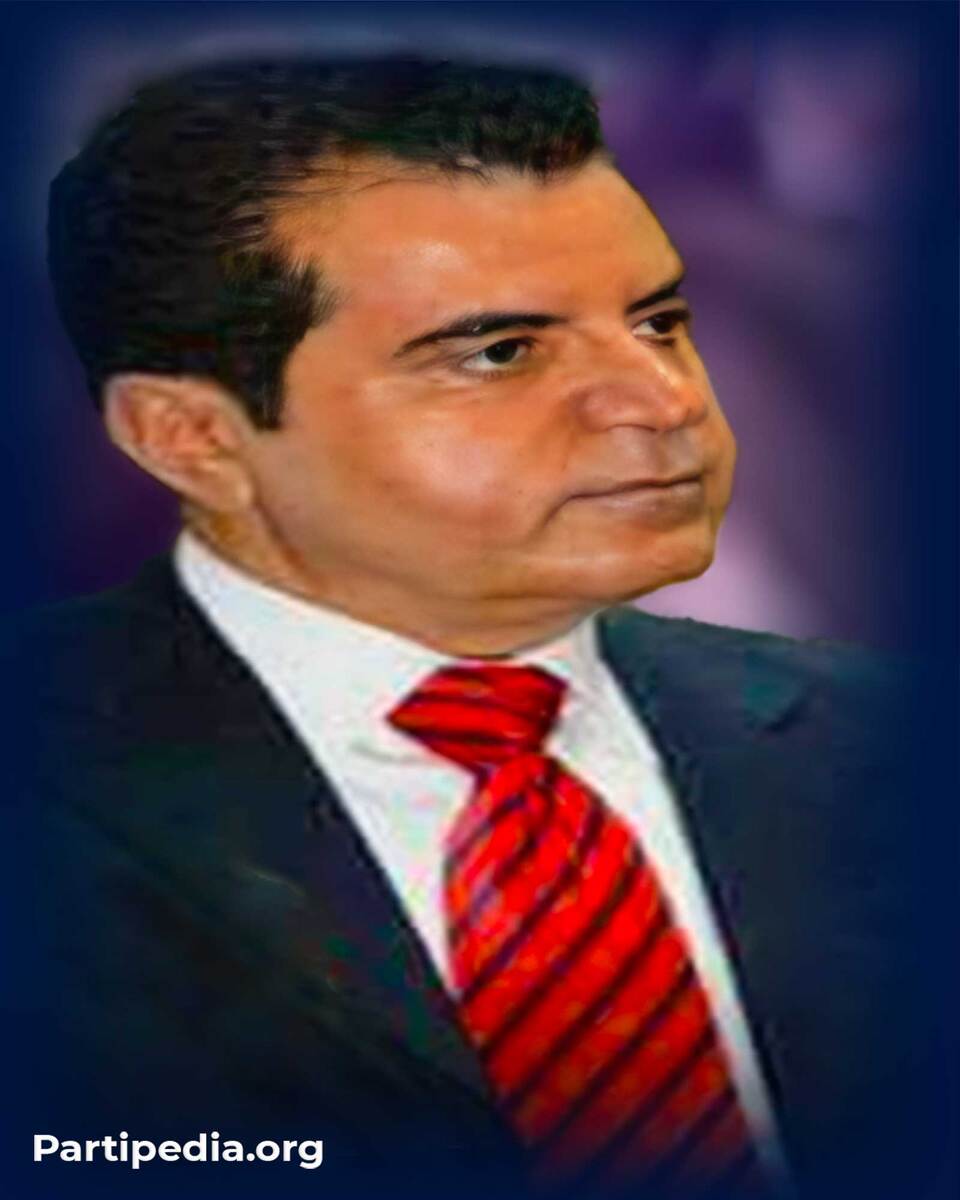
Abdulsamad Mohammed Abdulrahman Ibrahim, also known as Abdulsamad Bana and Abdulsamad Manjal, was born on March 11, 1913 in Koya, Erbil province He attended secondary and high school in the city.
He was appointed as an employee in the Shari'a Court of Rasafa in Baghdad in 1934. He died on February 11, 1968 in Baghdad and was buried on February 12, 1968 in the old cemetery in Koya township. He was fluent in Kurdish, Arabic, Persian, Turkish and English.
Khabatname
In 1932, he worked politically with the officials of the newspaper Al-Ahali, published in Baghdad on December 2, 1932, considered the only opposition newspaper known to communists such as Yousef Salman (1901-1949). In 1933, he was one of the founders of the youth association known as the Manwaran Association in Koya, Erbil province. In 1933, he was one of the founders of the Kurdish Youth Memorial Association in the city In 1934, he joined the Iraqi Communist Party and supported the recognition of the Kurds as a nation and the right to independence of Kurdistan She was arrested and dismissed in 1941 for her political activities. In early 1942, she translated articles in support of the women's movement for the Kurdish magazine Galawezhi He wrote the Baghdad edition.
In 1946, he was one of the officials of the Kurdish Democratic Party in Sulaimani province. In 1946, he wrote some of the publications of the Kurdish Democratic Party Barzani prisoners, on June 18, 1947, through Mohammed Saeed Mirza Majid Haj Ahmad (1904-1959), also known as Saeed Qazaz, was licensed as a legitimate writer on the last night of the four's lives The martyred officers were Izzat Abdulaziz Abdullatif (1912-1947) known as Izzat Katani, Mustafa Mustafa (1912-1947) known as Mustafa KhoshnawKhayrollah Abdulkarim Abdullah (1912-1947) and Mohammad Mahmoud Mohammad (1922-1947). Mohammad Mahmoud Qudsi Write their last will in his own handwriting. On June 19, 1947, he received the bodies of the four martyred officers from the Baghdad forensic medical examiner and sent them back to their places.
In 1947-1949 he was exiled to the village of Hit in western Anbar province. He participated in the demonstrations against the Iraqi regime in Baghdad on December 27-29, 1948. In 1949-1958 he was exiled to his farm In 1953, he was in charge of Massoud Mohammed's campaign for the Iraqi parliament. In 1958, he was a member of the delegation that welcomed the president Mustafa Barzani (1903-1979) He was a delegate to the Second Baghdad Conference in 1959. In 1959, he was a delegate to the Second Baghdad Conference Fourth Congress of the Kurdistan Democratic Party - On Saturday, December 8, 1960, he was a member of the fifty-member committee to support the founders of the Kurdistan Democratic Party (KDP). 5th Congress of the Kurdistan Democratic Party In 1961, he was the first hiding place of lawyer Omar Mustafa Mohammed Amin (1923-1992), also known as Omar Dababa, a member of the central committee of the Kurdistan Democratic Party (KDP) who had escaped from prison.
In 1963, he was arrested and tortured by the National Guard and later released. In 1963, he was a delegate to the First People's Congress (Koya Congress). In 1963, he was a member of the negotiating delegation Kurdistan Democratic Party He arrived in Baghdad on March 30, 1963. He was arrested and tortured by Iraqi government intelligence on June 9, 1963, after negotiations between the PKK leadership Kurdistan Democrat and Abdulsalam Mohammed Arif (1921-1966) Iraqi President Released. On June 17, 1965, he was appointed Inspector General for Northern Affairs.
Sources:
-
Archive of the Kurdistan Democratic Party Encyclopedia Board.
-
Aziz Hassan al-Barzani, The Kurdish National Liberation Movement in Iraqi Kurdistan 1939-1945, (Duhok, Spirits Printing and Publishing House, Ministry of Education Printing House, 2002), p.
-
Hamid Gawhari, Barzani Medal, the highest honor, book 1, second edition, (Erbil - Barzani Charitable Foundation - 2019), p.
-
Paul Ernst, Conversation with the Famous German Poet, translated by Abdul Samad Haji Mohammed, Galawezh Magazine, Nos. 3 and 4, Year 3, Baghdad, Knowledge Printing House, March and April 1942, pp. 66-71.
-
Mahdi Mohammed Qadir, Political Developments in Iraqi Kurdistan 1945-1958, (Sulaimani, Kurdistan Strategic Research Center, 2005), pp. 92, 101, 122, 123,
-
Shuan Mohammed Amin Taha Khoshnaw, Erbil Between 1963-1970: A Historical Study of the Political Situation, (Erbil – Salahaddin University Printing House – 2016), pp. 88, 114 AD
-
Jamal Baban, Sulaimani, My Bright City, Volume 3, Second Edition, (Erbil – Aras Publishing House – Aras Printing House – 2012), pp. 320,
-
b. Hawraz, A Brief Study on the Establishment and Dissolution of the Revolutionary and Liberation Party in South Kurdistan, (No place, May 1993), p.
-
Mohammed Sahl Taqush, Tarikh al-Akrad 637-2015, (Beirut, Dar al-Nafais for Printing, Publishing and Distribution, 2015), pp. 203-2
-
Habib Mohammed Karim, History of the Kurdistan Democratic Party of Iraq (in the headquarters) 1946-1993, (Duhok, Khabat Printing House, 1998), pp. 35, 85-8
-
Hassan Latif al-Zubaidi, Encyclopedia of Iraqi Parties, (Beirut, Arif Publishing House, 2007), pp. 338, 348,
-
Sobhi Abdul Hamid, Iraq in the Years 1960-1969, (Damascus-Dar Babl for Studies and Information-2009), p.
-
Tariq Jambaz, Hiwa Party in Erbil Brigade, (Erbil, Law Enforcement Magazine, 2005), p.
-
Tahir Ahmad Hawizi, History of Koya, Volume 2, Part 1, (Baghdad, Nimir Printing House, 1984), p.
-
Ali Abdullah, History Kurdistan Democratic Party 63. Iraq until the Third Congress, September 1968, p.
-
Abdulkhaliq Alaeddin, Koya ... Celebrities, (Erbil - Minara Printing House - 2014), pp. 195-1
-
Fouad Hussein al-Wakil, Jamaat al-Ahali in Iraq, (Baghdad, Dar al-Rashid Publishing House, 1979), pp. 104-105, 111-114, 186-1
-
Mahmoud al-Dara, Kurdish and Arab ethnic issues in the Iraq war, (Beirut, Dar al-Tali'a publications, 1963), p.
-
Massoud al-Barzani, Barzani and the Kurdish Liberation Movement, Volume 1, Second Edition, (Beirut-Kawa for Kurdish Culture-1997), p.
-
Mahdi Mohammed Qadir, Erbil in 1926-1939, (Erbil - Kurdish Academy - Haji Hashim Printing House - 2013), p.