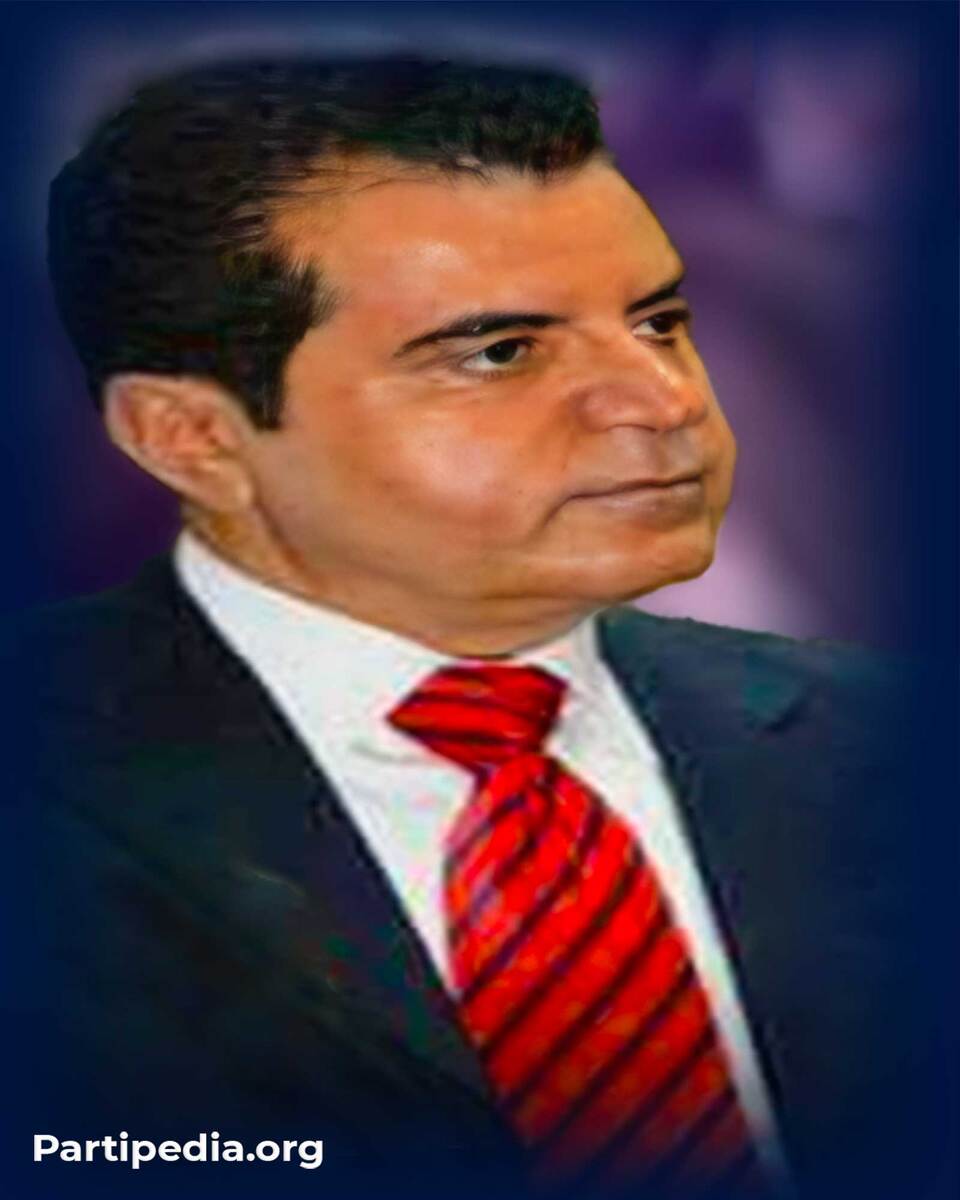



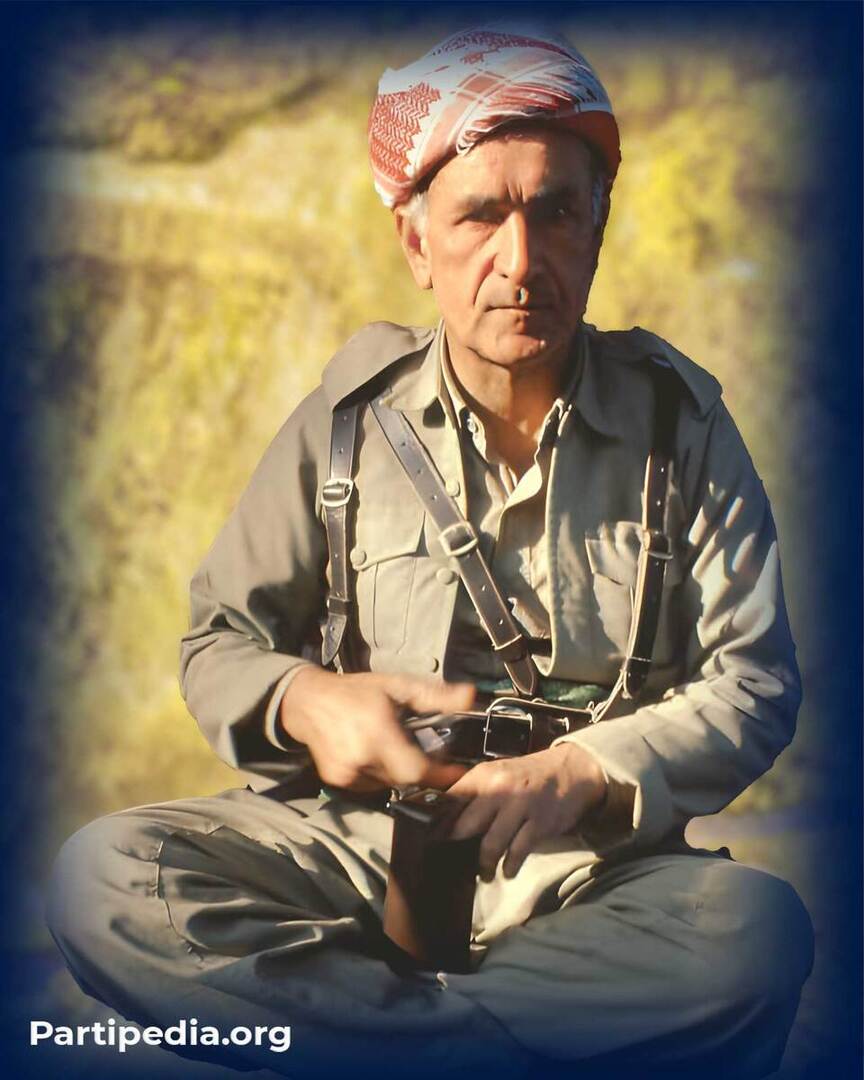
Biography
Dr. Saeed's father, also known as Sheri Barzan, participated in the First Barzani Revolution of 1932 and the Khalil Khoshaw Movement of 1935. On September 15, 1935, he was killed by Turkish gendarmerie forces in the battle of Mount Govand in North Kurdistan He was martyred.
Dr. Saeed was born in 1930 in Bedudi village of Piran district of Mergasur district of Erbil province. He fled to Turkey with his family on June 21, 1932 after the collapse of the First Barzan Revolution In October 1945, after the collapse of the Second Barzan Revolution, he was displaced to East Kurdistan and settled in Shino town. He married Baklal Elelna Novia in the Soviet Union. They had a son named Aziz Saeed was born in 1958 and holds a doctorate in contemporary history. He is fluent in Kurdish, Turkish, Russian, Persian and Arabic.
Khabatname
Saeed Ahmad Nader participated in the Second Barzani Revolution in 1944 and on 5 September 1945 he participated in the Battle of Maidan Morik. On 11 October 1945 he was displaced to East Kurdistan after the collapse of the Second Barzan Revolution In 1946 he served as a Peshmerga in the Barzani forces of the Kurdistan Democratic Republic Army in Mahabad. On May 3, 1946 he participated in the Battle of Malqarani in Saqiz Front in East Kurdistan.
He was one of the Peshmergas who returned to Sherwan and Mazuri on April 19, 1947 via Khawkurk and Dashti Barazgar. After their return, Genl Mustafa Barzani On May 6, 1947, he held a meeting with his comrades in the village of Argosh and instructed them to stay or go to the Soviet Union Mustafa Barzani He participated in the Battle of Qtur People and the Battle of Mako Bridge. After much hardship, he crossed the Aras River on June 18, 1947, which is located on the border between Iran and the Soviet Union.
After arriving in the Soviet Union, on June 19, 1947, he and all his comrades were detained in Nakhchevan, Azerbaijan, for forty days in an open community surrounded by barbed wire by a group of soldiers They were guarded and treated like prisoners of war in terms of food, clothing and transportation. They were divided into Aghdam, Lachin, Ayulakh and Kalbajar regions of Azerbaijan by the decision of the Soviet government. On December 10, 1947, they were transferred to a military base on the Caspian Sea in Baku, the capital of Azerbaijan They were given military uniforms and received eight hours of military training daily under the supervision of officers of the Republic of Azerbaijan. They were also taught Kurdish language for four hours daily by some of their educated comrades. . . .
After the mistreatment of his comrades, Jafar Bakirov decided to move his military camp from the Republic of Azerbaijan on August 29, 1948 to the community of Chirchuk near Tashkent, the capital of the Republic of Uzbekistan, where they continued military training. . . .
In March 1949, he and his comrades were distributed by train to the villages of the Soviet Union, working on the farms of the farmers who rented land from the government and paid back the government's share. . . .
After much effort and sending several letters from the general Barzanito Stalin, Stalin finally receives a letter in which Barzani He immediately decided to form a committee to investigate the situation of Barzani's comrades. The committee decided to gather them all in Vrevsky. In November 1951, he went to Vrevsky in the Soviet Union. . . . In 1954, at the request of General Mustafa Barzani He moved to Moscow to complete his university studies.
After the July 14, 1958 revolution in Iraq and his return General Mustafa BarzaniOn February 25, 1959, he and his comrades were granted a general amnesty under Articles 3 and 7, paragraph (a) of Article 10 and Article 11 of the 1959 Amended Law Georgia returned to Kurdistan via the port of Basra in southern Iraq and became a Russian translator at the Baghdad Military College. On November 5, 1960, at the invitation of the Central Committee of the Communist Party of the Soviet Union, he accompanied him on the anniversary of the October Revolution Mustafa Barzani He went to the Soviet Union and received his doctorate in contemporary history in In 1970, he returned to Baghdad and was appointed as a professor of history at Baghdad University (1971-1974).
In 1973, due to the complicated situation between the leadership Kurdistan Democratic Party He joined the Peshmerga forces for the third time in 1974 and participated in the battles of Zozk, Sartiz and Garwi Omar Agha in Erbil province The September Revolution In 1979, he fled to Iran as a refugee In the Ninth Congress of the PKK He became a member of the Central Committee Kurdistan Democratic Party He was elected commander of the Barzan forces in the same year. In 1987, he was one of the commanders of the battle of Mergasur in Erbil province. In 1988, he participated in the Dastan of Khawkurk as the commander of Barzan forces From April 7 to 14, 1991, he was the commander of the Battle of Korê, which defeated the advance of Iraqi forces. In 1993 he was appointed as a member of the High Social Committee of Barzan Region The September Revolution, The May Revolution and the South Kurdistan Uprising and the Sovereignty Period, on the Golden Jubilee of the PKK by the President Massoud BarzaniHe was awarded the Immortal Barzani Medal. He died on February 5, 1999 in Pirmam in his presence Nechirvan Barzani Representative of the President Massoud Barzani Sheikh Mohammed Khalid Barzani and a significant number of relatives and comrades were buried in the cemetery of Barzan village.
in his works:
- Life and Resistance - That History Shows Sovereignty - 1997.
Sources:
- Dr. Saeed Al-Barzani Research on Khalidin, Gulan Magazine, Gulan Media Foundation, No. 33, Sunnah Al-Thalitha, Erbil, Ministry of Culture Printing House, February 25,
- On the 40th anniversary of Dr. Saeed Tekosher, Brayati newspaper, organ of the Kurdistan Democratic Party (KDP)-United, No. 2799, Erbil, Wednesday, March 17, 1999.
- Brotherhood, Dr. Saeed, the Eagle Peshmerga who chose the path of resistance, Biryati newspaper, organ of the Kurdistan Democratic Party (KDP)-United, No. 2772, Erbil, Monday, February 8, 1999.
- Sherzad Abdulrahman, Death but in another color, Biryati newspaper, organ of the Kurdistan Democratic Party (KDP)-United, No. 2771, Erbil, Sunday, February 7, 1999.
- Dr. Saeed Barzani Reaches the Caravan of Martyrs, Biryati Newspaper, Organ of Kurdistan Democratic Party-United, No. 2771, Erbil, Sunday, February 7, 1999.
- Hamid Gawhari, Barzani Medal, Volume 1, (Erbil - Barzani Charitable Foundation - Haji Hashim Printing House - 2015).
- Habib Mohammed Karim, History of the Kurdistan Democratic Party - Iraq (in the headquarters) 1946 - 1993, (Duhok - Khabat Printing House - 1998m).
- Hamid Effendi, Dastan Korê 7/4 and 9/4/1991, Brayati newspaper, organ of Kurdistan Democratic Party, No. 3063, Erbil, Thursday, 6 April 2000.
- Dr. Saeed Barzani Reaches the Caravan of Martyrs, Biryati Newspaper, Organ of Kurdistan Democratic Party-United, No. 2771, Erbil, Sunday, February 7, 1999.
- Saeed al-Barzani, Masira al-Sharaf al-Barzaniyya Aam 1946, Al-Takhi newspaper, No. 1106, Baghdad, Times Printing House, Tuesday, August 8,
- Sherzad Abdulrahman, “The Life and Resistance of Dr. Saeed Ahmad Nader, Whose History Shows Sovereignty”, Volume 1, Biryati Newspaper, No. 2270, Thursday, November 7, 1996.
- Ali Kamal Barzi, Kurdish Celebrities in the Twentieth Century, Volume 1, (Erbil - Barzi Project - University Printing House - 1999).
- Fouzi al-Atroshi, to Dr. Saeed al-Barzani, who died, Khabat newspaper, Kurdistan Democratic Party (KDP) Language, No. 911, Erbil, Friday, February 12, 1999.
- Massoud Barzani, Barzani and the Kurdish Liberation Movement, Part I, Second Edition, (Beirut, Kawa for Kurdish Culture, 1997).
- Saleh Yousef Sufi, Chronology of Kurdistan and the World, First Edition, Volume 2, (Duhok - Duhok Provincial Printing House - 2013).
- President Masoud Barzani awards Barzani medals to martyrs and strugglers in the framework of the Golden Jubilee celebrations, Gulan magazine, organ of the Kurdistan Democratic Party, No. 84, Erbil, 1 September 1996.
- Massoud Barzani, Barzani and the Kurdish Liberation Movement 1931 - 1958, (Duhok - Khabat Printing House - 1998).
- Hamid Gardi, Summary of History, First Edition, (Erbil - Aras Publishing House - Ministry of Education Printing House - 2004).
- Look at the life of Lieutenant Dr. Saeed al-Barzani, Khabat newspaper, Lasan Hal al-Hizb al-Dimqrati al-Kurdistan - Al-Mohad, No. 911, Erbil, Friday, 12 February 1999;
- Sabri Chawshin Khano, Bedod in History, (Erbil – Rojhelat Printing House – 2018).